Black Snake Moan

Blacksnakemoan1

Movie review by Greg Carlson

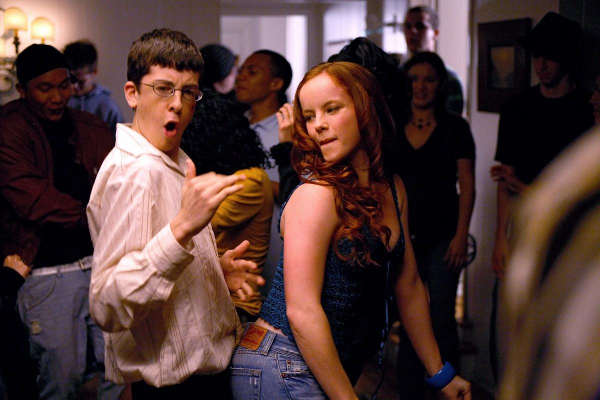
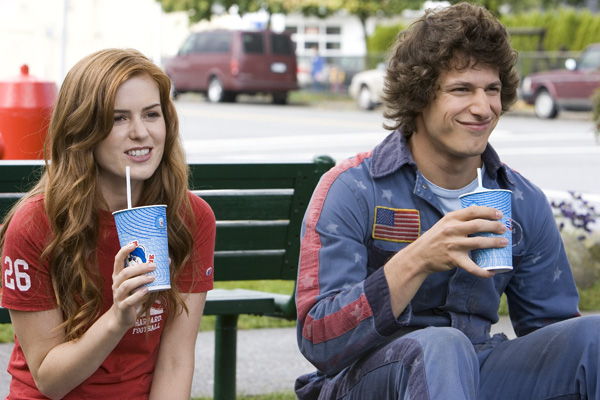
“Black Snake Moan,” writer-director Craig Brewer’s follow-up to his surprise hit “Hustle & Flow” appears eager to flaunt its obvious politically incorrect pitfalls. As if its racism and sexism aren’t enough, the movie operates from a simplistic social conservatism that argues in favor of marriage as a cure-all for even the deepest psychic scars. The film’s expertly designed poster is better than the movie, and equally as provocative. A scantily clad young white woman is held on a chain by a much older black man in a mock dime store pulp novel cover complete with creases, tatters, and stains.

Brewer’s visual sensibility injects those paperback imperfections directly into the style of his movie. Taking place in a rural Tennessee backwater seemingly frozen in the 1970s, “Black Snake Moan” intertwines the lives of two wildly different people. Rae (an underfed Christina Ricci) is a sexual abuse and rape victim whose only comfort is a jittery National Guardsman shipping out to Iraq. Lazarus (a weathered-looking Samuel L. Jackson) is a hardscrabble produce farmer and once-upon-a-time blues musician whose wife has left him for his own brother. Following a chemically-enhanced evening that sees Rae and Lazarus separately messed up, their paths finally cross when Laz discovers a bloodied, incapacitated Rae outside his shotgun shack.

What happens next belongs to the tradition of vintage exploitation cinema, as the grieving Lazarus takes it upon himself to “cure” Rae of her outrageous, misplaced nymphomania. Despite Jackson’s fine effort, his character is reduced to the age-old stereotype of the spiritual, self-sacrificing African American who corrects a deficiency in an undeserving white person. Brewer’s decision to have Lazarus chain Rae to his radiator lacks the necessary groundwork to achieve any kind of verisimilitude, but Ricci and Jackson turn the shocking scenario into a battle of wills laced with an off-kilter humor. Many viewers, however, will not find laughs of any kind in the situation.

To make matters even more salacious, Rae is periodically gripped by an uncontrollable desire to couple with any man within arm’s reach. Brewer initially seems smart for sidestepping any real sexual tension between the two principals, but Lazarus’ steadfastness also eliminates the film’s arguable primary thematic opportunity. Instead, the filmmaker widens the circle of folks who know about Lazarus’ reluctant captive to include a local adolescent and a sensible minister who takes the shocking situation in stride.

“Black Snake Moan” never manages to reconcile its over-the-top improbability with its pedestrian platitudes about salvation and redemption. Its final overtures are so odd and awkward that they veer dangerously close to ridiculousness. Only a last minute coda manages to return matters to earth. Brewer bookends the movie with footage of Son House explaining the connection between sex and the blues, and his appearance simply serves as a reminder that the film’s take on music works much better than its corny sex, age, and race-transcending friendship angle. Even though the best scene in the movie is a slow-motion gutbucket juke-joint jam and dance session, “Black Snake Moan” is too long and not nearly insightful enough to demand much respect or attention.

Zodiac

Zodiac1

Movie review by Greg Carlson

Followers of the career of director David Fincher have come to expect big things of the filmmaker. A stylish craftsman with a muscular command of storytelling and a ferocious appetite for impeccable technical specs on his films, Fincher has a rabid fanbase of moviegoers who enjoy journeys that explore the darker side of human nature. “Zodiac” is certainly Fincher’s most complete cinematic experience, even if it will never achieve the same kind of cult that surrounds “Fight Club.” At two and a half hours, it comes dangerously close to wearing out its welcome, but Fincher’s obvious interest in the material, combined with his smart sense of pacing, elevates “Zodiac” to the front rank of its director’s impressive resume.

While the movie focuses on the events surrounding the still-unsolved Zodiac serial killer case that began as the 1960s came to an end, Fincher’s thematic concerns transcend a simple cat-and-mouse exploration of good guys out to catch a very, very bad guy. The screenplay’s obsessive attention to a dizzying array of details immerses the viewer in the maddening process of chasing a ghost who ironically seems to recede as the facts and clues and case file folders pile up. It has already been suggested that “Zodiac” works best as a study of life in the information age, and this may be true. The film is also a study of the odd lengths to which people will go in order to achieve some kind of recognition. This eerily applies to the Zodiac himself as well as the men who hunt him.

While the actors acquit themselves admirably in their roles, “Zodiac” is decidedly not a performer’s showcase. Because the narrative focus is shifted among a group of key players in the unfolding Zodiac saga, the audience has the opportunity to follow along with both Jake Gyllenhaal in his turn as Robert Graysmith, the cartoonist who ended up authoring more than one book on the Zodiac, and Mark Ruffalo as David Toschi, the police detective who spent a considerable amount of time and energy in the initial investigation. We also cross paths with a gallery of intriguing folks who might lack in screen time, if not the ability to leave an impression. Robert Downey Jr. lightens the mood as SF Chronicle writer Paul Avery, Brian Cox makes a perfectly pompous Melvin Belli, the high-profile lawyer, and John Carroll Lynch, as suspect Arthur Leigh Allen, inspires nightmares.

Many true crime buffs agree that the allure of the Zodiac lies in his personal relationship to the press and the police, and Fincher lovingly re-imagines the newsroom of the San Francisco Chronicle in the early 1970s. The killer was fond of sending encrypted messages and other missives to the Chronicle and other newspapers, and the correspondence established a ghoulish connection between the murderer and the media. As for the murders themselves, Fincher keeps the most graphic violence to a minimum, although the film’s opening set piece, along with a daylight attack on a pair of lakeside picnickers, is visceral and unsettling. While the Zodiac case remains open in some jurisdictions, it is inevitable that Fincher would have to find an alternative resolution to the film. That he succeeds in satisfying his viewers is a mark of his increasing skill as one of the industry’s most fascinating moviemakers.


Breach

Breach1

Movie review by Greg Carlson

Robert Hanssen, currently serving a life sentence for selling classified information to the Soviets, is a fascinating figure. In “Breach,” Hanssen is portrayed by Chris Cooper as a bitter, conflicted individual whose contradictions make little sense to Eric O’Neill (Ryan Phillippe), the young FBI clerk assigned to help take Hanssen down. Director Billy Ray relishes the schism in Hanssen’s character, and builds a movie that neatly balances the imaginative intrigue of post Cold War-era espionage with the dreary, corporate reality of government desk jockeys frustrated with their lot in life. “Breach” is certainly not a great movie, but its sensational subject matter will interest history buffs and spy movie aficionados.

Hanssen was the person responsible for arguably the worst security breach in the history of the United States. During the course of at least fifteen years, he traded secrets for diamonds and cash that ultimately totaled well more than one million dollars. Among his ignominious activities, he sold out a trio of KGB agents who were working for the U.S., he revealed the course of action for U.S. officials in the event of a nuclear attack, and he offered up the names of American double agents. One can only speculate as to the reasons Hanssen decided to betray his country, and for the most part, “Breach” avoids simplistic generalizations.

Instead, the filmmakers reveal Hanssen as seen through the eyes of O’Neill, which allows viewers to discover the stupefying extent of the traitor’s duplicity with the same incredulousness as the young FBI man. At first, O’Neill is, in the parlance of the bureau, not even completely “read in” to the case; he believes he has been assigned to his new desk because Hanssen is a sexual deviant. While Hanssen’s secrets-for-cash deals with the Russians turn out to be much worse than O’Neill realizes, Hanssen’s other behaviors can make the hairs on one’s neck stand on end.

Cooper, a tremendously gifted actor, manages to make Hanssen a richly textured, thoroughly engrossing character, despite the man’s creepiness. Hanssen’s political double-dealing is mirrored in his personal life. A devout Catholic who virtually never misses Mass, Hanssen also videotapes himself having sex with his wife and mails copies to a friend. Ray makes a choice to abstain from a psychological exploration of Hanssen’s unusual peccadilloes, and one wonders how different the movie might have been had it been filtered directly through the consciousness of Hanssen as opposed to O’Neill.

Phillippe is well cast as O’Neill, and brings to his role a nicely tuned mixture of arrogance and naivete. Despite the withering sarcasm and criticism he suffers daily from his new “boss,” O’Neill comes to admire Hanssen for a time, and Phillippe brings the audience with him. O’Neill’s attitude only shifts for good once the extent of Hanssen’s violation is revealed. “Breach” has very few scenes that would appear in a fantasy spy movie, but it makes the most of its opportunities to cook up suspense. For a story with a well-known outcome, it is a movie that generates a fair share of tension in its telling.

The Queen

Queen1

Movie review by Greg Carlson

Stephen Frears’ “The Queen” dramatizes the short span of time between the surreal death of Princess Diana and the even more surreal outpouring of grief that culminated in her memorable funeral. Perfectly blending documentary footage with the performances of a circle of thespians more than up to the task of playing familiar public figures, “The Queen” offers viewers a delicious, if fancifully speculative, glimpse behind the royal curtain. The movie principally toggles between freshly elected PM Tony Blair’s adroit handling of the crisis and the seemingly brittle stoicism offered by Queen Elizabeth and her kin.

The screenplay, by Peter Morgan, is almost entirely sharp, clever, and engrossing. What at first seems like a simple struggle of wills between tradition and modernization blossoms into a thoughtful examination of the meaning of public service, as both Blair and Elizabeth learn a great deal from each other over the course of the ordeal. Frears bookends the movie with a pair of face to face meetings between the two characters, interspersing the remainder of the running time with a handful of exquisitely strained telephone exchanges. Just when it seems that Blair might be spinning opinion away from the royal family in his own favor, he demonstrates an almost uncanny level of sympathy for Elizabeth and her exasperating behavior following Diana’s death.

As Elizabeth, Helen Mirren delivers a top-notch performance. Smoothly avoiding the traps of playing a well-known person merely as a satirical caricature, Mirren manages to strike a perfect balance between the monarch’s icy remove and her genuine belief that she has been called upon by God to serve the people of her country. Because we are allowed to spend so much time with the ruler and her family behind closed doors, Mirren takes advantage of the terrific opportunity to humanize the iconic figure. Who would have imagined the sight of Elizabeth piloting an SUV over the bumpy roads of her Balmoral Castle estate in search of the hunting party made up of her husband, son, and grandsons?

Beyond the queen, the other members of the House of Windsor are depicted in less flattering terms. Elizabeth’s consort, Prince Philip, the Duke of Edinburgh, is played by American James Cromwell as a nasty, elitist snob. Son Charles (Alex Jennings) fares better than his father, calling for, and sometimes receiving, all kinds of disruptions to protocol during the planning of Diana’s memorial. The Queen Mother (Sylvia Syms) provides the lion’s share of comic relief, frowning with displeasure that the funeral arrangements she so carefully designed for herself might be appropriated for Diana.

Fans of political drama should be delighted with the juicy, imaginatively conjured hustle and bustle that attends life with her majesty, as a great deal of attention is paid to the minutiae of how one is supposed to interact with the queen. The real source footage, which includes several snippets of interviews with Diana herself, recalls the young woman’s magnetism and grace, making it that much easier to understand Elizabeth’s unspoken jealousy at Diana’s immense popularity.


Old Joy

Oldjoy1

Movie review by Greg Carlson

Kelly Reichardt’s “Old Joy” is a wispy but mostly well-observed rumination that contrasts the life paths of two friends who have grown apart. Essentially an “anti-buddy” movie, Reichardt’s film intends to accomplish a great deal in the margins of its frames and the silences on its soundtrack. Some moviegoers will connect with the tension between the responsibilities of settling down and the romantic allure of living to the beat of one’s own drum, while others will find the rapport between the central characters alienating and off-putting. “Old Joy” has as many flaws as it does charms, and to its great credit, a spare running time prevents it from wearing out its welcome.

Soon-to-be-father Mark (Daniel London) somewhat reluctantly agrees to accompany pal Kurt (Will Oldham) on a quickie camping trip to the Bagby Hot Springs in Oregon. Seeking approval from his scowling wife, Mark embarks anyway, and his lazy drive to fetch Kurt, underscored by Air America broadcasts on the radio, sets the movie’s minimalist tone. Once onboard, Kurt babbles about recent travels that have expanded his mind, trying to convince himself as much as his companion that drum circles and bonfire jumping have salved his spirit.

Reichardt, adapting the screenplay with Jonathan Raymond from his short story, easily sketches the sense of fleeting youth through beautifully composed shots from the windows of Mark’s Volvo station wagon. Anyone who has ever sought retreat by means of a road trip into the wilderness will recognize the diners and gas stations that appear between the stretches of woods as the city turns into the country. Predictably, Mark and Kurt cannot initially find the place they’re seeking, but once they do, Reichardt constructs a potent scene at the hot springs. Kurt shares the story that provides the movie with its title as Mark sits quietly nearby. A moment passes between the two friends that ripples with an uneasy acknowledgment of something Reichardt purposefully leaves up to the viewer to determine. It is the film’s strangest, saddest passage.

“Old Joy” doesn’t comment more authoritatively on the dropout/contributing citizen divide than Richard Linklater’s superior “Slacker,” a much stronger movie that covers a great deal of the same ground. “Old Joy” bypasses the self-deprecating humor of “Slacker,” and as a result, a blanket of melancholy settles over practically everything that Mark and Kurt experience together. Certainly, Reichardt purposefully withholds all kinds of explicit information about the sorts of things that have passed between the two men, but her reticence tends to generate the kind of frustration that comes from someone who refuses to share a secret, choosing instead to taunt and tease.

While neither of the central characters is thoroughly drawn, the performers manage to create familiar, recognizable types. As the more loquacious Kurt, Oldham strikes a neat balance between tiresome palaver and warm insight. Masking his neediness behind a façade of easygoing cool, Oldham delivers the sadness necessary to make the audience occasionally experience the depths of Kurt’s regret and uncertainty. Reichardt’s final shots of Kurt are the most haunting images in the movie. Despite his copious indie credibility, however, Oldham remains a more accomplished musician than a movie actor, although his presence is one of the joys of “Old Joy.”

Volver

Volver1

Movie review by Greg Carlson

In the opening scene of Pedro Almodovar’s “Volver,” a group of women tends to cemetery plots, scrubbing and polishing the memorials of departed loved ones. While a strong wind makes these dutiful acts rather challenging, Almodovar quickly sketches one of his movie’s central themes: how the living think about and relate to the dead. “Volver” is hardly a morbid movie, however, and despite some of its extraordinary plot points, it emerges as one of the great filmmaker’s most accessible and straightforward works. Almodovar has been one of world cinema’s most consistent storytellers of the past quarter century, carving a personal style that pays homage to all sorts of legendary directors, including the likes of Alfred Hitchcock and Luis Bunuel.

Almodovar’s American fan-base might divide over the apparent simplicity of “Volver,” which lacks the sort of intricately structured, interwoven plot threads that marked the director’s masterful “Talk to Her,” one of the strongest features on the prolific moviemaker’s resume. “Volver” also lacks the outrageous sexual gamesmanship that has come to be identified as a hallmark of Almodovar’s world. The mostly one-thing-at-a-time narrative of “Volver” proves one of its essential assets, and the payoff, like that of so many Almodovar movies, leaves a deep impression on the viewer.

In her Oscar-nominated turn as the industrious Raimunda, Penelope Cruz fulfills the promise of her captivating beauty. It has been rightly pointed out by a number of observers that Hollywood has failed Cruz by consigning her to anemic roles that trade exclusively on her otherworldly allure. Acting on her home turf is a different matter. Cruz’s fellow Spaniard Almodovar knows that she is gifted enough to play a much greater range of roles than the ones that have been offered in America, and Raimunda is the performer’s most vivid creation. Determined, smart, and optimistic, even in the face of long odds and dire circumstances, Raimunda provides “Volver” with a pounding heartbeat.

It is almost too easy to point out that “Volver,” like so many of Almodovar’s signature movies, focuses on the lives of females. Raimunda is surrounded, materially and perhaps spiritually, by very important women. Her daughter Paula (Yohana Cobo), her sister Sole (Lola Duenas), ailing friend Agustina (Blanca Portillo), elderly aunt Paula (Chus Lampreave), and a handful of other female neighbors help and are helped by Raimunda throughout the course of the story. Fulfilling the promise of the title is the possibility that Raimunda’s dead mother Irene, played by Almodovar favorite Carmen Maura, has returned from the dead.

Even though “Volver” explores the pain of sexual abuse, cancer, murder, and infidelity, Almodovar miraculously locates a buoyant silver lining and a spirit of encouragement amidst the hardships visited upon the characters. Viewers new to Almodovar’s movies will see plenty of what makes the director’s body of work so satisfying, including his rich use of vivid color, which functions symbolically and aesthetically. Red is the dominant hue in “Volver,” and Almodovar uses it in a variety of arresting ways. Almodovar capitalizes on the color’s identification with blood and passion, two descriptors that could be applied to so many of the director’s tales.


Pan’s Labyrinth

Panslabyrinth1

Movie review by Greg Carlson

Critics have lined up to sing the praises of Guillermo del Toro’s latest movie “Pan’s Labyrinth,” a well made fantasy set during the aftermath of the Spanish Civil War. Juggling outré surrealism with equally ghoulish reality, del Toro returns to some of the same territory he covered in “The Devil’s Backbone,” a movie just as good as “Pan’s Labyrinth.” Following the tale of Ofelia (Ivana Baquero), a young girl whose stepfather is a cruel military officer, “Pan’s Labyrinth” will delight fans of the filmmaker’s fantastic imagination. Far from a masterpiece, however, the movie tempers one’s enthusiasm with several lost opportunities, including a better handling of the heroine’s relationship with some of the supernatural creatures she encounters.

Following exposition that introduces Ofelia and her very sick, very pregnant mother, del Toro dissects the movie into two related spheres: the hallucinatory otherworld that Ofelia visits in order to receive instructions from the half-man, half-goat faun of the title, and the nightmarish compound where Ofelia’s violent stepfather Vidal (Sergi Lopez) oversees an operation to stop a group of rebel fighters in the surrounding woods. Toggling back and forth between the two storylines, del Toro might have taken more steps to integrate them, but taken individually, scenes regularly crackle with suspense and intrigue.

Like many fairy tales, Ofelia is given a set of three tasks she must accomplish in order to restore her crumbling world. In one sequence, she descends into the root system of a gnarled tree to face a bloated, phlegmatic toad. In another, she encounters the nightmarish Pale Man (Doug Jones, who also plays Pan), a beautifully realized bogeyman who keeps his eyeballs in the palms of his hands. All of the creature design is impeccable, but some viewers might become impatient with a pronounced lack of clarity in the rules and regulations of the fantasy realm, and exactly how Ofelia’s assignments are tied to a particular outcome.

In terms of narrative coherence, del Toro does a great deal better when he is dealing with Mercedes (Maribel Verdu), Vidal’s housekeeper and a secret ally and conspirator with the guerillas. As Mercedes develops into a surrogate mother for Ofelia, she finds herself in constant danger of being discovered by her sadistic employer, and Verdu brings a perfect blend of defiance, determination, and fear to her role. The inevitable showdown between Mercedes and Vidal is a heart pounding showstopper of a scene that will have the more squeamish viewers burying their faces in their hands.

By the time “Pan’s Labyrinth” marches to its potent, emotionally charged conclusion, del Toro has slowly but surely engrossed his viewers, and the film has a mostly satisfying resonance. Some will likely read Ofelia’s encounters with the fantasy world merely as her means of dealing with the unfathomable conditions of her situation, while others will identify an allegorical treatment of wartime cruelties. Yet another option simply believes in fairies, fauns, and other magical brutes. Del Toro doesn’t require us to choose, which makes “Pan’s Labyrinth” very much a movie worth seeing.

The Last King of Scotland

Lastkingofscotland1

Movie review by Greg Carlson

Kevin Macdonald, who previously directed the often engrossing “Touching the Void” and the brilliant “One Day in September,” makes his narrative feature filmmaking debut with “The Last King of Scotland,” an adaptation of Giles Foden’s well-regarded 1998 novel. Proving that he might still be better equipped to deliver gripping documentaries, Macdonald is occasionally hamstrung by the odd blending of fact and fiction, a regular distraction in a movie that causes audience members to wonder which things Ugandan dictator Idi Amin really did and what was merely cooked up for the sake of the drama.

Forest Whitaker, as the title character, goes to town in the role, catching Amin’s gregariousness and outlandish charisma without losing sight of the bloodthirsty tyrant who ordered scores of deaths among his own people. Whitaker shows just how easily one might have been seduced by the charming military man who promised a new Uganda to enthusiastic crowds, only to make a steady string of awful decisions that spiraled the country into misery. It is no easy task to empathize with such a well lampooned monster, but Whitaker brings his expert fire to the role, accomplishing a performance that ranks with his work in Jim Jarmusch’s underappreciated “Ghost Dog: The Way of the Samurai” and Clint Eastwood’s “Bird.”

Despite Whitaker’s domination of the film, the story is told through the eyes of the fictionalized character Nicholas Garrigan (James McAvoy), a Scottish M.D. who literally picks out Uganda from a spin of his bedroom globe. Following a flirtation with the fetching wife of the local physician, Garrigan unwittingly impresses Amin when the dictator’s hand requires medical attention following a car accident. Amin, who just won’t take no for an answer, cajoles Garrigan into service as his personal doctor, and the early sections of the movie delight in the strange relationship between the two unlikely acquaintances.

Macdonald strains to show how a person in Garrigan’s position might have been kept largely in the dark about Amin’s atrocious actions, but the young man’s initial exuberance for Amin is quashed when he witnesses the aftermath of an attempt on the leader’s life. In a risky move that completely obliterates credulity, Garrigan also begins an affair with one of Amin’s wives (Kerry Washington), a woman embittered because of Amin’s anger and shame over their epileptic son. It is virtually impossible to believe that anyone in Amin’s orbit would dare to seduce one of his wives, and this section of the movie is one of its least convincing, despite Washington’s wonderful acting.

As Garrigan’s relationship in Amin’s inner circle begins to collapse under the weight of the leader’s increasing paranoia, “The Last King of Scotland” relies more on melodrama and less on the effortless quirkiness that outlines the movie’s first half. A major plot point piggybacks on the well-known hijacking of an Air France flight that Amin invited to land in Entebbe. While Garrigan’s story in that episode has been fabricated, it shows the symbolic turning of the tide against Amin, and might have made an intriguing movie on its own.


Dreamgirls

Dreamgirls1

Movie review by Greg Carlson

Many admirers of Jennifer Hudson’s breakthrough performance in “Dreamgirls” might be simultaneously thrilled at her Golden Globe win and perplexed that it was bestowed for work in a supporting role category. Her presence in the screen translation of the Tom Eyen/Henry Krieger Broadway show commands our attention at every turn and functions as the movie’s core. Yes, the players form an ensemble, but it doesn’t take much to argue that Hudson could just have easily been awarded as a lead. By the time she belts the powerhouse tearjerker “And I Am Telling You That I’m Not Going,” she’s utterly taken control of the movie.

Despite not winning best musical when it debuted in the early 1980s, “Dreamgirls” snared half a dozen Tony awards and developed into a well-loved show. Filmmaker Bill Condon, who tackled the screenplay for the feature film adaptation of “Chicago,” as well as helmed interesting projects like “Kinsey” and “Gods and Monsters,” wears both hats on “Dreamgirls” and he excels at each task. The movie version of “Dreamgirls” occasionally reminds viewers that some things might work better with the immediacy and urgency of live performance, but like the finest Broadway to Hollywood translations, “Dreamgirls” regularly manages to work as a movie while maintaining an essential fidelity to the source material.

Even for folks unfamiliar with the basic plot, “Dreamgirls” will ring some bells. A thinly veiled spin on the story of the Supremes, “Dreamgirls” charts the meteoric showbiz ascendancy of an African-American “girl group” that crosses over from regional popularity in Detroit (transposed from the play’s original Chicago setting) to connect with white audiences. The issue of race is cannily addressed throughout the movie, reiterating the frustration of artists who saw their vibrant contributions to popular song pigeonholed as “race records” while bland covers by white artists dominated the charts and airwaves and sold millions of copies. As a Berry Gordy-esque manager, Jamie Foxx has the difficult task of playing a character caught between his desire to appeal to the broadest possible audience while avoiding his performers’ accusations that he’s selling out.

Once Hudson’s Effie is demoted from lead vocals to singing backup, some of the story’s energy shifts to the less worldly Deena, and Beyonce Knowles finally has a role worthy of her talent. While Deena, who suffers some tremendously spiteful comments from Foxx’s Curtis, is in many ways a less interesting character than Effie, Knowles fits perfectly into the Diana Ross mold, and fans will thrill at the way in which a seemingly endless parade of Ross-like costumes, hairstyles, and even musical phases and trends are dazzlingly replicated.

Appearing alongside the younger performers are veterans Danny Glover and Eddie Murphy, who are both warm and memorable in their respective parts. Murphy, as James “Thunder” Early, knocks one out of the park, lighting up his character with a combination of moves and traits borrowed from the likes of James Brown, Wilson Pickett, Jackie Wilson, and Marvin Gaye, among others. While a number of alterations have been made to the original property, including a quartet of tunes written just for the film, Condon’s version of “Dreamgirls” will likely appeal to a new generation of fans, some of whom might even feel compelled to seek out the original cast recording to hear for themselves how Jennifer Hudson stacks up against Jennifer Holliday.


Children of Men

Childrenofmen1

Movie review by Greg Carlson

A powerful and thought provoking bazooka of a movie, “Children of Men” represents the best work yet from director Alfonso Cuaron. Based on P.D. James’ dystopian novel, “Children of Men” is stunningly accomplished, from its incorporation of “Blade Runner” style retro-futurism to the woozy, visceral immediacy of its photography. Despite its bleak, nightmarish vision of 2027, the film carries with it an undeniable sense of hope, and the experience of viewing it will leave many with a profound desire for self reflection. There’s no clever Easter Egg following the end credits, merely one word repeated three times that reminds us of the movie’s leitmotif.

Carved with some of the same gritty, documentary-style design as Paul Greengrass’ gripping “Bloody Sunday,” “Children of Men” places the viewer in the center of its alarming universe, a police-state Great Britain, which turns out to have the last functioning government in the world. Following an infertility epidemic, no babies have been born on the planet for 18 years. A terrorist organization known as the Fishes wreaks much havoc in fierce battles with government soldiers assigned to the streets to staunch the waves of refugees, called “fugees,” attempting to breach fences designed to keep them out. With no apparent future, the earth descends into chaos and despair.

The movie’s exposition is largely accomplished in the margins of its stellar production design, courtesy of Geoffrey Kirkland and Jim Clay. We learn of the cult of personality surrounding “Baby Diego,” a worldwide celebrity due to his status as the globe’s youngest person. We also see advertisements for companies peddling suicide kits, as well as other spots for procedures designed to help people preserve their youth. Orwellian public service announcements warn citizens to report suspected illegal immigrants. In the midst of it all, hard-drinking Theo Faron (a terrific Clive Owen) is reluctantly caught up in an odyssey to shepherd some very precious cargo to a group of activists en route to a mysterious rendezvous that may or may not exist.

Matching the quality of the production design is the visual impact provided by Emmanuel Lubezki’s phenomenal work as the film’s director of photography and George Richmond’s almost unprecedented skill as camera operator. Several carefully rigged sequences, including a hair-raising car/motorcycle chase and a long, unbroken shot (digitally stitched together from several takes) during a ferocious urban battle, will provide movie lovers and cinematography fanatics with study material for years to follow. Few films in recent memory come as close to placing the viewer at the pounding heart of the action.

Detractors have sniped that the movie fails to address the wealth of issues raised by its intriguing premise, and several conservative critics have lashed out at the perceived liberties taken by Cuaron in transposing the novel to the screen. Cuaron strikes a balance, however, allowing his audience to puzzle out many of the movie’s enigmas. Other answers are intentionally missing. Where some see only indelicate broadsides leveled at the current state of U.S. policy, in terms of the war in Iraq and other ills of the Bush administration, others will discover a subtler parable that raises questions more than it points fingers.