Cover-Up

HPR Cover Up (2025)

Movie review by Greg Carlson

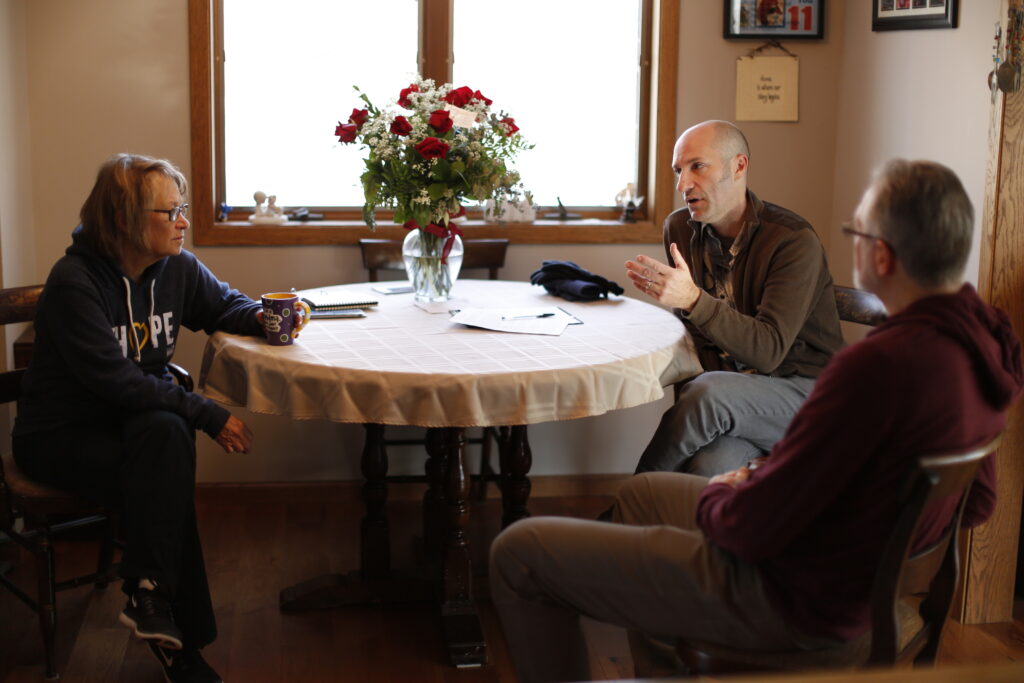
The great documentary filmmaker Laura Poitras had to work diligently to convince Pulitzer Prize-winning journalist Seymour Hersh to be the subject of one of her films. Most accounts and reviews of “Cover-Up,” the movie that would eventually be born from a collaboration between Poitras and co-director Mark Obenhaus, describe the famous investigator as a reluctant participant. Whether out of a desire to protect the identities of the often anonymous sources with whom Hersh interacts or a tendency to avoid revealing too much (or much of anything) about himself, Hersh’s skepticism layers the story with the overall aura of integrity that readers have associated with the man’s work since his reporting on the Vietnam War.

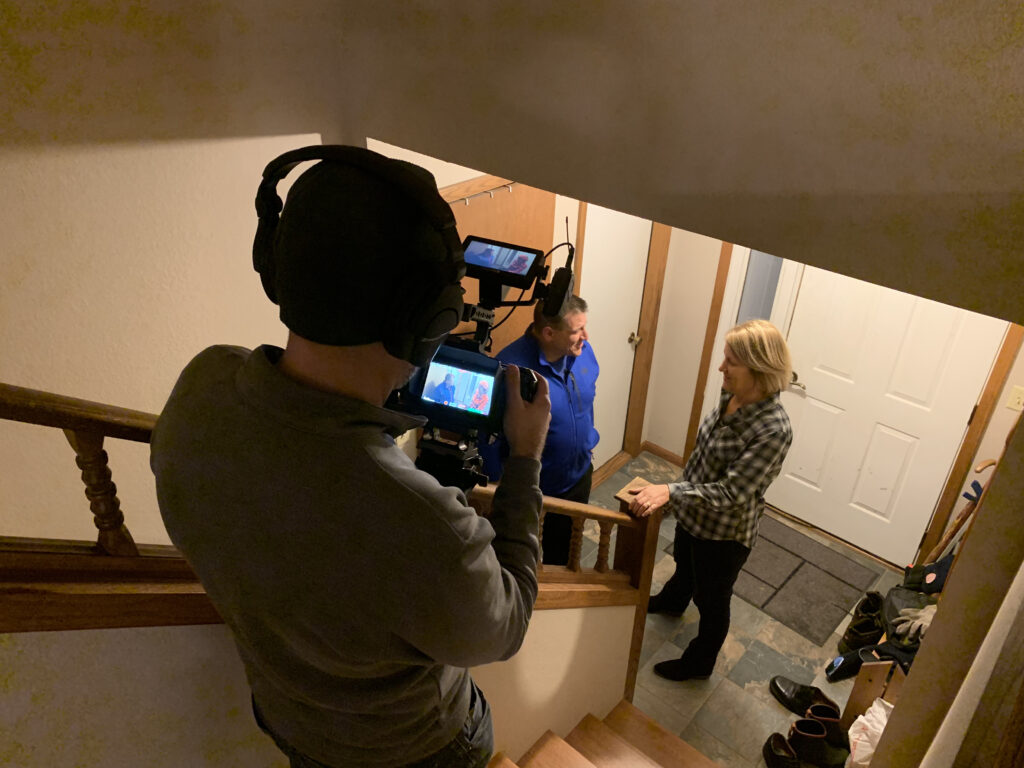
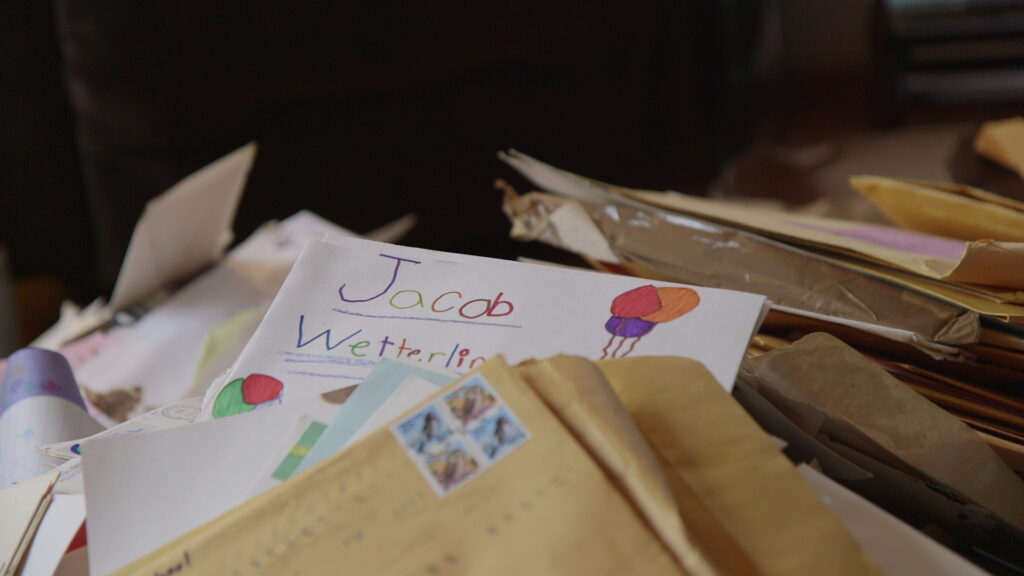
Poitras and Obenhaus are granted access to Hersh’s files and notes (the participation of Obenhaus, a longtime Hersh colleague, has been described as the factor that ultimately sealed the deal to finally get the movie made), and the filmmakers dig into their research in much the same manner Hersh would apply to his own dogged and indefatigable sleuthing. While the film focuses on the most significant milestones in the man’s decades-spanning career, “Cover-Up” includes a satisfying amount of personal background that humanizes Hersh with anecdotes about his childhood, including the astonishing tale of the decision for Seymour to work in the family dry cleaning shop on Chicago’s South Side because his folks only had enough money to send Seymour’s brother to college.

Fortunately, Hersh’s insatiable curiosity and thirst for knowledge would eventually lead him from Hyde Park High to the University of Illinois Chicago and the University of Chicago, where he would earn a history degree in 1958. In candid on-camera interview segments, Poitras and Obenhaus know when to get out of Hersh’s way, which is most of the time. The directors can’t possibly hope to uncover every aspect of their subject’s wide-ranging and very long list of important publications, but even the greatest hits should provide viewers with the raw material to inspire much-needed critical thinking. Some will surely long for more news-hounds in the tradition of Sy Hersh, especially in an age when it seems like every major media outlet is committed to controlling narratives that protect billionaire interests and owners.

The story of Hersh’s writing about the unconscionable war crime we call the My Lai Massacre – the largest confirmed mass killing of unarmed citizens committed by United States military forces in the 20th century – unsurprisingly emerges as one of the central segments of “Cover-Up.” Poitras and Obenhaus smartly connect the dots by keeping Hersh’s working methods as simple and straightforward as this kind of presentation allows. Poitras knows plenty about high stakes. Coverage of Edward Snowden and mass surveillance in “Citizenfour” (2014) put her own freedom at risk; Poitras has been repeatedly detained and harassed by the United States government.

“Cover-Up” addresses the elimination of a chapter from Hersh’s 1997 book “The Dark Side of Camelot,” recognizing that long before the firehose of disinformation and obfuscation reached its current levels of pressure, the verification of facts as an essential part of the journalist’s process can frustrate even the most careful writer. Without explicitly calling out the daily dose of Orwellian absurdities spewing from the mouthpieces of the current administration, Poitras and Obenhaus make clear that whistleblowers and leakers willing to trust people like Seymour Hersh are a vital resource in the forever war being waged on disclosure, accountability, and transparency.

Midwinter Break

HPR Midwinter Break (2026)

Movie review by Greg Carlson

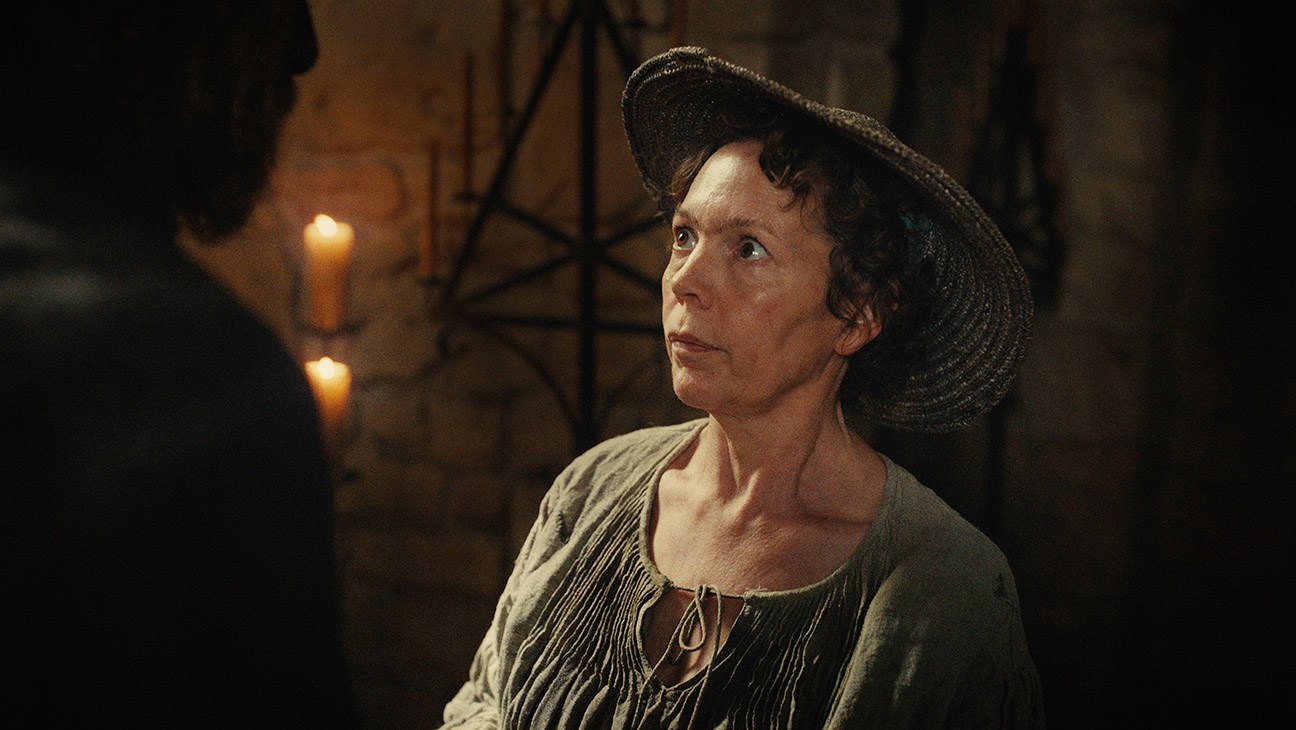
In what turns out to be a safe, sedate, and fairly dusty two-hander, novelist Bernard MacLaverty adapts his own 2017 book “Midwinter Break” with co-screenwriter Nick Payne. Experienced theatre director and first-time feature filmmaker Polly Findlay guides veteran talents Ciarán Hinds and Lesley Manville in their roles as Gerry and Stella, a long-married couple whose crumbling union reaches a critical point during an Amsterdam vacation. Admirers of MacLaverty’s original story, which alternates between the viewpoints of the key characters, may be more forgiving than audience members coming in cold, but Findlay’s reserved style only underlines the somnolence.

Although neither performer can be faulted for the steady, polished work delivered in “Midwinter Break,” Hinds and Manville have appeared in any number of far superior films. Both actors have been directed by Paul Thomas Anderson, who steered Manville to an Oscar nomination for her portrayal of the Mrs. Danvers-esque Cyril Woodcock in “Phantom Thread.” Hinds, as the principal character’s grandfather in Kenneth Branagh’s “Belfast,”  has also been nominated for an Academy Award. Together, they ring true as lovers who have grown cold and distant, even if they continue to treat one another with courtesy.

Rather than a complex and nuanced presentation of spousal disharmony, “Midwinter Break” opts for a hammer instead of a scalpel. Stella struggles to cope with Gerry’s fondness for alcohol while Gerry can summon little to no respect for Stella’s churchgoing and religious devotion. Periodically, flashbacks link the present to the past: Gerry and Stella, who currently reside in Scotland, left their home city of Belfast following trauma that haunts Stella decades later. The details of that fateful instant, which involve an unborn child and a desperate prayer, are not particularly revelatory, but Findlay stretches them out anyway.

Shot on location, “Midwinter Break” attracts the eyes of those who have been to Amsterdam and those who would like to go (hopefully, under more joyful circumstances than those experienced by Gerry and Stella). When not shown in their modest hotel room, the tourists take in the sights of canals and churches, strolling through the Red Light District in a scene that comes complete with amusing historical commentary. More sobering is the stop at the Anne Frank House, an experience that reminds Stella about the fragility of existence, the promise of children, and the inexplicable ramifications of violence on the innocent.

Even though it is nowhere near as singular as Nicolas Roeg’s hypnotic “Don’t Look Now,” “Midwinter Break” draws some unfavorable comparisons to the 1973 thriller adapted from the Daphne du Maurier short story. Both stories contemplate marital stress from the vantage point of geographical displacement in popular tourist destinations. Both films leverage spirituality and religious faith as counterweights to ongoing grief/guilt. The couples in both narratives take refuge in sex, despite ongoing internal and external strain on their partnerships. But “Midwinter Break” is familiar and uneventful where the far more impressionistic “Don’t Look Now” is consciously outré.

“Midwinter Break” isn’t designed to show off the domestic melodrama fireworks that juice so many memorable cinematic cousins, from “Scenes From a Marriage” to “Kramer vs. Kramer” to “Blue Valentine” to “Marriage Story.” The kind of long-simmering acrimony that ignites raging, tearful confrontations is, by design, held mostly in check by Findlay and her leads. I’m not necessarily arguing that scenery-chewing brawls are required for “Midwinter Break” to succeed. Hinds and Manville, however, deserve the kind of next-level dialogue worthy of their supreme skill.

Wuthering Heights

HPR Wuthering Heights Rain (1)

Movie review by Greg Carlson

Literature purists who will judge Emerald Fennell’s decadent, gorgeous, horny, and high-calorie interpretation of “Wuthering Heights” on the basis of its fidelity to the 1847 novel by Emily Brontë are certainly not the principal demographic sought by the new movie’s exhibitor. And anyone who admired the audacity of the Academy Award-winning filmmaker’s previous two features – “Promising Young Woman” in 2020 and “Saltburn” in 2023 – could have guessed that Fennell would certainly take the kind of wild liberties embraced by artists like Ken Russell and Baz Luhrmann and Sofia Coppola. The result is a personal recital that frequently discharges electric sparks, even if many of Brontë’s complexities and challenges are diminished.

The casting of current Oscar-nominee Jacob Elordi stirred up minor controversy based on Brontë’s descriptions of Heathcliff as a “dark-skinned gypsy,” but Fennell seizes on her “Saltburn” performer’s brooding intensity and stunning beauty. The always untrustworthy publicity machine, planting stories about the strain on co-star and three-time Oscar nominee Margot Robbie’s marriage caused by her steamy chemistry with Elordi, is as classic Hollywood as the physical looks of the pair. Decked out in costume designer Jacqueline Durran’s dazzling frocks and tailored finery that match the swells of Charli XCX’s fantastic songs and the anachronistic appointments of an opulent Thrushcross Grange, Catherine and Heathcliff look smart in any state of (un)dress.

Like many of the book’s cinematic adaptations, including William Wyler’s famous 1939 edition and Luis Buñuel’s 1954 “Abismos de pasión,” Fennell entirely skips the second half of the novel, depriving the audience of the relationship that develops between Catherine’s daughter Cathy Linton and Heathcliff’s son Linton Heathcliff. If only Brontë could have seen the havoc wreaked by her naming conventions on generations of readers! The core conflict is intact: Catherine betrays her love for Heathcliff by marrying Edgar Linton. Fennell also capitalizes on the dramatic return of a now-wealthy Heathcliff several years after the wedding, as well as the chaos resulting from the subsequent spite marriage of the brokenhearted Heathcliff to Catherine’s sister-in-law, although for some reason Fennell makes Alison Oliver’s Isabella the “ward” of Shazad Latif’s Edgar rather than his sibling.

Beyond that, the bets are off. The director goes all-in on a torrid affair between Catherine and Heathcliff that unfolds as between-the-lines and between-the-sheets lemon-shaded fanfic existing entirely outside Brontë’s boundaries. And for many, this will be the modification that makes or breaks one’s embrace and enjoyment of the Fennell variation. While I appreciate the radical and the innovative – “Wuthering Heights” has been brought to the small and big screen several dozen times, so why not try something fresh? – the mighty power contained within the adage “You can’t always get what you want” infuses the original story of the doomed lovers with spectacular energy. On the other hand, Fennell’s onscreen dollhouse metaphor extends to her own cinematic playroom.

In January of 1848, the reviewer published in “Douglas Jerrold’s Weekly Newspaper” anticipated 175+ years of fascination: “In ‘Wuthering Heights’ the reader is shocked, disgusted, almost sickened by details of cruelty, inhumanity, and the most diabolical hate and vengeance, and anon come passages of powerful testimony to the supreme power of love – even over demons in the human form.” Our filmmaker clearly understands at least this much, hot-wiring the toxicity and proximity of so much passion and loathing in a manner that I like to think would amuse Ms. Brontë in many respects.

For Fennell, moor is more.

The Best Summer

Mike Diamond and Tamra Davis appear in The Best Summer by Tamra Davis, an official selection of the 2026 Sundance Film Festival. Courtesy of Sundance Institute | photo by Tamra Davis.

Movie review by Greg Carlson

For the Generation X members obsessed with the incredible 90s music scene that gave us everything from the DIY exuberance of riot grrrl founding mothers Bikini Kill to the noisy NYC no wave of Sonic Youth to the evolutionary enlightenment transforming the Beastie Boys from bratty hip-hop pranksters to socially conscious elder statesmen, filmmaker Tamra Davis has something special in store for us. Not a lot of good came from the 2025 Palisades Fire, but one silver lining was the rescue of a box of Hi8 tapes shot by Davis during the 1995 Summersault tour featuring the mighty trio of outfits mentioned above, as well as Pavement, Beck, Foo Fighters, Rancid, and the Amps.

Thirty years later, Davis organizes and assembles the footage she recorded into “The Best Summer,” a perfect moment-in-time travelogue/diary/concert movie with enough no-pressure, behind-the-scenes home video joy to win the hearts of a new generation of fans waiting to discover some of the records loved by their parents (and, heaven help us, grandparents). Already a veteran music video director at the time of the tour, Davis spins gold from her stageside vantage, making absolute magic with her Sony’s built-in microphone and the rig’s approximate 400 lines of resolution. Brilliant color and sound, indeed.

Throughout “The Best Summer,” Bikini Kill’s Kathleen Hanna serves as a steady on-camera presence, using her gifts for interaction to draw fellow musicians into frequently revealing conversation. By the launch of the Summerault experience, Davis had already directed Hanna in the memorable clip for Sonic Youth’s “Bull in the Heather” and the short documentary “No Alternative Girls.” In a way that will resonate with and excite devoted admirers, “The Best Summer” feels in part like the discovery of a previously missing segment in that particular chapter of Hanna’s career. One of the movie’s motifs is a running account of the books being read by band members. Her genuine curiosity reinforces Hanna’s brilliance as our host and our guide.

In addition to the literary round-up, Hanna’s standard questions investigating the good and the bad of live performance and the conundrum of creating a stage persona versus sharing an authentic self lead to thought-provoking responses. All of these snapshots, which include chats with Kim Gordon, Thurston Moore, Stephen Malkmus, Dave Grohl, Beck, and others, stir up heady nostalgia punctuated by bittersweet and bitter changes wrought by time. The suicide of Kurt Cobain, still being processed by his friends when Summersault took place, is an elephant in the room. Gordon and Moore would finalize their divorce in 2013. Davis and Mike D have been separated for years. Adam Yauch died in 2012.

But Davis calls the movie “The Best Summer” for a reason. Golden sunshine radiates from the scene in which a flirtatious Hanna interrogates a nervous Ad-Rock at the genesis of their romantic relationship. They are still together. And performances of “Winnebago,” “Radio,” “Girl Dreams,” “Washing Machine,” “Elevate Me Later,” “Pacer,” “Sabotage,” and many others will leave you scrambling to warm up your turntable or build your playlist. I really hope Davis finds a way to bring the movie from Sundance to a physical media release so our best summer can last all year long.

H Is for Hawk

HPR H Is for Hawk (2026) copy

Movie review by Greg Carlson

A little more than a decade following the publication of the popular Helen Macdonald memoir upon which it is based, a feature film version of “H Is for Hawk” starring Claire Foy has been theatrically released in the United States following a 2025 world premiere at Telluride. Directed by Philippa Lowthorpe from a screenplay she co-wrote with “Room” novelist Emma Donoghue in collaboration with Macdonald, the movie joins the class of thoughtful narratives focused on grief and grieving. Macdonald’s rather unconventional decision to adopt and train a goshawk after the death of their father provides the principal story arc on both page and screen. Lowthorpe handles the understated and occasionally subdued emotional peaks and valleys with a steady hand.

As a cinematic experience, nobody will mistake “H Is for Hawk” for “Hamnet,” Chloé Zhao’s much more robust, complex and visually resplendent exploration of the impact made on the living by the death of a loved one. The loss of a parent versus the loss of a child cannot, of course, be precisely equated, which unbalances the equitability of the comparison. Even so, the primary strength in Lowthorpe’s movie is located in the evolving relationship between Foy’s Macdonald and the magnificent raptor named Mabel. Together, person and bird form a formidable team, their bond a tribute to Helen’s late father Alisdair (Brendan Gleeson), the well-known photojournalist and newspaperman who regularly took pictures of the Beatles.

Anytime Helen and Mabel go to work together, “H Is For Hawk” soars to its most satisfying heights (pun intended). Less convincing in the film than on the page, however, are quotidian expressions of Helen’s behaviors in daily tasks while struggling mightily to process the gaping void left by their dad’s sudden departure. Though no fault of Foy, who navigates these choppy waters with believability, the movie stumbles through multiple reiterations of Helen’s mental numbness. Close friend Christina (Denise Gough, so brilliant recently as Dedra Meero on “Andor”) supports Helen even when hygiene and housekeeping are casualties.

Any movie that explores a connection between a human and a bird of prey will inevitably be measured (fairly or not) against Ken Loach’s 1969 masterpiece “Kes.” Like Lowthorpe’s film, “Kes” was also based on a book, but the scope of Loach’s formidable ambitions as embodied in the filmmaker’s fierce critique of a cruel and inequitable education system exists on an entirely different level than the prestige and privilege affiliated with Macdonald’s teaching and research at Cambridge. The art of falconry serves both movies as the key metaphor that, among other things, visualizes transcendence.

The possibility of “H Is for Hawk” sending interested viewers in search of “Kes” would be a win. And some of that credit would belong to veteran Danish cinematographer Charlotte Bruus Christensen and wildlife image-maker Mark Payne-Gill. With expertise and assistance provided by falconers Lloyd and Rose Buck, the superb images of Mabel (played by several avian performers) in flight are undoubtedly the strongest endorsement for a screening of Lowthorpe’s film. One sequence in particular, an up-close look at the goshawk’s first extended hunt in the woods, is well worth the price of admission.

28 Years Later: The Bone Temple

HPR Bone Temple (1)

Movie review by Greg Carlson

The versatile Nia DaCosta follows her underseen and underappreciated “Hedda” (one of my 2025 favorites) with the first female-helmed entry in the 28 Days/Weeks/Years Later series, a fascinating and grisly memento mori called “28 Years Later: The Bone Temple.” Featuring a mesmerizing performance by an all-in Ralph Fiennes, reprising his role as Dr. Ian Kelson, DaCosta’s violent, vicious, and bloody chapter also brims with intelligence, visual beauty, and even a measure of unexpected grace in the unlikeliest of places. Alex Garland’s re-imagining of George Romero’s foundational and groundbreaking modern ghouls as fast-moving, zombie-like marauders infected by the Rage Virus continues to surprise and delight genre fans, no mean feat in one of horror’s most overworked categories.

Inaugurated in 2002 by the formidable team of screenwriter Garland, director Danny Boyle, and producer Andrew Macdonald, the saga today feels even more terrifyingly parallel to the unsafe, precipice-of-disaster dystopian hellscape currently tormenting American citizens. “The Bone Temple” takes place in the incongruously lush valleys and rolling hills of Northern England. The rural location of the Yorkshire Dales provides both budgetary relief as well as a striking contrast to city-set films. The title structure, hauntingly introduced in the previous chapter, plays an even bigger role this time, serving as the site of the climactic showdown between Kelson and the Jimmy Savile-inspired cult/gang leader Sir Lord Jimmy Crystal, the sadistic killer played to perfection by Jack O’Connell with the same degree of chilling commitment he brought to Irish vampire Remmick in “Sinners.”

Young Spike (Alfie Williams), now caught in the teeth of reluctant membership in Lord Jimmy’s merciless crew, must comply with awful instructions as a matter of survival. Spike’s experiences continue to be presented as the locus of audience identification, even though Kelson arguably takes over as the central protagonist of the new installment. Alongside Spike as one of Lord Jimmy’s seven “fingers” is Erin Kellyman’s Jimmy Ink, whose sensitivity to Spike’s plight sets her apart from the rest of the thugs eager to flay and slay any unfortunates who come into contact with the deranged scavengers. Jimmy Ink’s willingness to defy Lord Jimmy keeps the viewer invested by reminding us that anything could happen at any moment.

Kelson’s relationship with the hulking, infected Samson (Chi Lewis-Parry) arrives at a surprising conclusion. In one of the movie’s most poignant scenes, we learn that the supply of morphine and antipsychotics used by the physician to calm the dangerous Alpha is quickly running out. Amidst the downward spiral toward abject hopelessness, a small glimmer of light shines: Could Kelson’s drug cocktail be a roadmap to a Rage Virus cure? Even though Fiennes will soon have the opportunity to pull out the stops, the calm tenderness with which he communicates with Samson paints his character in subtle shades.

Kelson’s devotion to the construction of the title necropolis suggests the simultaneous presence of madness and the radical act of warding off despair. The irony and paradox of human mortality versus transcendent eternal life manifests in Kelson’s project, a monument of a piece with the real-life locations written about and photographed by Paul Koudounaris in his definitive 2011 book “Empire of Death: A Cultural History of Ossuaries and Charnel Houses.” The Bone Temple attracts the attention of Lord Jimmy, leading to a tour de force Black Mass parody underscored by Iron Maiden’s “The Number of the Beast” in one of contemporary horror’s most enthralling set pieces.

The Mastermind

HPR Mastermind (2025)

Movie review by Greg Carlson

There is a great scene in the middle of Kelly Reichardt’s excellent movie “The Mastermind” when protagonist James Blaine Mooney (Josh O’Connor) is chastised by criminally-connected wheelman Jerry (the wonderful Matthew Maher), who dresses down the would-be art thief for his gross incompetence and naivete. J.B., whose goose by now is seemingly cooked, sulks in the back seat while Jerry chuckles at all the mistakes that led his passenger to failure. The perpetually masterful Reichardt drops this moment as an absolute bonbon of viewer catharsis as Jerry verbalizes everything we have been thinking in regard to the privileged and materially comfortable family man.

O’Connor, who had another very good year in the movies, possesses a combination of skill and fortune that continues to work to his great advantage. He has already been directed by several master filmmakers and it feels like even bigger things are on the horizon. I like the risks he takes as J.B., whose self-centeredness is eclipsed by equal measures of middle class idleness and a lack of personal responsibility. O’Connor has an immediate grasp of J.B.’s weaknesses, and Reichardt, as usual, fashions a story that keeps stoking our curiosity even as we aren’t entirely certain how much to root for our protagonist.

Why does J.B. steal four abstract paintings made by American artist Arthur Dove from the (fictional) Framingham Museum of Art? Reichardt is most assuredly too good to spell out a single, simple answer. Instead, the filmmaker depicts a series of events deliberately inviting many more questions. At first, I wondered why Reichardt didn’t use Alana Haim’s Terri to more directly challenge the choices of her irresponsible husband. But what is unspoken or unsaid can so often be every bit as powerful as a tense argument or explosive altercation. This is certainly the case regarding the unfair share of emotional and domestic labor assumed by Terri in J.B.’s absence.

By including several essential scenes with sons Carl and Tommy (played by real-life twins Sterling and Jasper Thompson), Reichardt extends her deconstruction of the heist movie to contemplate generational family dynamics. The frustrating and difficult relationship J.B. has with his own father William (Bill Camp) looks to be repeated as he disappoints and alienates his own offspring. As J.B.’s mother, Hope Davis steals each of her scenes. We can instantly recognize the kind of parent whose unconditional love for a child obscures the harsh reality of their failures and shortcomings.

Reichardt uses history by suggestion to perfection, setting the action in 1970 while protests against the Vietnam War saw young and old take to the streets in opposition to the conflict. Throughout the story, the war lurks at the fringes and in the background on television news reports until a climactic scene results in a reversal of J.B.’s fortune that takes away one’s breath for the brilliance of Reichardt’s timing and its hiding-in-plain-sight anamorphosis. Like all of her movies, “The Mastermind” invites repeated viewings to appreciate the care and craftsmanship applied by Reichardt to her always distinctive worlds.

Darkest Miriam

HPR Darkest Miriam (1)

Movie review by Greg Carlson

Writer-director Naomi Jaye adapts fellow Canadian Martha Baillie’s 2009 novel “The Incident Report” as a potent and introspective character study. Retitled “Darkest Miriam,” Jaye’s movie stars Britt Lower as a Toronto librarian quietly observing a parade of quirky patrons whose behavior occasionally necessitates the filing of official workplace memos. Bibliophiles and public library supporters might represent some of the likeliest potential fans of the rewarding film, but Jaye cultivates an intimate human connection between Lower’s Miriam and a Slovenian taxi driver/artist played by Tom Mercier that humanizes the frequently inscrutable title protagonist.

Lower, the most recent recipient of the Primetime Emmy Award for Outstanding Lead Actress in a Drama Series for her work on “Severance,” cloaks Miriam in an unflappable stoicism and detachment that might otherwise be interpreted as inscrutable numbness. Well into the story, the viewer comes to understand that Miriam is still processing her feelings about the recent death of her father. Jaye trusts Lower and the audience by resisting any urge to explain in detail the concrete markers of Miriam’s unexpected risks and choices (like her bold and emphatic seduction of Mercier’s Janko), and the choice pays off by drawing us deeper into the main character’s experiences.

As Miriam explores a romantic relationship with Janko, oddly specific notes seemingly written directly to her begin to turn up in the pages of books she reshelves. These mysterious letters could easily suggest the ominous presence of a creepy stalker/watcher, and at one point, Miriam deals with the uninvited physical closeness of a library patron. But interestingly, Jaye veers in the opposite direction of a conventional thriller, electing to foreground Miriam’s resolute agency and leave the impact of the notes on Miriam to the imagination. The result is a kind of unspoken sympathy for some of the frequently vilified regulars who take comfort in the welcoming and egalitarian idealism of the public library space.

Many of these people are identified by traits that might end up in one of the incident reports processed by Miriam or one of her colleagues while others are labeled simply by physical features or how they use the library. We meet Suitcase Man and Desperate Man and the Unusually Pale Female Patron. Other guests include Beautiful Young Man, Fainting Man, and Piano Mom and Piano Girl (who uses the library’s practice room; Jaye develops an intriguing motif through references to specific musical compositions). When Miriam fills out a report, she often writes “none” in the “action taken” box.

While it is fair to read that lack of action as a wry commentary on Miriam’s own stasis and emotional paralysis, another possible interpretation suggests a strong sense of humanism for the folks who spend many hours in the library. Andrew Parker shrewdly notes that the “open displays of poverty and hardship” glimpsed around the adjacent Allan Gardens Conservatory extend to Miriam’s workplace, where many seek “refuge from the rest of the city.” Additionally, Jaye sculpts plenty of humor in the midst of some heavy, serious, and grim realities faced by Miriam.

“Darkest Miriam” premiered at Tribeca in 2024 and is now available to view on Tubi.

The Testament of Ann Lee

HPR Testament of Ann Lee (2025)

Movie review by Greg Carlson

Director Mona Fastvold’s “The Testament of Ann Lee” frequently writhes and gesticulates with a hypnotizing mysticism that mirrors the fervor of its title character. At its absolute best when reaching for the strange and inexplicable, the movie – stunningly photographed by William Rexer – also shrinks and retreats when focused on the more basic historical outlines of the early development of the Shaker faith in the northwest of England and then New York in the late 1700s. Presented as a quasi-musical with choreographed numbers that draw from original hymns and showcase new songs by composer/arranger Daniel Blumberg (who received an Oscar for his work on “The Brutalist”), “The Testament of Ann Lee” features a powerful, career-best lead performance by Amanda Seyfried.

As a curious period piece of relocation to America, “The Testament of Ann Lee” makes an intriguing companion to “The Brutalist.” Fastvold and partner Brady Corbet co-wrote both films, which often vibrate with resplendent visual storytelling and bold ambition. At 215 minutes, “The Brutalist” tested the patience of several otherwise impressed critics (and plenty of viewers). “Ann Lee,” at 137 minutes, is tight by comparison, but the new movie will also face claims that the whole operation might have been better served by a leaner running time. Fastvold has a tendency to repeat/recycle some narrative elements, looking for a balance of vibes versus plotting that doesn’t always click.

As Lee, Seyfried anchors a solid supporting cast that includes the always dependable Thomasin McKenzie as friend Mary Partington, Lewis Pullman as Ann’s brother William, and Christopher Abbott as Ann’s frustrated husband Abraham. Tim Blake Nelson shows up late in the story as Pastor Reuben Wright. Fastvold will use a variety of obstacles, both human and in the form of social constructs, as villains. Saving the most significant violence for the last sections of the movie, the director harnesses the irony of angry citizens acting in opposition to the Shakers as a means to cultivate sympathy for the eccentric worshipers.

While Fastvold’s devotion to the single-minded odyssey of her central character earns respect, one wonders whether closer consideration of Ann’s inner thoughts would have opened the gates to a more satisfying arc. We come to understand Ann’s total commitment to the celibacy that counters the procreation/multiplication doctrine linked to so many sects, Christian and otherwise. I was one of many kids who, upon learning of Shakers in Sunday school and history class, couldn’t wrap my head around the beliefs of a group that would quickly go extinct if all the members adhered to the directive to forsake marriage and renounce “lustful gratifications.”

The film deals to some degree with this conundrum, but Fastvold is much more successful in communicating how a charismatic leader with total commitment to a cause draws others to herself and to the fold. Lee’s rejection of Abraham as a sexual partner and husband in a position of authority pairs with the heartbreaking and unfathomable loss of four children in infancy to underline the director’s feminist themes. Seyfried infuses Ann Lee with an iron-willed conviction to build a more perfect world. Whether we read her actions as a shrewd and canny roadmap to bodily autonomy and independence from tradition or as the ecstatic lunacy of a false prophet, the figure of Mother Ann is a force of nature and a force of spirit.

The New Yorker at 100

HPR New Yorker at 100 2 (2025)

Movie review by Greg Carlson

Available on Netflix, Marshall Curry’s “The New Yorker at 100” takes the measure of the venerable publication as a compact primer aiming to please longtime readers and potential new converts. The Oscar-winning filmmaker toggles between key historical moments and the preparation of the magazine’s centennial issue, following several personalities devoted to the care and keeping of the special recipe that has enthralled us decade after decade. The grouchiest killjoys have attacked the film on the grounds that it functions as a self-congratulatory puff piece/promo, but Curry – facing the impossible task of sifting through mountains of archival treasures – understands the assignment. “The New Yorker at 100” entertains and educates in much the same manner as its namesake.

One can quibble with the selection of on-camera celebrities (Molly Ringwald, Jesse Eisenberg, Jon Hamm and Sarah Jessica Parker among them) called upon to share personal connections to the magnetic power of “The New Yorker,” but every aficionado who has fallen under the spell of one or more quintessential elements will happily reflect on when and how the magazine came into their lives. For the teenage me, a newfound interest in film criticism led to Pauline Kael collections and then to PK’s regular columns, both found in hard copy at the Moorhead Public Library in the 1980s. Current editor David Remnick notes that some readers come for the fiction while others skip it entirely. Another segment is devoted to the fire hose of cartoon submissions being winnowed to those few that make the cut.

“The New Yorker” does not have the most progressive track record when it comes to a spectrum of racial representation beyond the narrow gentility of its overwhelmingly white liberalism. Curry’s inclusion of the seismic impact of James Baldwin, which overlaps with commentary from Hilton Als (who speaks about the value of seeing someone like himself represented on the magazine’s pages) is an abbreviated start. It would take a different kind of film, however, to unpack the slow-to-change shortcomings on either side of the civil rights movement. The documentary fares better when touching on eye-opening long-form features like John Hersey’s 1946 “Hiroshima” and Rachel Carson’s 1962 “Silent Spring,” game-changing stories that moved the needle of public perception and opinion.

Since founders Harold Ross and Jane Grant established a tone and style that embraced a certain elitist sophistication while simultaneously poking snobbishness with a sharp pin (or at least trying not to take itself too seriously), “The New Yorker” has labored to have and eat its rich and creamy cheesecake. Outside of Remnick and beloved office manager Bruce Diones, Chimamanda Ngozi Adichie comes closest to a satisfying explanation of the Janus-faced contrasts of the high and low. Curry extends that line of inquiry with a look at the intense fact-checking tradition and idiosyncratic in-house style guide quirks that drive some staff writers to the brink of madness.

A quick glance at reviews of Curry’s film reveals a motif: there’s a good chance your favorite writer was omitted or barely mentioned. And even though I would have liked a little more Kael and a little less Richard Brody, I totally get it. “The New Yorker at 100” is a snapshot and a time capsule and another “issue” in the unfolding evolution of a really wonderful idea. A few weeks ago, an edited version of Jelani Cobb’s conversation with Curry and producer Judd Apatow offered readers a “making of” glimpse at the construction of the documentary. Together, they considered the brutality of killing one’s darlings by citing several tantalizing scenes left on the cutting room floor. When it comes to “The New Yorker,” some good stuff inevitably gets left out.