Movie review by Greg Carlson
The cinematic precocity of director Kane Parsons is quickly emerging as one of the year’s big moviemaking stories. The 20-year-old filmmaker’s “Backrooms,” an unsettling journey through the looking glass, has frequently been cited in tandem with Curry Barker’s recently released “Obsession.” Barker is Parson’s senior by six years, and according to several web-based outlets including “The Hollywood Reporter,” the two filmmakers hold the record as the youngest directors to top the domestic box office. Even more remarkable: their YouTube backgrounds as largely self-taught, DIY storytellers allowed for relatively low-risk micro-budget investments that are already returning massive profits.
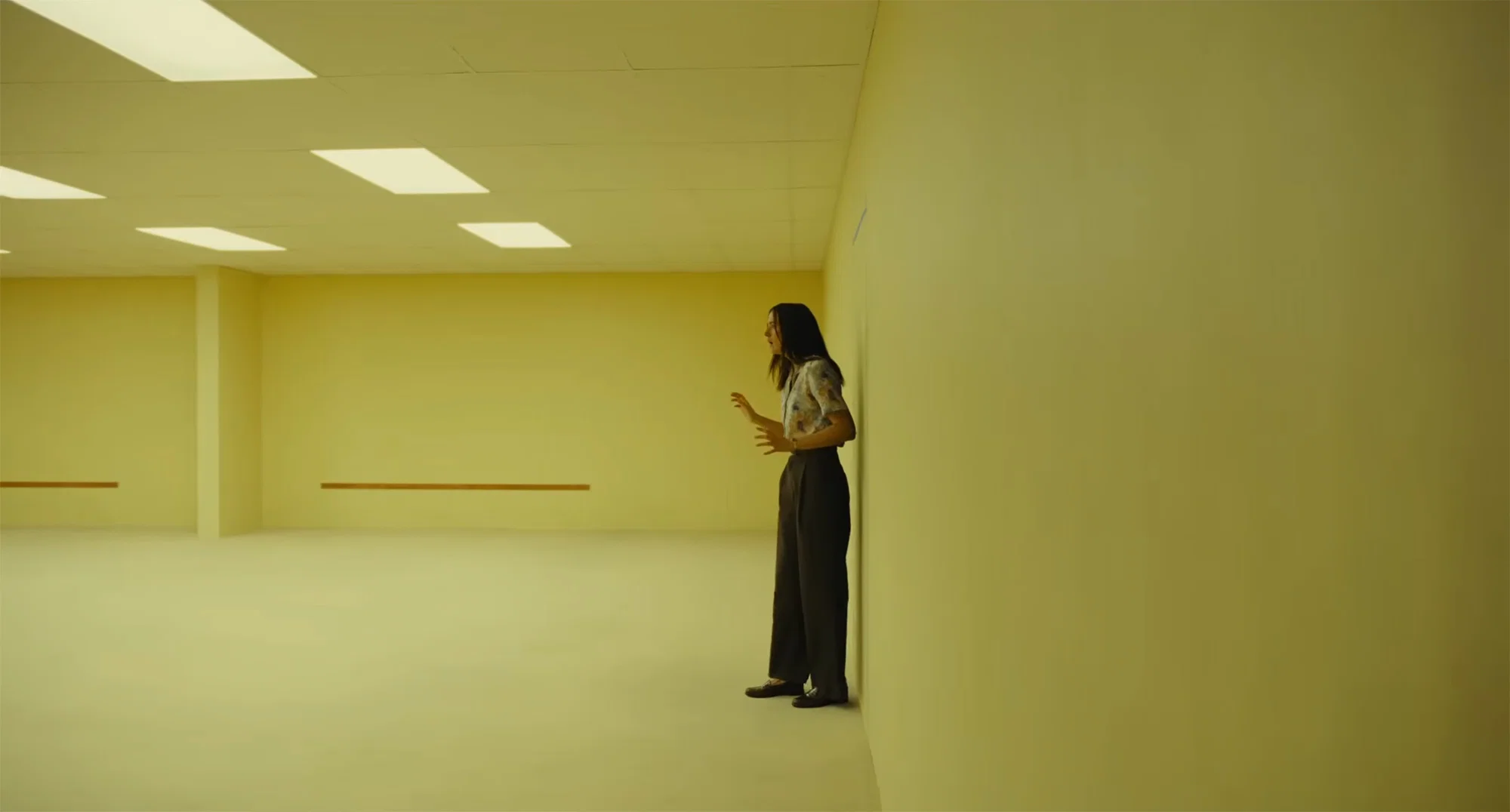
“Backrooms” earned back its estimated 10 million dollar production budget in previews and swiftly became A24’s biggest opening to date. The movie follows the grim descent of a failed architect who comes apart at the seams when he discovers an endless labyrinth of M. C. Escher-like impossibilities in the basement of the furniture store he manages. The style is inseparable from the substance. Developed from Barker’s multipart found footage series inspired by a 2019 4chan thread, “Backrooms” features a pair of Oscar-nominees in the central roles: Chiwetel Ejiofor as the alcoholic Clark and Renate Reinsve as Clark’s therapist Mary Kline.
Ejiofor and Reinsve commit to their characters with the typical gravitas they bring to so many of the inspired choices on their equally promising filmographies. Screenwriter Will Soodik is credited with the final iteration of the screenplay, but “Backrooms” clearly soars thanks to the participation of Ejiofor and Reinsve. Certainly, not every viewer will appreciate the biggest narrative risk, a leap taken fairly deep into the story, but Parsons smartly pins enough emotional weight to each of his two leads. Our investment in Mary, encouraged by flashbacks to childhood memories eerily linked to the furniture showroom location, accelerates when she goes looking for Clark in the disquieting catacombs.
Using the word liminal or liminality to describe the disorientation that accompanies both physical and emotional disequilibrium corresponding to sites of the “in-between” has morphed well past Arnold van Gennep’s original coinage (concerned initially with rites of passage) to its current application. With multiple subreddits, websites, and channels devoted to the rabbit-hole intrigue of interior and exterior thresholds, the popularity of the liminal space will surely get a boost from “Backrooms.” Whether intentional or not, Parsons owes a huge debt to all-time masters like Stanley Kubrick and David Lynch, who frequently dined on the potential found at the borders of no man’s land.
Some cinephiles will surely quibble with the audacious notion of elevating neophyte Parsons too hastily to the ranks of master filmmakers. To my own eyes, the director’s slow-cinema patience inside the maze underneath Cap’n Clark’s Ottoman Empire is, at the very least, a triumph of production design enhanced by shrewd camera placement that puts the movie’s complex of mostly empty rooms and passageways in conversation with the Overlook Hotel and the Black Lodge. “Backrooms” gets by on vibes for much of its duration and that is perhaps as it should be. The gradual increase in explanations tilts toward a decrease in the mysterious and the uncanny.