Napoleon Dynamite

Napoleondynamite1

Movie review by Greg Carlson

A thoroughly disjointed collection of weird sketches and odd circumstances revolving around a superbly awkward teenager navigating high school hell, “Napoleon Dynamite” bursts with a remarkable gift for observational detail.  Already drawing frequent comparisons to Todd Solondz (accurate) and Wes Anderson (not so accurate), first time feature director Jared Hess follows in the footsteps of filmmakers who ferociously document elements of their own experiences in ways that allow everyone to recognize something eerily familiar.  Freshening up the archetypal isn’t exactly easy, and Hess does not always succeed with “Dynamite,” but the movie is so unique that its quirky universe has a way of sticking with you for weeks at a time.

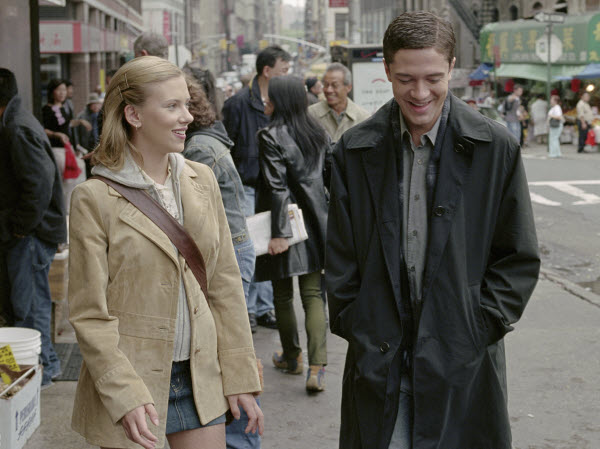
Jon Heder plays the title character, and his performance is as terrific as it is creepy.  With his tight-fitting thrift store t-shirts, jeans, and moon boots, Napoleon seems to instinctively sense that clothes can indeed make the manchild.  Given to machine-gun outbursts of fatuous lies (he claims to have spent his summer vacation hunting wolverines in Alaska) and jerky, sudden movements, Napoleon endures the cultural vacuum of rural Idaho (although the movie could be set in darn near any small town) with a sort of stoic optimism.  Even though his pencil drawings indicate that he has no eye for depth, perspective, or line, Napoleon is sure that his renderings of unicorns, warriors, and attractive classmates will be recognized as amazing by those lucky enough to see them.

When Napoleon’s very active grandmother does something unfortunate to her coccyx (to borrow a line from Steve Coogan), she sends sleazy Uncle Rico (Jon Gries) to babysit, even though Napoleon’s brother Kip (Aaron Ruell, stealing scene after scene) also lives at home and is 32 years old.  Even though the movie feels like it is set in the mid 1980s, Kip constantly scours online chatrooms in search of a soul mate.  He gives up his seat behind the monitor just long enough to embark on some door-to-door food container salesmanship with Rico.  Napoleon resents the team-up, and tries to raise some money of his own by taking a job at a poultry farm.  Needless to say, it doesn’t exactly work out.

At school, Napoleon bonds with new kid Pedro (Efren Ramirez) and the shy Deb (Tina Majorino).  Before you know it, Pedro has mounted a campaign to run for class president, and Napoleon eagerly accepts the management position, with the idea that he could eventually be in charge of security in the event Pedro wins the election.  The depths of Napoleon’s ineptitude are bottomless – a poster-hanging montage set to the theme song from “The A-Team” is hilarious – but Hess always finds a way to make you believe that even the wildest dreams can come true at the most unexpected moments.  The director probably should have skipped shooting the bonus ending that was attached to prints when the film earned a wider release, but stay all the way through the end credits to see what could just as well be the contents of Napoleon’s rich fantasy life.

“Napoleon” works as a fractured fairy tale, even though Hess fails to satisfactorily negotiate the fine line between laughing at and laughing with the characters.  The movie’s resolution also sneaks up too fast, and without the proper prelude.  The whole last act is tremendously funny, but would Napoleon’s otherworldly dance routine really trigger the admiration of his classmates?  Hess finds a few exhilarating moments that really indicate his strong sense of visual storytelling, such as Kip’s exit and Napoleon’s tetherball game with Deb, but the script (which Hess wrote with his wife Jerusha Hess) leaves you wanting just a little bit more.


Coffee and Cigarettes

Coffeeandcigarettes1

Movie review by Greg Carlson

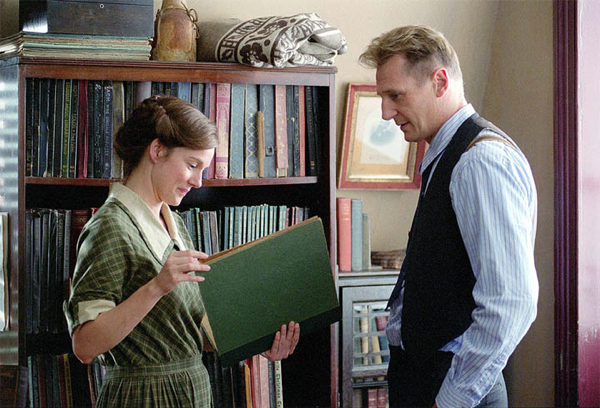
Jim Jarmusch, who has made a habit out of depriving his hardcore fans of regular movie treats (his last film was the brilliant “Ghost Dog: The Way of the Samurai” in 1999), groups together eleven short subjects to make a feature out of “Coffee and Cigarettes,” an interesting and occasionally inspired omnibus populated by Jarmusch’s usual parade of incomparably hip talents. The basic set-up: people conversing in diners, cafes, bars, dives, and other smoking-allowed environs over the caffeine and nicotine-laced items of the title, provides Jarmusch with the perfect opportunity to show off his jazz-like penchant for verbal riffs, complete with harmonies, melodies, solos and recapitulations.
Black and white are the only two colors Jarmusch has ever really needed, and as usual, the rich cinematography (provided by Tom DeCillo, Ellen Kuras, Freddie Elmes, and Robby Muller) is uniformly radiant.

The film’s original segment, which was shown once upon a time on “SNL,” stretches back to 1986, and features a paradox of personalities in its coupling of somnambulant comic Steven Wright and hyperactive Roberto Benigni, who struggle with a language barrier that makes their conversational comprehension as shaky as their java-jolted nerves. One of the movie’s better segments, it prepares viewers unfamiliar with Jarmsuch’s droll, ironic style for what is to come.

It could be immediately argued that each of the segments would work better on its own, but Jarmusch often repeats thoughts, ideas, and even lines of dialogue in ways that unify the whole assemblage. Meg White and Jack White of the White Stripes discuss in some detail the physics theories of Nikola Tesla, and later, Jarmusch will return to the rather beautiful notion that the entire world is a “transmitter of acoustic resonance.” When he does, with Bill Rice and Taylor Mead in the final section, the payoff of their dialogue is heartfelt and bittersweet.

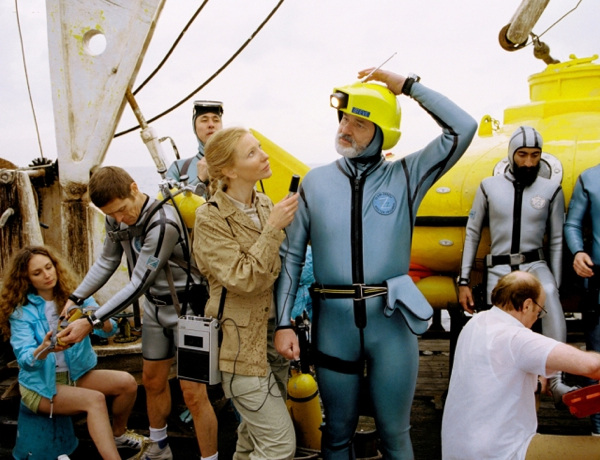
The strongest exchanges comment with subtlety on the odd nature of fame. Iggy Pop and Tom Waits circle around like dogs, trying desperately not to look hurt when each is deeply insulted by the other. Bill Murray sits down with the Wu Tang Clan’s GZA and RZA, who cannot believe that “Groundhog Day, Ghostbustin’ Bill Murray!” is waiting tables. Cate Blanchett plays a dual role, capturing the essence of a movie star and her not-famous cousin, who clearly envies and loathes the privilege that accompanies notoriety and wealth. Alfred Molina and Steve Coogan deliver a clinic on comic timing in their sketch, a commentary on the self-involvement and narcissism that can make celebrities so repugnant when they are off-screen; it is by far the best constructed of the film’s chapters.

Not everything works as well as it should, and some sections struggle to keep up with others. Renee French and E.J. Rodriguez leave you wanting something much more satisfying (despite being the ne plus ultra of Jarmusch’s dizzying demonstration of awkward silences and pregnant pauses). Alex Descas and Isaach de Bankole don’t manage to pull off the right tone for their play on the insecurity and paranoia that can occur between friends. Steve Buscemi, Joie Lee and Cinque Lee have a juicy script that puts Jarmusch’s occasional Elvis fixation at the heart of a tense debate on race, but the piece can’t find the right balance between comic playfulness and social-minded critique. Despite their minor shortcomings, however, the vignettes of “Coffee and Cigarettes” are likely to please longtime Jarmusch devotees as well as newcomers looking for something out of the ordinary.


I, Robot

Irobot1

Movie review by Greg Carlson

Nobody is going to mistake “I, Robot” for either great storytelling or important filmmaking.  The film’s director, Alex Proyas, honed his skills while making sumptuous (but empty-headed) eye candy like “The Crow” and “Dark City.”  Like those movies, “I, Robot” is long on style, short on ideas.  The film’s lack of brainpower is a real shame, however, considering that its basic source material – courtesy of Isaac Asimov’s stories dealing with the Three Laws of Robotics – should have fueled weightier ruminations on technology, humanity, and artificial intelligence.  Instead, audiences are left with a noisy action cop movie filled out with car chases, explosions, and mobs of computer-generated metal men battling humans in hand-to-hand combat.

Del Spooner (Will Smith) is a tough Chicago police detective in 2035, and unlike the rest of the human population, he does not trust the robots who toil as the servants, employees, and companions to their flesh and blood masters.  Robots, we are told more than enough times in the first act, are incapable of harming people, but Spooner has a hunch that the latest wave of product to roll out of the Microsoft-esque U.S. Robotics Corporation is coming awfully close to erasing the line between human and nonhuman.  Of course, the reasons for Spooner’s extreme prejudice against walking, talking machinery will be revealed (as a virtual afterthought) later in the movie.  As for the potentially interesting subject of race relations, “I, Robot” remains silent.

While investigating the death of an old friend – a research scientist (James Cromwell) who worked for U.S. Robotics – Spooner becomes increasingly convinced that the man’s killer was a robot.  Naturally, this utterly defies existing logic, which places Spooner at odds with his boss (Chi McBride) as well as Dr. Susan Calvin (Bridget Moynahan), another U.S. Robotics scientist with an unshakable faith in the Three Laws.  Things begin to get interesting when Sonny (Alan Tudyk), the robot suspected of murder, demonstrates that not only can he think for himself, he also has the ability to dream and exhibits the characteristics of free will.

Is Sonny good or evil?  What secrets do U.S. Robotics and its sinister CEO Lawrence Robertson (Bruce Greenwood) want to keep?  “I, Robot” is too focused on its own slam-bang action sequences to expend much effort addressing these and other more challenging questions and ideas.  When the movie does get around to considering the implications of whether or not there are ghosts in the machine, it flickers with the sort of excitement one feels when thinking about a superior film, like “2001: A Space Odyssey.”  Sonny is not afforded enough screen time to really dig in to the ethics of his treatment by others.  He wants to be loved, but he doesn’t understand why he wants to be loved.

Sonny’s dilemma might have been the subject of another movie altogether, but the demands of 20th Century Fox’s marketing strategists remain resolutely focused on delivering a “product” that resembles hits we’ve seen before, from “The Matrix” to “Robocop.”  “I, Robot” resembles those two movies more than “2001,” and it is too bad it could not have existed in a happy medium.  Doing sci-fi is easy, but doing sci-fi well is difficult.  Even Spielberg’s somber, overlong “A.I.” failed to improve on Kubrick’s earlier work.  Someday, somebody will make a great film about machines crossing over into consciousness.  “I, Robot” is not that movie.


Anchorman: The Legend of Ron Burgundy

Anchorman1

Movie review by Greg Carlson

“Anchorman” is one of the strangest, funniest, and most oddly satisfying comic vehicles to appear in a long time. Granted, you must be a fan of Will Ferrell in order to enjoy the film – if you don’t like him, you are in for a very long hour and a half. Continuing to capitalize on his big screen successes in “Old School” and the smash hit “Elf,” Ferrell pulls out all the stops with title character Ron Burgundy, a Scotch-swilling male-chauvinist moron who happens to be the most popular news reader in 1970s San Diego. Burgundy’s world is turned upside down when he begins to experience genuine feelings for his new co-worker, the smart and talented Veronica Corningstone (a solid Christina Applegate).

Despite casting her lot in the male-dominated local news business, Veronica is driven, and knows that she can become the first woman to anchor a network news program. Ron, clueless and self-absorbed to the point of ridiculous hubris, honestly believes that Veronica doesn’t have a chance, and after an embarrassing workplace erection and a gonzo turn on the jazz flute at a local nightclub, ends up successfully wooing her. Of course, co-screenwriters Ferrell and Adam McKay are only warming up, and both men know that Ferrell the performer is at his most brilliant when playing broken, devastated fools deserving of their cosmic comeuppance. You can imagine that Ron is headed for a doozy of a fall.

It is for this reason that “Anchorman” really improves and gets more hilarious as it chugs along. The movie is crammed with one-liners, non sequiturs, sight gags, and plenty of nonsensical wordplay – all of which add up to a journey that is richly rewarding for the folks who loved Ferrell’s characterizations on SNL: “Inside the Actor’s Studio” host James Lipton, Vegas crooner Robert Goulet, lusty academic Roger Klarvin, and music legend Neil Diamond. Ron Burgundy contains glimmers of them all, and “Anchorman” is the better movie for it.

As “Anchorman” director Adam McKay demonstrated in many of his short films that were played on episodes of SNL, loony, impossible-to-explain occurrences can easily reside alongside trivial, mundane existence when approached with an open mind. In “Anchorman,” this sort of surrealism is made possible by Ferrell’s sensational supporting cast: the great David Koechner as hyper sportscaster Champ Kind, Steven Carell as imbecilic weatherman Brick Tamland, and Paul Rudd as investigative reporter Brian Fantana. With Burgundy as their ringleader, you never know when a cappella office harmonizing will lift “Afternoon Delight” to heights never before imagined.

McKay and Ferrell are not shy about stretching for any gag, no matter how out there, and “Anchorman” goes bananas with a cameo-infested, knock-down brawl between several rival news teams (riffing on spaghetti westerns and gladiator movies in one swipe). The movie has so much in the way of bombastic madness, including an animated sequence, vintage stock nature footage, and intelligent animals that communicate in subtitles, that it is nothing short of amazing that the story pretty much sticks to a predictable, linear plot. Setting aside Ron’s Channel 4 news team pals, “Anchorman” just does not have enough time to give to its other supporting players, like Chris Parnell and Fred Willard. This is a minor complaint, however, because this is Ferrell’s show, and everything else is just icing on the cake.


Super Size Me

Supersizeme1

Movie review by Greg Carlson

Friendly, easygoing Morgan Spurlock finds the documentary’s killer application with “Super Size Me,” a gut-wrenchingly funny examination of America’s obsession with fast food buoyed by the director’s own freakish experiment: Spurlock will eat only at McDonald’s restaurants for thirty days, and measure the results of the disastrous diet on his health.  Of course, it’s really no contest when you consider that Spurlock is grossly exceeding the recommended daily intake of salt, sugar, fat, and calories, but the journey is both horrifying and hysterical, as our protagonist gains serious weight, watches his cholesterol spike and completely loses his sex drive.

Spurlock has all the tenacity of Michael Moore, but presents himself and his arguments in a less combative manner.  He could be you or someone you know, and the self-effacing humor with which he affably goes about trashing his liver engenders both audience interest and sympathy.  Enlisting three doctors and a nutritionist (who form a Greek chorus of increasing shock and stupefaction as Spurlock’s health takes a nosedive), Spurlock shrewdly supplements his daily intake of Big Macs and Quarter Pounders with alarming side trips and face-to-face interviews with a healthy (and unhealthy) cross-section of Americans affected in one way or another by the perils of the modern diet.

Leaving Manhattan to travel the country, Spurlock introduces us to characters who would not be out of place in Harvey Pekar, Daniel Clowes, or R. Crumb: a rail-thin nerd who has consumed more than 19,000 Big Macs; narrative pop-culture artist Ron English, whose gruesome paintings of sinister Ronald McDonald-esque child clowns echo Spurlock’s sentiments about brand imprinting; and former surgeon general David Satcher, practically at a loss to account for the poor eating choices of millions of Americans.  Spurlock never strays far from center stage, though, and in one of his most telling moments, struggles to find the pamphlets with nutrition information that should be readily available at all McDonald’s stores (in one case the poster is hidden behind a promotional standee; in another, a manager thinks some of the flyers are in the basement).

Spurlock deals with corporate irresponsibility as well as the powerful influence that food giants have on public school lunch programs (getting kids hooked on processed and refined vittles of low nutritional quality in order to turn a profit), but he does not go as far as Eric Schlosser in “Fast Food Nation,” the eye-opening bestseller that covered some of the same ground.  Spurlock does not, however, skimp on the alarming statistics, which he presents in a colorful, amusing parade of animated graphics designed to stun and titillate in equal measure.

“Super Size Me” never completely addresses the question of personal responsibility in matters of public health.  Spurlock peers into the same crystal ball that less-flashy doomsayers have been using for some time, and seems to say that education is no match for the advertising budget of McDonald’s and the happy-go-lucky characters that populate McDonaldland.  Children shown a set of pictures of notable figures easily picked out Ronald McDonald while frequently blanking on President Bush.  Like Spurlock vomiting his French fries on the pavement, this is as gruesomely comical as it is distressing.

The Saddest Music in the World

Saddestmusic1

Movie review by Greg Carlson

While his films remain an acquired taste for even die-hard cinema buffs, Guy Maddin toils as one of the most original and interesting independent auteur filmmakers working today.  Brewing up feverish melodramas with a visual style reminiscent of silent-era masters like Robert Wiene and Dziga Vertov, Maddin’s stunning filmography is consistently rich and rewarding.  Having blown a few minds at the 2000 Toronto Film Festival with his jaw-dropping short subject “The Heart of the World,” Maddin is only now beginning to enjoy a broader appreciation for his unusual tales, and his latest, “The Saddest Music in the World,” is also one of his most accessible and enjoyable.

Set in Maddin’s native Winnipeg in the winter of 1933, “Music” is adapted by Maddin and George Toles from Kazuo Ishiguro, but the script has clearly been stamped with all the familiar hallmarks of Maddin’s typically outrageous yarns.  Mark McKinney stars as Chester Kent, a Canadian passing himself off as an American stage producer and impresario.  Dating the gorgeous Narcissa (Maria de Medeiros), who is equal parts amnesiac and nymphomaniac – and who also makes most of her decisions based on the psychic advice of her own tapeworm – Chester navigates a contentious, stormy relationship with his father Fyodor (David Fox).  Chester’s ex-lover (and double-amputee) Lady Port-Huntly (Isabella Rossellini) owns a brewery and is growing ever wealthier from profits made on Winnipeg’s Great Depression status as the “World Capital of Sorrow.”  Lady Port-Huntly decides to sponsor a competition to determine the saddest music in the world, and stakes $25,000 as the grand prize.

Complicating matters is the arrival of Roderick (a brilliant Ross McMillan), Chester’s brother.  While living in Serbia, Roderick had been married to Narcissa.  Paralyzed with heartbreak following the death of their son, Roderick dresses in black and travels around with his child’s heart preserved in a jar of tears.  Along with musicians from Scotland, Poland, Siam, Mexico, and many other far-reaching locales, Roderick enters Lady Port-Huntly’s contest, certain that his mournful cello will claim first place.

Maddin has a wicked and sly sense of humor, and the staging of the music competition borders on the surreal, with snippets of songs cut off by blaring warning buzzers and the winners of every round sliding into a giant pool of ale to celebrate their victory.  Bagpipers and African drummers share the stage with pan flutists and Spanish guitarists, but none seem able to top Chester’s numerous variations on “The Song Is You,” which always whips the reeling, ossified crowd into a frenzy of cheers and whistles.  A pair of radio announcers provides color commentary on the action, and despite their barrage of hilarious one-liners, their presence is mostly unnecessary.

Between the musical showdowns, Maddin cranks up the hallucinatory psychodrama driving the characters.  Lady Port-Huntly is outfitted with a pair of prosthetic legs: glass gams filled to the brim with her own sparkling, effervescent brew.  Romances are rekindled and alliances are made.  The incendiary climax is classic Maddin, as Chester’s American steamroller morphs into a theatrical melting pot, with losing nations joining his team to present a stupefying “California Here I Come.”  It’s a clever commentary on the United States’ longstanding global dominance in the export of popular entertainment, as well as a dazzling set-piece.  “The Saddest Music in the World” should not be seen without also reading Maddin’s witty, fun, five-part online production diary (at villagevoice.com) – the director is equally talented as an observational essayist.

Dodgeball: A True Underdog Story

Dodgeball1

Movie review by Greg Carlson

A thoroughly funny David vs. Goliath comedy, “Dodgeball: A True Underdog Story” delivers a steady supply of laughs both subtle and vulgar. Buoyed by a cast of sensational comedic actors, including Ben Stiller, Vince Vaughn, Rip Torn, Stephen Root, and Gary Cole, “Dodgeball” hits its mark early and often, as it follows the fortunes and misfortunes of a hapless group of adults as they pummel each other in the faces, chests, and groins while playing a competitive version of the barbaric elementary-school game that has added new depth and dimension to our understanding of exclusion and humiliation.

Stiller riffs gleefully on his Derek Zoolander character, this time remaking him as White Goodman, an oily, narcissistic health club owner sporting an outrageously feathered hairdo matched only in weirdness by the inflatable codpiece in his workout spandex. Looking to steamroll his only competition, a grungy, dilapidated gym called Average Joe’s, Goodman is set to pounce as soon as imminent foreclosure lowers the curtain. Peter LaFleur (Vaughn, wisely playing it low-key), the owner of Average Joe’s, hasn’t collected membership dues in some time, but his loyal gym rats – a collection of goofballs, freaks, nerds, and lovable losers – refuse to let their hangout close without a fight.

Hatching a loony scheme to raise the fifty grand needed to keep the gym alive, Peter’s pals organize a competitive dodgeball team, hoping to qualify for a Las Vegas tournament that will net the winner the exact amount of cash needed to save Average Joe’s. Coached by an aged, wheelchair-bound dodgeball legend named Patches O’Houlihan (Torn), who enjoys hurling wrenches at the heads of players as a form of training, the Average Joe’s team shapes up enough to hold their own. When they are joined by Kate Veatch (Christine Taylor), the lawyer assigned to the foreclosure proceedings, her blazing underhand throwing style kicks their game up a much-needed notch.

First-time writer/director Rawson Marshall Thurber keeps things moving quickly enough to maintain the attention of his target audience, but the script includes plenty of witty one-liners and clever pop-culture references as well. Once Peter’s team makes it to Vegas for the inevitable showdown with Goodman’s Purple Cobras, the movie erupts with dizzying absurdity: ESPN 8 (hilariously nicknamed “the Ocho”) is broadcasting the tourney, and this section of the film is delivered precisely like a mind-numbing cable TV showcase. Best of all is the pairing of Gary Cole and Jason Bateman as brilliantly-named on-air commentators Cotton McKnight and Pepper Brooks. Taking a page out of Christopher Guest’s “Best in Show” playbook, the duo’s idiotic banter reminds viewers of Fred Ward’s inane announcer, with the laughs to match.

Sure, more could have been done to develop the relationship between Kate and Peter (even though it does have a giddy payoff), but Thurber knows that more audience members will enjoy the comic schadenfreude unleashed by rubber balls smashing into faces at maximum velocity. The brackets of the tournament are executed quickly, but it is great fun to examine the oddities supplied by opposing squads (the hip-hop crew Skillz That Killz in their powder blue track suits, Team Blitzkrieg, driven by their passion for David Hasselhoff, etc.) as they face off against Peter’s plucky bunch. “Dodgeball” will never be mistaken for a great motion picture, but as far as summer fun goes, it’s got a lot of bounce.

Saved!

Saved1

Movie review by Greg Carlson

A mostly toothless satire of contemporary Christian culture as imagined by the popular media, “Saved!” is an amiable, mostly entertaining teen comedy that scrapes by on the talent of its formidable young cast. Directed by Brian Dannelly from a script he wrote with Michael Urban, “Saved!” wraps its simple sociological lessons in a conventional storyline: when the all too obviously-named Mary (Jena Malone) discovers that her adorable boyfriend Dean (Chad Faust) is gay, she reasons that the only way to “save” him is to have sex. Of course, Mary ends up pregnant, which you might imagine is a major no-no at American Eagle Christian High School.

American Eagle might start off with prayers and hymns at morning assembly, but in most respects, it operates like any secular high school. Mary hangs out with the Christian Jewels, a popular clique led by Hilary Faye (Mandy Moore, marginally spoofing her good girl image), a narrow-minded harpy with a fake orange tan and globs of blue eye shadow. Hilary Faye bends over backwards to congratulate herself for taking care of her wheelchair-bound brother Roland (Macaulay Culkin, quite good), who takes every opportunity to prick holes in his sister’s unflattering self-righteousness. When Hilary Faye discovers that Dean has been sent to Mercy House for “degayification,” she reminds Mary gravely, “You’re not born gay, you’re born again.”

The longer Mary hides her secret from her friends, the less tolerant she is of their own special brand of self-satisfied sanctimoniousness. Drifting from Hilary’s non-stop prayer meetings towards Roland’s cynical worldview, Mary discovers an unlikely friend in Roland’s girlfriend Cassandra (Eva Amurri), a rebellious troublemaker and the school’s only Jewish student. Complicating matters even more is Patrick (Patrick Fugit), the skateboarding son of school principal Pastor Skip (Martin Donovan). While Patrick quickly develops a crush on Mary, Mary’s own mother Lillian (Mary-Louise Parker) begins to explore her feelings for Pastor Skip.

As Skip, Donovan delivers his usual, low-key, quietly intelligent performance, despite the indignity of having to spout purposefully dated hip-hop slang in order to look woeful and foolish (at one student gathering, he asks “Who’s down with G-O-D?”) to the intelligentsia in the audience. Skip never convincingly behaves as a fully formed character, however, which adds a sense of frustration to what could have been meaningful scenes with Lillian, Patrick, Mary, and the other students. Dannelly stumbles even harder with the oft-used “climactic public revelations” sequence, in which several shocking truths are revealed at the prom. Handled more deftly, the messages of tolerance and forgiveness central to the filmmaker’s thesis might have been worked – but clumsy, spotlight-washed speeches don’t cut it.

“Saved!” is at its best when it allows its pious characters to be seen with something that resembles humanity (although watching Hilary Faye, eyes closed with one hand in the air and one hand on her heart, always generates a hearty laugh), but the movie never goes far enough in its criticism of zealousness and persecution. Some story threads surely would have been interesting to follow in more depth (Dean at Mercy House, Cassandra’s relationship with Roland), but Malone – who had better be careful lest she make a career out of playing troubled schoolgirls – is a really excellent performer, and she earns the attention of the story and the audience.

Harry Potter and the Prisoner of Azkaban

Harrypotterazkaban1

Movie review by Greg Carlson

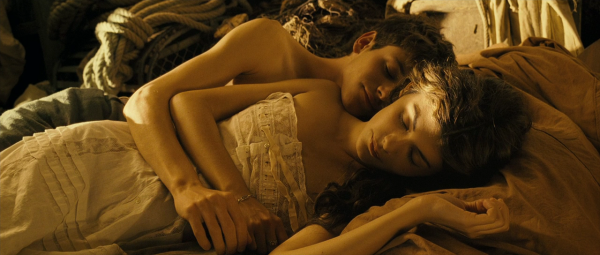
To say that “Harry Potter and the Prisoner of Azkaban” is the strongest of the three movies in the series is something like faint praise; translating Potter to the screen has consistently resulted in long-winded, ponderous juggernauts that try way too hard to please fans of the novels by cramming in far too much plot and not enough cinematic breathing room. Alfonso Cuaron, who takes over the directing duties from Chris Columbus, is a superior filmmaker, but for all his efforts, “Azkaban” manages to overwhelm his considerable sense of style. Even so, the film remains tremendously entertaining, and seems poised to win even more converts to J.K. Rowling’s fantasy world.

Boy wizard Harry (Daniel Radcliffe) is reintroduced in a sly tableau of archetypal adolescent discovery: practicing spells under the covers in his bed. Cuaron may be announcing his grown-up sensibilities, but the entire opening set-piece, in which Harry blows a fuse and inflates a cruel dinner guest until she literally floats away, should have been excised. A manic ride on a phantom coach is enjoyable enough, but “Azkaban” doesn’t really begin to move until Harry is reunited with pals Hermione (Emma Watson) and Ron (Rupert Grint) aboard the train to Hogwarts, where they encounter new Defense Against the Dark Arts Professor Lupin (David Thewlis), as well as some Dementors, floating, spectral reapers apparently on the trail of Sirius Black (Gary Oldman), the escaped prisoner of the title, who has something to do with the death of Harry’s parents.

Cuaron has thoroughly re-envisioned Hogwarts for Harry’s third year. Aided by phenomenal cinematographer Michael Seresin, Cuaron paints the sprawling grounds of the academy with a darker, more sinister brush. A large portion of the action takes place outdoors, and this also helps to free the movie from the predominant soundstage effect that plagued the first two. Buckbeak, the half-falcon, half-horse hippogriff tended to by Hagrid (Robbie Coltrane) is the best-rendered creature of the series so far, and the natural forest settings emphasize the beast’s grandeur and nobility.

More attention is now being paid to unraveling some of the mysterious circumstances surrounding the murder of Harry’s folks, and both Thewlis and Oldman – who are excellent in their roles – reveal new insights that will change Harry profoundly. Other characters, like Emma Thompson’s Sybil Trelawney, could have been cut without harm to the film, and Timothy Spall’s Peter Pettigrew scarcely has a chance to register before the movie rushes off to deal with other things. Michael Gambon has replaced the late Richard Harris as Albus Dumbledore, and his take on the character is more lively and spirited, if less sweet. As always, Alan Rickman’s Snape is brilliant.

Harry, Hermione, and Ron are growing up quickly, and it has been fun to watch the young actors age along with their characters. All three exhibit a marked increase in confidence, and the development of their acting skill is reflected in the comfortable way in which they inhabit their roles. Certainly the fourth Harry Potter movie (which will still utilize the original trio) will mark a major turning point as the performers head into their middle teen years. Speculation abounds that they will eventually be replaced for the later films in the series, but that would be a shame – with “Azkaban,” they are really coming into their own.


The Day After Tomorrow

Dayaftertomorrow1

Movie review by Greg Carlson

“The Day After Tomorrow,” a stupendously awful disaster flick in the tradition of “Earthquake” and “The Towering Inferno,” is an absolute howler. Writer-director Roland Emmerich continues to build his dodgy resume (“The Patriot,” “Godzilla,” “Independence Day”) with another computer effects-driven spectacle; the only difference this time is that he weirdly seems to embrace perpetually maligned eco-philes as his noble protagonists. While global warming leads to tidal waves, floods, hurricanes, and the dawn of a new ice age (seemingly thrown in for good measure), insensitive politicos are initially painted as the shortsighted bogeymen whose disregard for the environment has led to meteorological Armageddon.

Climatologist Jack Hall (Dennis Quaid, jaw clenched tightly) barks his way through the hysterical screenplay’s finest lines. After suggesting that the North Atlantic has hit “a critical desalinization point” Hall springs into action – which amounts to spending lots of time on the phone with other weather gurus like Terry Rapson (Ian Holm), in order to corroborate the grim calculations that just don’t seem to matter that much when the whole world is under siege from extreme weather conditions. The Capitol Records building and the Hollywood sign are vaporized by twisters, New Delhi is hit with a blizzard, Tokyo is buried under giant chunks of hail, and New York is drenched by a wall of water that almost instantly freezes into a sheet of ice.

While the special effects are generally impressive, the catastrophic conditions are never once rendered plausibly. Victims are rarely shown, and the survivors are almost unfailingly polite to each other. The cool detachment, which some have suggested exists as a kind of antidote to post 9/11 skittishness about showing large-scale urban chaos, robs the movie entirely of its ability to inspire awe or fright. The perpetual irony of the disaster movie genre is that we know instinctively that the underlying theme is going to be one of survival and not destruction. No matter how devastating the calamity, most of the core group of central characters will make it through to the end, ready to start anew.

Just as the emergency reaches fever pitch, Hall’s son Sam (Jake Gyllenhaal, smirking) finds himself trapped in Manhattan with the other members of his competitive academics squad. He admits joining the team because he has a wicked crush on hot brainiac Laura (Emmy Rossum), and sure enough, the movie makes sure that the pair has to save their lives by “sharing body heat” (see also: “The Saint” with Val Kilmer and Elisabeth Shue, and nearly every daytime soap opera ever made). Resourceful Sam holes up with a handful of other stock characters (mousy librarian, snobbish intellectual, streetwise homeless guy, etc.) in the public library, which provides plenty of opportunity to make jokes related to the burning of books for warmth.

Jack eventually decides that it would be a swell idea to set out on foot to rescue his son, and the movie chucks the last of its skimpy plausibility out the window. By this point, it is best to simply give up on the goofball movie science that governs the action (temps dropping at ten degrees per second, for example), and the wacky inclusion of select sequences tossed in for their “look what we can do!” factor (watch out for those wolves!). Instead, enjoy the tiny number of comic bits that were actually intended to be funny: the vacant president nervously asking the Dick Cheney-esque veep “What do you think we should do?” and the shots of Americans wading the Rio Grande into Mexico. In the end, the movie is never particularly entertaining, which suggests that one should just wait and see it the day after tomorrow.