Shrek 2

Shrektwo1

Movie review by Greg Carlson

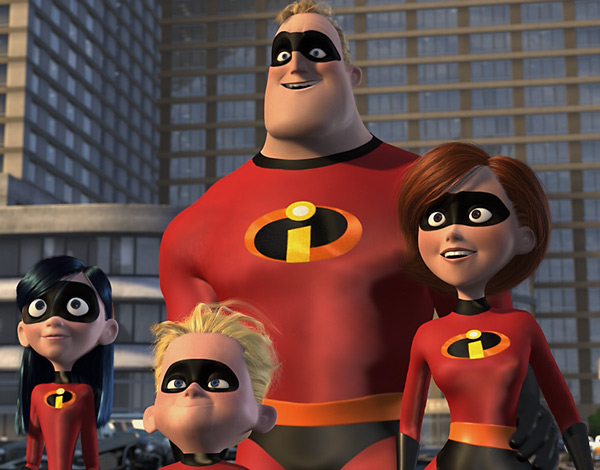
A carefully engineered crowd-pleaser with equal measures of jokes for children and adults, “Shrek 2” improves on the original by expanding its palette to include vivid new characters and different locations for the principal characters to visit.  While the DreamWorks animation department still falls well short of the technical brilliance of Pixar’s work, “Shrek 2” features animation superior in every way to the original – despite the fact that the human characters continue to resemble plastic, single-expression action figures as opposed to breathing specimens.  Ogres and donkeys look wonderful, however, and the movie’s breezy charm and lightweight plotting will most certainly translate into serious money over the course of the summer.

An opening music montage reaffirms the “accidental love” of the unlikely ogre couple united in the original “Shrek.”  Shrek (Mike Meyers) and Fiona (Cameron Diaz) have scarcely had the opportunity to begin their life of “happily ever after” wedded bliss when messengers arrive from the Kingdom of Far Far Away.  Fiona’s royal parents (John Cleese and Julie Andrews) have requested an audience with their newly-married daughter, and after some cajoling by Fiona, Shrek reluctantly agrees to meet the in-laws.  Donkey (Eddie Murphy) latches on to the road trip, and following a comically protracted journey, the trio arrives in a fairy tale version of Hollywood, complete with thinly-disguised product placements and goofs on the self-absorption of Tinseltown’s inhabitants.

Writers Andrew Adamson, J. David Stern, Joe Stillman, and David N. Weiss introduce a variety of conflicts to complicate the lives of the protagonists, but the more interesting thread (dealing with how the King and Queen struggle to accept their new son-in-law) is dropped in favor of a more action-oriented storyline in which Fairy Godmother (Jennifer Saunders) pressures the King to remove Shrek from the picture so that Godmother’s son Prince Charming (Rupert Everett) can hook up with Fiona.  The King employs the services of Puss in Boots (Antonio Banderas), but the debonair assassin’s conscience gets the best of him, and he ends up joining forces with Shrek and Donkey.

As Puss, Banderas steals the movie.  Sending up his own Zorro role as well as his lover-boy image, Banderas purrs his way through the film’s sexiest part.  The script capitalizes on the funny feline’s presence by developing a wary rivalry between Donkey and Puss as the two compete for Shrek’s attention.  While Donkey cheerfully reminds everyone that one annoying, talking animal sidekick is plenty, the movie proves otherwise.  By the conclusion, Puss has distinguished himself enough to warrant his own movie.  Other classic characters, including the Gingerbread Man, the Three Blind Mice, and Pinocchio, team up to assist Shrek when things look grim.

“Shrek 2” is not without its shortcomings.  Fiona disappears for long stretches, and despite her early arguments with Shrek, is rarely depicted as a fully-formed, proactive character.  That the King would so willingly agree to have his son in law murdered (ogre or not) is largely unmotivated – Godmother’s threats are not enough to explain it.  It also would have been nice to see Shrek and Fiona spend more time together.  By now, the movie version of “Shrek” bears little resemblance to William Steig’s book, but it is abundantly clear that the filmmakers have a difficult time reconciling sneering cynicism and satire with the desire to be genuinely touching and sincere.  Even so, as rainbow-colored brain candy, “Shrek 2” provides plenty of reasons to smile.


Troy

Troy1

Movie review by Greg Carlson

“Troy,” director Wolfgang Petersen’s spin on the uber-classic Homeric epic “The Iliad,” turns out to be another link in the chain of outstanding sword-and-sandal camp.  More a testament to Brad Pitt’s considerable biceps and rippled six-pack abs than a serious philosophical treatise on war, love, honor, and immortality, “Troy” obediently fills in all the genre clichés crucial to its survival as an ostentatious, posturing addition to the canon.  The movie is very freely adapted from the literature that inspired it, and many have groused about the tweaked storylines and the absent Olympian gods and goddesses.  Nobody seems to mind, however, that interminable catalogues of ships aren’t included, so the loss of Zeus, Apollo, and the rest of the gang is surely no catastrophe for something intended to be enjoyed with Coca-Cola, hot buttered popcorn, and air-conditioning.

The script of “Troy” is credited to David Benioff, who manages to simultaneously pen ridiculously awful dialogue and harness the essential emotional framework of Homer’s vast canvas.  The clichés are abundant, but it must be noted that the source material more or less set the stage for every epic written since the ninth century B.C.  Yes, characters mostly end up reduced to single epithets (Odysseus = clever, Priam = wise, Helen = beautiful, etc.), but the movie adroitly manages to juggle more than half a dozen different storylines.  If the script has a fatal flaw (aside from the clunky, self-important speeches), it is manifested in the laborious, heavy-footed way in which the movie contents itself with alternating so regularly between battles and discussions about battles.

Pitt mostly tosses out the usual tics he brings to his characters, and instead invests Achilles with a brooding, quasi-existentialist streak.  The greatest warrior of all time is a juicy role to play, and it is surely to Pitt’s credit that his performance takes into account the tumultuous combination of rage, narcissism, and scoffing, misanthropic derision that makes Achilles and his attendant hubris so compelling.  Eric Bana’s Hector is a worthy foil, with his deeply ingrained sense of family duty and self-sacrificing resignation to his fate.  Bana understands that Hector is a guy who knows he cannot beat Achilles, but goes out to lock swords with him anyway.  The pair’s one-on-one clash is one of the movie’s highlights, a visceral gut-punch that tops anything from “Gladiator.”

Like all great movies set in antiquity, one of the most enjoyable aspects of “Troy” can be found in the outrageous hairstyles and over-the-top togas and tunics worn by the cast.  While the women, including German model Diane Kruger as Helen, Saffron Burrows as Andromache, and Rose Byrne as Briseis ,don’t fare too badly in the costume and coiffure department, the men are on display like Greece was sponsoring Versace’s spring runway show.  Elaborate hair extensions, complete with gold clips, layered curls and perfectly-placed braids, festoon the handsome heads of Pitt, Bana, and Orlando Bloom, who spends most of his screen time looking uncomfortable that he has to play Paris as such a cowardly pretty-boy.

The older actors tear through their roles with both hands, however, and as King Priam, Peter O’Toole magnificently navigates several tricky scenes in which he is paired with younger fellows mostly out of their depth.  Brian Cox goes ballistic as Agamemnon, Brendan Gleeson is in his usual fine form as the cuckolded Menelaus, and Sean Bean has more fun with Odysseus than the script seems to afford.  “Troy” won’t be the last version of “The Iliad” to hit the big screen with a combination of veteran character actors and hot young stars, but for what it is worth, it’s likely to best many of its contenders.


Van Helsing

Vanhelsing1

Movie review by Greg Carlson

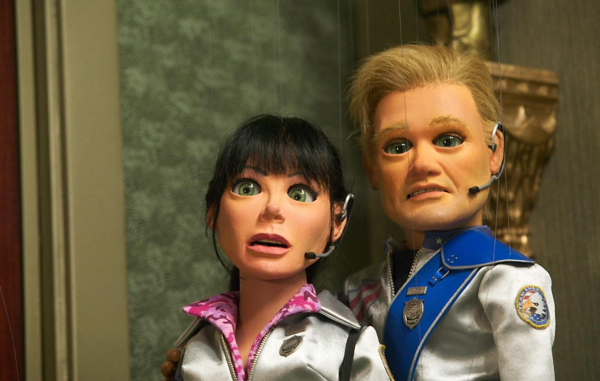
Director Stephen Sommers has already had his way with the Mummy, turning the great Karl Freund’s atmospheric 1932 classic into the noisy and noisome computer-driven action-thriller that starred Brendan Fraser.  With “Van Helsing,” Sommers dumps the Mummy in favor of assembling a package of Universal’s stable of staples: Dracula, Frankenstein’s Monster, and the Wolf Man (along with the Count’s sexy brides, Dr. Jekyll and Mr. Hyde, and Igor, apparently for good measure).  Team-ups like this one are nothing new (NBC’s 1976 live-action “Monster Squad” series even put a super-hero spin on the trio now featured in “Van Helsing”), but Sommers just keeps doing his usual: spoiling a good story with CG overkill and cardboard characters.

Hugh Jackman plays Gabriel Van Helsing (supposedly the younger brother of Abraham Van Helsing, but honestly, who cares?), a perpetually youthful amnesiac who has been doing battle with supernatural baddies for centuries.  Working in the service of a clandestine organization of clerics – whose workshop copies the James Bond universe down to the inevitable introduction of cutting-edge toys and weapons that will come in handy when the plot demands it – Van Helsing hooks up with sidekick Carl (David Wenham), a wise-cracking friar who provides what little comic relief the movie can muster.  They travel to Transylvania to square off against Dracula (Richard Roxburgh), who is on the verge of hatching thousands of his devilish offspring.

Van Helsing eventually crosses paths with the improbably named Anna Valerious (Kate Beckinsale, decked out like some kind of gypsy pirate), a gorgeous vampire hunter whose family has entertained a wicked feud with Dracula for generations.  Together, they slash and bash their way through endless skirmishes with the shape-shifting succubi, who don’t seem to mind that the Count is a bigamist.  Van Helsing shoots at the swooping harpies with a technologically advanced crossbow that spits out ammunition like a 19th century Gatling gun, and Anna divides most of her time between swinging around like Tarzan and getting thrown by the blood-sucking ghoulies into the branches of tall trees.

With Sommers, more is more, and the computer-generated special effects are employed like a heavy truncheon.  The movie’s only coherence lies in its incoherence, as set-piece after set-piece populates the screen with digital excess (in one, bat-winged beasties burst mid-flight, like thousands of kernels of hot popcorn).  It doesn’t really seem to matter that major characters suffer from lycanthropy, or that the anguished, tormented Frankenstein’s Monster pops up only when it is most convenient to include him.  Worst of all, Roxburgh’s Dracula is a one-way ticket to dullsville, lacking every detail that made Bela Lugosi’s iconic interpretation the premier cinematic version of the vampire.

On the plus side, “Van Helsing” contains an excellent chase scene involving the ever-popular runaway coach and horses, and the movie’s opening, photographed in gorgeous black and white by Allen Daviau, perfectly recreates the magical design of James Whale’s vintage Frankenstein movies.  The rest of “Van Helsing” is a serious disappointment, however, as the film never quite achieves the sense of thrilling wonderment that made the original Universal horror cycle the monster movies by which all subsequent versions continue to be measured.

Mean Girls

Meangirls1

Movie review by Greg Carlson

Shrewdly, Saturday Night Live head writer and Weekend Update anchor Tina Fey insisted on adapting Rosalind Wiseman’s non-fiction book “Queen Bees and Wannabes” without a phalanx of more “seasoned” screenwriters to offer their guidance and support via unnecessary rewrites, deletions, and additions.  Scripts by committee often yield disastrous results, and while Fey doesn’t have a feature film track record, her solo writing proves to be consistently sharper, funnier, and more intelligent than virtually everything else that is supposed to pass for comedy at the multiplex.  With “Mean Girls,” it is immediately clear that she will be invited to write more movies.

While “Mean Girls” never erupts with the kind of vicious satirical edge that made its psychological predecessor “Heathers” one of the greatest teen movies ever made, it still manages to outpace all the other recent films aimed at the youth market.  This is not to say that “Mean Girls” lacks chops in the social commentary department – on the contrary, its observations on the cruel high school caste system are nearly always astounding in their authenticity and acute in their familiarity.

Lindsay Lohan, directed once again by “Freaky Friday” helmer Mark Waters, plays Cady, a smart home-schooler whose researcher parents raised her mostly in Africa.  After relocating to the Chicago area, Cady is eager to try out the public school system, but learns immediately that everyone is divided into cliques of varying power and popularity.  Just when she seems poised to give up, Cady is adopted by a pair of colorful, interesting, outcasts.  Janis (Lizzy Caplan, calling to mind a young Janeane Garofalo) and Damian (Daniel Franzese) provide Cady with a brand new education: the finer points of the school’s social pecking order.

The most potent and poisonous crew in the student body, dubbed the Plastics, is a terrible trio accomplished in the art of backstabbing, manipulation, and mind games.  Leader Regina (Rachel McAdams) parcels out her favors and insults in equal measure to fawning subordinates Gretchen (Lacey Chabert) and Karen (Amanda Seyfried).  Urged by Janis to infiltrate the shrill tribunal in order to set up sweet revenge for a junior-high-era falling out that severed the one-time friendship between Janis and Regina, Cady finds herself not only welcomed into the Plastics’ inner circle – she discovers that it is a pretty good place to be.

Fortunately, the remainder of “Mean Girls” takes almost all the right turns, and the presence of Fey (as a weary math teacher), as well as other SNL associates like Tim Meadows, Amy Poehler, and Ana Gasteyer, assists the delivery of the keen dialogue.  Lohan is well-cast as the central character, and the other actors in the teen roles turn in impressive performances.  Peripheral “mathlete” Kevin Gnapoor (Rajiv Surendra) is so funny in his scenes, one wishes he had been given a much bigger part to play.  The movie breaks a little sweat trying to push the theme that teenagers should be nicer to one another (not likely to happen), but one can hardly blame Fey for giving it a shot; her quirky, detailed observances are savvy, skillful, and so on the mark that she deserves a little time to get serious.

13 Going on 30

13goingonthirty1

Movie review by Greg Carlson

It is too darn bad that “13 Going on 30” didn’t explore the meatier psychological dimensions of making a leap from gawky teenager to older high-fashion hottie in the blink of an eye. Body switching comedies have run the gamut from graceless (“Like Father, Like Son”) to great (“Big”), but the central tenets of the genre – including the mantra that you should always be happy to just be yourself (yawn) – are worn-out shoe leather. It certainly helps this time that the footwear belongs to frolicsome Jennifer Garner, but the odor emanating from “13 Going on 30” will remind most audience members of smelly gym sneakers.

In 1987, teenager Jenna Rink (Christa B. Allen) dreams of infiltrating the most popular clique of girls at her school and gaining their friendship and acceptance. Naturally, this will mean compromising her own ethical values (writing homework reports for the snotty crew) and alienating her closest, true-blue pal Matt (Sean Marquette), the boy next door who loves Jenna with the sort of devotion one typically doesn’t see in thirteen-year-olds. When her birthday party blows up in her face during a cruel game of “seven minutes in heaven,” Jenna wishes away her childhood, and with the assistance of some magic dust (don’t ask), finds herself all grown up and inhabiting the bod of lithe Garner.

Most body switch flicks spend generous amounts of time wringing comic mileage out of grown-up actors pretending to be kids (or vice versa, if Judge Reinhold will pardon the pun), but “13 Going on 30” is almost weirdly content to let Garner settle into the clunky machinery of the plot without so much as a trip to FAO Schwarz. Thankfully, director Gary Winick includes at least one amusing set-piece, and the office dance party that goes from deadly dull to deliciously fun (courtesy of the choreography from Michael Jackson’s “Thriller” video) stands as one of the few moments not devoted to some frightfully lifeless nonsense about redesigning the magazine where the suddenly-grown up Jenna works.

The older version of Matt is played by Mark Ruffalo, whose effortless charm goes a long way to making the movie bearable. Sure, it’s a little weird, and possibly a tad creepy, that Ruffalo’s 30-year-old Matt ends up romantically involved with Jenna – who maintains her 13-year-old persona even though she has grown-up curves. Far too much of “13 Going on 30” relies on the familiar obstacles that get in the way of true love: Matt is engaged to another woman, and the adult version of Lucy (the leader of the popular girls that ruined Jenna’s birthday bash), now Jenna’s pal and co-worker, is quick to sabotage Jenna’s best efforts to become a good person.

Screenwriters should be banned from writing any more movies that include scenes where a character is literally decked out in tux or gown before realizing that he or she is getting hitched to the wrong person or for the wrong reason. Cathy Yuspa and Josh Goldsmith, the scribes who cribbed anything resembling good stuff from “Big,” are guilty of this and many, many other narrative misdeeds throughout the course of “13 Going on 30.” At least the tunes – which include early to mid-80s classics like “Burning Down the House,” Jessie’s Girl,” “Crazy for You,” and “Love is a Battlefield” – are memorable, even if the film conveniently sidesteps using any major stuff actually released in 1987.

Kill Bill: Vol. 2

Killbillvoltwo1

Movie review by Greg Carlson

Upon completion of Quentin Tarantino’s sprawling “Kill Bill” epic, the initial reaction is that the severed halves should most certainly be stitched back together for maximum impact. “Kill Bill: Vol. 2” sets out to do several things QT purposefully absented from the first outing, and while he manages to succeed (often against the odds – no matter what his ardent fans argue), the movie only holds up if you have seen the first part. Because the intention was to make one film all along, it is difficult to criticize “Volume 2” on the grounds of its tone and story alone.

While “Volume 1” skirted cinema’s heavenly firmament in its colorful blending of samurai sword-crossers and yakuza yarns, “Volume 2” aligns itself primarily with the dusty trails of Sergio Leone’s turf. Like the first outing, “Volume 2” is structured in such a way that allows side trips and diversions, and the best of these concerns a flashback dealing with the Bride’s martial arts training under the painful tutelage of Pai Mei (Gordon Liu), a spry master with godlike powers. Tarantino provides a legitimate reason for the inclusion of the Pai Mei scenes, as the Bride’s intense schooling ends up saving her life (not once but twice).

The Bride continues her “roaring rampage of revenge” against the Deadly Viper Assassination Squad, but along the way, Tarantino makes more than enough room for loquacious stretches of indulgent dialogue that simultaneously grind the film to a snail’s pace and delight viewers with their cleverness. David Carradine’s Bill, who spent nearly all of “Volume 1” waiting in the wings, makes up for lost time with several speeches of faux-prudence and contemplation. As windy as the bamboo flute he plays to accompany his tales, Bill emerges as an enigma: for all his talk, he reveals very little.

Because “Kill Bill” is structured as a revenge saga, much of its time is reserved for the wicked obstacles personified by Elle Driver (Daryl Hannah, seen in “Volume 1” as the ghoulish nurse who whistles the “Twisted Nerve” theme) and Budd (Michael Madsen), the remaining members of Bill’s death squad. The sequences concerning Budd are among the movie’s most puzzling: why would a retired, world-class assassin work in a pathetic strip bar out in the boondocks, suffering verbal abuse from his boss and mopping out backed-up toilets? Budd’s choice of locale sets the stage for a bone-crunching showdown in his dilapidated trailer home, and while the trashy setting was used to greater comic effect in the battle between John Goodman and Nicolas Cage in “Raising Arizona,” Tarantino clearly relishes watching his combatants bust through flimsy walls and crash down on cheap furniture.

By the end of “Volume 2,” the Bride’s name has been revealed (although Tarantino opts to eschew the inclusion of another flashback to thoroughly explicate the backstory), and the movie’s final scenes come full circle, mirroring the thematic underpinnings of the Vernita Green showdown at the beginning of “Volume 1.” Uma Thurman, whose physical poise and self-assurance in “Volume 1” is matched by emotional resonance in “Volume 2,” injects no small amount of verisimilitude into the more far-fetched elements of her character’s predicament. Tarantino probably overstates his case on the nature of motherhood, at least insofar as it receives superficial treatment until the endgame, but there is no denying that as a dimension of the story, it makes the whole “Kill Bill” universe a pretty interesting place to visit.


The Girl Next Door

Girlnextdoor1

Movie review by Greg Carlson

A rip-off of “Risky Business,” one of teensploitation’s benchmarks, Luke Greenfield’s “The Girl Next Door” is a numb, queasy disaster. A comedy without any jokes, the film limps along interminably without ever disclosing anything interesting about the mannequins that are meant to be its primary characters. While the premise – high-school goody two-shoes falls for ex-porn actress house-sitting next door – has the makings of an interesting tale (imagine what Leos Carax, Francois Ozon, or heck, even Michel Gondry might have been able to do with it) nothing in the movie offers even the tiniest glimmer of intellect or emotion.

Pleasantly elfin Emile Hirsch plays the overachieving Matthew Kidman, a sexually frustrated (is there any other kind in movieland?) rule-follower with designs on both a major Georgetown scholarship and a future as a politician. Matt’s wildest fantasy appears to bear fruit when he window-peeps sexy Danielle (Elisha Cuthbert) undressing, and she catches him in the act. Danielle promptly rings Matt’s doorbell, introduces herself to his folks, and the next thing you know, she and Matt are cruising around in her adorable Volkswagen Beetle convertible. Because “The Girl Next Door” is supposed to be a teen-comedy, Danielle talks Matt into taking off his clothes and running through the neighborhood in his birthday suit. This was comical when Will Ferrell did it in “Old School.” It is not so funny this time.

Danielle and Matt begin an improbable courtship, and director Greenfield botches and mishandles nearly all of the expository scenes. Introducing the motif that Matt is prone to daydreaming and fantasizing, Greenfield fails to clearly distinguish between reality and fantasy – often leaving the audience wondering whether a particular event has taken place or has merely been imagined by Matt. This frustrating technique is compounded by the script’s essential deficiency: there is no good reason why Danielle would hook up with Matt so quickly (at one point, she rather weakly explains that she liked the way Matt looked at her). Rather than allow the two characters to share any meaningful dialogue, the movie is quite content to lob one pop-song-scored montage after another, perhaps assuming that maybe the target demographic won’t notice that Danielle and Matt don’t behave like real human beings.

Seemingly forever in search of a balance between titillating glimpses into the “glamorous” world of adult entertainment and a teenage male fantasy about rescuing a gorgeous starlet from her abusive past, “The Girl Next Door” has absolutely no idea what to do with its title character, and Cuthbert gets completely lost in the shuffle. One minute, she is a self-assured, been-around-the-block veteran who knows how to take charge of every situation. The next minute, she is an insecure victim of poor choices, essentially pimped by her “manager” (Timothy Olyphant, nearly reprising his role in “Go”). Sometimes, when the machinery of the plot is grinding toward some peak, she is entirely ignored.

“The Girl Next Door” is so inconsequential, it’s difficult to argue that it is even worthy of criticism. Still, the insensitive screenplay by Stuart Blumberg, David T. Wagner, and Brent Goldberg seems almost delighted to flirt with racism (in an unfortunate and unnecessary subplot involving a fundraiser for a Cambodian math whiz), homophobia, and sexism. Utterly stupid, ugly, and dispensable, “The Girl Next Door” causes one to long for the wit, charm, and warmth of “Risky Business.” And as far as eroticism goes, “The Girl Next Door” does not begin to approach Tom Cruise, Rebecca De Mornay, and a nearly empty train car.

Walking Tall

Walkingtall1

Movie review by Greg Carlson

“Walking Tall,” director Kevin Bray’s remake of the popular 1973 film of the same name, is not likely to be nominated for any Academy Awards, but then it is doubtful that the filmmakers were thinking like Harvey Weinstein when the cameras were rolling.  Former pro-wrestler The Rock plays Chris Vaughn, a Special Forces veteran who returns home to the Pacific Northwest (British Columbia stands in for Washington) just in time to discover that his idyllic childhood community has been transformed into a nightmarish wasteland of drug abuse and economic hardship.

The original movie, which starred cult favorite Joe Don Baker as Sheriff Buford Pusser (the Tennessee lawman whose real-life exploits formed the basis of the story), evolved into something like a franchise, with a pair of sequels (Baker bowed out and was replaced by Bo Svenson), a short-lived “Walking Tall” TV series (also starring Svenson), and a television movie with Brian Dennehy.  Someone apparently balked at the notion of The Rock playing someone with the decidedly un-Rocklike handle Buford Pusser, which is a shame if only because it would have been amusing to see the hulking powerhouse answer to the moniker.

While The Rock continues to prove that he is genuinely charismatic and can easily hold his own on the big screen, “Walking Tall” is a great deal less intelligent than its leading man.  Director Bray chugs through the all-important fight and action scenes with workmanlike skill, but anything that requires subtlety or sensitivity ends up being hammered home like it was mere fodder for Vaughn’s massive cedar club.  Audiences will do well to stifle their laughter when they witness the ham-handed shots of young addicts leaving their babies unattended in order to score drugs (that this occurs in broad daylight, on streets bustling with activity, not only calls for The Rock’s trademark eyebrow-raise, it insists on ridicule from the audience).

Vaughn quickly reckons that his one-time buddy Jay Hamilton Jr. (Neal McDonough), now a sleazy, peroxide-drenched scoundrel, is behind the town’s downfall.  Hamilton sold the family mill – depriving folks like Vaughn’s hardworking father of employment – and opened an adult-themed casino in its place.  Even worse, Hamilton is peddling all sorts of illicit drugs to mere children, who have the audacity to smoke pot in public parks.  After consulting his goofball ex-con chum Ray (Johnny Knoxville, having more fun than then script affords his character) to confirm Hamilton’s devilry, Vaughn busts up the casino and ends up defending himself in court for his hot-headed actions.

Bray jumps immediately from the legal proceedings to Vaughn’s new role as sheriff, but nothing outside of the choreographed brawls is valued by the shallow screenplay.  When Vaughn’s old flame Deni (Ashley Scott) shows up to rekindle their romance, one begins to wonder why she was included in the story at all.  This is too bad, because Scott delivers a decent performance, and because any kind of emotional investment in the characters would have surely made the movie less boring.  The same thing goes for Vaughn’s family, who fade into the background when they should have provided the demonstrative ballast for the main character’s unorthodox decision to “take matters into his own hands.”  The Rock remains tremendously watchable, however.  Maybe his next one will be better.


The Ladykillers

Ladykillers1

Movie review by Greg Carlson

Remaking the 1955 Ealing gem of the same name, Joel and Ethan Coen transplant “The Ladykillers” to their own unique universe: an anachronistic pastiche of old and new, symbolically summarized in the glorious strains of traditional gospel and thumping hip-hop that play on the soundtrack. Similar in many ways to the ridiculously sublime Coen movies that exult in their off-center senses of humor at the expense of everything else, “The Ladykillers” is already being called a “minor” Coen film (whatever that exactly means). In any case, one’s enjoyment of “The Ladykillers” will almost certainly depend upon whether disbelief can be suspended enough to give Tom Hanks room to do his thing.

Hanks inhabits a bizarre criminal who goes by the name G.H. Dorr, Ph.D. Purporting to be a scholar of dead languages and Renaissance music, Dorr rents a room from devoted churchgoer and widow Marva Munson (Irma P. Hall) in order to set up a caper that requires tunneling through the walls of Munson’s root cellar in order to pilfer a large sum of cash from a nearby riverboat casino called the Bandit Queen. Predictably, one of the movie’s most satisfying running gags is the sight of Dorr and his motley crew scrambling to pick up their antique instruments whenever Munson descends into their basement practice space.

Dorr’s companions in crime appear to be anything but master thieves. Mustachioed demolitions expert and irritable bowel syndrome sufferer Garth Pancake (J.K. Simmons) is nearly as loquacious as Dorr, and his ostentatious manner ideally matches his khaki safari jacket. Pancake takes an immediate dislike to Gawain MacSam (Marlon Wayans), the “inside man” who nearly derails the plot when his fondness for the round posteriors of female casino guests gets him fired from the Bandit Queen’s custodial staff. The remaining two crooks are as quiet as Pancake and MacSam are gabby: The General (Tzi Ma) likely honed his skills digging tunnels in Vietnam, and Lump (Ryan Hurst) is a mountainous cretin rather used to taking a brutal beating on the gridiron.

While the storyline of “The Ladykillers” follows a predictable path, it becomes clear that the Coens are only interested in providing a platform on which to stage their verbal pyrotechnics. Like their best films, including the underrated “Miller’s Crossing” and “Barton Fink,” “The Ladykillers” is consistently stunning in its appreciation of weird diction and ornamental erudition. While Hanks, in his KFC-style Vandyke and layers of capes and topcoats, gets the showiest role, all of the actors adopt cadences and rhythms that are dazzling to hear. The Coens have never been shy about profanity, and it should be noted that “The Ladykillers” favors torrential outpourings of what Dorr would most likely call the harshest of imprecations and maledictions. Many will find the variety of foul tongues comic, others will think them coarse.

Visually, “The Ladykillers” returns to the meticulous compositional palette that defined much of the filmmakers’ early work. Longtime DP Roger Deakins bathes the movie in a golden glow that often serves as an ironic counterpoint to the gruesome activities that pile up in the final act (the God’s-eye view of the ever-present garbage barge is surely the film’s slyest, most satisfying motif). Several of the film’s other fanciful touches (including the “Sullivan’s Travels”-esque device of a portrait that changes its expression nearly every time it is shown) also contribute to the farcical tone. The final impact of the Coen brothers’ painstaking eccentricity – ideally realized in the tidy inevitability of the conclusion – pays off for fans like the slot machines on the Bandit Queen.


Eternal Sunshine of the Spotless Mind

Eternalsunshine1

Movie review by Greg Carlson

Even positioned as an early entry, “Eternal Sunshine of the Spotless Mind” is destined to be one of the best films of the year. The second collaboration between Gallic music video genius Michel Gondry (whose unbelievable clips for the likes of Daft Punk, the Rolling Stones, Bjork and the White Stripes almost literally burst at the seams with creative elan) and eccentric screenwriter Charlie Kaufman (who has also penned “Being John Malkovich” and “Adaptation” as directorial vehicles for Gondry’s fellow music video virtuoso Spike Jonze), “Sunshine” is a mind-bending tour-de-force of writing, directing, and acting that is both for and about the contents of one’s cranium.

While it resembles Kaufman’s other scripts in its concern for dexterous jumps in space and time as well as its preoccupation with mental interiority, “Sunshine” is far and away the most fully realized of the screenwriter’s filmed stories. While “Malkovich” hinted, often sardonically and skeptically, at the ruinous effects of misguided lust and unrequited love, “Sunshine” contains at its core a sweetly optimistic philosophy of the need for love and affection. Its protagonists deal with the full gamut of roller-coaster highs and lows, from the thrilling, endorphin-fueled rush of first attraction to the bitter resentment of turning into the boring couple you once pitied.

Jim Carrey easily betters his serious-minded turn in “The Truman Show,” displaying incredible subtlety and emotional restraint against the apparent odds. Cast partially, smartly against type as Joel Barish, a reserved introvert, Carrey is provided ample opportunity to demonstrate his remarkable psychological elasticity. At the very beginning of the movie, Joel meets aggressive free-spirit Clementine (Kate Winslet, completely smashing) on a train platform, and the déjà vu that accompanies their flirtations proves spectacularly ripe with layered meaning as Gondry and Kaufman catapult the audience an entire year into the relationship by the time the opening credits appear.

Once balance is temporarily regained, the immediacy of Joel’s situation reveals itself: post breakup, Clementine has hired Dr. Howard Mierzwiak (Tom Wilkinson) to have Joel entirely erased from her memory. Mierzwiak is the proprietor of Lacuna Inc., a storefront clinic with dubious medical credentials implied hysterically via the on-the-job incompetence and unethical behavior of memory-sucking technicians Mark Ruffalo and Elijah Wood. Devastated by Clementine’s harsh act, Joel signs up to undergo the procedure too, so that he can obliterate Clem from his own gray matter. Midway through the process, Joel realizes that he has made a mistake, and his efforts to hold on to experiences he shared with his sweetheart comprise the bulwark of Kaufman and Gondry’s fascinating head trip.

With the aid of Ellen Kuras’ perfect cinematography, which at times shoots blinding beams directly at the characters like cosmic flashlights or prison-tower searchlights, Gondry represents the multiverse of the mind with perfectly integrated special effects, many of them delightfully old fashioned. That having one’s memory eradicated carries with it unknown risks turns out to be only one of the movie’s concerns. By the time Gondry is deep into the labyrinth of Joel’s complex of synapses, the tone has shifted just enough to allow the audience to understand that losing the memory of a heartbreak will not really fix anything – it’s the pain that reminds us that we once had something real. Joel and Clem, desperately trying to outsmart the machinations of Lacuna’s extinguisher, make one of the most romantic pairs in recent cinema. They are, in fact, unforgettable.