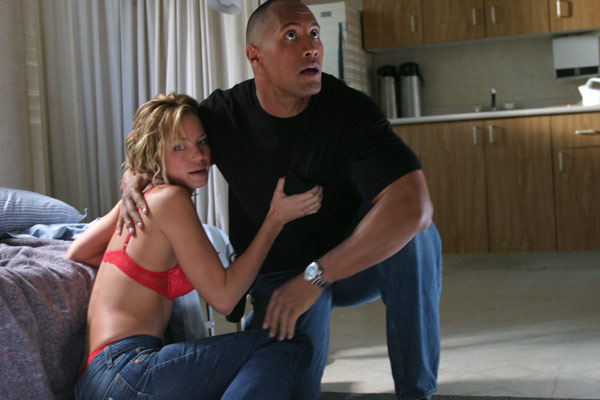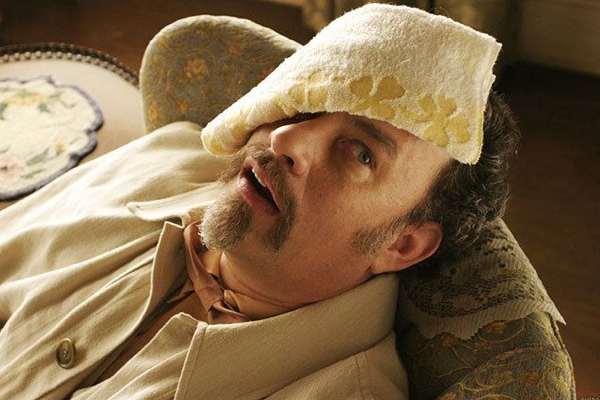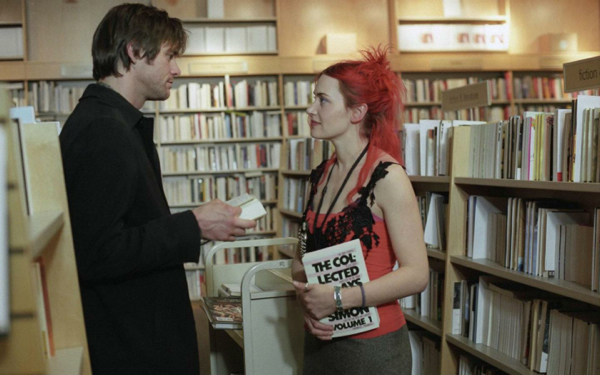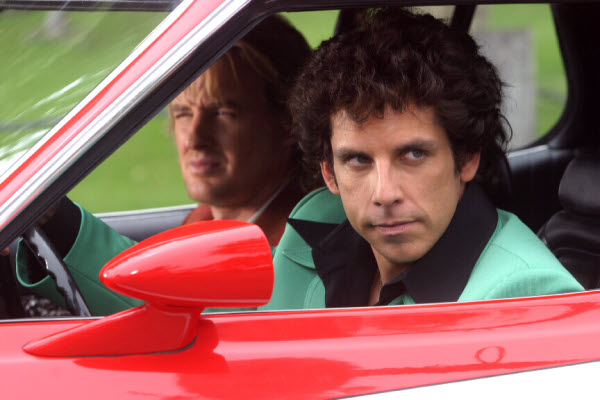
Kill Bill: Vol. 1

Killbillvolone1

Movie review by Greg Carlson

“Kill Bill: Vol. 1,” the first film from Quentin Tarantino since “Jackie Brown” in 1997, is an audacious return to form for the egomaniacal filmmaker. In his movie performances (thankfully absent in “Bill”), his press interviews, and his TV appearances, Tarantino inevitably comes off as a braying, boorish big-mouth. Fortunately for moviegoers, the director is as talented behind the camera as he is insufferable in front of it. “Kill Bill” is another QT mash note to the retro-cool memories of the popular culture that obviously left an indelible impression on the moviemaker in his formative years.

Nothing short of an intertextual minefield that confidently challenges its hardened viewers to identify all of the tributes and references, “Kill Bill” is a candy-colored homage to samurai movies, spaghetti westerns, yakuza flicks, blaxploitation yarns, and kung-fu epics. You don’t even need to wait past the opening credits before the first salvo is fired: a one-two punch that trumpets “Our Feature Presentation” with a vintage 1970s tag and the “Shaw Scope” banner. It’s an announcement that Tarantino is acknowledging his status as the ultimate distiller/recycler/alchemist – if the product wasn’t any good, you’d say he was an outright thief.

The thing is, Tarantino whips up this bouillabaisse like he was born to do it, and the result is trippy, fun, and somehow fresh. The plot is blood simple: Uma Thurman is a deadly assassin nearly done-in by her former colleagues on her wedding day. Miraculously, the Bride survives the attack, which includes a rather nasty bullet to the head, but spends the next four years in a coma. As you might imagine, upon waking up she is more than a little bit pissed off. Cue revenge motif, as the Bride makes it her business to hunt down and kill each of the members of the Deadly Viper Assassination Squad.

What follows is a feverish tour de force of visceral action, in which the director is aided immeasurably by world-class DP Robert Richardson (who has to be one of the best cinematographers on the planet), editor Sally Menke, and production designers David Wasco and Yohei Taneda. The icing on the cake is the excellent music, courtesy of the RZA, with some additional help from Al Hirt, Quincy Jones, Nancy Sinatra, Bernard Herrmann, Ennio Morricone, and a host of others. Tarantino has always demonstrated a flair for reinvigorating old tunes, and it is unlikely that anyone who sees “Kill Bill” will be able to disassociate the creepy whistling of the “Twisted Nerve” theme from the image of Daryl Hannah’s nurse-from-hell Elle Driver strolling down a hospital corridor.

There is so much on display in “Kill Bill,” it is impossible to cover all the bases, but the final “House of Blue Leaves” set-piece, which unfolds in a stunning, bi-level, combination teahouse and disco (that rivals Jack Rabbit Slim’s in “Pulp Fiction”), is utterly unforgettable. The Bride faces Lucy Liu’s O-Ren Ishii and her underworld army, the Crazy 88, in a heart-stopping, Grand Guignol bloodbath that spews fountains of hemoglobin over every available surface. Chiaki Kuriyama, as depraved schoolgirl Go Go Yubari, wields a mace and chain with such elegance and skill, it is no wonder she brings out the best in the Bride and her own weapon of choice: a custom Hattori Hanzo steel. Along with O-Ren, the two make formidable foes, and Thurman meets the challenge with the best performance of her career.


The School of Rock

Schoolofrock1

Movie review by Greg Carlson

It’s not like Richard Linklater, the indie auteur that many film geeks worshiped for “Slacker” and “Dazed and Confused” and reviled for “Before Sunrise” and “The Newton Boys,” hasn’t tried to be a commercial success before now – the timing and marketing of his movies for mainstream audiences just wasn’t quite perfect.  That has all changed with “The School of Rock,” a delightful comedy squarely in the right place at the right time.  Written by Mike White (who also appears as an actor in most of his movies, like “Chuck and Buck” and “The Good Girl”) and starring the irrepressible Jack Black, “The School of Rock” manages to transcend its formulaic conventionality in order to, well, rock.

White wrote “The School of Rock” specifically for Black, who will most likely never have another role as tailor-made for his blustery, volcanic persona (honed to perfection in Tenacious D) as Dewey Finn, a tubby, lazy, goof-off kicked out of the rock band he formed because he took one too many extended guitar solos.  Convinced he was put on earth to serve society by rocking, Finn still needs to make rent.  He assumes the identity of his roommate Ned (played by White) and heads off to a prestigious, private, elementary school posing as a substitute teacher.

“The School of Rock” might at this point have become a prosaic, routine time-waster, but Linklater, White, and Black play an ace: the movie takes both rock music and its audience seriously.  Some will chuckle at the notion that “one great rock show can change the world,” but Black shouts it with such conviction you will be hard-pressed to doubt him.  The same goes for the class of 10-year-olds in his charge.  Before you can say “Blitzkrieg Bop,” Dewey has assigned the full range of rock and roll occupations to his talented pupils.

The child actors, most of whom play their own instruments, are as critical to the success of “The School of Rock” as Black.  Reticent keyboard player Lawrence (Robert Tsai), lead guitar player Zack (Joey Gaydos), bass player Katie (Rebecca Brown), drummer Kevin (Kevin Clark), and singer Tomika (Maryam Hassan) may form the core of the group, but Dewey’s limitless imagination finds plenty of room for security, groupies, roadies, lighting techs, and even a stylist.  Miranda Cosgrove, who plays class suck-up and eventual band manager Summer, is particularly memorable.

Linklater’s low-key directorial approach perfectly suits White’s smart slant on the way a group of pre-adolescents would react to a character like Dewey.  “The School of Rock” is virtually gimmick-free, and the transformation of the class from rule-following automatons to full-bore rebellious thrashers is joyous to behold.  In one scene, Dewey builds a cohesive group one power chord at a time; in another, we are treated to a breathless lesson on how a good rock song is born.  Even the detailed flowcharts Dewey chalks on the blackboard are authentic.  Sure, the outcome of the movie is never in doubt, but by the time the clever end credits roll, you’ll be ready to plug in your Flying V and crank up that amp.

Duplex

Duplex1

Movie review by Greg Carlson

Even though Danny DeVito was not the first director selected for helming duties on “Duplex” (he replaced Greg Mottola), the movie certainly resonates with the macabre sensibility of some of the director’s earlier, better work, like “Throw Momma From the Train” and “The War of the Roses.” DeVito, who is absolutely hilarious in Woody Allen’s latest, doesn’t have the same good fortune behind the camera on this outing, despite the potential for a gruesome good time. “Duplex” is not a bad movie – many audience members might be surprised at just how many solid laughs it contains – but it is not particularly good either.

Ben Stiller and Drew Barrymore play Alex and Nancy, a young, upwardly mobile couple looking to trade their tiny apartment in the heart of the Big Apple for something more spacious. Their dreams apparently come true when real estate agent Harvey Fierstein steers them in the direction of a stunning Brooklyn brownstone with high ceilings, built-in shelves, three fireplaces, original stained glass windows, and hardwood floors. Even the price is right, but there’s a hitch: the upstairs of the duplex is occupied by an ancient Irish woman protected from eviction by rent control regulations.

The sweet little old lady is played with demented glee by octogenarian Eileen Essel, and one of the strengths of “Duplex” is that the aged actress is game for anything the screenplay throws at her, no matter how revolting or repugnant. As the story progresses, Nancy and Alex quickly realize that they have made a giant miscalculation in their decision to purchase their new dwelling: Essel’s Mrs. Connelly is beyond irritating. The old bat harangues and bedevils the whippersnappers with constant intrusions. She plays her TV at ear-splitting volume in the middle of the night. She cajoles Alex into taking her for groceries and prescriptions, interrupting his writing schedule even as a big deadline looms. She claims that rats have invaded her kitchen. And so on.

Larry Doyle and John Hamburg’s script, which takes a turn for the worse at the end of the second act, fails to make Mrs. Connelly nasty enough for the audience to believe that Alex and Nancy are ready, willing, and able to commit murder for the sake of their sanity. It is on this point that “Duplex” never really takes flight as a black comedy. Yes, it is hysterical to witness the myriad ways in which the irksome Mrs. Connelly shakes up her new landlords, but there is no emotional investment the audience is allowed to make that justifies, for example, the hiring of a hit man to exterminate the badgering neighbor.

Stiller and Barrymore try their best to keep up with the sprightly Essel, and for the most part, they deliver – in one outrageous sequence Alex deliberately gets infected with a harsh flu virus in the hopes that he can pass it along to Mrs. Connelly. In another, a plugged up sink leads to a spectacular display of vomiting that will either leave you rolling or retching. The inconsistency in the story’s tone, however, extends into the staging of the humor, and “Duplex” often resorts to broad slapstick when subtlety is required.

Anything Else

Anythingelse1

Movie review by Greg Carlson

Woody Allen is so reliably prolific as a writer-director of New York City-based tales of cosmic humiliations and bittersweet relationships, seeing one of his films is often like pulling on a comfortable, well-worn sweater. Even when his newer work fails to live up to the spectacular golden age that delivered pictures like “Annie Hall” and “Manhattan,” it is still a bracing antidote to much of the poison being sold as caviar in the current cinema. The old, dependable formula is in full-swing in “Anything Else,” a funny riff on Woody’s regular obsessions with difficult girlfriends, anti-Semitism, and occupational failure.

Jason Biggs is in fine form as Jerry Falk (the role Woody would have played had the movie been made some time ago), a young comedy writer represented by a struggling, past-his-prime agent (Danny DeVito, in a small, but wonderfully comic part). Jerry is mentored and guided by fellow writer David Dobel (Allen), a neurotic conspiracy theorist hell-bent on assembling the perfect survival kit for the inevitable Armageddon. Dobel dispenses misguided life-advice to Jerry on a daily basis, often summarizing his personal philosophy through antique vaudeville one-liners and other ancient witticisms. Meanwhile, Jerry is tied up in knots over Amanda (Christina Ricci), a dangerous man-magnet and all-around reckless, free-spirited flake.

Despite the obvious hazard of making Amanda a nightmarish femme fatale, Allen sidesteps the potential charges of misogyny by allowing Ricci to craft a sly and subtle performance that propels the film forward. Sure, Amanda is an obvious liar and cheat, but she is also forthcoming about many of her eyebrow-raising lifestyle choices. There is also the little matter of how Jerry hooked up with her in the first place – via an illicit affair begun while both parties were involved with significant others. In other words, Allen makes it abundantly clear that Jerry is responsible for the generous servings of misery he chokes down after getting involved with Amanda.

Like many of Allen’s character-driven movies, “Anything Else” plays as a series of comic vignettes dependent upon the chemistry of the actors. Individual scenes draw solid laughs, including the sight of Allen’s Dobel weakly trying to smash out the windows of a car following a chastening at the hands of a pair of thuggish louts, a sidewalk exchange in which Jerry’s plans for a fancy anniversary dinner are spoiled when Amanda informs him she has already eaten, and the tour de force spectacle of DeVito’s character having a disruptive meltdown in a nice restaurant.

Even as he ages, Woody Allen enlists extremely talented directors of photography in order to keep himself, his actors, and his beloved Manhattan looking as attractive as possible. Cinematographer Darius Khondji (adding his name to a long list of venerable DPs to shoot for Allen) practically makes his locations glow from within, and the many scenes set in Central Park are gorgeous. Ricci and Biggs have also never looked better on film than they do here. Nobody is going to argue that Allen or DeVito are in line to win any beauty contests, but co-star Stockard Channing (taking an uncharacteristically flimsy role) also receives the Khondji touch.

Matchstick Men

Matchstickmen1

Movie review by Greg Carlson

For those who love the con-artist genre, it is difficult to take in any new stories without the cautious, attentive, knowledge that at some point, the old switcheroo is going to pulled on the audience as well as on the characters in the narrative.  Ridley Scott’s “Matchstick Men,” adapted from the novel by Eric Garcia, is no exception to this rule, but the richness and depth of the primary performances softens a great deal of the typical frustration one feels as a victim of the “Jamaican Switch.”

Nicolas Cage, as an artful dodger with a satchel full of neurotic tics, twitches, and nervous mannerisms, is the center of the movie’s universe.  His Roy Waller belongs in the pantheon of over-the-top screen depictions of fanciful phobics.  Stuttering, blinking, and hiccupping his way through a sensational performance on par with his very best work, Cage’s turn might occasionally remind you of his Academy Award-winning role as self-destructive alcoholic Ben Sanderson in “Leaving Las Vegas,” or his recent double-duty as Charlie and Donald Kaufman in “Adaptation.”  This sort of stuff is what Cage does best – he’s the Miles Davis of the mentally maladjusted.

Stars are only as good as the actors with whom they are surrounded, and Cage is aided and abetted by Sam Rockwell and Alison Lohman.  Rockwell equals the insouciant, oily charm of his Chuck Barris impersonation in “Confessions of a Dangerous Mind” as Roy’s partner-in-crime, Frank Mercer.  Frank is as loose and slovenly as Roy is clenched and meticulous – he’s the kind of guy who scarfs down cheeseburgers over Roy’s perfectly manicured carpet even when he knows the crumbs drive his pal to distraction.  Lohman is, without second thought, the film’s not-so-secret weapon.  A 23-year-old playing a 14-year-old (the actress turns 24 on September 18) Lohman is dazzling as Angela, Roy’s long-lost daughter, and steals every scene in which she appears.

Ridley Scott, clearly taking a much needed break from the overbearing bombast of flicks like “Gladiator” and “Black Hawk Down,” shrewdly steps back and lets his actors have at it.  With players as good as these, it is a delight to just watch them strut their stuff, but Scott also understands pacing, rhythm, design, and the value of parallel storylines.  The “big con” that Frank and Roy are pulling on a mark named Frechette (inhabited by on-the-button Bruce McGill) supposedly drives the story, but the scenes in which Roy bonds with Angela are a sublime cut above.  Once Roy begins to teach Angela the tricks of his trade (she is, of course, a natural born grifter), the movie takes flight and manages to soar for nearly the majority of its remaining running time.

“Matchstick Men” is not quite perfect, however, in that the screenplay (by Nicholas Griffin and Ted Griffin) violates its own elaborate premise on a few occasions, unscrupulously – and some would argue unfairly – scamming the viewer after the manner of its protagonists.  The tired and overused “One Year Later” coda is trotted out with some ambivalence, and the final result leaves a decidedly curious aftertaste.  Despite these minor flaws, “Matchstick Men” shimmers and sparkles like the water in Roy’s well maintained but never utilized backyard pool.

The Order

Order1

Movie review by Greg Carlson

Writer-director Brian Helgeland cannot be faulted for trying to expand his repertoire with “The Order,” despite the fact that the movie is a complete dud.  Following up the occasionally clever “A Knight’s Tale” (which also starred Heath Ledger, Shannyn Sossamon, and Mark Addy) with a contemporary spin on ecclesiastical arcana is not the sort of choice many filmmakers would make.  Barring “The Exorcist,” the religious thriller has not fared too well, and unfortunately, “The Order” must be added to the pile of failures.

Ledger plays Alex, a young, devastatingly handsome NYC-based priest-cum-detective who flies to Rome to investigate the mysterious death of his old mentor.  Apparently because it would be boring not to have a love interest and a sidekick, Alex brings along Mara (Sossamon), a recent mental hospital escapee who shares a convoluted history with him, and Thomas (Addy), another renegade cleric from Alex’s order who happens to fancy large doses of booze and profanity.  Once in Italy, the trio crosses paths with Eden (Benno Furmann, who apparently replaced Vincent Cassel when the latter dropped out of the film over “creative differences” with Helgeland), a wealthy gadabout who claims to be a “Sin Eater.”

Sin Eaters, we learn, operate outside the boundaries of Catholic doctrine – they perform a ceremony in which a dying person can gain entrance into the kingdom of heaven without the blessing or forgiveness of the church.  This supernatural shortcut is accompanied in the movie with some seriously awful CG special effects: at the climax of the odd rite, vaporous tendrils resembling calamari undulate toward the Sin Eater’s mouth, causing visible distress and discomfort to Eden as he grants each expiring sinner safe passage to paradise.  Something like the grim reaper, Eden has been steadily employed as the last of the Sin Eaters for centuries, and is now ready to pass the torch to – who else? – Alex.

While the basic premise of “The Order” offers a potentially intriguing spin on the worn-out tropes of the theological horror movie, Helgeland muddies up the works with a goofy “Eyes Wide Shut”-wannabe subplot involving a creepy underground society of sinister clergy – kind of like a “respected cardinal by day,” “weird, masked, dungeon-dwelling, sex-deviant executioner by night” sort of thing.  Even the presence of skeletal Peter Weller, intoning dialogue in his most ominous voice, fails to resuscitate the cobwebby storyline.

Ledger, a good actor with good instincts, wanders around looking lost and unsure of himself for most of the movie.  Worse yet, the talented Sossamon is hamstrung with a criminally underwritten role.  Helgeland allows her to disappear for large blocks of time, and never satisfactorily establishes the weight of the forbidden sexual attraction between Mara and Alex that is so thematically critical to the plot.  Instead, Mara spends her time wandering around in silk pajamas, brushing her teeth and nonsensically explaining why she paints pictures of sunflowers.  Addy’s Thomas seems to be the only character in the movie that sees through the metaphysical smokescreen, but his entreaties to Alex are always too little, too late.

Jeepers Creepers 2

JeeperscreepersII1

Movie review by Greg Carlson

Writer-director Victor Salva attempts to establish a horror franchise with the release of “Jeepers Creepers 2,” an uninspired sequel to the clever, well-directed 2001 original. It is certainly too bad that this new installment of the story fails to reach beyond the standard “group of teenagers get picked off one by one” formula, because the design of the creature and its attendant mythology are conceptually top-flight. Adding a few flourishes to the details that made the Creeper so compelling in the first film, Salva doesn’t go nearly as far as he did before in making the terror resonate with psychological intensity.

A supernatural humanoid with gigantic bat wings, razor teeth, and clawed feet, the Creeper inspires additional fright by occasionally appearing as a scarecrow – complete with old, raggedy clothes and beat-up hat. We learn that the monster only awakens from a kind of hibernation once every twenty-three years, and only then for twenty-three days before it shuts down its body clock. Those twenty-three days, however, are going to be seriously unpleasant for the hapless people selected by the Creeper as breakfasts, lunches, and dinners.

“Jeepers Creepers 2” mostly does things one at a time, but at least initially, two different stories begin to unfold. In the first, salt-of-the-earth farmer Jack Taggart (the always intriguing Ray Wise) loses his youngest son to the Creeper in broad daylight. Fueled by a desire to seek revenge, Taggart and his surviving son set out to track and kill the Creeper. Meanwhile, a small high school basketball team has won the state championship and is heading for home when a flat tire hamstrings their celebratory road trip. A weird bone-and-claw throwing star turns out to be the source of the blowout, and it isn’t too long before the marauding Creeper begins to prey on the sitting ducks.

Salva obviously studied “Jaws” while preparing his movie, and the modus operandi of Taggart echoes the single-minded obsession of Robert Shaw’s Quint – even down to the specially modified tools employed in order to bring down the beast. Taggart’s weapon of choice is a nasty harpoon: a pickup truck-mounted fencepost hole puncher, tricked out with hand-forged skewers attached to strong cable. It’s a good thing someone has prepared to do battle with the Creeper, because the kids on the bus aren’t particularly resourceful.

Weaving in an odd subplot dealing with racial tensions on the basketball team (which never really goes anywhere), the high-schoolers are crudely sketched. There is a bitter, racist, homophobe, a bookish equipment manager with oversized glasses, a cute cheerleader who has unexplained visions in which she comes to understand the Creeper’s ghastly motivations, and a budding journalist pegged as gay by his insensitive classmates. Salva misses the boat by not investing any time in the development of these characters, and the audience is left with broad types instead of three-dimensional people. By the time the credits roll, it is painfully apparent (despite an appealing flash-forward coda) that no new lessons have been learned – which is not a good sign for the unlucky ones who will be around the next time the Creeper takes flight.


American Wedding

AMERICAN WEDDING, Thomas Ian Nichols, Nikki Schieler Ziering,2003, (c)Universal

Movie review by Greg Carlson

The original “American Pie” worked because it was genuinely clever and inventive, despite its reputation for outrageous, gross-out gags. The large ensemble interacted like a group of people who really knew one another, and even though the primary plot revolved around male buddies vowing to have sex with their girlfriends by prom time, the females weren’t just left on the sidelines with nothing to do – in some cases they turned out to be far more interesting than the boys vying for their attention.

By the time the inevitable sequel strolled into theatres in 2001, practically everything that made the first “American Pie” so enjoyable had been replaced by leaden gags that seemed to go on forever without generating a single chuckle. Somehow, the second film figured it could get by exclusively on the “charm” of accidentally ingested bodily-fluids and painfully embarrassing sexual situations in which the protagonist is humiliated in the most mortifyingly awkward ways imaginable. Character development was an immediate casualty, and protagonist Jim’s relationship with geek flutist Michelle delivered little of the kinky promise alluded to with that quotable phrase “this one time, at band camp…”

So apparently Jim (Jason Biggs) and Michelle (Alyson Hannigan) stayed together for the long haul, and decided to tie the knot, but you would hardly know it from the plot of “American Wedding.” While Jim at least hangs around for most of the lame action, poor Michelle practically disappears from the movie altogether. What a shame. Hannigan is at least as gifted as Seann William Scott. But one supposes that because Stifler turned out to be the “breakout” character of the series, the filmmakers just figured they would build the entire story around him. This is a major miscalculation, and it torpedoes “American Wedding” swiftly.

Scott’s portrayal of Stifler was one of the funniest things about the original “American Pie,” but he has certainly worn out his welcome. A funny thing happened between 1999 and 2003, though, and it shows in every phony giggle and forced profanity that passes Stifler’s lips. Screenwriter Adam Herz appears to have forgotten how to write for his own creations: where once Stifler was immediately identifiable as the archetype of that one guy we all knew in high school, now he is merely a bogus, hollow imitation. That one of the movie’s plot lines revolves around Stifler teaching Jim how to dance doesn’t help matters either.

Director Jesse Dylan phones it in with near-incompetence, even choking on the internal pacing of short scenes. In addition to the criminal underutilization of Alyson Hannigan, Herz’s script also drops the ball on several other important characters. Thomas Ian Nicholas has always been a drip as Kevin, and in “American Wedding” he has finally been relegated to standing around and nodding. It seems like he has no more than half a dozen lines in the entire movie. Eddie Kaye Thomas’ Finch (weirdly, the character who has changed the most from movie to movie) is allowed a bit more to do. The additions of January Jones, Eric Allen Kramer, Deborah Rush, and Fred Willard – who all do good work – cannot save this mess. Perhaps all of the actors can be put to better use in the next “American Pie” movie. Or maybe they will just give Stifler his own starring vehicle.

Lara Croft Tomb Raider: The Cradle of Life

Laracrofttombraiderthecradleoflife1Movie review by Greg Carlson

Summer 2003 proved one strange, inconsequential thing at the box office: movies based on video games almost inevitably suck, while movies based on theme park rides might actually be pretty fun.  In the second “Tomb Raider” entry (its full title, odd punctuation intact, is “Lara Croft Tomb Raider: The Cradle of Life”) Angelina Jolie reprises her role as the globetrotting thrill-seeker, but the result is as boring and predictable as the first film.  Sadly, the bottom line is clear: it is more fun to play “Tomb Raider” on your computer than it is to watch it on the silver screen.

Does the plot even matter?  Not really – but when your foggy memory recollects that in the first flick, Croft was chasing after the Illuminati in order to prevent the controlling of time itself, the notion of tracking down Pandora’s Box does not seem any more unreasonable.  After all, the sequel’s opening set-piece – an underwater treasure hunt in a temple erected by Alexander the Great – ends with our heroine cutting her own arm in order to attract a nasty-looking shark, which she then punches in the snout and rides to the water’s surface.  Reality itself is relative in Lara’s world.

Ripping off iconic adventurers like Indiana Jones and Allan Quatermain (who rather unfortunately turned up recently in the slumberous adaptation of “The League of Extraordinary Gentlemen”) does not seem that difficult – especially when employing someone as stunning and unusual as Jolie in the lead – but “The Cradle of Life” makes a perfect mess of it.  Screenwriter Dean Georgaris elects to do nothing that might elevate his script above the lifeless sludge that preceded it, and as a result, Lara herself remains as brittle, aloof, and unknowable as she did the first time around.

Not even director Jan De Bont, taking the reins from Simon “Con Air” West, can jumpstart the lumbering, two-hour affair.  Sure, the movie teems with action scenes, but each one feels as though it was written, performed, photographed, and edited in extreme slow motion.  Lara Croft visits Greece, Asia, and Africa, but the gorgeous scenery remains utilized only as travelogue eye candy and never as a vibrant geography that demands to be treated as if it were integral to the plot or as important as the characters.  Predictably, the regional ethnicities, from an “adorable” family on a sampan/houseboat to Djimon Hounsu’s stoic warrior, are treated with old-fashioned, colonial condescension.

Jolie, whose ravishing physicality makes her the ideal human being to play a computer-generated superhero, has built a solid reputation for playing unpredictable, edgy mavericks and should therefore be able to harness Croft’s inherent appeal (the intelligence, the purposefulness, the independence, the resiliency, etc.).  Somehow, the rich and beautiful daredevil continues to elude the actor, despite her dedicated efforts.  Jolie should not be blamed, however, for the sad fact that the “Tomb Raider” movies are anything but entertaining.  The trick lies inside the rambling narratives of the video games, and more to the point, how to turn those escapades into compelling big screen tales.  Maybe next time.

Bad Boys II

BadboysII1

Movie review by Greg Carlson

A stomach-turning quagmire of wretched excess and capitalist notions of wealthy America’s manifest destiny, “Bad Boys II” is one of the most shockingly horrid movies released in recent memory. It’s not quite “Bloodsucking Freaks” with a budget, but producer Jerry Bruckheimer and director Michael Bay demonstrate again and again that what they possess in the way of chase-scene finesse, they sorely lack in taste. So idiotic is this name-only sequel, audience members will wonder aloud whether Will Smith and Martin Lawrence even bothered to read the screenplay before accepting their handsome salaries.

Set in a fantasy-land version of Miami, where Henry Rollins can pass for the head of the police department’s Tactical Narcotics Team and large scale Ku Klux Klan rallies front drug smuggling operations, “Bad Boys II” plays like an abject TV cop show – sort of a “Miami Vice” from a parallel universe where the writing is no good. Bay’s visuals betray his fascination for “Vice’s” Michael Mann, but he uses a sledgehammer instead of Mann’s scalpel, and the results are boorish, ugly, and simple-minded. Imagine the movie without the charisma of its two appealing leads, and its inherent cruelty would be unbearable.

At roughly 145 minutes, “Bad Boys II” never meets an action sequence it doesn’t like, going so far as to nearly dispense with plot entirely. What little story that does exist concerns the two-man wrecking crew of Lawrence’s Marcus Burnett (the tightly-wound family man) and Smith’s Mike Lowrey (the smooth-talking ladykiller) as they pursue a ruthless Cuban drug kingpin (embarrassingly inhabited by Jordi Molla as a Summer Stock version of Al Pacino’s “Scarface” mobster). Add to the mix NYC-based DEA agent Gabrielle Union (looking completely disoriented) as Marcus’ little sister, a half-dozen plot holes and coincidences, and some flashy sports cars and large explosions, and you’ve got what passes for entertainment these days.

Bruckheimer also produced “Pirates of the Caribbean,” and minus a couple of spectacular shots of things blowing up, the two films could not be any less alike. “Bad Boys II” respects neither the conventions of action movie protocol – its “heroes” are extravagantly self-centered and egomaniacal – nor its audience. One ghastly set-piece, offensive on a variety of levels, sees a van loaded with corpses carom around the streets, spilling bodies on the pavement. Some of the cadavers are then run over by pursuing vehicles, and the head of one unfortunate dead body pops off while Lawrence stifles his urge to vomit. This is supposed to be humorous.

In another scene, the bad boys badger a teenager who has come to take Marcus’ daughter on a date. At the door, Mike pretends to be a drunk ex-con, and threatens the poor kid with sodomy. This is also apparently intended for laughs. Or consider the stunt that sends a canary-yellow Hummer bouncing through a Cuban hillside shantytown, shredding the hardscrabble shacks that are homes to hundreds of people too poor to even attend a movie. The composition unintentionally renders an apocalyptic vision of America’s whip hand crushing any weaker society that doesn’t appreciate late-model SUVs – and the sight is as repugnant as the rest of the movie.