Pirates of the Caribbean: The Curse of the Black Pearl

Piratesofthecaribbeanthecurseoftheblackpearl1

Movie review by Greg Carlson

Since its debut all the way back on March 18, 1967, Walt Disney’s “Pirates of the Caribbean” dark ride has delighted literally millions of children and adults alike.  With its gorgeous dioramas and elaborate special effects, “Pirates” is arguably the signature attraction of the theme park.  Some may claim that its (then-groundbreaking) audio-animatronic figures haven’t dated terribly well, but visit Anaheim any given summer day, and take a look at the smiling faces of the folks stepping off the ride – dead men may tell no tales, but “Pirates of the Caribbean” is an American classic.

While the idea of making a movie based on a theme park ride is certainly novel, the Gore Verbinski-directed, Jerry Bruckheimer-produced “Pirates of the Caribbean: The Curse of the Black Pearl” struggles to live up to the entertainment that inspired it.  The movie version is noisy, sprawling, and cannot make up its mind how many climaxes it needs.  At more than two hours long, it quite simply cannot do what Disneyland accomplishes in a matter of minutes.  That said, “Pirates” still manages many delights, not the least of which is a fabulous performance from Johnny Depp.

Playing Captain Jack Sparrow as a flouncing, out-of-his-mind oddball decked out with colorful beads in his half-dreadlocks and mascara dripping from his eyes, Depp clearly relishes his role.  The actor might have described his approach to Sparrow as a cross between Keith Richards and Pepe LePew, but the heady stew he conjures up is something altogether original in the annals of cinematic pirates.  Captain Jack operates with a roguish insouciance that always keeps you guessing as to where his true allegiance lies.  He’s a natural born scoundrel and liar, and he has so much fun, you cheer him on even when it appears he is up to no good.

The other actors can barely keep up with Depp, but they all serve their purposes nicely.  Knockout Keira Knightley (herself something like a cross between Natalie Portman and Winona Ryder) is at the center of the plot as the imperiled Elizabeth Swann, a governor’s daughter destined from childhood to be mixed up with buccaneers.  Elizabeth’s love interest, a self-conscious blacksmith with his own ties to piracy, is played by Orlando Bloom.  Rounding out the group is scenery-glutton Geoffrey Rush as the evil Captain Barbossa, the cursed mutineer who kidnaps Elizabeth because he believes her to be the key that will untangle him from his fate.

Unfortunately, far too much time is spent away from the main characters, dwelling instead on the less-interesting scalawags in the supporting cast.  While it certainly is cool to see the special effects wizardry that turns the Black Pearl crew into undead skeletons (it happens whenever the moonlight shines upon them), the filmmakers should have paid more attention to Elizabeth.  Overall, though, “Pirates of the Caribbean” seems likely to break another major curse by becoming the first successful pirate movie in a very long time.  Virtually every effort released in the last couple of decades has been a complete failure (i.e. “The Pirate Movie” and “Cutthroat Island”), but this Disney version might earn itself a rousing chorus of “Yo Ho! Yo Ho!  A pirate’s life for me!”


Terminator 3: Rise of the Machines

Terminator3riseofthemachines1

Movie review by Greg Carlson

For a relatively outmoded, 55-year-old action hero whose best work took place what seemed like ages ago, Arnold Schwarzenegger does his thing just like that other unstoppable mechanized force, the Energizer Bunny.  He keeps on coming, with a relentlessness that somehow transforms audience boredom into something resembling admiration, if not respect.  While the same certainly cannot be said for the wooden thespian’s “call to serve” as a potential gubernatorial candidate in sunny California, seeing the impassive hulk in his Terminator leathers conjures a weirdly comforting nostalgia.  It’s hard to believe the franchise was born nearly two decades ago, when Ronald Reagan inhabited the White House.

While James Cameron shrewdly morphed the bad Terminator into a good one for 1991’s “Terminator 2: Judgment Day,” the basic personality of the killer cyborg has remained intact all the way through the latest installment (and if “Rise of the Machines” is as monstrous a hit as the previous outing, there is little doubt we will be visited at least once more by the metallic juggernaut).  By now, of course, the Terminator is as ensconced in our popular culture as Frankenstein’s monster, with catchphrases like “Hasta la vista, baby,” and “I’ll be back” fused in the brains of millions.

Cameron is not behind the camera for “T3,” but director Jonathan Mostow, who showed much promise in his effectively-staged action sequences in “U-571” and “Breakdown” proves a solid choice to take the reins.  Fans will undoubtedly argue which of the three Terminator movies is their favorite, and that is a credit to Mostow – for merely holding his own in a world previously dominated by legendary control-freak Cameron.  “T3” is not without deep flaws, however, even if many are the result of things beyond the new director’s control.

First of all, the absence of Linda Hamilton and Edward Furlong resonates deeply.  Replacing the reportedly troubled Furlong, Nick Stahl struggles to match the brooding intensity of future leader John Connor, but never equals the kind of haunting, cornered-animal quality that was the signature of his predecessor.  The same goes for Claire Danes, who plays veterinarian Kate Brewster.  Granted, it is unfair to compare her bewildered, out-of-the-loop character with Hamilton’s commanding powerhouse, but there is little doubt that she just doesn’t quite discharge automatic weapons with the same verve as Sarah Connor.

Plots of time-travel movies, especially ones that are populated by wicked human-like androids hell-bent on assassination, are generally unwise to scrutinize too closely.  Suffice it to say that once again, everything boils down to machine versus humankind, with John Connor the fated survivor who must take on the self-aware computer system that threatens anything consisting of blood and bones.  And that’s where “T3” delivers its payload.  As the TX, or Terminatrix, icy Kristanna Loken one-ups the hair-raising potency of Robert Patrick’s T1000 (even though she does not employ exactly the same kind of cool, liquid metal visual effects).  Loken is not nearly as good an actor as Patrick, but the filmmakers try to make up for it by giving the robo-babe a morphing, bionic arm that, among other things, doubles as a flamethrower.  One look at the TX, and you know that Arnold’s “obsolete design” T101 will have his work cut out for him.

Charlie’s Angels: Full Throttle

Charliesangelsfullthrottle1

Movie review by Greg Carlson

“Charlie’s Angels: Full Throttle,” measured against the majority of its summer box office competition, peels out, tires spinning, to take a commanding lead over stiff and stilted killjoys like “Hulk,” “2 Fast 2 Furious,” and “Bruce Almighty,” in the category that counts: big dumb fun. Director McG returns (along with celestial Cameron Diaz, lush Lucy Liu, and darling Drew Barrymore) to do what he does better than the rest – serve up a mind-boggling confection that borders on sensory overload, and make it all look breathlessly easy. McG, whose background as a music video and commercial helmer is a major asset, always keeps an ace up his sleeve: an encyclopedic knowledge of pop culture, ready to be quoted at the drop of a phonograph needle.

Like the first “Charlie’s Angels” movie, the sequel is packed with perfectly-selected pop songs that cover the action like a kind of sonic wallpaper. Ditto the director’s fondness for movie references, which crop up so often it is easy to lose track of just how many are squeezed in (best one: the nod to “Singin’ in the Rain” via a zealous fan at a big movie premiere). Sure, all the finely-tuned style doesn’t leave much room for anything resembling a developed plot, but who cares? Operating like one giant-sized, big-gulp of a music video itself, the story can only serve as an excuse to set up one dazzling action set-piece or spectacular costume change after another.

If “Full Throttle” falls short of the original, it does so on two counts: first, by aping so much of what had been presented in the first movie, and second, by spreading out the screen time among too many diversions. The second criticism is typical of action-comedy or comic book-type sequels (just think of how the Batman franchise finally collapsed under the weight of too many new characters and villains). This time, we have a new Bosley (Bernie Mac, quite serviceable as a replacement for droll Bill Murray), a fallen angel in the form of Demi Moore (whose much-ballyhooed return to the screen amounts to no great shakes), and a round robin of subplots and scenes for the central trio and their boyfriends (Matt LeBlanc and Luke Wilson both return). Even Crispin Glover reprises his role as The Thin Man. Add to that cameos by Bruce Willis, John Cleese, Jaclyn Smith, Pink, and heck, even the Olsen Twins, and you’ve got a few balls to juggle.

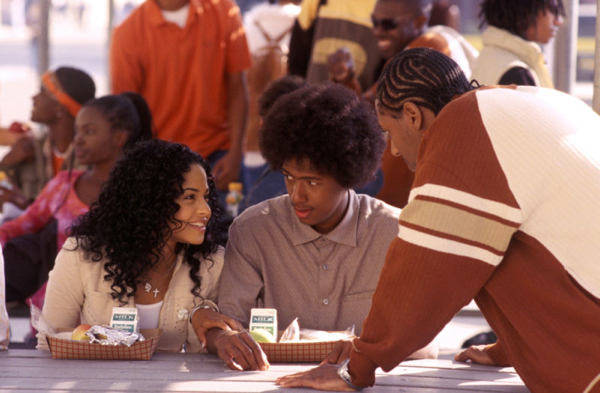
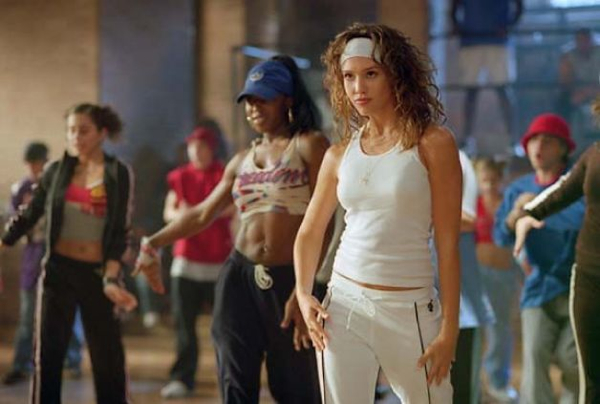
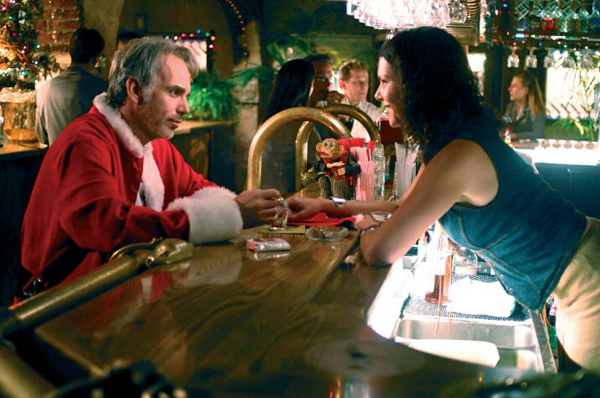
The heart and soul of “Charlie’s Angels,” however, remains the relationship of the titular trio, and producer-star Barrymore can be credited with building a team that feels and acts like a family. As preposterous as it seems, the age-old themes of taking care of each other and looking out for your loved ones bubble up through the otherwise glib winks and nudges. These best friends may bond while dressed as nuns or strippers, but their loyalty to each other transcends their wardrobe, no matter how impressive. Teamwork is merely reinforced by color-coordinated get-ups, from neon moto-cross garb to welders’ outfits, and Natalie, Alex, and Dylan have got the looks that kill.

Hulk

Hulk1

Movie review by Greg Carlson

Early in Ang Lee’s sorrowful, mannered, and dismal “Hulk,” Marvel comics mastermind Stan Lee and 1970s TV Hulk Lou Ferrigno walk out of a building as security guards. The older audience members chuckle in recognition of the nifty cameo, but the fleeting bit turns out to be nothing more than a sore reminder that the green behemoth’s original incarnations in page-bound pen and ink and series television were way more fun and interesting than anything the new big screen version has to offer. Lee, the wonderful director of terrific movies like “Sense and Sensibility,” “The Ice Storm,” and “Crouching Tiger, Hidden Dragon,” seems at first like the ideal person to tackle a large budget “event” film like “Hulk.” Surprisingly, he’s not the man for the job.

Lee and longtime collaborator James Schamus opted to update Stan Lee and Jack Kirby’s 1962 comic as a dreary Oedipal pity-party, unwisely focusing large segments of the film on the repressed memories of not one, but two, major characters. The filmmakers clearly glom on to the big green one’s most obvious literary and popular culture precedents, referencing the Freudian dualism of “Dr. Jekyll and Mr. Hyde,” the man-interfering-with-God themes of the “Frankenstein” mythology, and the beauty and the beast angle from “King Kong.” The results are as ugly as the all-digital brute cobbled together out of pixels by visual effects supervisor Dennis Muren and his team.

Weirdly, director Lee takes his sweet time before delivering a healthy dose of what ticket-holders paid to see – it’s almost as if he is taunting us with a sense of self-importance that nearly screams out: “You must take this seriously! I am dealing with big emotional issues!” No matter how hard he tries, however, the retooled origin story creeps along at a snail’s pace, and is interminably boring to boot. Aussie Eric Bana plays Bruce Banner as a gutless, defeated also-ran (I loved how he had already been dumped by hottie labmate Betty Ross before the action of the movie even begins), leaving baddie-daddy Nick Nolte to devour scenery long before he morphs into the ghoulish entity resembling Hulk foe the Absorbing Man.

The hardest pill for fans to swallow, though, is that the Hulk himself is psychologically emasculated (which calls to mind the old joke about how during his transformations, all of Banner’s clothes rip away from his body except for his trousers). Rather than run the risk of doing any real damage, the script makes certain that the furious colossus crumples up mostly government property. And in keeping with the kiddie-cartoon covenants, the occupants of tanks that are tossed several miles by the raging titan always emerge to let us know that everyone aboard is unhurt.

Ultimately distracting is Lee’s choice to clutter up the frames with multiple split screens. Clearly, the intention was to evoke the multi-paneled comic book page, but the technique reveals itself as just another irksome contrivance, distracting when the film calls for more subtlety. Many of the lengthy dialogue exchanges – and there are more than enough to last for two or three more “Hulk” movies – are presented almost entirely in close-up, resulting in a suffocating, claustrophobic screen. Sure, the movie is going to make a small fortune, but many fans will be left weeping as much and as often as Jennifer Connelly’s Betty Ross.


Dumb and Dumberer: When Harry Met Lloyd

Dumbanddumberer1

Movie review by Greg Carlson

A dreadful, pitiful, and totally pointless exercise in humiliation, the cloddish follow-up to the Farrelly Brothers 1994 smash hit “Dumb and Dumber” – made back when Jim Carrey was focused on being funny instead of gunning for “serious” acting awards – falls flat from start to finish. With virtually zero decent laughs, “Dumb and Dumberer: When Harry Met Lloyd” is an unworthy successor to the original on every level. Granted, not everyone raved about the first “Dumb and Dumber” – more than a few critical doomsayers lamented the end of civilization as we knew it, moaning as they enumerated the high quotient of gags revolving around snot and diarrhea.

Those same critics might wish to take back some of their barbs upon seeing the hell-spawned “prequel” that now languishes on screens nationwide. Despite the movie’s Rhode Island setting, virtually required in Farrelly Brothers movies, “Dumb and Dumberer” has no connection to any of the principal creative staff who worked on the film’s forerunner. Appearing to have sold out to the lowest bidder, Peter and Bobby certainly cannot be pleased with what has become of their creations. Writer Robert Brenner and director and co-writer Troy Miller have failed to understand the most basic property of life in the Farrelly’s world: maintaining genuine warmth toward the characters, no matter the severity of their afflictions.

Worse yet, the new script pathetically tries to ape many of the first movie’s plot devices. You’ll feel déjà vu when a lousy fantasy sequence takes us inside the dimly-lit mind of Lloyd (Eric Christian Olsen, nearly going into overdrive trying to live up to Carrey’s take on the role), or when Harry (Derek Richardson, bombing in the Jeff Daniels part) has a major bathroom mishap. Or when the pair’s friendship is nearly destroyed when a girl comes between them. And on and on.

If nothing else, the Farrelly Brothers proved that being able to effectively make light of extremely stupid people is no mean feat. Director Miller never once strikes a winning note, saddled as he is with a stupendously lame sub-plot that explores the treacherous plan of high school principal Eugene Levy using Harry and Lloyd to garner funding for a “special needs” program. Levy, who is often the highlight in comedies without the comedy, is paired with Cheri Oteri as his lunch lady/mistress, and nary a chuckle is generated between the two.

Weirdly, only Bob Saget, as the father of Harry and Lloyd’s object of affection, seems to understand that he is standing on cinematic quicksand, and he spits out his lines with just the right amount of venom to let the audience know that he is painfully aware that he is doing time in one of the most god-awful movies to come along in decades. The other cast members are negligible, utterly failing to resonate more than two minutes after the merciful conclusion. Luis Guzman, as Lloyd’s dad and Mimi Rogers, as Harry’s mom are given absolutely nothing to do, and it’s a shame considering that they might have been able to salvage something out of this mess if they had been given half a chance.

2 Fast 2 Furious

2fast2furious1

Movie review by Greg Carlson

In a way, it’s too bad that Vin Diesel, whose nearly instant stardom was based in large part on his performance in the original “The Fast and the Furious,” decided to opt out of the inevitable sequel. “A Man Apart,” which Diesel selected instead of “2 Fast 2 Furious” laid an egg critically and commercially, and the once touted “thespian” is quickly losing some of his box office luster. Yep, Diesel could have used “2 Fast 2 Furious,” and the movie sure could have used him. As it is, though, the follow-up manages to get by on the appeal of its pedal-to-the-metal driving sequences and the candy-colored rainbow of hot rods showcased attractively in its sunny Florida setting.

If one were to scrutinize the “2 Fast 2 Furious” story, by Michael Brandt, Derek Haas, and Gary Scott Thompson – and it is not advisable to do so – you might discover that the screenwriters have developed something that resembles a video game more than it does a movie. Characters spit out clipped one-liners in tidy sentences that seem like a bother amidst all the rocket-paced car chases. When the plot occasionally requires behavior approximating other films and television shows, “2 Fast 2 Furious” cribs more from “Miami Vice,” and “Smokey and the Bandit” than from “Bullitt” and “The French Connection.”

Very few of the original personnel returned for the second lap, but wooden Paul Walker (who must be genuinely glad just to be in any movie) picks up where he left off as former LAPD undercover officer Brian O’Connor. For those who kept score on the first film, O’Connor upheld the code of honor in buddy movies instead of his sworn duties as a cop, letting Vin Diesel’s Dominic Toretto escape following about a hundred minutes of some serious homo-erotic bonding. Now O’Connor whiles away his time in the Sunshine State, street-racing a silver and blue Nissan Skyline GTR with enough power to make hyperspace with the flip of a switch.

Apparently, the FBI doesn’t mind that O’Connor engages in a highly illegal and dangerous hobby, or that he was bounced off the force for aiding and abetting his one-time target. The feds just want him to saddle up for a tour of duty designed to bring down a powerful gangster named Carter Verone (ably, sleazily played by Cole Hauser – who has a real future if he sticks with this kind of role). Natch, our hero agrees, and insists on working with childhood pal and ex-con Roman Pearce (Tyrese, having a grand old time) in order to get the job done.

The rest of the movie essentially takes care of itself, with monster smash-ups and dizzying, 120 mph sprints consuming the majority of the running time. Leftover moments are devoted to O’Connor’s dangerous infatuation with gorgeous undercover agent Monica Fuentes (Eva Mendes), who has infiltrated Verone’s operation. Curiously, director John Singleton (a long way from “Boyz N the Hood”) chooses to downplay the sexuality virtually to the point of banishing it altogether. If you didn’t know any better, you might think that O’Connor was still carrying a torch for Toretto.


Wrong Turn

Wrongturn1

Movie review by Greg Carlson

According to “Wrong Turn,” another predictable entry in the long-stale teen horror genre, West Virginia is the sort of place where generations upon generations of inbreeding has led to a family of anti-social cannibals out to devour any traveler hapless enough to wander through the state’s rural back roads.  Despite protestations by West Virginia Division of Tourism officials, as well as Governor Bob Wise, who opined of the movie “I think it’s trash,” creepy, shack-dwelling hillbillies apparently translate to financial success – especially when mayhem and misadventure are added to the mix.

“Wrong Turn” begins with young med student Chris (Desmond Harrington) en route to a crucial job interview in Raleigh, North Carolina.  Tooling along in his vintage Mustang, everything is peachy until a major highway back-up blocks his path.  Unwisely opting to take a dirt road “short cut,” Chris accidentally collides with a parked SUV (the smash-up, incidentally, is very well-staged), completely disabling his car.  Occupied by a quintet of attractive young campers, including stoner-couple Evan (Kevin Zegers) and Francine (Lindy Booth), freshly engaged Scott (Jeremy Sisto) and Carly (Emmanuelle Chriqui), and the gloomy, recently – and rather conveniently – dumped Jessie (Eliza Dushku), the SUV had been deliberately sabotaged courtesy of barbed wire stretched across the road.

That’s a bad sign, especially when cell phones don’t work and the nearest gas station is a good hike.  Naturally, the kids decide to split up, with Evan and Francine staying behind to watch the vehicles.  As soon as the others are out of earshot, the unfazed pair decides to indulge their libidinous urges.  Splitting up and sex are a literal magnet for homicidal crazies, and before you can say “disembowelment” the movie is off and running – and running, and running.

Fortunately, director Rob Schmidt knows how to build suspense – even when the outcomes of Alan McElroy’s script can be guessed well in advance.  “Wrong Turn” plays like an amalgam of “The Texas Chainsaw Massacre,” “The Hills Have Eyes,” and “Deliverance” (which is name-checked by Sisto’s wise-cracking character) albeit with increased action and much more photogenic victims.  One extended set piece, a nighttime cat-and-mouse chase that takes place high above the forest floor, is nearly worth the price of admission.  Scrambling up trunks and negotiating skinny branches like high-wire daredevils, the protagonists must stay just steps ahead of an ax-wielding marauder.  This scene, as well as a few others, transcend the typical expectations of the horror movie by virtue of their imagination and visual flair.

The downfall of the movie, however, comes ironically at the hand of special-effects wizard and co-producer Stan Winston.  Characters with monikers like Three Finger, Saw Tooth, and One Eye are unquestionably scarier when left in the shadows and to the imagination.  Winston should know, with all of his experience and skill, that less is more, but apparently he could not resist whipping up large batches of latex appliances and gruesome dentures.  Unseen, the cackling ghouls are genuinely spooky.  Out where we can view them clearly, the results are disappointing and anything but frightening.

Bend It Like Beckham

Benditlikebeckham1

Movie review by Greg Carlson

As a teenage coming-of-age comedy, “Bend It Like Beckham” is sturdy and reliable, with a conclusion so foreseeable you will likely telegraph it from the opening scenes. Tried and true tropes are firmly in place: a wedding, a love triangle, a passion for something your parents just don’t understand, and a handful of white lies and misunderstandings to keep things chugging along. Despite the movie’s formulaic familiarity, however, director Gurinder Chadha (“ Bhaji on the Beach,” “What’s Cooking?”) has heart to spare, as well as a terrific way with the young actors in her charge.

Jesminder (Parminder Nagra, top-notch all the way) – Jess, for short – loves to play football (soccer, to Yanks), despite the pressure for her to focus on the traditions her Indian family holds dear. Older sis Pinky (Archie Panjabi) is set to be married, and mama Bhamra (Shaheen Khan) insists that Jess learn to cook a traditional meal, find a nice boy, and follow her older sibling to the altar. Jess, however, has little time to think about aloo gobi and potential suitors. She wants only one thing: to bend it like Beckham, that is, put a soccer ball in the net with all the skill of Great Britain’s most famous athlete.

David Beckham, who makes only a fleeting appearance in the movie, is to Brits now what Michael Jordan was to basketball fans in the prime of his career: a superb player with enough natural talent to match his many commercial endorsements. Because Americans in general are not exactly recognized for a wild passion for soccer, Becks is known to some folks over here simply as the husband of Posh Spice. England, however, is a different matter. Like thousands of other young kids, Jess decorates her bedroom as a sort of shrine to Beckham, much to the consternation of her parents, who refer to the footballer as “that bald man.”

Jess is spotted in the park one day by Jules (Keira Knightley), another football-mad young woman who plays for a local club called the Hounslow Harriers. Impressed with Jess’ footwork, Jules recruits her to play on the team. Coached by a handsome Irishman named Joe (Jonathan Rhys-Meyers, more likable than he has ever appeared on-screen), the Harriers welcome Jess to their fold, and quickly began to win plenty of games. All the while, Jess keeps her newfound glory hidden from her protective family. You can bet that her deceit will catch up with her sooner rather than later, but getting there is half the fun.

Both Nagra and Knightley manage to exuberantly and convincingly convey a fervent keenness for football, and director Chadha realizes some of her most visually accomplished work during the scenes in which soccer is being competitively played. The supporting cast is also excellent – particularly Rhys-Meyers and Bollywood veteran Anupam Kher, who appears as the stern but patient father of Jess. Chadha also makes time for activities off the playing field, and the staging of Pinky’s nuptials is a delight to both eye and ear, rivaling “Monsoon Wedding” in its colorful energy.

All the Real Girls

Alltherealgirls1

Movie review by Greg Carlson

It’s easy, sometimes, to forget that David Gordon Green is still a young man in his late 20s. “All the Real Girls” is only his second feature, following the haunting “George Washington,” but it resonates with a careful, unhurried patience that few filmmakers of Green’s generation are likely to be able to demonstrate to an audience, even if they wanted to. While Green is certainly not the first film school attendee to gulp down extra helpings of Terrence Malick en route to the development of a directorial style, he is undoubtedly one of the best. Both “George Washington” and “All the Real Girls” construct tiny universes out of their small, North Carolina milltowns that border on the astonishing in their authenticity.

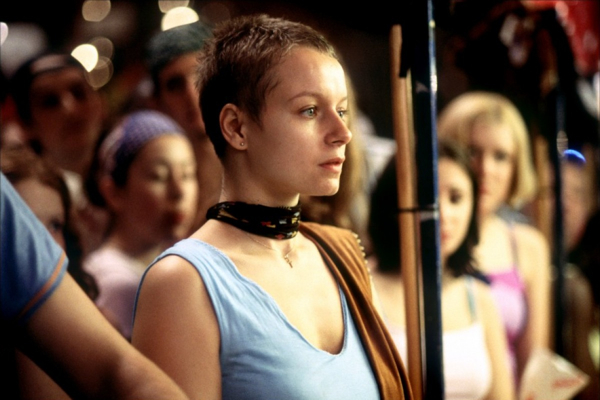
While “George Washington” dealt with the tragedy attending the accidental death of a child, “All the Real Girls” dissects the heady confusion that swirls around falling in and out of love. Paul (Paul Schneider, who also co-wrote the story with director Green) is a directionless kid who has managed to bed every available young woman in the area – more than twenty by his count – despite the fact that he still lives with his mother. Noel (Zooey Deschanel) is the virginal 18-year-old sister of Paul’s best pal Tip (Shea Wingham, rocking an impressive pompadour).

If you think you can guess with some certainty the sorts of things that will happen next, you would probably be right. But Green is not interested in machine-tooling some kind of contrived revelation or unexpected shock. In his own quietly contemplative manner, he wants to see how his characters will behave under the most usual of circumstances. Respecting the regular, commonplace ordinariness of daily life, Green uncovers both happiness and sadness in the most mundane details of typical conversations. As a screenwriter, Green almost effortlessly taps in to the weird emptiness of the way in which we communicate.

Most of the movie is spent dealing with the intense emotions experienced by Noel and Paul as they draw closer to one another, but many of the supporting cast members are expertly incorporated by the director. Danny McBride is hilarious as Bust-Ass, the sort of person who knows he won’t be any girl’s first choice but hangs in there so he can take advantage on the rebound. The always compelling Patricia Clarkson is wonderful as Paul’s mom, a professional clown who entertains at birthday parties and children’s hospital wards. As Tip, Shea Wingham gets to play one of the best scenes in the entire film, as he discusses fatherhood with Paul.

There is no mistaking, however, that the movie really belongs to Deschanel and Schneider, who share a death-grip on the disorientation and punch-drunk bewilderment that attends falling hard in love. Deschanel, in particular, shows off a deeply convincing vulnerability that lights up the screen. She understands perfectly the irony of how Noel yearns to become more experienced, even as Paul cherishes her innocence as an opportunity for a new beginning. At one point, Noel explains to Paul that, in a dream, she was so happy she invented peanut butter. On paper, this sounds more than a little ridiculous. On screen, Deschanel makes it work.


Laurel Canyon

Laurelcanyon1

Movie review by Greg Carlson

“Laurel Canyon” could have been a really good movie.  Writer-director Lisa Cholodenko, whose “High Art” covered some of the same thematic territory, has the right cast, the right setting, and the right crew – especially in cinematographer Wally Pfister, nearly as masterful here as he was in “Insomnia.”  The problem is, Cholodenko provides a tempting set-up and then plays it far too safe when the time comes to really deliver a wallop.  A Valley Girl herself, Cholodenko has an unblurred, almost crystalline lucidity about the bewildering strangeness of greater Los Angeles – a locale that is as much a state of mind as a physical address.

Christian Bale (sporting an almost impossibly bad hairdo) and Kate Beckinsale both tackle American accents as Sam and Alex, a pair of Harvard Medical School graduates who relocate to L.A. from Cambridge.  The uptight, straitlaced Sam has arranged to crash temporarily at his mother’s Laurel Canyon spread while she retreats to her Malibu beach house.  The problem is, mother Jane, a prolific and somewhat legendary record producer (bookshelves are cluttered with photos of her with Joni Mitchell, David Bowie, and Bruce Springsteen), has split with her latest beau, and he is holed up in the beach house while Jane toils away with a young band in her home studio.

Reluctantly, Sam agrees to share the space, but insists that Alex look for a place to rent while he puts in long hours at the hospital.  Alex’s enthusiasm for new digs quickly wanes when she is sucked in to Jane’s carefree orbit of sex, drugs, and rock and roll.  Abandoning her doctoral dissertation on the reproductive habits of fruit flies, Alex spends more and more time smoking weed, consuming tofu steaks, and lounging around the pool with the musicians.  Meanwhile, at the clinic, Sam’s head is turned by a gorgeous fellow resident (Natascha McElhone) who seems more than eager to seduce him.

There is an unfortunate obviousness about the way in which Sam and Alex drift away from each other, and worse yet, Cholodenko offers zero edge when exploring the sexual transgressions that endanger Alex and Sam’s relationship.  Beckinsale’s Alex seems tame, restrained, and closed off even when she is supposed to be at her most reckless and adventuresome.  As Sam, Bale expertly conveys the aura of a son whose entire childhood was damaged by his irresponsible mom, but short of a pair of acutely focused scenes, the audience is expected to take his bottled-up rage almost for granted.

The film’s saving grace is the superb performance by Frances McDormand as Jane.  Running circles around her young counterparts, McDormand adds another bulls-eye to her remarkable filmography.  McDormand understands that Jane is a woman who pursued, and largely accomplished, her life-dreams with an urgency and sense of mission that few people ever experience, even though she might have been hurt a few times along the way.  Sam resents her for this, but the audience certainly doesn’t: Jane’s good humor and dauntless spirit always trumps her son’s mopey brooding.  Too bad we didn’t get to spend more time with her.