North Dakota Human Rights Film and Arts Festival Director Sean Coffman Interview

Awake (1)

Interview by Greg Carlson

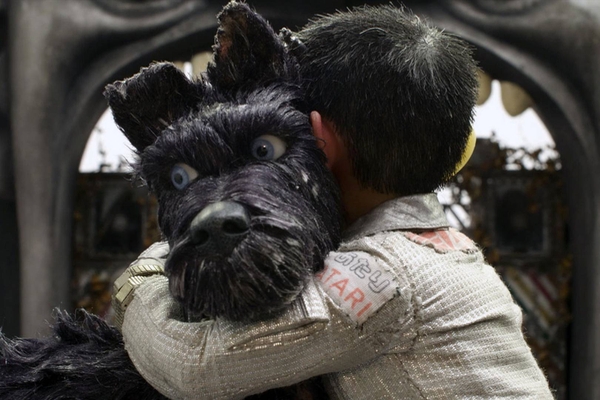
An impressive collection of visual art and fiction and nonfiction movies, including “Awake: A Dream from Standing Rock” (pictured above), can be seen by the public during the inaugural North Dakota Human Rights Film and Arts Festival. HPR film editor Greg Carlson talked to organizer Sean Coffman about the events.


Greg Carlson: For people who may not know you, can you describe your background and your role as executive director of the Human Family?

Sean Coffman: The Human Family is a new 501(c)(3) in North Dakota, founded in March of 2017.  The mission of the organization is to promote human rights and social justice issues through film and art. Our goal is to educate, engage, and facilitate discussion in our communities around local or worldwide human rights issues.

My role as Executive Director is not unlike the role of Executive Producer or Producer on a film set: I identify the various projects we’ll create or support, establish those project’s budgets, find and establish funding, and assemble the creative team to help bring those projects to life.


GBC: This is the inaugural year of the Human Rights Film and Art Festival. How long has the planning taken?

SC: We started planning the festival in November 2016, so a year ago. We made the announcement in December 2016, and started accepting submissions in February of 2017.

The genesis behind the festival was the media documentation taking place during the peaceful resistance at Standing Rock. There was such an influx of still photography, documentary video production, and art creation that we recognized the need to provide a forum for these filmmakers and artists to share these stories so they weren’t lost to time or other distractions.

In this part of the country, there isn’t a regularly held film or arts festival dedicated directly to human rights and social justice. The closest is in Boulder, Colorado or Chicago, Illinois.


GBC: The lineup of movies features stories that range from the regional to the international, past and present. How did you and your team go about finding and programming the films?  

SC: I think the need for a forum to share these stories was proven to be true, because the filmmakers found us. We established a submission portal for films on Film Freeway for filmmakers to share their work. Inside of a few days, submissions started to come in from around the world.

In the end, we had 118 submissions from 29 different countries. Over 76 hours of content was shared from narrative, documentary, experimental or student filmmakers working in human rights.

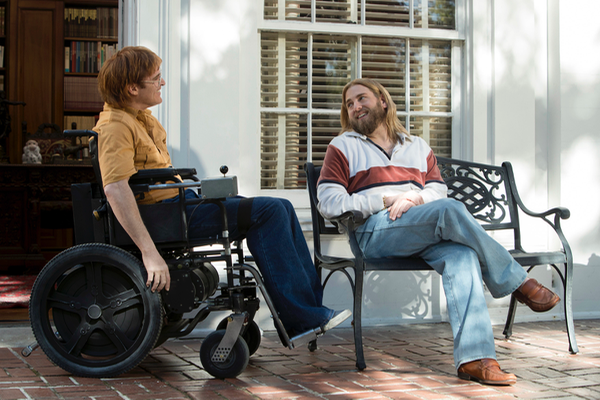
This year, the films selected for the festival include the deconstruction of stereotypes for individuals with mental or physical disabilities, LGBTQ rights and discrimination, women’s rights and cultural discrimination, stories of refugee experiences and discrimination, human and civil rights violations, and discrimination and violence towards Native American culture.


GBC: Which movie are you most looking forward to seeing with an audience?

SC: That’s a tough one. My personal favorite is India’s first LGBT silent film and the jury’s choice for Best Narrative Short, “Sisak.” For me, the film embodies the definition of cinema. The writing and storytelling, the cinematography, the score, the acting, the directing, the human rights message; everything about this film is so incredibly well done.

In terms of seeing with an audience, I’d have to say “No Reservations.” Screening Friday evening, the film takes a satirical approach to the issue of corporate oil companies and oil transfer pipelines. The film swaps the narrative, and has an indigenous oil company putting an oil pipeline through a suburban white neighborhood. It’s poignant, relevant and intentionally humorous as the narrative works its way through the important topics specifically impacting North Dakota today.

That same evening is the discussion “Reflections of Standing Rock,” and filmmakers Myron Dewey, Floris White Bull, and Margaret Landin will be part of a panel moderated by NDSU professor Dr. Michael Yellow Bird. As the year anniversary of the the peaceful resistance to the Dakota Access Pipeline takes place, this will be the first time filmmakers have been gathered in Fargo to share their experiences from the front lines of the resistance. I think it will be an incredibly powerful and important evening for everyone.


GBC: What is the human rights issue you think about the most?

SC: Globally and locally, the issue I think about most is humanity’s inability to learn from its past. We are continually persecuting and subjugating individuals on the basis of their race, creed, culture, religion, sexual identity or political affiliation.

Even in the nearness of some of the most horrific experiences, we continue to make the same decisions, to demonize individuals for the same reasons. We’re talking about genocide. We’re talking about internment camps. We’re talking about breaking agreements with our indigenous brothers and sisters.


GBC: What inspires you?

SC: I’m inspired daily by the human rights and social justice activist working to ensure that the protections afforded by the United Declaration of Human Rights are provided.

In North Dakota, I’m working daily with individuals who are giving everything they have — time, resources — to ensure that other people have what they need. In today’s current political climate, that’s a rare thing.

And an unintentional byproduct of the festival is the friendships I’m making with filmmakers from around the world. I’m talking with people from India, China or Iran on the phone, and we’re able to find common ground through art.

United Arab Emirates filmmaker Dia Zaiem, whose work “Forgotten” will screen on Wednesday evening, said to me, “The fact that this film has been accepted in the U.S. shows that politics can’t limit the art.”

There’s a lot of work that takes place to make a festival like this happen, but knowing that we have the power to influence understanding between cultures and nations through the power of art… that’s humbling, and it makes the effort to create something such as this festival totally worth it.


The North Dakota Human Rights Film and Arts Festival will be held November 15-17 beginning at 7:00 p.m. each evening at the Fargo Theatre. Single day passes are ten dollars each and all-access and full festival passes are also available.

The complete lineup of movies and events, including film award winners, can be found at human-family.org.

The Meyerowitz Stories (New and Selected)

Meyerowitz Stories (1)

Movie review by Greg Carlson

Noah Baumbach’s “The Meyerowitz Stories (New and Selected)” comforts fans of the filmmaker like a favorite quilt or a pair of old slippers. Sterling production and an all-star cast could attract the uninitiated to the film’s home on Netflix, and longtime appreciators will laugh and wince at many of Baumbach’s favorite observations on family rivalries, aging (un)gracefully, and personal and professional failures. Centered around a meaty performance by Dustin Hoffman that soothes the sting of the majority of the legendary actor’s work over the past decade plus — including multiple Fockers and Kung Fu Panda turns — “The Meyerowitz Stories” smartly balances the universal and the specific.

Hoffman’s Harold Meyerowitz, a cantankerous sculptor who never received the level of fame he thought he deserved, stares down the twilight. An oft-wed professor enthralled by the sound of his own voice and the weight of his opinionated pronouncements, “the Dad” — as he is called by his current wife — withholds affection, plays favorites, and repeats old jokes with the expectation of slavish devotion. Son Danny (Adam Sandler in his most heartfelt and affecting performance since “Punch-Drunk Love” in 2002) and daughter Jean (Elizabeth Marvel), are used to living in Harold’s shadow. Half-sibling Matthew (Ben Stiller) returns to New York after years of self-exile in California.   

Several critics have pointed out the superficial similarities between the “bad dads” patriarchy of Hoffman’s Meyerowitz and Gene Hackman in Baumbach collaborator Wes Anderson’s “The Royal Tenenbaums.” The structural parallels manifest most acutely in the heartache experienced by adult children coming home and still seeking love and approval from their father. The Meyerowitz kids don’t share the stylized expressionism of Anderson’s one-time child geniuses, whose brilliance “had been erased by two decades of betrayal, failure and despair,” but Baumbach has long explored the rough terrain of broken marriages and difficult parenting.  

Despite the dominating presence of the Hoffman, Stiller, Sandler trio, many of the great joys of “The Meyerowitz Stories” are attached to Grace Van Patten as Danny’s daughter Eliza, Marvel’s Jean, and Emma Thompson as Harold’s dipsomaniac spouse Maureen. None of the women are granted the screen time or depth of characterization afforded the central group of men, but each makes the most of what’s on offer. Van Patten, whose impressive work in Adam Leon’s captivating “Tramps” hinted at things to come, radiates an insouciance that secretly masks Eliza’s desire to follow in her grandfather’s artistic footsteps (Anthony Lane calls her “a sort of cool Cordelia” to Harold’s “neighborhood Lear”).

Eliza’s first-year Bard film class assignments, a series of experimental hard-R shorts ripe with tongue-in-cheek pretentiousness and pissed-off critiques of sexual double standards, provide one of the movie’s funniest running gags. As art school parody and source of awkward group viewing, Eliza’s movies — populated with Little Red Riding Hood, the Big Bad Wolf, and the hermaphroditic superhero Pagina-Man — comment indirectly on the theme of growing up and moving on. Later, in a fascinating scene that Anne Cohen has incisively deconstructed, Jean reveals a secret from the past that triggers a curious reaction by her brothers. That chapter of the film introduces additional food for thought on issues of gender dynamics, and will bring some viewers back for second and third looks.           

Spielberg

Spielberg HBO Doc (1)

Movie review by Greg Carlson

Veteran “American Masters” producer and series creator Susan Lacy, whose access to subjects and breadth of knowledge is the envy of scores of documentarians, looks at Steven Spielberg in a nearly two-and-a-half hour long portrait for HBO. Simply titled “Spielberg,” the movie is surprisingly safe, conservative, and risk-free. Populated with an endless supply of close-up talking heads and anchored by the famous filmmaker’s own on-camera commentary — with many of the anecdotes offered up for what feels like the umpteenth time — Lacy’s result plays like the television equivalent of the Eagles’ multi-platinum greatest hits collection.

For cinephiles, the make-it-or-die-trying determination of the nerdy kid who sneaked and bluffed his way (“print the legend”) to a Universal gig as the youngest ever contract director at a major Hollywood studio is familiar. Really familiar. Even so, an undeterred Lacy’s first in-depth dive is “Jaws,” and the resulting re-cap sets the tone for the remainder of the show. Sustained Jawsmania has already given birth to Laurent Bouzereau’s 1995 making-of doc, Erik Hollander’s 2007 “The Shark Is Still Working,” and Jamie Benning’s 2013 “Inside Jaws,” but the mogul and the great white shark are like peanut butter and jelly: unthinkable to separate, despite the oceans of existing records.

And so it goes. “Close Encounters of the Third Kind” and “E.T. the Extra-Terrestrial” form a one-two punch between a “movie brats” roster breakdown accompanied by home-movie film and a note on Spielberg’s magic touch with child actors. The latter, punctuated by a behind-the-scenes clip of the director’s grimace into the camera while comforting a sobbing Drew Barrymore, recognizes the fraught terrain of emotional manipulation by directors looking to acquire the perfect shot by any means necessary. A thought from Leonardo DiCaprio hints at a more complex exploration of the matter, but Lacy moves on.

More big dogs are lined up for veneration, with “Schindler’s List” and “Jurassic Park” each receiving predictable scrutiny, but to her credit Lacy introduces a few unexpected surprises. A short but refreshing account of “1941” is one early, albeit rare, example that Spielberg could stumble hard. Even more satisfying is the way in which Lacy covers the director’s inability and/or unwillingness to dig more deeply into the relationship between Shug and Celie in “The Color Purple,” as Spielberg blushes at the very notion that his adaptation could have included the mirror scene. Ultimately, any more serious considerations of race and sexuality fail to make the cut.                  

Lacy also skirts most charges of Spielberg’s tendencies toward sentimentality, but a handful of acknowledgements, including one by Tom Stoppard, turn up. A lukewarm appraisal of whether massive commercial success and blockbuster appeal preclude the possibility of artistic merit hovers at the fringes, and J. Hoberman — one of several critics invited to participate in the movie — tantalizingly assesses the value of Spielberg’s apparent humanist neutrality in “Munich,” referring to the filmmaker as “the Hollywood equivalent of a public intellectual.” It is also during the section on “Munich” that Lacy demonstrates Spielberg’s potent sense of spatial orientation. Without specifically invoking Hitchcock or mentioning the privileged viewer, Spielberg argues soundly on behalf of suspense.

Overall, however, Lacy pays very little attention to Spielberg’s directorial technique ala the “pure cinema” discussed by Kevin B. Lee in “The Spielberg Face.” Thematic approaches, especially those concerned with divorce and the dissolution/reunification of the family fare much better, and Lacy makes excellent use of Spielberg’s sisters Nancy, Anne, and Sue, as well as father Arnold (currently 100 years old) and mother Leah Adler (who died in February), to underline the biographical touches to which Martin Scorsese alludes when describing Spielberg’s oeuvre as deeply personal.

Christopher P. Jacobs (1954-2017)

Old Dark House (1)

Reflection by Greg Carlson

Ted Larson introduced me to Chris Jacobs one evening at Weld Hall in the late 1980s. I was in high school then, but Chris recognized fellow film fanatics, and we would chat a little bit each week. I learned quickly that he loved movies as much as anybody, and had a special fondness for the obscure and little-seen “gems” from the silent and early sound eras. Over the next decade, I came to respect Chris’s dedication and devotion; he lived in Grand Forks and yet, every Monday during the Summer Cinema series he made the drive to the campus of Moorhead State University (now MSUM) to see whatever Ted had programmed.

I soon began attending the two annual film festivals recognized by Ted Larson as the Mount Everest and K2 of rare movie thrill-seeking: Cinefest in Syracuse, New York and Cinecon in Los Angeles, California. Upon arrival, I would collect my program, look over the list of films so uncommon that many had not been publicly screened since their original release dates, and head for the auditorium. No matter how early I arrived, Chris was already in his usual spot. After watching features back-to-back-to-back for hours, when my brain pounded against the inside of my skull and my bloodshot eyeballs begged for mercy, I would scan the room on my way out. Sure enough, Chris was still there, drinking in the images on the silver screen.

In 1997, I wrote my first article for the High Plains Reader, and not long after that, editor John Lamb invited me to join Chris as HPR’s other regular contributor on the topic of movies. Chris and I coexisted peacefully in print for — can it be? — the next twenty years. Initially, I somewhat reluctantly deferred to his senior status, coordinating reviews so we could avoid doubling-up. Once in awhile, we did end up covering the same title, but it never bothered us. Eventually, Chris turned his attention to an ongoing series of diary-like chapters on do-it-yourself moviemaking, offering practical advice to aspiring directors.

At the time, I was just happy to have the pick of new releases all to myself, but in hindsight, I gained a new level of respect for Chris. His digital moviemaking columns paralleled the ambitious run of micro-budget features that he wrote, produced, and directed. From noir crime thriller to backstage musical to body-switch comedy to supernatural horror (that allowed him to indulge his longtime affinity for ancient Egypt), Chris satisfied another facet of his all-encompassing passion: learning by doing and gaining a deeper understanding of all things film in the process.

Chris got things done, and the list of his accomplishments has been documented in several other recent tributes. When it came to the content Chris made, you had to expect the unexpected. A music video for local heavy metal heroes Sons of Poseidon? Check. A contemplative, meditative visual essay on loneliness and loss — starring his father — submitted as an entry for the Fargo Film Festival’s 2-Minute Movie Contest? Check.

Chris once gave me a copy of his 1980 graduate thesis, “A Critical Appraisal of James Whale’s ‘The Old Dark House’.” I have spent the last few days rereading it. The essay is a terrific assessment of a great film, vividly rendered through Chris’s skillful pen. And like all good film writing, it makes you want to immediately watch the movie. Tom Brandau recently said that Chris “truly loved the cinematic arts and devoted most of his time and energies spreading the gospel of film.” Those who knew Chris and those who have enjoyed his writing would wholeheartedly agree.  

Blade Runner 2049

Blade Runner 2049 (1)

Movie review by Greg Carlson

As thrilling and thought-provoking a sequel as one might hope, “Blade Runner 2049” leverages potent nostalgia for one of the most influential science-fiction films in the canon. It’s a tall order to measure up to Ridley Scott’s stunning 1982 accomplishment, and filmmaker Denis Villeneuve — working for the third time with cinematographer Roger Deakins — pays homage without succumbing to pure slavishness. While the new model contains enough echoes, parallels, and callbacks to infuriate some members of the same crowd who carped about structural similarities between “The Force Awakens” and “Star Wars,” the pleasures and charms of metanarrative and intertext can enhance, rather than diminish, one’s enjoyment of the “original,” whatever that is today. There are, after all, some seven versions of the cyberpunk landmark.  

Ryan Gosling, in taciturn “Drive” mode, is Blade Runner KD6.3-7 — K for short — a dutiful civil servant reporting to Robin Wright’s Lt. Joshi in the L.A.P.D. Sent to dispatch a replicant named Sapper Morton (Dave Bautista) in a scene that pays tribute to the tense interrogation of Brion James’ Leon Kowalski by Morgan Paull’s Dave Holden, K discovers an ossuary that sets into motion a plot that draws on one of the first film’s core questions: how do we define personhood? That mystery, pondered from multiple angles and through the carefully engineered eyes of several supporting characters, is just as loaded in 2017 as it was thirty-five years ago.

While the “more human than human” replicants continue to be produced as specimens of uncanny beauty and unfettered physical strength and stamina, their new “father” is Jared Leto’s Niander Wallace, a Croesus-rich shadow replacing Joe Turkel’s Eldon Tyrell. Leto, whose optical impairment and careful diction veer awfully close to an attempted imitation of the inimitable Turkel, is abetted by deadly femme fatale Luv (Sylvia Hoeks). Hoeks is cool, but she’ll never be as cool as the richly drawn and beautifully written likes of Rutger Hauer’s unforgettable Roy Batty. Who could?

The half-angels/half-devils that filled out Batty’s crew of kick-murderers, basic pleasure models, and cargo loaders gave “Blade Runner” urgency and pulse. They wanted more life, fucker. But accelerated decrepitude and Methuselah Syndrome are absent from “2049.” A different existential theme resides in Joi (Ana de Armas), the artificially intelligent companion of K. The novelty of the relationship between Joi and K, complicated by the presence of Mariette (Mackenzie Davis), calls to mind some aspects of the complex operating system in Spike Jonze’s “Her.”            

Villeneuve’s “Blade Runner” is roughly 45-minutes longer than the first, and the extended running time of the sequel is not necessarily an asset. The much anticipated return of Harrison Ford to one of his signature roles is, along with another jaw-dropping surprise, deliberately postponed until later in the film. Curiously but not unexpectedly, the expository retrofitting that backfills Deckard’s biography doesn’t quite match the man we thought we knew. Even so, Deckard’s monkish existence in a space-age bachelor pad, complete with virtual Frank Sinatra, Elvis Presley, and Marilyn Monroe, sees Villeneuve confidently staking out a different vibe from the densely populated urban chaos of Scott’s Los Angeles.  

American Made

American Made

Movie review by Greg Carlson

The indefatigable Tom Cruise, still able to carry off youthful mock-insouciance at the age of 55, has plenty of fun as Barry Seal in “American Made.” Seal, a pilot who smuggled drugs for the Medellin Cartel and informed and testified for the D.E.A., probably wouldn’t have recognized much of his lived experience in Doug Liman’s entertaining fantasy, but the “true story” epigraphs affixed to feature films allow us to assign plausibility to the implausible. Cruise’s Seal, an in-over-his-head entrepreneur seduced by a government handler into thinking he’s one of the good guys, uses his dazzling smile and firm handshake to hide his initial ignorance of all the deep shit that piles up around him.

Cruise, who previously worked with Liman on “Edge of Tomorrow,” elects not to push Seal’s rapid rise into the full-blown meltdown and fall usually accompanying the theme of wretched excess. Instead, he and Liman willfully turn their backs to any kind of moral hand-wringing or introspection. It’s a sound move, as Seal’s can-do pluck perfectly suits the Cruise template. Seal, like so many fiercely driven Cruise characters, desires motion, action, and a sense of purpose — even if that purpose breaks a lengthy list of national and international laws.        

“American Made” twists the rags-to-riches schematic of the Horatio Alger myth to its own agenda, acknowledging the perverse glee our fellow citizens take in accumulating wealth by any means necessary. Liman simultaneously lampoons and celebrates the obsession with money by constantly emphasizing Seal’s cash-only transactions. As Seal completes an escalating number of successful smuggling trips, the greenbacks pile up in duffel bags, closets, hat boxes, suitcases, stables, and car trunks. Money is buried all over the backyard. In one scene, a suspicious F.B.I. agent rolls into sleepy Mena, Arkansas — the town where Domhnall Gleeson’s mysterious agent Schafer has relocated Seal — only to see an alarming number of banks, trusts, and savings and loans along the main drag.   

In the hypermasculine, jacked-up universe of “American Made,” women unsurprisingly take a back seat to the parade of scenes in which men speak to other men. Sarah Wright, as Seal’s spouse Lucy, gets the most screen time of the trio of females who register at all. The always interesting Lola Kirke shows up as the wife of Jesse Plemons’ Sheriff Downing, and for a minute you wonder whether her role will develop into something of substance. It does not. Jayma Mays, as the state attorney interrupted by an unwelcome phone call from Governor Bill Clinton, appears in just a couple of scenes. None of the women share a conversation with another woman.

Screenwriter Gary Spinelli zips through a far too-good-to-be-true chronology that links Seal to U.S.-based Contra training camps, reconnaissance photos, Pablo Escobar, and drug and gun running routes the C.I.A. conveniently chooses to ignore. Liman matches the pace with a fevered mix of great stock footage (much of it featuring Ronald Reagan), animation, freeze frames, pop music, smeary VHS tape confessions, and other winking period details evocative of the early 1980s. The cumulative effect of the movie has already been compared a number of times to “Goodfellas,” but “American Made” does not accomplish the same level of world-building verisimilitude on display in Scorsese’s classic.    

Strong Island

Strong Island (1)

Movie review by Greg Carlson

“Strong Island,” Yance Ford’s vital cinematic elegy to his slain brother, is a gripping documentary presented with control and precision. That careful formality serves both the story and the filmmaker’s underlying thematic questions addressing the absurd but commonplace outcomes of the notion of justifiable homicide and the use of reasonable fear as a means for perpetrators to claim self-defense. In 1992, Ford’s then 24-year-old sibling, William Ford, Jr., was shot to death by Mark Reilly, a white mechanic. Even though Ford’s close friend Kevin Myers was nearby, the killing took place out of the direct sight of any potential eyewitnesses.

Statistically speaking, it was unsurprising when an all-white grand jury decided not to indict Reilly. Ford’s incredulous family members, initially expecting that a criminal case would be brought forward, speak about the slow-motion devastation of the system’s injustice and the effective destruction of their nuclear family in the months and years that followed. Yance Ford, who often appears on camera in tight close-up shots, intimately processes his thoughts to articulate the impossible: “I’m not angry. I’m also not willing to accept that someone else gets to say who William was. And if you’re uncomfortable with me asking these questions, you should probably get up and go.”       

Calls are made to several of the people involved with the original investigation, and Ford uses those conversations to underline the common way in which power is exercised against the marginalized. But as the narrative unfolds, the filmmaker stakes out and clarifies positions that don’t rely on the procedural (mis)handling of his brother’s case: Ford said in an interview with Steve Rose, “I have no interest in giving Mark Reilly any space in this film. When you shoot my brother, you’ve said everything to me that you have to say.”

Instead of orienting in the direction of any lurid, true crime rundown of reported details, Ford makes some bold and rewarding choices. The insidiousness of zoning all African-American neighborhoods inside Long Island is expressed by Ford’s matter-of-fact narration and through the words of Ford’s mother Barbara Dunmore Ford, who leaves a lasting impression on viewers through the vivid detail and specificity of the anecdotes she shares. Dunmore Ford’s presence in the movie is indispensable, and the way in which she addresses the toll of grief on her marriage results in one of the movie’s most unforgettable scenes.

Additionally, Yance Ford personalizes the loss of his brother by including a series of snapshots and photographs, physically arranged by hand within the frame (home movie footage is also incorporated, but to a lesser extent). The visual device calls to mind, among others, Daniel Lindsay and T.J. Martin’s stunning 2013 short “My Favorite Picture of You.” From start to finish, Ford spent more than a decade on this project, and the full weight of its considerable impact lands with the filmmaker’s grim reminder that the conversation about violence against unarmed African Americans must be expanded beyond the coverage of police incidents to account as well for civilians who get away with murder.   

Mother!

Mother (1)

Movie review by Greg Carlson

WARNING: The following review reveals plot information. Read only if you have seen “Mother!”

With a tongue-in-cheek exclamation point distinguishing it from the likes of Joon-ho Bong’s superior 2009 film and the more than 180 other movies sharing the title, Darren Aronofsky’s “Mother!” offers fair warning to the curious. Eschewing proper names for characters and saddling them instead with the likes of Penitent, Defiler, Herald, Pilferer, Supplicant, Hewer, Lingerer, and Zealot, the moviemaker drinks deeply from the well that gave birth to the similar ecology-meets-religious-mythology themes of “Noah.” Fast-tracked once Jennifer Lawrence signed to play the lead, “Mother!” tells the story of a young woman married to a distant poet (Javier Bardem). No matter how much she offers of herself, her powerful husband keeps taking.

If that dynamic sounds suspiciously familiar, Aronofsky acknowledged in a “Vanity Fair” interview that the core of Lawrence’s character was influenced by, of all things, the plot of Shel Silverstein’s “The Giving Tree.” The Mother Earth symbol labors in vain to restore and refurbish the couple’s spacious octagonal home (“I want to make a paradise”), but her efforts are perpetually interrupted, first by an ailing surgeon (Ed Harris) and his wife (Michelle Pfeiffer), and later by an unruly throng of the poet’s admirers. Eventually, all hell figuratively breaks loose in a tour de force sequence certain to terrify anyone planning their next dinner party.     

Even before the inevitable think pieces start to pile up, one anticipates the impending slugfest over Aronofsky’s treatment, or mistreatment, of womanhood. Is the filmmaker offering a nuanced critique of the patriarchy’s systematized marginalization and abuse of women or is he wallowing in the spectacle of violence visited on the sexualized female body? Chelsea Phillips-Carr stakes out her position that the movie is “a work of pure misogyny,” writing, “Films which depict extreme abuse in order to make a point that abuse exists are not effective: it’s well known that violence against women exists, and the simple regurgitation of it on screen is not illuminating. The reproduction of misogyny, without thought or solid critique, can very rarely be effective beyond its lifelessly repetitive presentation, so often indistinguishable from works of more earnest hatred.” And she’s just getting started.

Defenders of the Aronofsky/Lawrence partnership argue that “Mother!” does, in fact, present that “solid critique” in several ways: recognition of the infuriating entitlements of the poet, the painful outcome of the pregnancy that inverts the nativity of “Rosemary’s Baby,” and the pleas for the sustainable treatment of the planet’s resources are three options. Additionally, Aronofsky’s relentless viewer identification with Mother via tight framing and subjective camera merits further discussion. Even so, certain choices, like the use of the trope known as the Not If They Enjoyed It Rationalization, in which rape and sexual assault victims are made to appear as if initial resistance gives way to erotic pleasure, raise serious questions.  

While the thunderous allegorical nonsense devoted to heavy-handed biblical and environmental metaphor is a hefty burden if not a millstone around Lawrence’s capable neck, other layers of meaning and/or alternative readings yield far more pleasure. The exasperation of the put-upon host, for example, ripples with terrific comedy when Mother cannot get the goddamned interlopers to stop perching their asses on her unbraced sink. Audience members who claim the film works just as well as a commentary on celebrity culture and the pressures of being in a relationship with someone famous might have more fun than those looking only for parallels to scripture.

Tulip Fever

Tulip Fever (1)

Movie review by Greg Carlson

The snaky production history of the long delayed “Tulip Fever,” detailed most thoroughly in a “Telegraph” article by Adam White, proves more intriguing than the final version of the movie. Wilting in cinemas during a particularly painful Labor Day weekend, the arrestingly photographed period melodrama was at one time expected to attract award season accolades under the careful orchestration of Harvey Weinstein, apparently looking to duplicate some of his “Shakespeare in Love” success. Instead, Justin Chadwick’s film is a disheveled curiosity — a bad movie that still manages to push a few buttons and convey some guilty pleasures.

Based on the novel by Deborah Moggach, who co-wrote the screen adaptation with Tom Stoppard, “Tulip Fever” uses the 17th century Dutch phenomenon of bulb speculation as a framework for a story of adultery and seemingly doomed romance, complete with mistaken identities, a conniving abbess, naval impressment, and a pregnancy switcheroo that topples the whole works into a laughable jumble that at times borders on self-parody. One can only imagine the scenes left on the cutting room floor, including those featuring Cara Delevingne, Matthew Morrison, and Kevin McKidd.    

Alicia Vikander is orphan Sophia, the young wife selected to provide an heir to peppercorn king Cornelis Sandvoort (Christoph Waltz). Trapped by her matrimonial bonds and irksome sexual chores, Sophia’s eyes light up when hungry artist Jan van Loos (Dane DeHaan) is commissioned by Cornelis to paint a family portrait. Before you can say “red ochre,” Sophia and Jan start a clandestine affair complicated when servant Maria (Holliday Grainger), who also narrates, discovers the deception. Maria, deeply in love with fishmonger William (Jack O’Connell), has some monumental troubles of her own, and Chadwick labors to keep all the wobbling plates spinning.

Had the promotional campaign of the movie embraced the comic instead of the tragic, “Tulip Fever” might have been more warmly received by critics and viewers. The film’s supremely silly, credulity-stretching artifices yield plenty of deliberate laughs, from Tom Hollander’s playful obstetrics quack to Waltz’s entreaties to command his little soldier to conjugal attention. But there are unintended guffaws as well. The ridiculousness finally collapses under the weight of a curiously cast Zach Galifianakis. In defiance of all common sense, his dipsomaniac Gerrit is perplexingly entrusted with a plot-turning task of grave importance — the outcome of which is so immediately obvious it inspires groans of derision.    

White summarizes the consensus opinion, noting that “Tulip Fever” has “been met with significant disdain, critics referencing clumsy edits, nonsensical plotting based almost entirely on coincidences and contrived leaps of logic, and the feel of a film cut to shreds in an editing room at the behest of worried producers.” Despite the accuracy of these assertions, “Tulip Fever” works up a bit of sweaty charm through a combination of the gorgeously imagined costumes by Michael O’Connor and production design by Simon Elliott, and the fantasy projections of cinephiles who will speculate on the “Tulip Fever” that never was: a proposed 2004 John Madden-helmed version starring Keira Knightley as Sophia, Jude Law as Jan, and Jim Broadbent as Cornelis.   

Brent Brandt Interview

Brent Brandt Molly Ringwald (1)

Interview by Greg Carlson

On Wednesday, September 13, 2017, actor and filmmaker Sean Astin will visit the Fargo Theatre to share conversation about his life in the movie industry. Cinephile, film festival producer, and enthusiastic LaserDisc collector Brent Brandt will co-host the event.

Greg Carlson: After co-founding the South Dakota Film Festival and living and working in Aberdeen for years, you recently returned to Fargo-Moorhead. What brought you back?

Brent Brandt: Fargo-Moorhead has always been home to me. I went to Moorhead State University and lived here for almost twenty years before a job brought me to South Dakota.

South Dakota was a great place to raise my family but I was excited to make the move back to the area when a job opportunity came up. I’m thrilled to be back in Fargo-Moorhead!


GC: When did you fall in love with the movies?

BB: I can remember movies being a part of my life early on. I grew up in a rural community with no local theater so when I did get to go to the movies it was quite a treat. I would watch old movies on television whenever I had the chance. Sometimes very late at night. That’s still my M.O.

At MSU, I took film professor Ted Larson’s New Hollywood course, which featured great stuff like “Annie Hall,” “Jaws,” “Taxi Driver,” and “Rosemary’s Baby.” Ted was so passionate and knowledgeable about cinema, and it was exciting to be involved in the conversation.


GC: What are some of your favorite moviegoing memories?

BB: I have so many, like seeing “Star Wars” on the big screen for the first time as a kid, watching “Die Hard” two times on opening night with a college buddy, or taking my son and daughter to “Toy Story” when they were young and “The Room” now that they are both in college. “The Room” is such a bad movie and so much fun to watch.


GC: Through your involvement with the SDFF, you brought guests like Kevin Costner, Graham Greene, Molly Ringwald, Cary Elwes, Anthony Michael Hall, and Stephen Tobolowsky to Aberdeen.

BB: It’s a thrill bringing that little bit of Hollywood to town. I get a great deal of joy seeing people get so happy meeting these movie stars and hearing stories from them. When Cary Elwes says “As you wish” to a fan who asks them to sign a copy of “The Princess Bride” DVD or Molly Ringwald hugs someone that says “Pretty in Pink” is their all time favorite movie, I’m pretty happy.


GC: Can you tell me about HERO and “An Evening with Sean Astin”?

BB: HERO stands for Healthcare Equipment Recycling Organization. Our mission at HERO is to collect and re-distribute donated healthcare supplies to those in need. We help people all across the region and also around the world with mission trips.

Working together with the Fargo Film Festival on a fun event like this allows both of our organizations introduce what we are about to new people and raise some much needed funds. It will be a great evening, hearing Sean Astin share some amazing behind-the-scenes Hollywood stories.


GC: Best Sean Astin role: Mikey Walsh in “The Goonies,” Daniel “Rudy” Ruetigger in “Rudy,” or Samwise Gamgee in “The Lord of the Rings” trilogy?

BB: “Rudy.” You wouldn’t believe how many times I’ve cried watching that movie.


GC: What are you most looking forward to asking Sean Astin?

BB: I’m really excited to hear details from the sets of the three movies you mentioned, and several others. Sean is also in the next season of “Stranger Things,” so I’m curious what he has to say about being on that show, if he is allowed to say anything at all before it comes out.

Sean had such an interesting childhood — he is the son of Oscar-winner Patty Duke and John Astin, who most of us know as Gomez on “The Addams Family.” I’m curious what it was like to grow up in that environment, being a child actor, and how he has been successful in the business through adulthood.

I also want to know what happened to the map from “The Goonies,” the Irish jacket from “Rudy,” and the One Ring from “The Lord of the Rings.”


Tickets for “An Evening with Sean Astin” are now available at etix.com.