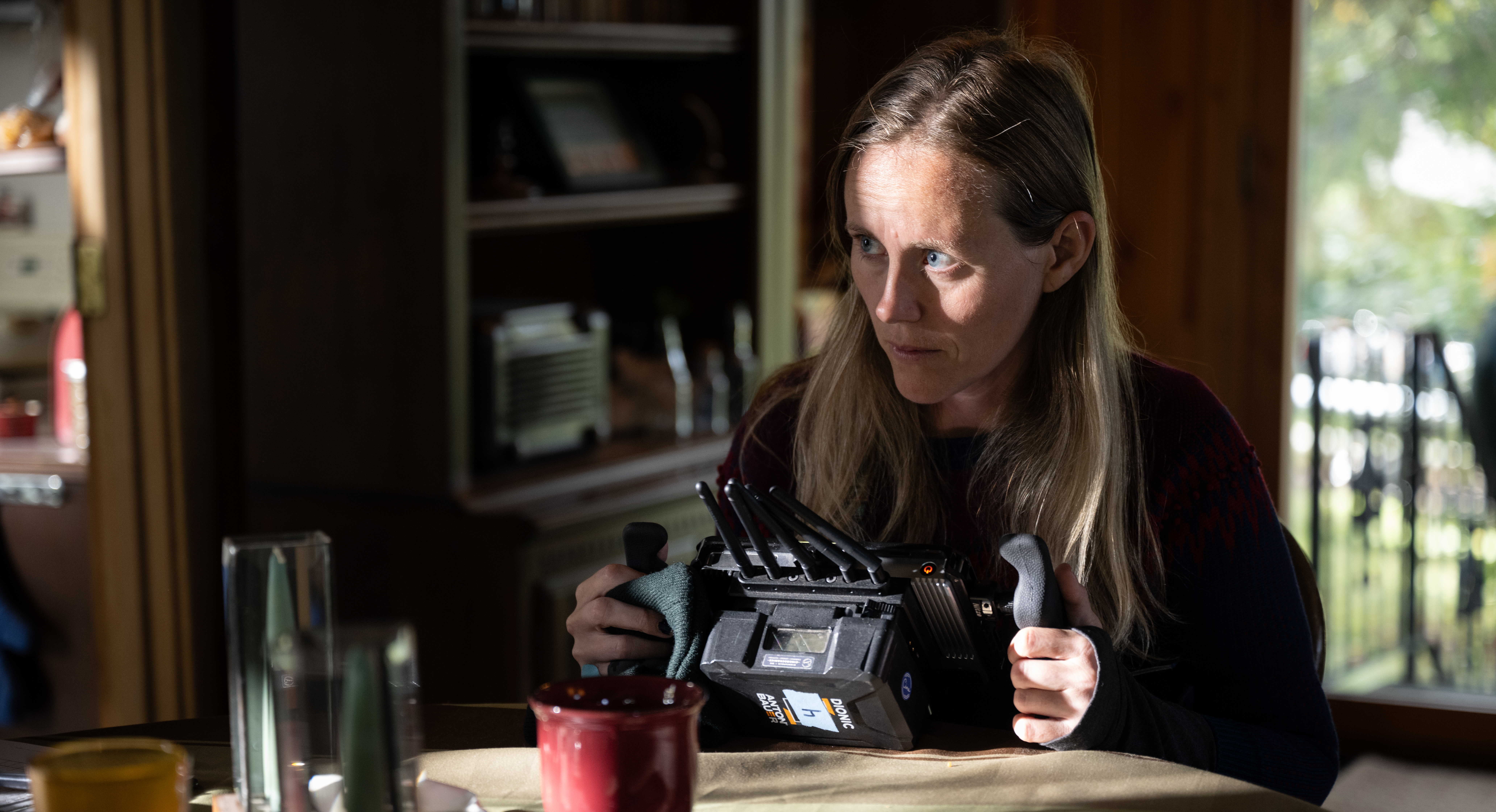
Interview by Greg Carlson
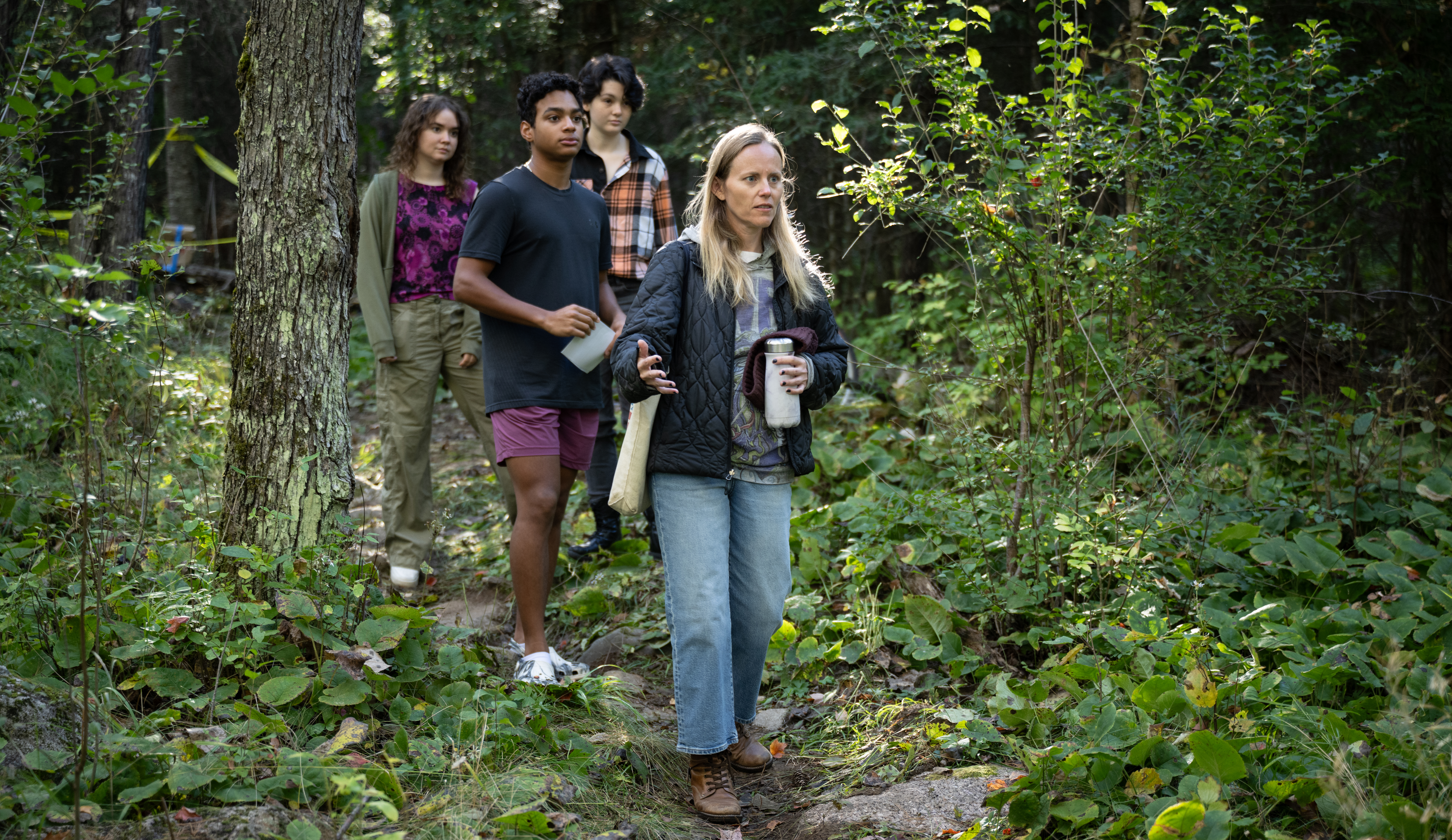
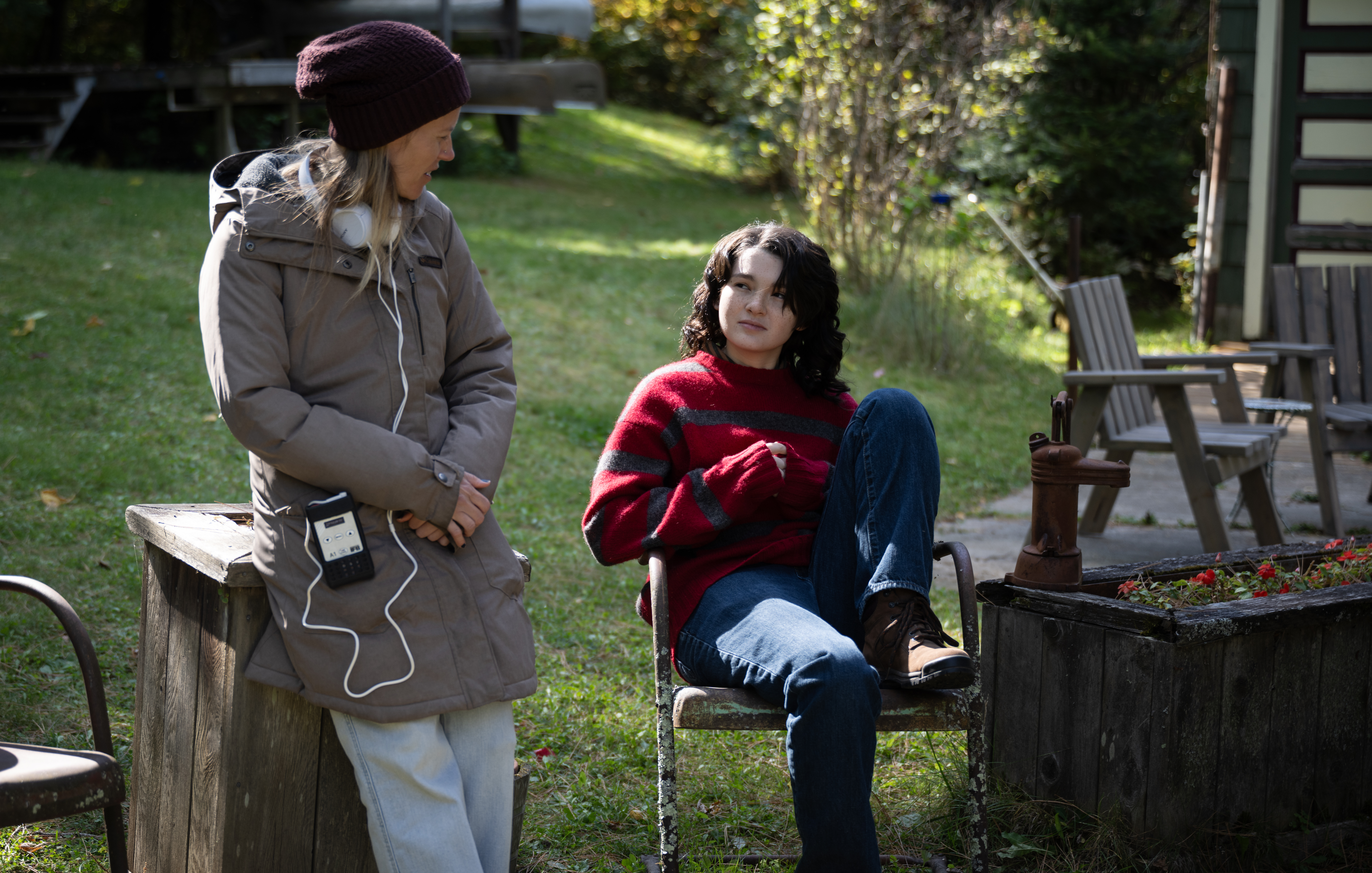
Filmmaker Elizabeth Chatelain returns to the Fargo Film Festival with the new feature “Bigfoot Woods,” screening on Saturday, March 21 at 1:30pm at the Fargo Theatre. She will be joined by several members of the production team for a conversation following the movie. HPR film editor Greg Carlson spoke with Chatelain about moviemaking, physical media, film studies, and their shared admiration for Richard Linklater.
Greg Carlson: How did you get into film? Can you tell us some formative early movie love stories?
Elizabeth Chatelain: I grew up going regularly to the movies. And one of my formative movie experiences was “Jurassic Park.” I sat in the dark of the theater and was just in awe of what I was seeing on the screen and just the magic of it. I know a lot of filmmakers have had similar experiences. That’s why we go to the movies.
GC: I can’t begin to imagine how many people have been inspired by seeing a Steven Spielberg movie on the big screen. Did you always want to make movies?
EC: It wasn’t until late in high school that I realized I wanted to pursue filmmaking. At the time it still felt sort of early to me because we didn’t have specific film classes at Fargo South High, which is a pretty big school. South did offer drama and music and other programs. And YouTube had just started.
GC: What was another movie that made an impression on you?
EC: This might sound like a weird reference, but I saw Richard Attenborough’s “Gandhi.” It has its problems, but I felt so moved by it. I was just a high school kid. The film is a giant biopic done on this massive scale and explored a world that I didn’t know very much about. I hadn’t yet traveled outside of the United States and Canada.
GC: Movies as windows to the world. When I was 10 years old, I begged my parents to take me to “Gandhi” in the theater. The depiction of the assassination gave me nightmares, but I did not want to tell them out of fear that they wouldn’t let me watch other “grown up” films. Fantastic that “Gandhi” inspired you to make movies.
EC: Yes, I think I want to make films! As I was learning about it all, at first I thought I wanted to just produce, because I was pretty good at economics and I really loved movies. So maybe I’ll do that. I chose Middlebury College in Vermont because they had a film program, but it was more of a film and media culture studies program rather than production. But they did have a few production classes.
I took all the production classes that you could. And discovered that I really enjoyed making documentaries because it was the most accessible form of filmmaking.
GC: Had you made anything before Vermont?
EC: My friends and I did a couple shorts on VHS, edited in-camera. One was for our orchestra class. We made a mockumentary about Beethoven, which was hilarious. I mean, to us, it was hilarious.
GC: I would love to see it. When did you make the leap to really understanding how to shoot and edit and put together a story?
EC: As an undergrad, I took a lot of film analysis classes. I studied how film started, from the beginnings in the late 1800s to how editing evolved, how camerawork evolved. That was eye-opening for me. After that, it was just getting my hands on a camera. I think one of the biggest steps is just going out and working with the equipment.
And then when you find a story that speaks to you, that you feel like you have to tell, I think that’s really where you realize the impetus to move forward with the story and telling it in the form of film, which has sound, visuals, acting, movement, editing, all these different things.
GC: What did you watch in film class that stuck with you as a lesson for making your own movies?
EC: Kieslowski, because of his use of visuals for storytelling and his use of abstract visuals.
In addition to the beauty of his work, there’s always this humanist element where all of the characters are struggling with something morally or ethically or philosophically or existentially. And he’s able to communicate that through extremely interesting visuals and sound. The Three Colors trilogy and “Dekalog.”
GC: I saw “The Double Life of Veronique” at the Fargo Theatre during my first year of college. Later, I also went to see all of the Three Colors films there.
EC: And he started from a documentary background, which I feel like you can see in his work with the humanist element. He was very influential.
GC: Do you still collect movies?
EC: I collected DVDs through college. And then I lived in India for a year, so I did not have my collection. I’m going back to buying DVDs, because I feel like what happens now is, I want to watch a movie and then I have to rent it for like $3 online for two days. I would rather own the physical DVD if I am going to watch something more than once.
When I came back to Fargo, I worked at Cash Wise Video and I collected a lot of DVDs during that time, because we would get discounts. After a couple months, when the rentals fall off, they downsize the extra copies. We could get them for really cheap. I acquired a lot of DVDs then. I have a lot of Criterion Collection. I remember those originating on LaserDisc, a format that was only around for a quick minute.
GC: I still have my LaserDisc player. My first experience with accessing audio commentaries. I collected a lot of Criterion discs. A really good audio commentary enhances your love and enjoyment and respect for the movie. I still listen to audio commentaries a few times a week.
EC: They’re so great. I remember specifically, when I was in college, I got the extended versions of “The Lord of the Rings” films with all the extras. You look at everyone working towards the creation of this amazing world, Hobbiton, and all these different places, and the armor and stunt work.
Everybody was so invested in making it come to life. And there’s something that’s super magical about that. So that was inspiring for me to watch, because I think sometimes we don’t know how much work and passion and care goes into something. Even on a small movie like “Bigfoot Woods,” collaborators share the vision.
GC: How do you accomplish that?
EC: This movie was a little bit different for me, because for the most part, I direct films that I’ve written. I felt like it was incumbent on me to put forth the vision of the material that was in the script and be true to what the script was saying and asking for.
“Bigfoot Woods” definitely deals with some difficult themes and situations, but in general, it’s much more lighthearted. I challenged myself to think about how that would translate to a visual style. What visual style is best for telling this story?
GC: What was the first movie you bought with your own money?
EC: The first movie that I purchased on VHS was “Meet Joe Black.” Do you remember that one?
GC: Brad Pitt and Anthony Hopkins. Inspired by “Death Takes a Holiday.”
EC: Yes. I haven’t seen it in years. But at the time, to me, it was just a film that was a little bit weird. I remember it being a little outside the standard film and that appealed to me.
GC: You must have had some of the staples as well.
EC: Of course. We grew up watching “Star Wars” and so many 80s classics, like “Stand by Me” and “The Goonies,” which I watched a million times.
GC: What was a movie you went back to see multiple times in the theater because you wanted to chase the endorphins?
EC: I feel like I’m totally embarrassing myself, but it’s “Titanic.”
GC: No, you should be proud! “Never let go.”
EC: It was a shared cultural experience. I went back multiple times with friends. Everybody was going to see it. The theater experience felt so different. I must have been 13 or 14. I could go and see it without my parents! It was larger than life. Those state of the art visual effects. And that love story!
GC: A phenomenon, for sure. You later lived in Austin, Texas, a great cinema town.
EC: I loved living in Austin. I think it has changed a lot in the last 10 to 15 years. But one of the coolest things I did there was work on the “Slacker 2011” project for the film’s 20th anniversary. A bunch of directors in Austin did different sections.
I was part of a group of young women at the University of Texas working on one segment. I was producing and someone else was directing, but I also worked on a couple of the other parts. And then they brought it all together and played it in theaters. It was a really cool experience because Richard Linklater is such an amazing filmmaker.
GC: He’s done so much for the Austin film scene.
EC: He has contributed so much and inspired so many filmmakers, really in multiple ways because he made super low budget films and then went on to make larger movies. He always gave back to Austin and co-founded the Austin Film Society and enriched Austin’s film community and independent filmmaking specifically. Very few filmmakers of his status have given back as much, especially to a specific place.
GC: Linklater had a really good year last year with “Nouvelle Vague” and “Blue Moon,” two movies that are so completely different stylistically. And yet they are both totally, wholly riveting.
EC: Absolutely. What a filmography: “Dazed and Confused” and “Boyhood.”
GC: And the genius of the “Before” trilogy.
EC: There’s such range. He’s always experimenting and finding things that interest him and pushing himself and challenging himself and exploring things.
GC: Like the animation: “Waking Life” and “A Scanner Darkly” and “Apollo 10 ½: A Space Age Childhood.”
EC: He’s such a generous person as well, with his time and his resources and his connections. He’s definitely a filmmaker I look up to. Because of the idea that you don’t have to be stuck in a box and make only one type of movie over and over.
GC: Since you’d previously worked from material that you had written, how did you come into contact with the “Bigfoot Woods” script?
EC: Megan Huber, one of the producers on the film, had read some of my work and knew I was living in Minnesota, up here in Hibbing. Another director had been attached before me and a lot of things were lined up for making the film. They had the cinematographer and the costume designer and the production designer and were about two months from shooting.
I figured Megan was reaching out to talk about post-production because that’s usually what people call me about. She said, to my surprise, that they were looking for a director. I met with executive producer and co-writer Bruce Pavalon. He wrote the movie with his son Abel and I thought it was a story that needed to be told.
GC: Coming of age stories can feel urgent and vital.
EC: My sister’s kid is in a challenging place right now. She’s 14 and figuring out her identity. There were a lot of things that I saw in my sister’s child that resonated with me in this script and through the main character of Bridget/Jonah.
I really liked Bruce and Abel and I felt honored that they would consider me to direct the movie. Bruce looked at previous work. I’ve worked with kids a lot. And I’ve worked with non-professional actors, often in North Dakota or Minnesota. And “Bigfoot Woods” is based up here. I think all of that spoke to him and he liked my vision. I also did a look-book and a pitch. I have to say, if I wasn’t living in Minnesota, I don’t know if they would have reached out to me.
GC: Right place at the right time.
EC: Exactly. You never know what’s going to come up.
GC: Ambrose Velasco Jenkins is really incredible as Jonah in the film. Was Ambrose attached to the movie by the time you came on board?
EC: They had started the casting but hadn’t finished. We went through several rounds for Bridget/Jonah. And Ambrose just really stood out to us as embodying this character and he had also gone through a similar transition.
He felt very close to the material. He hadn’t done a film before. He was very much a theater actor and had just started college. Now he’s probably 20, but at the time he was 18. Really smart, really bright, really emotionally attuned. And just had a very, very real connection to the character.
GC: How did Rich Sommer get involved?
EC: The producers had some connection to him, probably related to the state, since Rich was raised in Minnesota and went to college there. All of us thought immediately that he would be perfect for the role. Just reading the script you can totally see Rich as this character.
I believe the material spoke to him. And he was game to go and shoot a movie in Ely. It is beautiful there. It was such a pleasure working with him. He’s so experienced and professional. Nails it in one or two takes.
GC: What is the rollout for “Bigfoot Woods” going to look like? We are excited to have it as part of the festival.
EC: The Fargo Film Festival is our world premiere. And then it will play in Minneapolis and Duluth. It will screen in Poland in April in four different cities. And we’ve submitted it to a bunch of other festivals, including some that are LGBTQ-focused.
Distribution has changed a lot in the last few years. I have been talking with a few other documentary filmmakers about coming together to see how we can collectively distribute our films. Maybe work with independent theaters to have screenings and also how to go about digital distribution. Online distribution is still a very new world.
GC: What are your hopes for the movie?
EC: What’s important to myself and to Bruce and Abel is to get the film out to kids and families going through similar experiences. The most powerful thing that Bruce told me when Abel first came to him and said, “I’m male and I want to transition,” was that his first thought was of “Boys Don’t Cry,” which is the biggest nightmare a parent could ever have. That story confronts you with the kind of danger faced by trans kids.
He wanted to make a film that was positive and hopeful and affirming for kids who are gender nonconforming and trans. Something where they’re authentically reflected. It’s a really difficult time to be a teenager right now. One of the best things that could have possibly happened was when my sister’s kid watched a rough cut with me and at the end, asked, “Can I show this to my friends?”
Tickets for “Bigfoot Woods” are now on sale at the Fargo Theatre box office. You can find more information about the 2026 Fargo Film Festival here.