What Happened, Miss Simone?

What Happened, Miss Simone? Nina Simone

Movie review by Greg Carlson

Filmmaker Liz Garbus, Oscar nominee and 2002 Fargo Film Festival special guest, considers the icon in “What Happened, Miss Simone?” — an often thrilling and sometimes exasperating portrait of the singular singer/songwriter/activist/piano prodigy. Executive-produced by Nina Simone’s only child, Lisa Simone Kelly, Garbus’ film accesses a wealth of personal correspondence, family photographs, and archival artifacts along with more familiar audio and visual documentation of Simone throughout her storied career. In several ways, Kelly’s complex and contentious relationship to her famous mother shapes the arc of the movie, which debuted at the Sundance Film Festival ahead of its availability on Netflix.

Even though Simone died in 2003 at the age of 70, protracted legal battles involving and often between Kelly and Andrew Stroud, Kelly’s father and Simone’s ex-husband and manager, raged beyond Stroud’s death in 2012. “What Happened, Miss Simone?” operates partially as a means of asserting control over the artist’s legacy, especially in light of the troubled and still unreleased biopic written and directed by Cynthia Mort and starring Zoe Saldana as Simone. Another nonfiction film titled “The Amazing Nina Simone,” like Mort’s “Nina,” is currently scheduled for a 2015 release.

Time will tell whether the other Simone movies will measure up to the power of their subject, but Garbus’ effort, by virtue of arriving first, intends to establish its preeminence. Passionate Simone disciples are likely to see in the movie the shortcomings of what Jordan Hoffman calls “Wikipedia-entry-as-cinema” highlights, and will be disappointed that any number of fascinating chapters in Simone’s biography — like her self-exile — are mentioned only in brief, and that others — such as Simone’s relationship with the first Prime Minister of Barbados Errol Barrow —  aren’t included at all. Expectedly, the film highlights Simone’s prominent place during the 1960s Civil Rights Movement, a critical stage in her development as a musician and thinker.

Both Manohla Dargis and Tanya Steele have questioned the amount of onscreen time afforded to Simone’s onetime spouse Stroud, the former NYPD detective who raped and regularly beat Simone. Steele, apoplectic at Simone’s “abuser telling her story,” acknowledges the painful relationship between parent and child, writing, “Whereas, I understood her daughter’s recounting of the abuse that she experienced at the hands of her mother and I wanted to hear that, I felt that it was irresponsible to say that Nina Simone invited the abuse she received.” Additionally, Simone’s struggles with mental illness, while noted in the latter sections of the movie, remain a controversial, thorny and problematic component of her life, especially in terms of the temptation to link madness to creativity in the popular “tortured genius” narrative.

Fortunately, Garbus values the sonic authority of Simone’s music, and the best parts of the film share the sights and sounds of classics like “Mississippi Goddam,” “To Be Young, Gifted and Black,” and “I Wish I Knew How It Would Feel to Be Free.” The movie opens with Simone’s infamous, legendary appearance at the 1976 Montreux Jazz Festival. As indicated by the footage from that concert, in which Simone is testy, tempestuous, erratic, commanding, fierce, and heartbreaking, significantly more detailed discussions of both her live performances and her recordings are merited. Garbus intends to be comprehensive, however, treating the music as but one (albeit important) aspect of her story. The final report is a starting point for anyone curious about one of the most important figures in 20th century popular culture, although the episodic and chronological arrangement of the content sometimes feels safer and more staid than the innovative and unconventional habits of the High Priestess of Soul warrant.

Me and Earl and the Dying Girl

Movie review by Greg Carlson

Alfonso Gomez-Rejon’s adaptation of Jesse Andrews’ popular novel “Me and Earl and the Dying Girl” presents delights and dilemmas as it negotiates (and doesn’t negotiate) the rough terrain of terminal illness, race, class, and white male privilege via an irresistibly attractive package aimed squarely at the eye and ear of the cinephile. Like “The Wolfpack,” another movie in which imaginatively staged recreations of cult films are pasted together in DIY delirium, “Me and Earl and the Dying Girl” functions as a Brian Eno-infused clarion call to wannabe auteurs. It’s catnip for Criterion collectors, with onscreen tributes to Herzog, Scorsese, Godard, Lynch, Hitchcock, Kurosawa, Bergman, and others. Notably, the work of Wes Anderson, to which Gomez-Rejon and cinematographer Chung-hoon Chung owe a sizable stylistic debt, is not among the 47 tributes created by animators Edward Bursch and Nathan Marsh, artists who have worked on Anderson films.

As first-time screenwriter, Andrews makes several shrewd alterations in translating his book, but he and Gomez-Rejon stick close to the principal content of the source material. Greg Gaines (Thomas Mann) is a “good kid” who swedes movie parodies with catchy titles like “A Sockwork Orange,” “Pooping Tom,” and “2:48 p.m. Cowboy,” collaborating with his co-worker/best friend Earl Jackson (RJ Cyler). During his senior year of high school, Greg’s mother insists he spend time with Rachel Kushner (Olivia Cooke) following Rachel’s cancer diagnosis, and the awkward boy and doomed girl embark on an acutely self-aware, platonic friendship.

In a lengthy response to Scott Tobias’ negative review, David Ehrlich acknowledges several of the film’s most problematic issues while arguing that the subjectivity attending Greg’s narcissism is vital to the structure of the film and the aims of the narrative. Ehrlich writes, “While ‘Me and Earl’ is on its surface an uncomfortably proud celebration of stories in which enchanted dying girls and magical black men exist only to further the spiritual development of a vanilla white male hero, it’s also a rebuke to the self-absorption that makes those stories possible.” Additionally, Andrews has pointed out that Greg is someone “who hasn’t yet learned to pay attention.”

Even so, films that present the skewed worldview of a flawed or antiheroic protagonist might also include clear critique from supporting characters able to see through the shortcomings of the central personality. And despite Ehrlich’s convincing rationalization, “Me and Earl and the Dying Girl” would have been stronger and richer had the filmmakers made more room for Earl and Rachel. Those two, as well as several of the adults depicted in the movie, do take Greg to task for his selfish behavior. Indeed, two of the best scenes in the film revolve around calling out Greg on his bullshit: Earl delivers an earful along with a punch to the gut and later, in the longest unbroken shot in the movie, Rachel points out that Greg has based his entire experience of their relationship on how Rachel’s leukemia has affected him.

The closest contemporary of “Me and Earl and the Dying Girl” is “The Fault in Our Stars,” and the stories share a great deal of DNA. In my 2014 review of “The Fault in Our Stars,” I mentioned the gender inversion of the Manic Pixie Dream Girl trope embodied by Augustus Waters in John Green’s bestseller, but Rachel’s function in “Me and Earl and the Dying Girl” (note the title’s reduction and diminishment, replacing her name with the bluntest descriptor) is, on the most basic level, business as usual. Cooke is lovely inside and out, and does all she can with the character, even as the Ebert-coined “Ali McGraw’s Disease,” de rigueur in the genre, intensifies and illuminates her physical beauty — particularly in a cinematic swan song that improves on the late events of the novel.

The Wolfpack

Wolfpack1

Movie review by Greg Carlson

Fascinating and frustrating, Crystal Moselle’s documentary “The Wolfpack” is essential viewing for fans of DIY moviemaking and cinephilia. The premise of Moselle’s film and the promise of her incredible subjects – a sextet of isolated, homeschooled brothers who grew up carefully acting out movies like “Reservoir Dogs” and “The Dark Knight” – makes “The Wolfpack” sound a little more otherworldly and exotic than the evidence supplied. Even so, the endearing personalities of the Angulo boys, who lived with sister Visnu, mother Susanne, and father Oscar in public housing on the Lower East Side of Manhattan, is a trippy mashup of “Grey Gardens” and “Be Kind Rewind” that captured the Grand Jury Prize for documentary at Sundance.

The most magnetic scenes in “The Wolfpack” revolve around the obsessively crafted movie performances staged by the Angulos. Props and costumes fabricated from cardboard and packing tape are fetishistic talismans: the automatic pistols include separate, fitted magazines, and Batman body armor fashioned from yoga mats and cereal boxes is a thing of beauty. Different reports have suggested that the Angulos rarely videotaped their efforts, and Clayton Dillard takes Moselle to task for not elucidating this point more clearly, or, for that matter, exploring why the brothers didn’t preserve these elaborate productions to “to be shared with those beyond the confines of their apartment-cum-prison cell.”

The audience is asked to accept the assertion that patriarch Oscar, an ex-Hare Krishna who named his sons Mukunda, Narayana, Govinda, Bhagavan, Krsna, and Jagadisa, has prohibited the boys from venturing outside of their four-bedroom dwelling. The edict is more implicit than explicit, as the brothers have already begun to explore the larger world, and certainly would not have met Moselle had they been totally confined to their building. Emergent press for the movie has aggressively capitalized on the “locked away from society” angle, exaggerating the idea that movies were the siblings’ exclusive window on outside society.

For many viewers, “The Wolfpack” leaves too many avenues unexplored and too many questions left unanswered. Kate Erbland distills one of the most vexing issues, writing that Moselle has made “a film about access, and though we are admitted into the world of the eponymous Wolfpack, not understanding how we got there robs the film of compelling commentary.” For whatever reason, the director does not include any information regarding her unique relationship with the Angulos beyond the quick acknowledgment that she is possibly the very first outsider invited to visit the apartment. We must guess at timelines and other details, especially the dark intimations of Oscar’s possible alcoholism and abuse.

What Moselle gets really right in “The Wolfpack” is the expression of movie mania that fuels a dream-space recognizable to anyone under the spell of filmmaking. One sequence, in which “This Is Halloween” from “The Nightmare Before Christmas” plays out like a scarier version of any of the horror classics on which the Angulos have patterned their outfits, defies any viewer to remain calm when candles threaten to set the room ablaze. In another, the kids watch “Blue Velvet” together, enraptured by David Lynch’s masterpiece. By the end of the movie, Mukunda is seen crafting an original movie production featuring a stunning owl costume and a Lady in the Radiator-esque love interest. The spirit of his creation owes as much to George and Mike Kuchar as it does to the “Eraserhead” auteur, and I for one can’t wait to see it.

Dope

Dope1

Movie review by Greg Carlson

A sticky mashup of broad comedy, contemplated quirk, and stylish pretentiousness, the latter of which doubles as writer-director Rick Famuyiwa’s heart-on-sleeve love letter to his formative years, “Dope” operates a little bit like “Risky Business” meets “Friday.” Fishtailing between tonal shifts as rapid-fire as some of the semiautomatic weapons brandished in the story, the film’s greatest success hangs out in the fresh design and the throwback songs on the soundtrack – and most definitely not in the awkward, instantly dated depictions of social media and the movie’s ongoing, tricky, and problematic relationship to violence.

Had “Dope” been a more introspective exploration of character instead of a vignette-driven caper, one could imagine greater possibilities for future cult status – although, who knows? Shameik Moore is infinitely charismatic as Malcolm, the geeky Inglewood high school senior whose desire to go to Harvard is challenged by the socioeconomic realities of living in a place where, to paraphrase Biggie, you can hear death knocking at your front door. An alumni admission interview intersects with a drug deal gone sideways, and “Dope” is off the races with a parade of forced hijinks, including a protracted interlude in which Malcolm tangles with Lily (Chanel Iman), a wild child as high as a giraffe’s eyelashes.

As it stands, Famuyiwa fails to let us get to know or care about all but Malcolm, and even he is tough to completely parse. Key supporting characters, including Malcolm’s pals/bandmates Diggy (Kiersey Clemons) and Jib (Tony Revolori, in his first significant role since “The Grand Budapest Hotel”) never light up with indications of their own hopes and dreams, leaving the audience to wonder about the contours of their inner lives. The biggest drag is the treatment of Zoe Kravitz’s Nakia, Malcolm’s love interest who disappears for such a long stretch that her perfunctory return toward the end is almost startling.

Sad but not really surprising to say, “Dope” fails the Bechdel Test, pointing out a huge missed opportunity, especially since the inclusion of the queer Diggy initiates hopes that turn out to be unfulfilled and unfounded. In her mixed review for “The Stranger,” Ijeoma Oluo observes that Diggy “matches her friends in their objectification of women,” criticizing the film’s failure to convincingly portray females other than as “prizes or sex objects.” We do meet Malcolm’s mom Lisa (Kimberly Elise), supportive and hardworking, but rarely seen.

Similar to Beck’s brilliant realizations of Sex Bob-omb’s sound in “Scott Pilgrim vs. the World,” “Dope” soundtrack producer Pharrell Williams imagines some terrific tracks for Awreeoh, the punk trio composed of Malcolm, Diggy, and Jib. Bummer we spend more time figuring out how to synthesize MDMA than we do taking Awreeoh seriously. Even though a chance encounter lands the group in a home recording studio, Famuyiwa keeps the music-making angle on the sidelines, disappointing viewers hoping for more of the unexpected and innovative pleasures of that potential plot. The same old “in over their heads” conundrums attending the illegal pharmaceuticals entrepreneurship assumes center stage, along with gun violence that sometimes reminds us of its capriciousness and horrifying costs and other times is just straight out played for laughs. I am not certain how well the latter works in 2015.

I’ll See You in My Dreams

Illseeyouinmydreams1

Movie review by Greg Carlson

A luminous Blythe Danner portrays one of the warmest and most inviting characters of her long career in “I’ll See You in My Dreams,” a quiet and seductive movie about the contours of friendship and the parameters of solitude. Danner’s Carol Petersen resists the entreaties of her trio of pals (Rhea Perlman, Mary Kay Place and June Squibb) to sell her house and join them at the snazzy retirement community/country club where they socialize over cards and the occasional medical marijuana indulgence. Carol, whose husband has been dead for more than two decades, prefers her own kind of carefully ordered independence.

Director Brett Haley, who co-wrote the movie with Marc Basch, doesn’t let his tender age interfere with his interest in treating with respect a demographic virtually invisible in popular movies. Some of the filmmaker’s choices, like the large black rat that appears just the right number of times to establish its symbolic and narrative credentials, or Carol’s altered-states interaction with a police officer, read more broadly than the movie’s most consistent asset: the delicate reminders that we are all subject to the march of time and its accompanying losses.

Following the devastating death of her beloved dog Hazel – a tough scene positioned early and rendered with unflinching detail – Carol makes an unlikely friend in pool cleaner Lloyd (Martin Starr), a bright but rudderless semi-slacker whose introversion and circumspection click with Carol’s sensibilities. Lloyd and Carol bond over a shared interest in music-making, and a scene in which Danner slays a karaoke performance of Arthur Hamilton’s torch classic “Cry Me a River” is worth the price of admission. The age difference between Carol and Lloyd yields several opportunities for the wiser partner to hold forth with some astringent truths, but Danner’s delivery bypasses any potentially preachy overtones.

Gears shift considerably with the arrival of Sam Elliott’s Bill, a courtly smoothie whose charming smile and Zen-like patience lay waste to the battery of pathetic losers encountered by Carol at an uncomfortable speed dating event. Bill’s entrance offers an age-appropriate romance challenged a bit by Carol’s platonic bond with Lloyd, but Haley wrings a great deal of subtlety from the quirky triangle, even pulling off one of those classic movie tropes in which an unexpected visit reveals that “company” has spent the night. Several commentators have remarked on the whisperingly discomfiting manner in which Haley circles around and flirts with a possible sexual spark between Carol and Lloyd, and the film handles it as confidently as the similar tension between Mark Ruffalo’s Dan Mulligan and Keira Knightley’s Gretta James in “Begin Again.”

Some viewers might yearn for additional layers of conflict, but others will admire and appreciate Haley’s resistance to manufacture disagreement for its own sake. For example, when Carol’s adult daughter Katherine (Malin Akerman) comes for a visit, one expects some kind of generational or familial strain. Instead, the conversations between the two women, and for that matter, the majority of the one-on-one interactions throughout the film, invite the viewer to listen in on thoughts — to paraphrase Bill — right just the way they are.

Girlhood

Girlhoodpurple1

Movie review by Greg Carlson

“Girlhood,” Celine Sciamma’s third feature and the conclusion of what the filmmaker considers a coming-of-age trilogy, continues her engagement with the bildungsroman. Not as contained as debut “Water Lilies” or as directly preoccupied with gender as “Tomboy,” “Girlhood” follows the trajectory of teenager Marieme (Karidja Toure), a bright young woman whose grades are nevertheless inadequate to secure her a continuing spot in school. The alternative, placement in a vocational program, is such a disappointing prospect that Marieme joins a group of fellow dropouts, trading her quieter and more conservative identity for a scrappy tough girl ready to menace suspicious shopgirls and bully the meek out of their pocket money.

Sciamma has a treasure in screen newcomer Toure, whose observant Marieme invites the viewer to share her experiences. Marieme’s companions Adiatou (Lindsay Karamoh) and Fily (Marietou Toure) are led by Lady (Assa Sylla), whose fistfight with a bitter rival simultaneously humiliates and inspires Marieme to assert more power within the quartet. As the reborn Vic (short for Victory), Marieme bonds in several ways with her adopted sisters. Sciamma observes changes big and small as Marieme begins to tentatively step away from her role as caregiver to a pair of younger siblings in favor of the validation and camaraderie she enjoys with her peers.

Much has been made of a standout scene in which the girls put on dresses and dance to Rihanna’s “Diamonds” during a hotel room idyll. The song, charged with the aspirational intertextuality of the singer’s biography, works as both a reminder of the long odds faced by Marieme and the warmth of her sisterhood with Lady, Adiatou, and Fily. Kate Stables draws a general comparison between “Girlhood” and Andrea Arnold’s “Fish Tank,” via “these oppressed tower-block teens, juggling big desires and limited options,” and the parallel can be extended to the music, as the hopeful presence of “Diamonds” functions similarly to Arnold’s use of Nas’ “Life’s a Bitch.”

Just as Marieme begins to discover her place within the core group and the larger community to which the smaller factions belong and/or interact, her blossoming relationship with Ismael (Idrissa Diabate), a close companion of her abusive older brother, threatens the precarious equilibrium. Chastised for imagined promiscuity, Marieme bristles at the patriarchal hypocrisy, and Sciamma firmly filters the sexual exploration through Marieme’s point of view, capturing her resentment and frustration.

The final movement sees Marieme graduate to a less savory means of survival than either the safe(r) but static nuclear unit in the projects or the delinquency that comes with membership in Lady’s clique. While the narrative anticipates some kind of third act Hogarthian rake’s/harlot’s progress, Marieme’s yearning intelligence commands ongoing audience sympathy, even when she makes questionable choices. Additionally, Sciamma subverts any expectation that the indoctrination of Marieme into the “gang” is representative of corruption or moral deficiency.

Marieme’s employment by a manipulative and significantly more dangerous drug dealer alludes to darker thresholds, and Sciamma hints at some challenging gender issues when Marieme morphs between a masculinized persona dependent on breast binding under a baggy sweatshirt and a high-heeled, platinum-wigged courier with uncomfortable hints of being groomed for sexual exploitation. She is caught between two unsustainable options, but is there another? In arguably the film’s finest exchange, Marieme rejects Ismael’s marriage proposal, wisely reasoning that even if the solution would remove the double-standard stigma and make her a “decent girl,” the inevitable future pregnancy would force her into a life she doesn’t want.

Atari: Game Over

Atarigameover1

Movie review by Greg Carlson

When Microsoft’s subsidiary Xbox Entertainment Studios ceased operations, only one episode of the planned series “Signal to Noise” had been produced. The first cycle of the show was originally slated to include six documentaries on various aspects of videogame culture and the videogame industry. Screenwriter and director Zak Penn, known equally for his work on the stories and scripts of popular Marvel comic book adaptations and his 2004 Werner Herzog team-up “Incident at Loch Ness,” helmed the one-off “Atari: Game Over,” which centers on the quest to dig up a purported trove of Atari merchandise interred, as hardcore fans would have it, when the company went bust back in the 80s. The movie is now available on Netflix – the platform upon which the Xbox Entertainment Studios brand was partially modeled for direct competition.

“Atari: Game Over” includes a flashy and fleet overview of the rise and fall of the titular tech company, the innovative coin-op kingpins and providers of the massively successful Atari 2600 home gaming console. The main course, however, is a drawn-out, contemporary update on the fate of the company’s maligned overstock of “E.T. the Extra-Terrestrial” cartridges, famously buried in a public landfill in Alamogordo, New Mexico on September 26, 1983. For years, the narrative of the Atari garbage dump has been told and retold as a cautionary tale about the catastrophic failure of the “E.T.” game itself and not in the context of bigger picture market saturation and financial mismanagement that more accurately account for the end of Atari.

At the very heart of the tempest in a teapot is “E.T.” game designer Howard Scott Warshaw, the crazy smart computer engineer who understood the limitations of Atari’s home platform so perfectly that his million-seller blockbuster “Yar’s Revenge” is considered by many to be among the most elegant, immersive, and entertaining games built for the 2600. Gamers will know more details than Penn has time to cover in the short timeframe, but the impossibly brief design window for “E.T.” was a mere five weeks when a typical schedule would allow for several months. “Atari: Game Over” indulges in a bit of revisionist defense on Warshaw’s behalf, arguing that “E.T.” is not all that bad, but one of the funniest scenes in the film shows frustrated players griping about the monotony of the E.T. avatar constantly, maddeningly falling down the playfield’s ubiquitous holes.

While Penn finds an affable and enthusiastic excavator in Joe Lewandowski, whose longtime experience with the landfill leads to a humorous bit comparing Lewandowski’s triangulation techniques to Indiana Jones and the Staff of Ra, the movie leaves out several of the historical anecdotes that gave rise to the “E.T.” legend in the first place, including reports that local kids raided the site to recover copies of not only “E.T.,” which ultimately represented only a fraction of the discarded Atari inventory, but also many other titles.

In addition to Warshaw and Lewandowski, Penn talks to key people like Atari co-founder Nolan Bushnell and the knowledgeable Manny Gerard, an executive with much to say about the inner workings of the videogame company’s relationship with Hollywood. No new interviews with Steven Spielberg were granted, but the “E.T.” auteur shows up in archival footage, at one point enthusing about the upcoming release of the doomed game adaptation. Additional color commentary and nerd cred is provided by “Ready Player One” author Ernest Cline, seen driving a replica E.T. to the dig in his DeLorean DMC-12 (bonus geek points that we get to see Cline pick up the vehicle from George R. R. Martin), and videogame historian and designer Mike Mika, whose personal archive bursts with more than enough content for several more documentaries.

The Jinx: The Life and Deaths of Robert Durst

Jinx1

Miniseries review by Greg Carlson

WARNING: The following review reveals key plot information. Read only if you have seen “The Jinx.”

The bombshell revelation that concludes Andrew Jarecki’s HBO series “The Jinx: The Life and Deaths of Robert Durst” occurs when the title subject uses the bathroom while wearing a hot mic. Hilariously, weirdly, but somehow not surprisingly, the incident mirrors the gag in “The Naked Gun” when Leslie Nielsen’s Frank Drebin noisily relieves himself during a press conference. During Durst’s own caught-on-tape moment, the millionaire real estate heir and alleged multiple murderer, long suspected in the disappearance of his wife and the slaying of his close friend, says, “There it is. You’re caught. You’re right, of course. But, you can’t imagine. Arrest him. I don’t know what’s in the house. Oh, I want this. What a disaster. He was right. I was wrong. And the burping. I’m having difficulty with the question. What the hell did I do? Killed them all, of course.”

Whew. What to make of it? Is the recording admissible evidence? Was that the last thing he said when the mic was on or is there an edit for the sake of drama? How long did the filmmakers hold on to that content, and the misspelled “Beverley” envelopes to which Durst was heard reacting, before sharing it with authorities? Was Durst confessing or just imagining a hypothetical conversation with Jarecki? Clearly, Jarecki hit the jackpot by finding, as Sean T. Collins so perfectly put it, “a documentarian’s unicorn.”

The creepy, entitled Durst is remote and aloof, but he also appears to crave attention – chattering and spouting against the advice of his legal team. Jarecki might work a little too hard at the outset to build sympathy for the belching elitist with the “lifeless eyes, black eyes, like a doll’s eyes” of a great white shark. And yet for every stranger-than-fiction inclusion, from cross-dressing and sandwich shoplifting to getting away with shooting, dismembering, and disposing of Morris Black, Jarecki leaves out stuff like Durst urinating on a CVS cash register and “drenching a candy display” in what the latter hysterically described as a “medical mishap.” Indeed.

In her “New Yorker” essay on the end of “The Jinx,” Rebecca Mead takes the position that the audiences of “quasi-journalistic entertainments” engage in an ethically suspect symbiosis. Mead takes aim at the filmmakers as well as HBO subscribers, writing, “…every viewer who is not too stupid or too full of himself to know what was going on knows that what we did was morally indefensible.”

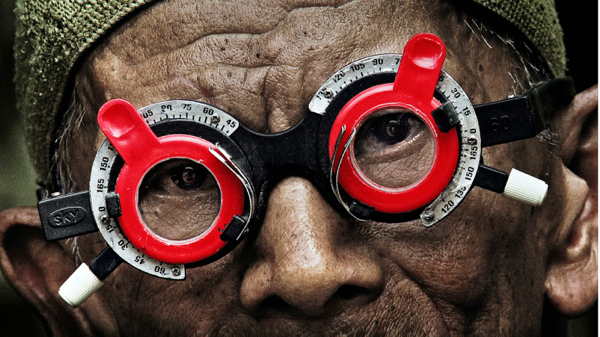
Similar outrage is often leveled at “The Act of Killing,” dividing opinion within the documentary filmmaking community, especially when it comes to the manner or extent to which cinema can/cannot and should/should not be used to reach for or uncover the “truth.” Underneath a great deal of the ire is questionable outrage at the “manipulations” of the moviemaker, as if the construction of any document is not already fraught with the subjectivity of “this-and-not-that.” Are there strict boundaries when it comes to infotainment?

Throughout the course of the public’s fascination with “The Jinx,” Jarecki has been accused of any number of perceived violations of the unstated but assumed codes that govern nonfiction storytelling. Critics have pointed out the stylistic similarities between “The Jinx” and the lowbrow, lurid, true crime content that fills out episodes of “Dateline” and comparable network and cable programming.

From the slow-motion repetition of reenactments (the execution of Susan Berman stands out as one particularly glaring example) to the collection of photographs and documents arranged for greatest emotional impact, Jarecki embraces techniques that Mead thinks contribute to an “extralegal spectacle.” One thing is certain: “The Jinx” is far more entertaining than “All Good Things,” Jarecki’s fictionalized version of the story that piqued the interest of Robert Durst enough for him to reach out to the filmmaker and initiate the long, strange trip leading to Durst’s arrest on March 14, 2015.

Going Clear: Scientology & the Prison of Belief

Goingclear1

Movie review by Greg Carlson

Alex Gibney’s documentary “Going Clear: Scientology & the Prison of Belief” uses author Lawrence Wright’s similarly titled book as the basis for a feature-length examination of the controversial organization known to many as the secretive, confusing and mysterious spiritual home of celebrities like Tom Cruise and John Travolta. Legally recognized as a religion by the IRS in 1993, the Church of Scientology began when prolific science fiction writer L. Ron Hubbard morphed his pseudoscientific counseling techniques known as Dianetics into a “religious philosophy” of Byzantine complexity that vacuums money from adherents in a Ponzi-like structure of levels based on one’s ability to purge past traumas through confessional “auditing.”

Hubbard’s esoteric narrative unsurprisingly cobbles together all kinds of pulpy hogwash in the astonishing tale of Galactic Confederacy dictator and alien traveler Xenu, who invaded Earth some 75 million years ago in a DC-8-like spaceship during events known in Scientology as “Incident II.” Gibney does spend ample time examining the better-known aspects of Hubbard’s biography, but Philip Seymour Hoffman’s performance as the LRH-esque Lancaster Dodd in Paul Thomas Anderson’s “The Master” better imagines the kind of charisma needed to invent a religion from the ground up and convince people to come along for the ride.

Left somewhat in need of illumination by Gibney is a fuller explanation of Scientology’s appeal to intelligent and rational humans, especially given its tremendous capacity to attract such huge sums of money and a fair number of Hollywood millionaires. Both Cruise and Travolta make appearances in the film by way of archival material, with the “Top Gun” star often raving like a rabid, foaming lunatic in thrall to current Scientology leader David Miscavige. Travolta comes across as humble and earnest by comparison, but beyond the usual speculation that Miscavige possesses massive files of potentially career-ending blackmail on these stars, we continue to wonder why the successful actors remain so loyal.

One of the most distressing things investigated by Gibney is the intense harassment faced by the so-called apostates who leave Scientology. Filmmaker Paul Haggis, whose very public split with the group in 2009 made headlines and led to Wright’s 2011 feature in “The New Yorker,” is better known than Sylvia Yvonne “Spanky” Taylor, Jason Beghe, and Sara Goldberg, but the personal accounts of the latter trio – as well as the participation of high-ranking senior executives Mike Rinder and Marty Rathbun, who alleges that Nicole Kidman had been illegally wiretapped by Scientology bosses while married to Cruise – are chilling testimonials of prison-like conditions and mental and physical abuse for anyone out of favor with Miscavige.

The vast number of possible storylines contained within and without Wright’s research precludes comprehensive coverage in Gibney’s film. Perhaps the most discussed omission is any mention of Miscavige’s wife Michele, who has not been seen publicly since 2007. Longtime Scientology critics, including Wright, have previously alluded to the absence of Mrs. Miscavige as yet another example of the terrifying manner in which those who run afoul of high leadership are treated. Undoubtedly, Gibney had enough content to create a series of films on Scientology, but what emerges in this single-serving introduction should inspire the curious to learn more about one of the strangest religious movements of the 20th century.

The D Train

Dtrain1

Movie review by Greg Carlson

WARNING: The following review reveals key plot information. Read only if you have seen “The D Train.”

In their feature directing debut, “Yes Man” screenwriters Jarrad Paul and Andrew Mogel take a stab at blending sitcom-like laughs with social introspection, and the results are as confused as the emotional state of main character Dan Landsman (Jack Black). Landsman, the self-appointed chairperson of his Pittsburgh high school reunion committee, spots old classmate Oliver Lawless (James Marsden) in a national Banana Boat sunscreen commercial, and convinces himself that his upcoming event will be a smash if he can deliver Lawless to the party. Cooking up a phony business trip to Los Angeles to hide his intentions from his supportive wife Stacey (Kathryn Hahn) and his old-fashioned boss Bill (Jeffrey Tambor), Dan’s plan to connect with Oliver goes so well that the men have a one-night stand in the City of Angels.

The sexual encounter comes as a huge surprise to both Dan and the viewer, and the filmmakers – who also co-wrote the script – stage the scene, and especially its final shot, as a comic bombshell dependent on shock value. While the directors make several gestures in the wake of the tryst to alleviate perceptions of outright homophobia, the repercussions of the incident demand more detail than the movie ultimately offers. Oliver, marginally predatory and self-loathing, defines himself as a kind of omnivorous sexual opportunist, neither entirely straight nor gay. He claims that his seduction of Dan meant nothing, and the viewer must take him at his word.

Oliver’s indifference opens several potential readings of the character, and few of them are positive, even as the script provides Marsden with a number of terrific scenes to demonstrate Oliver’s libertinism (threesome advice given to Dan’s 14-year-old son, for example, is the topic of one hilarious if farfetched exchange playing out an equally farfetched subplot). The real disappointment is that Dan’s hurt feelings – acutely communicated by Black – are shrouded in too much ambiguity. Dan might be simultaneously ashamed, traumatized, and exhilarated by what happened in L.A., but “The D Train” only hints about the condition of Dan’s heart when it comes to his relationships with Oliver and Stacey.

The filmmakers are more successful in the handling of another of the movie’s chief thematic concerns: the desperation to affiliate with the perceived “big deal.” Even in Hollywood, the cracks in Oliver’s reputation reveal a dreamer no better or more successful than boring family man Dan. A pitiful exchange between Oliver and Dermot Mulroney, playing a humorously unflattering version of himself in a club, is one in a series of divulgences to the audience that despite Dan’s impressions, Oliver is pretty far away from living the dream.

Paul and Mogel are less confident once the action shifts back to Pennsylvania (New Orleans stood in for the Keystone State) and Dan is left to deal with the potential fallout from the lies he told in the first place. As Dan’s insecurities boil over, the directors miss a genuine opportunity to fully process the experience. Dan’s likeliest confidant is Stacey, and Hahn is fantastic as usual, but for whatever reason, the screenplay fails to see Dan’s spouse as an equal partner in their relationship. In one especially frustrating scene near the end of the movie, Stacey is shut out from a conversation screaming for her participation.