The Babadook

Babadook1

Movie review by Greg Carlson

Earning accolades for its stylish design on a modest budget, its reliance on character and storytelling instead of CGI, and its reverence for several legendary genre hallmarks, Jennifer Kent’s “The Babadook,” like its namesake ghoulie, can be tough to banish from your head. Tracing the downward spiral of a struggling widow who loses her husband in a car wreck on the way to the hospital to deliver their son, Kent grounds her breakthrough film in the horror of the everyday before she unleashes the supernatural frights of the title figure, a bogeyman who first appears in the pages of a mysterious pop-up book.

Amelia (Essie Davis) and the now about-to-be-seven Samuel (Noah Wiseman), manage the best they can, although the odd little boy’s constant disruptions and “disobedience” hint at longstanding behavioral issues we suspect stem from the tragic circumstances attending Samuel’s birth. Single parent Amelia, at her wit’s end, sacrifices her own sleep every night, since Samuel complains of regular torment by a monster who visits his bedroom. With her job at stake, Amelia’s stress is palpably conveyed by the sympathetic Davis, and Kent introduces the unsettling idea that mother harbors ill will, maybe even blame, toward offspring.

Amelia is less dismissive of Samuel’s claims after she discovers “Mister Babadook,” an authorless tome filled with grisly monochromatic images and prophetic rhymes. Featuring a menacing evildoer reminiscent of Lon Chaney’s repulsive “Man in the Beaver Hat” disguise from the lost “London After Midnight,” the twisted text grows more disturbing with each turn of the page. The creepy red-covered album, designed by Alex Juhasz, is a marvel of illustration and engineering, and “Mister Babadook” steals one of the film’s best scenes, immediately assuming a place alongside some of cinema’s most effective false documents.

Shrewd and ambitious – Kent famously wrote a letter to Lars von Trier that landed her the opportunity to work for the director on “Dogville” – the filmmaker manages to load plenty of potential readings into that dreaded volume and the creature it spawns. From the draining demands of motherhood to the unthinkable rejection of one’s own child to the bottomless grief of a marriage cut short, the Babadook can easily symbolize any number of demons. Kent leaves open the possibility that Amelia constructed the book herself, an idea that should give even the most hardened horror aficionado the shivers.

“The Babadook” is Kent’s inaugural feature following a long time spent as a performer, and given the movie’s confidence and imagination, it is hopefully just the first in a series of projects. Take one look at “Monster,” the 2005 short that forms the basis of the story that would become “The Babadook,” and Kent’s gifts as a visual storyteller are evident. A motif in “The Babadook” is the use of mediated imagery to intensify the jaw-clicking disequilibrium and hallucinations experienced by the exhausted Amelia while she stares at her television. Kent selects tantalizing clips from Rupert Julian’s “The Phantom of the Opera,” Lewis Milestone’s “The Strange Love of Martha Ivers,” and Mario Bava’s “Black Sabbath,” along with dazzling magic tricks from several evocative Georges Melies shorts.

One of Kent’s most challenging moves is to dive deep into Amelia’s psychological anguish, switching from a perceived external threat posed by the Babadook to an internal battle operationalized as a kind of possession. Narratively, the shift dampens the immediacy of the Babadook as an intriguing and involving instrument of fear, but parents may find Amelia’s filicidal tendencies every bit as harrowing as similar depictions in films like “Bigger Than Life,” “Eraserhead,” and “The Shining.”

Blue Ruin

Blueruin1

Movie review by Greg Carlson

Jeremy Saulnier contributes a worthwhile addition to the family revenge thriller with “Blue Ruin,” a sharp livewire that transcends both its modest budget and the familiar expectations of the genre through the filmmaker’s keen intellectual investments. The umpteenth story to track the efforts of a driven protagonist en route to a climactic bloodbath, “Blue Ruin” unfolds with many of the hallmarks of tales in which the dire consequences of payback offer little in the way of satisfaction to the bereft. Saulnier aligns his stylistic approach with movies like “Blood Simple,” “In the Bedroom,” “Revanche,” “The Place Beyond the Pines” and “Out of the Furnace,” asking us to ponder the consequences of getting even.

From the film’s opening frames, Saulnier proves a shrewd and economical storyteller, carefully doling out just enough information to keep the viewer fully invested in the slow motion horror we are unable to prevent. Haggard and homeless Delaware beach vagrant Dwight Evans (Macon Blair) learns that the man who murdered his parents is soon to be released from prison. Evans returns home to Virginia, and the realization that he intends to do harm to the convicted killer is presented by Saulnier with as much woozy ambiguity as the sinking feeling that Dwight is in way over his head.

One of the unsettling dimensions of “Blue Ruin” is the ease with which Saulnier convinces the viewer to sympathetically align with Dwight in his quest for vengeance. Some of this is accomplished through the construction of the character, played by Blair as a sad-eyed sufferer fulfilling his destiny with a strong sense of doomed resignation. Dwight’s physical transformation, from scruffy, bearded, and emaciated to a smooth-cheeked square in a button-down dress shirt and khaki pants, only adds to his pathetic mismatch against the grim members of the clan he must face.

In his review of the film, David Edelstein asserts that “Aside from ‘Go for it!,’ the most pervasive motif in American film (and TV) is ‘I will have my revenge!’” Edelstein goes on to make the claim that the retribution theme “cheapens what it touches,” implying that our collective fascination with a kind of solipsistic and perverted sense of justice – combined with America’s cultural embrace of guns if not the violence connected to them – signals a depressing celebration of murder.

Edelstein believes that “Blue Ruin” is “drivel,” but his critique fails to account for any number of narrative surprises used by Saulnier as substantive moral and ethical complications standing in the way of Edelstein’s argument that “…there isn’t a second when we don’t think the people in question would be better off dead and that a measure of order will be restored by their killing.”

Edelstein does, however, make a compelling point not unlike some of the conversations about Clint Eastwood’s “Unforgiven” that located the contradiction and disjunction of two seemingly mutually exclusive options regarding stories that simultaneously appear to condemn violence and celebrate violence.  Of course, fictions in which common folk resort to extraordinary actions have driven drama since the dawn of theatre. To the extent that it is possible in the movies, Saulnier grasps for ways to illustrate a kind of humanity for the antagonists. Most genre exercises in the vein of “Blue Ruin” don’t treat the “bad guys” with nuance and sophistication, and that’s enough to recommend the movie.

Night Moves

Nightmoves1

Movie review by Greg Carlson

Filmmaker Kelly Reichardt continues to build her reputation as a storyteller of remarkable skill with “Night Moves,” a pressure cooker of a movie that observes the actions of a trio of radical environmental activists who plot to blow up a dam in the Pacific Northwest. Like her recent work, including “Meek’s Cutoff,” “Wendy and Lucy,” and “Old Joy,” “Night Moves” operates with visual precision and thoughtful staging. Rather than depend on dialogue-driven exposition and traditional plotting, Reichardt maintains an exacting distance from the dramatized actions, asking the viewer to drawn conclusions from several tantalizing ambiguities.

Jesse Eisenberg is Josh, a sullen, close-mouthed organic farmhand wound up tight with a level of indignation that matches his commitment to sustainability. Partnered with Dena (Dakota Fanning), a health spa employee from a wealthy background, Josh prepares to meet up with Harmon (Peter Sarsgaard), a mysterious ex-soldier who claims to have previous experience in planning and executing dangerous, clandestine acts of mayhem. The government would likely label these three people “terrorists,” and one of Reichardt’s strengths is the careful way in which she withholds judgment, neither supporting nor condemning the plotters.

Reichardt co-wrote “Night Moves” with Jonathan Raymond, and their story’s similarity to Edward Abbey’s 1975 novel “The Monkey Wrench Gang” resulted in a lawsuit prior to the start of production. A feature film based on Abbey’s novel was being developed by Edward Pressman, who objected to parallels between Reichardt’s project and his own, and the complaint cited three basic areas of overlap: “the targeting of a dam for destruction by means of ammonium fertilizer-laden boats,” a U.S. Marine veteran with a knowledge of demolitions, and a “20-something woman who starts out as a companion of another member of the group but develops a sexual relationship with the bomb-making veteran.”

Obviously, the conflict was resolved and “Night Moves” completed, but similarities to “The Monkey Wrench Gang” aside, Reichardt’s film arrived following Zal Batmanglij and Brit Marling’s “The East,” a far more conventional and less satisfying thriller that also addresses eco-terrorism. By contrast, Reichardt’s devoted taciturnity is sophisticated and demanding. The filmmaker runs the risk of alienating those who expect to learn something about the how and the why leading the characters toward violence, but will delight observers comfortable with drawing their own conclusions. One shocking incident that occurs late in the narrative is so disturbing, it echoes all the way to the movie’s final shot, an image of dread and paranoia.

Based on its subject matter, “Night Moves” at first glance seems far away from Reichardt’s three most recent features, but a closer look links the newest film with the other titles. Thematically, Reichardt likes to contemplate the relationship between all kinds of people and the environments with which they interact. Human-versus-nature is often identified as one of the classic structural conflicts in literature, and Reichardt grounds her stories in situations that carefully contemplate one’s “place” in the world. Whether or not “Night Moves” is as good as “Meek’s Cutoff” or “Wendy and Lucy” is debatable, but Reichardt’s remarkable facility with the icebox talk that blooms from the steady supply of nerve-wracking setbacks and unfortunate encounters with potential witnesses reveals a moviemaker at the top of her game.

Ida

Ida1

Movie review by Greg Carlson

Warsaw-born, UK-based Pawel Pawlikowski delivers one of the year’s most rewarding cinematic experiences in “Ida,” a stark, monochromatic treasure set in Poland in 1962. Quiet, introspective, and deliberate on the outside, the movie’s interior life is by contrast filled with the most tumultuous emotional upheaval imaginable. Raised by nuns and now on the verge of becoming one herself, Anna is instructed by her mother superior to seek out the aunt she never knew she had. Reluctant but obedient, the young woman meets Wanda, a weary judge who numbs her own sorrow with alcohol and one-night stands. The novice’s earnest piety is tested by Wanda’s flinty pragmatism, especially when Wanda reveals that “Anna” is really Ida, a Jew whose parents were killed during World War 2.

Aunt and niece begin a journey of discovery to find out the details of the fate of Ida’s parents, traveling by car through bleak landscapes en route to knowledge that might bring as much pain as peace. As Ida, newcomer Agata Trzebuchowska is, in her own way, every bit as mesmerizing as Emily Blunt’s enigmatic Tamsin in Pawlikowski’s excellent “My Summer of Love.” Trzebuchowska’s performance is perfectly complemented by the work of Agata Kulesza as Wanda, and both actors communicate the steadily developing respect that each character reluctantly earns from the other.

Pawlikowski’s unusual road movie functions on several planes, from the horror of the Holocaust and the political fallout of Poland’s post-Stalin era to the pragmatic debate between the tangible pleasures of the material world and the unknown territory of life everlasting. Identity, particularly in terms of the revelation that the main character is not the Catholic Anna but instead the Jewish Ida, is paramount. In Ida and Wanda, the oddest of couples, the differences are starkly outlined. One believes and the other does not. One is a virgin and the other demonstrates a worldly sexual appetite. One has grown up in ignorance of the grim events that stole her family while the other has lived with that knowledge every day for nearly two decades.

Shot in the squarish 1.37:1 Academy aspect ratio of bygone cinema by photographers Lukasz Zal and Ryszard Lenczewski, “Ida” is filled with meticulous compositions that command attention. Pawlikowski frequently places characters low in the frame, exaggerating headroom to include the ceilings of many interior spaces visited by Ida and Wanda (so much so that, as noted by Catherine Wheatley, the subtitles often become surtitles so as not to interfere with the visuals). Both indoors and outdoors, Pawlikowski relishes opportunities for vivid internal framings and sharp contrasts between foreground and background objects.

An accomplished storyteller, Pawlikowski dispatches more information through Bressonian silences and long static takes than he does via lengthy exchanges of dialogue. In one enticing subplot, Ida and Wanda pick up jazz saxophonist Lis (Dawid Ogrodnik) on his way to a gig, and the young people are noticeably attracted to one another — much to the delight and amusement of Wanda. Lis later performs John Coltrane’s “Naima,” and for a few delicate scenes, Pawlikowski turns from the somber realism inspired by the Polish Film School to pay homage to the spirit of the influential films of the Czech New Wave, letting tiny rays of light shine in through the darkness.

Whiplash

Whiplash1

Movie review by Greg Carlson

Late in writer-director Damien Chazelle’s sophomore feature “Whiplash,” monstrous music teacher Terence Fletcher states, “There are no two words in the English language more harmful than good job.” By this point, the viewer will have formed a few troubled thoughts about Fletcher, who berates and belittles his students in much the same way R. Lee Ermey’s Parris Island drill instructor Gunnery Sergeant Hartman shouts down his U.S. Marine Corps recruits in “Full Metal Jacket.” As Fletcher, J.K. Simmons realizes he has the role of his career, and the veteran actor brings complexity to every scene in which he appears.

Ostensibly, the protagonist of “Whiplash” is jazz drummer Andrew Neiman (Miles Teller), and award season chatter regarding Simmons identifies his work in the supporting category. Make no mistake, though, Teller and Simmons share the screen as two complementary leading men duking it out in a corrosive mentor/apprentice relationship that wonders whether cruelty and sadism might legitimately reveal a great artist. While Fletcher spews a torrent of ugly homophobic and misogynist slurs at Andrew and the other members of the competitive (and fictional) Shaffer Conservatory of Music in Manhattan, Chazelle sets the table for the movie’s bloodthirsty final movement, a relentlessly entertaining series of psychologically intense reversals.

Buddy Rich-hater Richard Brody’s curmudgeonly essay “Getting Jazz Right in the Movies” blasts “Whiplash” for having “no music in its soul” and “no music in its images.” The critic supports the former assertion by suggesting that Neiman’s obsessive, competitive drive dominates the narrative while Chazelle offers “no sense of a wide-ranging appreciation of jazz history.” The latter claim is accompanied by Brody’s unsupported and miscalculated jab that “There are ways of filming music that are themselves musical, that conjure a musical feeling above and beyond what’s on the soundtrack, but Chazelle’s images are nothing of the kind.”

For those who have seen Chazelle’s 2009 feature debut “Guy and Madeline on a Park Bench,” the methodological intersection of jazz and filmmaking in “Whiplash” feels like stylistic second nature for the young director. Chazelle constructs his movie with the rhythms, movements, tempo changes, and solos of a great piece of music. Shot in just 19 days, “Whiplash” capitalizes on Chazelle’s relationship to sound, and the sharp work of editor Tom Cross, cinematographer Sharone Meir, and production designer Melanie Jones mark the contributions of indispensable sidemen and sidewomen.

Although Chazelle’s intense focus on the bloody bond between Fletcher and Neiman takes up the largest share of “Whiplash,” the filmmaker does extend Andrew’s universe by including both a romance subplot and several scenes in which Andrew interacts with his father Jim (Paul Reiser). Dana Stevens has already made the claim that Andrew’s fragile flirtation with movie theatre concessionist Nicole (Melissa Benoist) is unnecessary because the film’s “love story is already there in the form of Fletcher and Andrew’s complex, enmeshed, fiercely adversarial relationship.” I won’t argue with that, although Benoist is terrific and makes the most of her limited screen time.

In fact, despite the firepower that juices every scene in which Simmons appears, Benoist and Teller end up sharing one of the film’s most wrenching moments, an agonizing split that echoes the dazzling interplay of the opening scene of “The Social Network.” Andrew’s foolish heart races hard at the thought of becoming a master and a legend; the girl never has a chance. As Anthony Lane puts it, Andrew “can’t both love and drum.” Chazelle uses this scene and several others to raise questions about the costs of performing at the elite level and the toll that ambition can exact on one’s humanity.

Birdman or (The Unexpected Virtue of Ignorance)

Movie review by Greg Carlson

Alejandro Gonzalez Inarritu’s “Birdman” gives Michael Keaton the “Being John Malkovich” treatment in a messy, noisy backstage drama enamored of its own ruminations about art and artifice, celebrity worship, self-respect, narcissism and several dozen additional Big Ideas. In 2000, “Amores perros,” the first installment of Inarritu’s “death trilogy,” divided audiences, a trait extending through “21 Grams,” “Babel,” and “Biutiful.” Those who share the filmmaker’s penchant for insane coincidence, exaggerated melodrama, and heart-on-sleeve emotional outpourings often praise the director’s visual intensity. Detractors, like Scott Tobias, pronounce Inarritu a “pretentious fraud” who is “incapable of modulation.”

Keaton plays the living daylights out of Hollywood has-been Riggan Thomson, an actor who walked away from the blockbuster “Birdman” franchise two decades ago and is now prepping a Broadway adaptation of Raymond Carver’s “What We Talk About When We Talk About Love” as writer, director, and star. Fragile, stressed, and nearly broke, Thomson replaces one of his principal performers with stage darling Mike Shiner (Edward Norton, volume knob cranked), a manipulative scene-thief. Meanwhile, Riggan tiptoes around his rightfully resentful daughter Sam (Emma Stone), a recovering addict now serving as her father’s assistant. Thomson’s relationship with co-star Laura (Andrea Riseborough) is hitting the skids. Oh yeah, he also hears voices, can levitate, and possesses the power to move objects with his mind.

Along with “Being John Malkovich,” “Birdman” recalls “Synecdoche, New York,” another Charlie Kaufman script that plays with the conundrum of honesty/dishonesty in film and theatre. Kaufman is a better hand than Inarritu at communicating the vicissitudes of the gossamer veil blurring reality and fantasy. Some of the movie’s side trips, like the blossoming romance between Sam and Mike, don’t fully pay off, and “Birdman” is at its best when focused on Riggan’s rapidly escalating crises. In one scene, Riggan struts through Times Square in his tighty whiteys after accidentally getting locked out of the St. James Theatre. At moments like this one, Keaton makes it difficult for the viewer to root against his shallow egomaniac – despite the character’s apparent addiction to attention-seeking behavior.

Inarritu, working with the phenomenal cinematographer Emmanuel Lubezki, constructs “Birdman” to look as though the majority of the action occurs as one continuous, unbroken take. Lubezki defends the technique by claiming that viewers can become “immersed in the movie” via the uninterrupted exchanges of dialogue. The gambit can be exhausting, but the wide-angle lenses and imaginative, ever-shifting compositions function as a reflection of Riggan’s hyperactive desperation. Lubezki’s vertiginous camera also swoops and soars from ledges and rooftops to street level. The film’s final shot, wholly dependent on camera position, cements the director’s commitment to this unorthodox shooting style.

“The Unexpected Virtue of Ignorance” is Inarritu’s subtitle, a reference to both the filmmaker’s hellzapoppin impetuousness and to the eventual headline of the New York Times review of Riggan’s play by theatre writer Tabitha Dickinson (Lindsay Duncan). When critics show up in movies, chances are pretty good they will provide instant conflict for the performers who simultaneously fear and court them. It’s easy to read Dickinson as Inarritu’s straw woman, but in a terrific scene, she makes a powerful point about the value of championing original work over the adaptations and revivals that keep the cash registers ringing. Tabitha is Riggan’s bête noir, but she might just be the movie’s secret hero.

Nightcrawler

Nightcrawler1

Movie review by Greg Carlson

One of the best films of 2014, Dan Gilroy’s “Nightcrawler” is thrilling metafiction that simultaneously wallows in and critiques the lurid relationship between violent crime and broadcast/cable/Internet news. The writer-director also thoroughly explores the insatiable hunger of the viewing public to devour stories of death and mayhem, and does so with a jet-black comic touch. Additionally, Gilroy’s movie is clearly made by a film lover for film lovers, deliciously referencing several beloved titles. In particular, “Nightcrawler” is the twitchy offspring of two 1976 masterpieces: Sidney Lumet and Paddy Chayefsky’s “Network” and Martin Scorsese and Paul Schrader’s “Taxi Driver.” Paying homage to the former’s satirical bite and the latter’s diary of madness, “Nightcrawler” shimmers and vibrates from start to finish.

We meet Jake Gyllenhaal’s hollow-eyed Lou Bloom in the middle of a late night theft of some chain link fencing that he sells to a shady scrapyard. When Lou opens his mouth to request a job from the dubious night manager, a torrent of fortune cookie wisdom, self-help platitudes, and motivational poster-speak (“My motto is, if you want to win the lottery, you have to make the money to buy a ticket”) sounds an alarm that Bloom is not entirely in balance. Lou’s chance encounter with a veteran “nightcrawler” – a crime scene videographer in the tradition of Weegee who prowls the streets for opportunities to document fresh disaster – inspires him to pick up a camera and start collecting his own footage.

Bloom blooms, and soon embarks on an odyssey decidedly more bloody than the one experienced by his Dublin-based namesake, although as a character, Lou has more in common with “God’s lonely man” Travis Bickle than with James Joyce’s famous peripatetic. Like the damaged cabbie, Lou is a volatile cocktail blending one part childlike naivete with two parts bad ideas. Bloom’s earnestness only escalates the creep factor, especially when he starts to deliberately blur the line between documenting and creating the “news” that he sells to Rene Russo’s Nina Romina.

As the unscrupulous, desperate TV veteran, Russo is dynamite in “Nightcrawler,” and her scenes with Gyllenhaal suggest that when people without morals or ethics form an alliance based on radical frankness, the results can be gonzo. Nina’s handling of Lou’s vile sexual blackmail is one of Gilroy’s nastiest surprises. Less surprising is the thanatotic impulse that drives these two creatures more than money and libido. Outside the station, Lou’s eager trainee Rick (Riz Ahmed, in a riveting performance) learns these lessons and then some.

Long before Lou trades his clunky beater for a shiny red Challenger to more quickly arrive at crime scenes, Gilroy has established his gutsy, cockeyed view of rapacious capitalism.  Crazy, untrustworthy, and feverish, Lou’s ambition is matched only by Nina’s merciless survival instinct, and their alliance is as toxic as it is absurd. Not everyone will accept Gilroy’s sense of humor, although the shot of Lou chuckling at a clip from “The Court Jester” is tough to deny. Writing in “Variety,” Scott Foundas makes the claim that “Touches of apocalyptic comedy run throughout ‘Nightcrawler,’ but the movie’s overriding tone is one of strident, finger-wagging self-seriousness.” Never for a second, however, did I read Gilroy’s intentions as didacticism.

“Nightcrawler” is a movie that could earn its own section in any update of Thom Andersen’s “Los Angeles Plays Itself.” From Venice Beach to the Capitol Records Building to the LAPD’s Hollywood Station, ace cinematographer Robert Elswit reimagines iconic landmarks for the umpteenth time. Lou’s scanner eavesdrops on the police band, guiding him like the Grim Reaper to locations in the Hollywood Hills and all over the sprawling San Fernando Valley, and many of the neon-lit rides call to mind the nocturnal automotive allure of films like “Collateral,” “Drive” and several dozen film noir classics from the mid-20th century that led the way.

St. Vincent

Stvincent1

Movie review by Greg Carlson

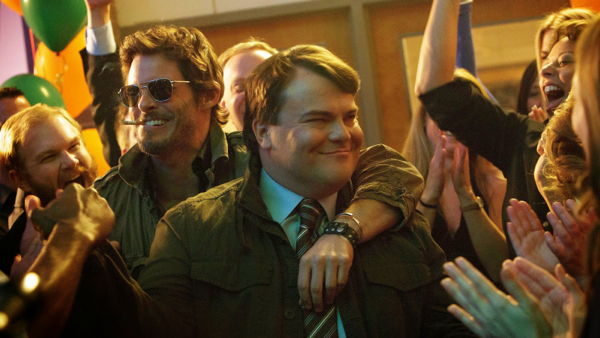
Like Herman Blume, the wealthy industrialist in Wes Anderson’s awesome “Rushmore,” Bill Murray’s Vincent MacKenna is a prickly, disillusioned Vietnam veteran with a taste for alcohol and cigarettes. MacKenna is poor and Blume is rich, but both men reassess their lives following unexpected and unorthodox friendships with much younger boys. The formula of the weary old grump and the precocious, inexperienced cadet learning lessons from one another works better in Anderson’s memorable film than it does in “St. Vincent,” but writer-director Theodore Melfi still manages to locate a number of opportunities for beloved headliner Murray to demonstrate why he’s a national treasure.

Murray is every bit as good in his mid 60s as he was decades ago in movies that established his cult bona fides. Before box office monsters like “Ghostbusters,” Murray consistently made lasting impressions as either lead or support in “Meatballs,” “Where the Buffalo Roam,” “Caddyshack,” “Stripes” and “Tootsie.” “St. Vincent” is another golden opportunity to see Murray break out his sly and ornery misanthropy, even though we all know the kindness and humanity are hiding just beneath the surface – and will certainly show up in time for the wet-eyed finale.

Newcomer Jaeden Liebeher plays Oliver, the introspective, considerate son of Melissa McCarthy’s struggling Maggie. They have the good and bad fortune to move in next door to Vincent, who soon becomes Oliver’s paid “babysitter” when Maggie is stuck at work. Vincent treats Oliver to something resembling an education, with trips to the horse track and meals taken at a local watering hole. The situations are all as formulaic as they sound, but Murray makes up for any predictability with his convincing flair for the celebration of vice.

One of the more provocative aspects of “St. Vincent” emerges in the complex relationships Vincent shares with the women in his life. Given the man’s host of socially frowned-upon behaviors, it’s no surprise to discover that Vincent scrapes together enough cash to regularly employ the sexual services of pregnant, gold-hearted stripper Daka (Naomi Watts). But when Melfi reveals that Vincent is also providing for his wife Sandy (Donna Mitchell), whose dementia confines her to a long-term care facility, it is left to the audience to determine the extent to which Vincent’s behavior is conscientious.

Melfi is blessed with a talented ensemble of actors. Somewhat surprisingly, however, several people expected to feature more prominently in the narrative take a back seat to the development of the central pairing of Murray and Lieberher. McCarthy rather convincingly demonstrates the same kind of skill handling serious dramatic material that has served co-star Murray so effectively in his career. Chris O’Dowd, as a wisecracking but warmhearted priest directly descended from Bing Crosby’s Father Chuck O’Malley, does his best to breathe life into his character. Terrence Howard’s role as a loan shark is so small that it is a bit surprising to see the Academy Award nominee in the part. “St. Vincent” is Murray’s party all the way, though, and audiences are staying through the credits just to see Murray’s spirited backyard sing-along to Bob Dylan’s “Shelter from the Storm.”

Men, Women & Children

Menwomenchildren1

Movie review by Greg Carlson

Trading the comic complications and satirical stingers of “Thank You for Smoking” and “Juno” for the more nakedly manipulative white whine and/or bathos of “Up in the Air,” “Young Adult,” and the critically ravaged “Labor Day,” filmmaker Jason Reitman adds another entry to his list of underwhelming missteps. The director’s sixth feature, “Men, Women & Children,” is based on the novel by Chad Kultgen, and aspires to examine the dark side of our fascination with smart phones and social networks. Good films about connectivity and disconnectedness are possible, but “Men, Women & Children” can only dream of being in the same class as “Me and You and Everyone We Know.”

Juggling a sprawling ensemble that includes a group of parents played by Adam Sandler, Rosemarie DeWitt, Jennifer Garner, Judy Greer, and Dean Norris, Reitman devotes equal time to the lives of teenagers including Ansel Elgort, Kaitlyn Dever, Olivia Crocicchia, Travis Tope, and Elena Kampouris. These men, women, and children, slaves to a culture determined by the façade of identity construction and the relentless demands of online profile management, appear to fulfill the prophecy of diminishing face-to-face human contact. Reitman never misses an opportunity to remind us of their pain.

The extent to which the movie manages to accurately capture some, if any, of the rapidly changing uses of the Internet is debatable, and the most tech-savvy viewers will snort derisively at a few of the more outmoded references. “Men, Women & Children” continues the visually intriguing evolution of the onscreen display of electronically mediated content like text messages, and Tony Zhou’s “A Brief Look at Texting and the Internet in Film” is a highly recommended primer for viewers either before or after they screen “Men, Women & Children.” Zhou’s short video effectively explores in five minutes several of the things Reitman struggles to do in just under two hours.

Zhou argues three key ideas regarding the dramatic increase of onscreen textual integration: it is more economical than the old manner of using close-up insert shots of phone screens, it is “artistically efficient” (in that “shot/reverse shot is slow”), and it “allows us to combine action and reaction in the same frame” via an uninterrupted view of an actor’s performance. Zhou praises “Sherlock” as the definitive exemplar of the technique’s “elegant design,” identifying several specific ways in which the BBC series has elevated the game: elimination of the display bubble containing the text, unified typeface and color – which further involves the audience by requiring the viewer to infer who is sending the message, and graphics that are (mostly) untethered to character or device. “Men, Women & Children” does not adhere to these practices.

In Reitman’s movie, the messages are indicative of a dispiriting isolationism that leads to a checklist of ills including adultery, eating disorders, bullying, sexual exploitation, fame worship, and misguided parental overprotectiveness. In case we miss the point(s), the plummy tones of Emma Thompson’s disembodied narration – accompanied by images of the Voyager space probe and Carl Sagan’s reflections on the “Pale Blue Dot” photograph – portentously interrupt the action in an effort to introduce philosophical gravitas. Thompson’s voice, deliberately or not, also recalls her similar role in “Stranger Than Fiction,” a far more thought-provoking examination of the existential crisis and moral values in the digital age.

Plastic Galaxy: The Story of Star Wars Toys

Plasticgalaxy1

Movie review by Greg Carlson

By fans, for fans, “Plastic Galaxy: The Story of Star Wars Toys” covers the profitable marriage of George Lucas’ phenomenal movie and Kenner Products, the Cincinnati-based company that acquired the license to produce action figures, vehicles, and other playthings based on Luke Skywalker, Princess Leia, Darth Vader, and the many inhabitants of the “Star Wars” universe. Director Brian Stillman alternates between the super collectors who have devoted the majority of their spare time and money amassing private hordes and the onetime Kenner staff members responsible for the concepts and designs that would result in the sale of an estimated quarter of a billion action figures during the line’s 1978-1985 run.

Many of the best-known legends of the classic Kenner “Star Wars” toys, including double telescoping light sabers, the redesign of Snaggletooth, and the rocket-firing Boba Fett, receive their expected analysis. Several players from the Kenner team, including design manager Ed Schifman, talk about the impact of visionary Kenner president Bernie Loomis, the man who shepherded the company’s “Star Wars” license and coined the term “toyetic” as a descriptor of the importance of a product’s imaginative play value. Although Schifman claims credit in the movie, Loomis is often associated with the idea of the “Early Bird Certificate Package,” the empty box promise that sold more than 500,000 pre-orders for “Star Wars” toys that were not ready in time for the holiday season of 1977.

Despite the level of detail provided in the movie’s numerous anecdotes, Stillman leaves out several stories that are considered de rigueur within the lore. For example, discussions of figure variations such as the vinyl cape versus cloth cape Jawa and the “pinhead” versus big head Han Solo are omitted. Additionally, no information is given regarding the process of naming figures like Walrus Man and Hammerhead. “Plastic Galaxy” does, however, touch on the extent to which Lucas was involved with and protective of his brand, tracing the early days that saw Kenner employees taking snapshots during theatrical screenings of “Star Wars,” before Lucasfilm reference material and documentation was routinely provided to designers and sculptors.

Another of the great mysteries of Kenner’s “Star Wars” history that remains largely unexplored in the movie is the process by which characters were chosen to be immortalized. “Plastic Galaxy” includes some nice commentary on the appeal of offering figures based on minor personalities, background creatures, and fringe aliens and droids, but nothing is said concerning the absence of more prominent players like Grand Moff Tarkin, Uncle Owen and Aunt Beru. Sure to set the hearts of the most devoted enthusiasts aflutter, those three, as well as the cantina musicians, General Dodonna, and assorted X-wing pilots, do appear on an early Jim Swearingen memo of proposed figures and ships.

Modestly budgeted (the movie was funded partially through a Kickstarter campaign), “Plastic Galaxy” makes hay under fair use exceptions to copyrighted material, incorporating a number of commercials and clips featuring scenes from “Star Wars” along with John Williams’ instantly recognizable score. Nearly all of the interviews are static, talking head compositions, and the documentary’s chief visual interest resides in both the archival material from Kenner and the many vintage photographs of kids and their toys. Crude animations and chapter-break title cards with banal statements like “The End of the Line?” and “Star Wars Is Forever” aren’t particularly inspired.

Unsurprisingly, “Plastic Galaxy” is male-centric. Then, as now, toy companies segregated properties into “boy toys” and “girl toys.” Of more than two-dozen interviews, only one woman, collector Lisa Stevens, is included in the movie, and even though Kenner employed several women who worked on the “Star Wars” account, none appear on camera. The aging fanboys eager to show off their stockpiles can be annoying and amusing in equal measure. Every so often, they manage to sound insightful. The recognition, for example, that Kenner TV ads deliberately suggested scenes that were not part of the movie underscores the importance of using one’s imagination and reminds us why we play with toys in the first place.