Cedar Rapids

Cedarrapids1

Movie review by Greg Carlson

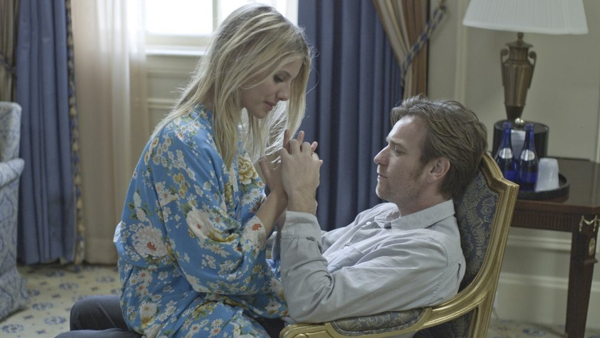
Following an auto-erotic asphyxiation misadventure that ends the life of a hot-shot coworker, naïve manchild/insurance salesman Tim Lippe (Ed Helms) must represent his small town agency at a regional conference in metropolis Cedar Rapids. The nervous, neophyte conventioneer takes his very first airplane ride to get there, and shortly after arrival meets roomies Ronald Wilkes (Isiah Whitlock Jr.) and Dean “Deanzie” Ziegler (John C. Reilly), unlikely guides for Tim’s initiation into the worldly, after hours pleasures that threaten Tim’s run at a coveted “Two Diamond” service award. En route to a predictably Capra-corn finale, director Miguel Arteta’s broad brushstrokes paint a familiar portrait of big-hearted rubes.

Whether or not Arteta laughs with or at his subjects is a matter of debate, but the principal cast members tackle their roles in earnest. The masterful Reilly, whose Deanzie constantly runs his filthy mouth without filter, relishes the opportunity to stick it to the hypocritical holy rollers running the ASMI (American Society of Mutual Insurance, but pronounced, naturally, “ass me”), knowing full well that straitlaced Ronald will patiently tolerate every outrageous insult and innuendo. Joining the fellows is Joan Ostrowski-Fox (Anne Heche), a candid and forward ASMI veteran who quickly tempts the “pre-engaged” Tim.

Despite Deanzie’s colorful way with words and his unconcealed pain at the unraveling of his marriage, Heche’s Ostrowski-Fox emerges as the most interesting figure in the movie. Arteta handles the fallout from her “what happens in Cedar Rapids stays in Cedar Rapids” adultery more effectively than the practically identical complication that Jason Retiman takes so seriously in “Up in the Air.” Helms is hardly George Clooney, but Lippe’s post-coital meltdown allows the actor to invest in a hysterical display of humiliation that includes a confessional phone call to the older woman (Sigourney Weaver as Lippe’s former middle school science teacher and current lover) Lippe believes he has wronged.

The comedy of embarrassment built around infantilized male protagonists is more than a cottage industry, and “Cedar Rapids” joins a long list of movies that wring laughs from fish-out-of-water scenarios capitalizing on Peter Pan-like characters embarking on journeys of self-discovery. Lippe’s adventure includes making the acquaintance of prostitute Bree (Alia Shawkat), whose heart of gold beats faster when introducing her new pal to the joys of crystal meth. Shawkat, like Heche, makes the most of her limited screen time and is a welcome presence in otherwise masculine territory.

“Cedar Rapids” seldom takes seriously its satirical mission to expose the hypocrisy of the ASMI’s religious piety and moral righteousness. Kurtwood Smith’s unctuous Orin Helgesson registers in several smaller scenes, including one that necessitates a nude locker room embrace. Arteta appears to relish any opportunity to showcase the pasty flab of his unclothed cast members, even if the dermal displays exist primarily to fuel uneasy gags about homosexuality. “Cedar Rapids” evolves into something as mild and unassuming as its central figure, and though Tim Lippe is a little long in the tooth to be the subject of a traditional bildungsroman, Helms inhabits him as a man who sheds his innocence without losing his good manners and essential decency.

Blue Valentine

Michelle Williams as Cindy and Ryan Gosling as Dean in BLUE VALENTINE

Movie review by Greg Carlson

Relying on a fluid editing structure that contrasts past and present, director Derek Cianfrance’s labor of love “Blue Valentine” is a painful domestic drama anchored by Ryan Gosling and Michelle Williams, the skillful performers playing a couple on the brink of divorce. Both stars double as executive producers, and Williams reportedly received a version of the script when she was only 21. Cianfrance intended to shoot the early relationship sequences and then wait several years to complete the material that takes place when the characters are older, but budget limitations prevented any prolonged or interrupted shooting schedule.

The minor press drama surrounding the almost NC-17 rating of the movie proves more interesting than the film itself, a metaphorically bloody dissection of the doomed relationship of Gosling’s Dean and Williams’s Cindy. While Harvey Weinstein’s personal appeal to the MPAA spared the film any cuts (the original objection centered on a short scene of discreet cunnilingus), the film’s one-sheet is the sexiest thing about “Blue Valentine.” The intercourse that materializes onscreen, especially a near coupling in a space-age themed novelty hotel room, is caustic – even humiliating – and laced with a purposeful artlessness that highlights love’s extinction.

Whenever Cianfrance cuts to the scenes of Dean and Cindy’s courtship, the audience breathes a small sigh of relief. As the “now” scenes crushingly hammer toward demolition, the “then” scenes fill in the relationship’s construction. Dean’s sensitivity places a somewhat dubious halo around Gosling that the actor struggles to shatter. Dean supports Cindy all the way, from a literal last minute change of heart over an abortion to a steadfast commitment to raise daughter Frankie as his own. He deals with Cindy’s less than supportive family and survives that tried and true movie trope: a vicious beatdown from Cindy’s awful ex.

Karina Longworth aptly and accurately pointed out that “Blue Valentine” favors Dean’s point-of-view over Cindy’s, and that the film as made demonstrates a “lack of interest in imbuing [Cianfrance’s] female character with the rich interior life and complicated morality he gives his male lead.” While Longworth wonders aloud about the possibility of misogyny, viewers will find themselves longing for any opportunity to understand Cindy as something other than burned out, exhausted, and constantly prepared to reject any and all of her husband’s attempts at reconciliation and affection. The unfortunate result casts Cindy as a cruel shrew and aligns the movie with Dean’s desperate desire to hold the marriage together and protect Frankie from growing up in a broken home.

“Blue Valentine” unapologetically embraces the gut-wrenching death throes of a once promising union through the minutiae of observed details and improvisational performances, a bold directorial decision that is certain to turn off more viewers than it attracts. Designed to showcase every inch of working class drabness, the film benefits substantially from Grizzly Bear’s atmospheric music as well as the nearly forgotten early 1970s demo “You and Me,” credited to Penny and the Quarters (an interesting story in itself). The obscurity of the song, which Cianfrance shared with Gosling but deliberately kept from Williams, symbolizes the dedication of the filmmakers to their constructed universe, even though that world teeters on the precipice of oblivion.


Biutiful

Biutiful1

Movie review by Greg Carlson

Alejandro Gonzalez Inarritu’s fourth feature “Biutiful” retains the director’s long-windedness while dispensing with the criss-crossing, interlocking approach to multiple plot threads that he employed in the loose trilogy of “Amores perros,” “21 Grams,” and “Babel.” Inarritu, whose preoccupation with death hovers over all of his features, inscribes “Biutiful” to his father, but despite the closeness shared between audience and principal character Uxbal (Javier Bardem), the movie struggles mightily to sustain its nearly two-and-a-half hour running time. Set in a gritty Barcelona a world away from the sun-dappled paradise inhabited by Bardem’s Juan Antonio in Woody Allen’s terrific “Vicky Cristina Barcelona,” “Biutiful” explores the end of a life not particularly well lived.

Bleak is assuredly the most commonly applied adjective in reviews of “Biutiful,” and Inarritu relentlessly constructs one nearly unbearable crucible after another. Close to the outset, we learn that black market fixer Uxbal has but a few months to live, as his prostate cancer spreads throughout his body. Unable to rely on his mentally unstable ex, whose parenting skills will give any mother or father the shudders, Uxbal turns to Liwei (Luo Jin) and Ige (Diaryatou Daff), undocumented aliens, to look after his two kids while he juggles daily conflicts arising from his shady business dealings.

Several detractors have pounced on Inarritu for what might be perceived as cultural opportunism, especially in the way the Chinese and Senegalese characters are engaged as exotic wallpaper in Uxbal’s colorfully wretched journey toward oblivion. While one subplot involving a secret relationship between two of Uxbal’s Chinese partners vexingly goes nowhere, Inarritu devotes enough time to Ige for her own plight to resonate with the viewer. Also in the director’s defense is the narrative’s unwavering dedication to Uxbal, whose shoulder and point of view are almost never abandoned.

As a guiding motif never more than a breath away, death announces itself in several manifestations throughout the movie. Uxbal makes additional cash as a clairvoyant who communicates with the departed, and while some skeptics cry foul, Inarritu wants the viewers to know he is a believer: frightening apparitions float near ceilings, and some of the ghosts communicate directly with Uxbal. In one sequence, Uxbal literally touches the face of the father he never met when an exhumation provides a surreal once-in-a-deathtime opportunity. In many ways, this memorable moment is the closest “Biutiful” comes to expressing Inarritu’s gift for synthesizing the grotesque and the transcendent, although regular collaborator Rodrigo Prieto’s photography frames cockroaches and asphyxiated sweatshop workers with a “fearful symmetry” that finds beauty in the unlikeliest of images.

In one unmistakably strange set-piece, Uxbal visits a club that might as well be called Purgatorio. Accompanied by the deafening thump of Underworld’s “Shudder/King of Snake,” Uxbal somnambulates through the crowd of sweaty revelers while gyrating dancers appear as sexual monstrosities, nipples sprouting from buttocks and giant breasts where heads should be. The entire outré enterprise carries Inarritu’s emotional manipulation past the point of bluntness, but then, whoever accused this filmmaker of subtlety? Fortunately, Bardem is a monumental screen presence, and his previous work, including “Before Night Falls,” “The Sea Inside,” and even “No Country for Old Men” indicates a pattern of suffering that reaches some kind of apex – or nadir – in “Biutiful.”


Unknown

Unknown1

Movie review by Greg Carlson

Hilariously specific and wildly improbable, “Unknown” stars coasting underachiever Liam Neeson (“Release the Kraken!”) in another of his recent paycheck-generators. Oskar Schindler may be long out of sight, but Neeson’s choices make for a fascinating and motley collection of historical personalities and fictional firebrands. From Michael Collins and Qui-Gon Jinn to Alfred Kinsey and the majestic lion Aslan, Neeson is no stranger to characters with incredible self-confidence or mighty ego – and sometimes both at the same time. “Unknown” provides the appealing performer with another protagonist whose sensitivity and decency collide with the necessity of physical violence.

Neeson – now approaching sixty – plays biotechnology researcher Dr. Martin Harris, an academic visiting Berlin for a major conference. Leaving behind much younger wife Elizabeth (January Jones) to check in to the hotel while he attempts to retrieve a mislaid briefcase from the airport, Harris experiences serious trauma when the taxi in which he is riding plummets into a river. Four days later, the groggy and disoriented victim makes his way back to Elizabeth, who shockingly denies ever having met him. Stranger still, Elizabeth is in the company of another man identified as Martin Harris. Undeterred, Harris aims to uncover the truth, which turns out to be a pretty ripe caper involving a blight-resistant strain of, yes, corn.

Based on a novel by Didier van Cauwelaert titled in English as “Out of My Head,” which alludes to an impishness the film never musters, “Unknown” is the second Dark Castle Entertainment-branded title directed by Jaume Collet-Serra to deal with the concept of double personalities. While it is certainly an improvement over “Orphan,” “Unknown” is instantly recognizable for the movie-world convenience provided by a konk on the noggin. It really doesn’t matter whether Neeson is Harris or not, given the constant presence of danger and peril that rockets the man from one dilemma to the next.

“Unknown” also takes itself more seriously than it should, and its few flashes of humor – most of which belong to the wisecracking Diane Kruger in her role as Gina, the Bosnian cabbie whose fateful fare involves her in farfetched espionage – are drowned out by plot convolutions and action thriller genre requirements. Car chases and assassination attempts alternate with quieter scenes, several of which focus on the tremendous Bruno Ganz as a weary former Stasi agent invigorated by an opportunity to revisit the kind of deception with which he dealt decades ago. Ganz’s single-scene confrontation with Frank Langella is a delightful slice of Black Forest ham.

Welding “The Bourne Identity” to several of Alfred Hitchcock’s finest “wrong man” scenarios, “Unknown” demonstrates for the umpteenth time the tonal challenges that the Master of Suspense made look so effortless. One immediately recognizable problem lies in the romantic inclinations of the “faithful” Harris toward the woman he thinks is his wife, even as the story insists that he and Gina take turns rescuing one another from all manner of serious bodily harm. In his prime, Hitchcock would not have commenced shooting until the sexual gamesmanship was honed to a fine edge of innuendo and double entendre, an element sorely missing from “Unknown.”

The Illusionist

Illusionist1

Movie review by Greg Carlson

Inspired by a script written by Jacques Tati, animator Sylvain Chomet’s “The Illusionist” strolls through the wistful melancholy of a bygone era. An itinerant rabbit-and-hat performer’s act of kindness for a rural chambermaid named Alice leads to a chaste and gentle relationship that parallels the timeless tug between the outdated and the modern, the past and the future. While Chomet’s resolute commitment to missed opportunities, personal humiliations, and the crushing weight of failure distinguish “The Illusionist” from the majority of animated features, cinephiles should find much to admire in the movie’s exquisite design. More contemplative than Chomet’s “The Triplets of Belleville,” “The Illusionist” is also more rewarding.

As we follow the fragile acquaintance of the older man and the younger girl, Chomet casts his adopted country as the principal character. Few films have rendered Scotland as lovingly as “The Illusionist.” Filtered through the gauze of its late 1950s settting, Chomet’s nostalgic, romanticized Edinburgh is much closer to the leisurely picnics of “The Prime of Miss Jean Brodie” than the needle dens and filthy toilets of Danny Boyle’s “Trainspotting.” Painstakingly researched, the movie’s cityscape is a stunning simulacrum, from individual buildings to clothing styles and automobile makes and models.

Chomet constructs “The Illusionist” with remarkable restraint in an era of manic, computer-generated hallucinations populated by hyperactive, chattering beasts caroming through pinball machines built from dated movie references and shiny pop song montages. In “The Illusionist,” one is hard pressed to spot even a single facial close-up, and Chomet’s deliberate distance from the human beings has put off any number of critics quick to label the film airless, empty, and repetitive. Instead, the filmmaker mimics the wide shot staging favored by Tati predecessors Chaplin and Keaton (especially visible in a scene that alludes to the motorcar mayhem of Keaton’s 1922 “The Blacksmith” without surrendering to total chaos).

In an essay for Senses of Cinema, Tati biographer and Princeton French literature professor David Bellos complains bitterly, perhaps jealously, that Chomet has done literally “nothing” with Tati’s source material, and that the “transposition of a Tati gag from the medium of mime to the medium of animation changes its nature entirely – and makes it just a bit pointless, too.” Bellos goes on to argue that Chomet has insensibly conflated the lead character in “The Illusionist” with Tati’s signature M. Hulot persona, most probably through signifiers that include the replication of a number of Hulot gags and the film’s lack of spoken dialogue.

It must be noted, however, that the magician in “The Illusionist” shares Tati’s unaltered surname Tatischeff, not Hulot’s, and Chomet’s purpose with the character departs significantly from Tati’s careful erasure of Hulot’s “trade, profession, activity, or social integration of any sort” (as Bellos puts it). In one of the most enjoyable moments in “The Illusionist” the old conjurer hides from Alice by ducking into a screening of “Mon Oncle.” The animated figure regards his projected, live-action doppelganger with a seemingly contradictory blend of surprise and recognition, and in this single moment, Chomet reiterates his artistic prerogative to honor Tati with homage rather than mount a futile attempt at a “pure” Hulot feature.

Another Year

Anotheryear1

Movie review by Greg Carlson

Mike Leigh’s polarizing style moves and inspires some as surely as it alienates and bores others, and “Another Year,” the prosaically titled Academy Award nominee in the original screenplay category, falls short of several of the filmmaker’s features, including “Happy-Go-Lucky,” “Vera Drake,” “Secrets & Lies,” and cult favorite “Naked.” Divided into seasonal quadrants leading up to an inevitable winter, “Another Year” bluntly compares the comfortable existence of an aging couple with the misery and loneliness of a frequent dinner guest. Deliberately selected quotidian content shapes the narrative in a decidedly low-key portrait of domesticity, and audience enjoyment will depend on tolerance levels for the prickly and often unlikable characters populating the film.

As Tom and Gerri, Jim Broadbent and Ruth Sheen reek of blissful, long-term partnership. Employed, stable, and affectionate, they often entertain their sad sack pals at cookouts featuring the bounty of their well-tended and symbolic garden allotment. Chief among the losers is Mary (Lesley Manville), a souse whose dreams of romantic partnership are so desperate she openly flirts with Tom and Gerri’s thirty-year-old son Joe (Oliver Maltman). While Mary’s encyclopedia of woe charts one futile letdown after another, a visit from Tom’s old buddy Ken (Peter Wight), a wheezing, chain-smoking lush, makes her plight look – for a moment – sunnier by comparison.

No reviewer hated Leigh’s film more than the Village Voice’s Karina Longworth, whose blood-draining demolition compared “Another Year” unfavorably with “The Human Centipede.” Longworth might have a point with her criticism of the entitlement, self-righteousness and condescension demonstrated by Tom and Gerri to their less fortunate acquaintances, but she misses the man’s point when bemoaning the ambiguity inherent in the writer-director’s own sympathies. One of the film’s pleasures is the concluding scene’s alliance with Mary in her emotional isolation, which unfolds as a grim epiphany (or perhaps anti-epiphany) that would be right at home in “Dubliners.”

After spending the entirety of the narrative as an object of pity, scorn, and even ridicule, Mary sits in the midst of a group meal as the soundtrack fades to silence. Far from Longworth’s description as “totally awful,” Mary has perhaps glimpsed a kind of future to which she may resign herself. Branched into a pair of possibilities in which a tenuous connection to Tom’s quiet brother Ronnie (the excellent David Bradley) opposes the resignation of continued solitude, Leigh renders enough vagueness for the viewer to wonder whether Mary will continue to search for some elusive joy that sits just out of reach.

Additionally, Leigh shares a clue to his concerns with the cameo appearance of Imelda Staunton, whose brief screen time sets up the gulf between the well adjusted and the chronically depressed. As Janet, a patient counseled by Gerri, Staunton’s stone-faced matron is asked to rate her happiness on a scale of one to ten. When “one” comes as the practically unhesitating reply, viewers should – via Leigh’s casting choice, especially since Staunton never returns to the story – understand the implications of the tired woman’s response. Leigh drapes her grave self-assessment over the proceedings like a shroud, indicating that one should not necessarily take comfort in the cheerful banalities of the “lucky” Tom and Gerri.

127 Hours

127hours1

Movie review by Greg Carlson

A harrowing man-versus-nature adventure in the vein of a classic Reader’s Digest “Drama in Real Life” story, Danny Boyle’s “127 Hours” imagines the ordeal of mountaineer Aron Ralston, who amputated his right arm after being trapped by a boulder while exploring some narrow rock formations near Moab, Utah in 2003. While Ralston’s survival has been extensively documented on television, most notably in Dateline NBC’s “Desperate Days in Blue John Canyon,” Boyle’s movie is as exhilarating and indefatigable as any number of the filmmaker’s previous features, from “Trainspotting” to “Slumdog Millionaire.”

“127 Hours” is a precision-machined study in dialectical opposition: external reality battles internal fantasia, kinetic action collides with punishing immobility, and the threat of failure interlocks with soaring triumph. Director Boyle embraces these polar opposites with vigor, and even though the faint of heart have been warned via numerous publicity-enhancing accounts of possible lightheadedness or nausea brought on by the film’s graphic depiction of Ralston’s self-surgery, “127 Hours” transcends the grotesque through a relentlessly life affirming posture undoubtedly affected by the fact that Ralston made it out alive against overwhelming odds.

Adapted by Boyle and collaborator Simon Beaufoy from Ralston’s memoir “Between a Rock and a Hard Place,” “127 Hours” owes much of its visceral impact to James Franco’s performance as Ralston. Franco’s confident portrayal is certainly the best work of the young actor’s career, and he covers a huge range of emotional terrain without resorting to any significant traces of self-pity. Ralston’s initial sense of invincibility, forever erased by the 2003 experience, gives Franco a terrific platform from which to probe the character. Longtime admirers of the actor will not be surprised by Franco’s reserves of humor, manifested in a series of pitch black jokes laced with cosmic irony.

“127 Hours” is redolent of Sean Penn’s film of “Into the Wild” in the way that viewers are poised to vicariously witness the mettle-testing, life-altering, and mind-bending odysseys of principal characters from the safety of a darkened theater. Both Ralston and Christopher McCandless documented enough of their ordeals to provide the foundation for the “major” motion pictures that would eventually follow, and in the case of “127 Hours,” the presence of a small camcorder opens up a tantalizing world of possibility for Boyle, who uses it as a confessional, a time machine, and a last will and testament.

Ralston has attested to Boyle’s essential accuracy in the translation of his crucible, but it is worth noting that the film’s subject did not enjoy the secret pool frolic with hikers Megan McBride (Amber Tamblyn) and Kristi Moore (Kate Mara) prior to his accident. While the truth is less thrilling – Ralston demonstrated some basic climbing moves to his chance acquaintances before they parted ways – the swimming scene is revisited in a fascinating meditation that dares to flirt with erotic reverie despite, or possibly because of Ralston’s perch at death’s door. The enveloping presence of water, a major motif throughout the movie, provides one more example of Boyle’s deployment of contrasts, as Ralston’s own dwindling supply puts his life in jeopardy. By the end of the movie, if Boyle has been persuasive, the audience shares Aron Ralston’s thirst.

All Good Things

Allgoodthings1

Movie review by Greg Carlson

Filmmaker Andrew Jarecki, whose excellent 2003 documentary “Capturing the Friedmans” examined a family destroyed by sexual abuse and child pornography, fails to translate his sharp observational acuity to drama in “All Good Things,” a fictionalized account of Robert Durst, wealthy heir to a family fortune in Manhattan real estate and prime suspect in his wife’s still unsolved 1982 disappearance. Durst, renamed David Marks and played by Ryan Gosling in the movie, was also questioned in the execution-style killing of a longtime friend and eventually served time for lesser charges following the murder of a boarding house neighbor in Texas.

Durst’s proximity to three grim cases included tabloid headline-baiting details: he posed in wigs and make-up as a woman named Dorothy and openly admitted to dismembering Morris Black (called Malvern Bump and played by an underutilized Philip Baker Hall) with a hacksaw. Weirder still, Durst – a free man today, spoke favorably about Jarecki’s film in a November 24, 2010 “New York Times” article by Charles V. Bagli and Kevin Flynn, reporters who had covered the Durst case beginning in 1999.

Lurching through decades of domestic dysfunction traced all the way back to Marks witnessing his mother’s suicide, “All Good Things” oversimplifies the relationship between David and his father Sanford (Frank Langella), a ghoulish presence constantly pressuring his son to do his bidding. When David meets the winsome Katie (Kirsten Dunst) and retreats with her to Vermont to open the health food store that provides the film with its title, Sanford tightens his grip, bullying David into the family business back in NYC. Dunst’s performance as Katie is one of the few bright spots in the movie, principally because viewers can relate to her confusion and frustration as David begins to lose his temper and eventually his mind. As soon as she exits the movie, so too does the viewer’s interest.

Vague when it needs to be concrete and detached when it should show concern, “All Good Things” frustratingly holds Marks at a distance too great for Gosling to make him a thoroughly human character. Blunt pronouncements about David’s childhood trauma are repeated to explain the character’s warped and wounded social maladjustments, but the filmmaker shares only the most superficial aspects of David and Katie’s unraveling marriage. When David’s inability to cope with his demons reaches a fever pitch, so does Rob Simonsen’s bombastic score, a dreadfully obvious wreck alleviated only by the presence of some period pop, including a trio of well-placed Steely Dan cuts.

With the exception of Daniel Patrick Moynihan, seen brushing off possible evidence of the Marks/Durst family’s seedy corruption, screenwriters Marcus Hinchey and Marc Smerling rename all the real life models, granting a greater degree of freedom and speculation than might have been used if the original missing persons case was closed. Theories are offered for all kinds of dirty deeds, ranging from contract killing to blackmail to a decoy imposter used to establish an alibi. The result is messy guesswork that lacks all the intrigue and spooky ambiguity displayed in “Capturing the Friedmans.”

The King’s Speech

Kingsspeech1

Movie review by Greg Carlson

While watching “The King’s Speech,” one might occasionally wonder what present monarch Queen Elizabeth II would think of Colin Firth’s portrayal of her father Albert Frederick Arthur George, better known as King George VI to the world, and Bertie to his immediate family. Dashing movie actors have a tendency to abet filmdom’s fantasy reconstruction of history, and Firth’s handsome face provides only the first clue that movies tend to do more than simply cut out all the boring bits.

Stately and dignified if not always majestic, “The King’s Speech” inverts “Pygmalion,” stripping it of George Bernard Shaw’s keenest satire in favor of a more superficial “crowned heads are people too” theme that played just as well in Stephen Frears’s “The Queen.” Focused on the eradication of Bertie’s prominent stammer, the story traces the relationship of the royal to his Australian speech therapist Lionel Logue, played with relish by Geoffrey Rush. Commoner Logue’s unorthodoxy and insistence on informality initially vex the stiff noble, but positive results and a requisite amount of dramatic conflict cement the unlikely friendship.

Bertie is both a hesitant patient/client/pupil and a reluctant ruler, and director Tom Hooper bounces back and forth between scenes of often humorous therapeutic techniques, including one that requires the liberal application of salty profanity, and the succession crisis initiated by brother Edward VIII (Guy Pearce), who abdicated when his proposed marriage to American Wallis Simpson met with stern political rebuke. A few sticklers have criticized the narrative streamlining that suggests a much tighter cause-and-effect chronology for George VI’s public speaking remedy, but there is no question that dramatically, “The King’s Speech” works best during the scenes exclusive to Firth and Rush.

The two actors capitalize on the gulf of wealth and privilege that divides their characters from one another, and Rush’s barbs earn numerous laughs as he skewers pomposity and protocol without personally offending His Highness. When Logue finally does overstep, the tension created by Bertie’s cold shoulder gives the film its strongest jolt. On multiple occasions, David Seidler’s screenplay suggests that Logue’s lack of deference was a deliberate ploy to trigger a commanding response from the usually taciturn Bertie. The fantastic image of Rush casually slouched in King Edward’s Chair, the seat of coronation for all but two British sovereigns since 1308, offers the most visually arresting example.

Hooper might have done more to emphasize the transformative influence of the media as a conduit between governors and governed, and a few moments in “The King’s Speech” hint at the seismic impact of widely distributed sound and vision on the masses during the ascendancy of radio transmission and film distribution. In one suggestive scene, a newsreel of Hitler delivering a fiery oration impresses Bertie, who recognizes that his own speech skills pale by comparison. Once Hooper has set the stage for the predictably triumphant climax, the broadcast of King George’s September 3, 1939 address in the wake of declared war with Germany, most viewers will be ready to hang on every word. The curious might even make time to visit YouTube or the BBC’s online archive to hear the actual recording.

Country Strong

Countrystrong1

Movie review by Greg Carlson

Unintentionally hysterical, “Country Strong” is another variation on “A Star Is Born” assembled with all the skill and depth of a third-rate made-for-cable tearjerker. A textbook case of predictability, cliché, and superficiality, Shana Feste’s movie can claim only a single asset: the decent, if not spectacular, musical performances delivered by three of the four principals. Charting the “comeback” of a substance-abusing recording artist caught between her controlling manager husband, her younger lover, and her own demons and insecurities, “Country Strong” drowns in its own melodramatic self-seriousness, from locked dressing room fits to on-stage meltdowns.

As multiple Grammy-winning country music star and slow motion train wreck Kelly Canter, Gwyneth Paltrow can’t entirely shed the elitist, blue blood, power-cleanse entitlement that has served her in a string of British-accented roles including “Shakespeare in Love,” “Great Expectations,” and “Emma.” On paper, the Canter part looks juicy, and hard-luck country singers have earned Oscars for Sissy Spacek, Robert Duvall, Reese Witherspoon, and Jeff Bridges. In each of the previous cases, however, some amount of identifiable human complexity was present; Canter remains so thoroughly opaque we have to take her word that she wants to rebuild her shattered image, since her behavior suggests otherwise.

Feste’s murky screenplay often loses track of Kelly to juggle the rivalries and recriminations of husband James (Tim McGraw, the only legitimate country music star in the bunch, in a non-singing role), rising talent Beau Hutton (Garrett Hedlund, likable) and determined ingénue Chiles Stanton (Leighton Meester, pretending to lack confidence as a performer), each of whom occasionally threatens to steal the spotlight. Many scenes almost collapse under the weight of their own shameless mawkishness, from an awkwardly laughable bedroom cold shoulder to the fluffy and symbolic quail chick nicknamed Loretta Lynn that Kelly intends to nurse to health to the contrivance of Kelly’s redemptive serenade to a little boy dying of cancer. “Country Strong” embraces every stereotype in a tight bear hug.

In his own way, Beau behaves as erratically as the boozy, addled Kelly, inexplicably flip-flopping when it comes to his feelings for “country Barbie” Chiles. Initially, he treats the shallow dim-bulb with outright contempt, mocking her beauty contestant credentials and questioning her devotion to “real” country music. Later, despite a promise of fidelity to the already adulterous Kelly, Beau finds it hard to resist Chiles’s physical charms (essentially setting up a strongly hinted-at four-way romantic roundelay that, perhaps regrettably, never comes to fruition). Feste herself cannot seem to make up her mind about Chiles, alternately painting the character as a calculating Eve Harrington and as an earnest sweetheart.

“Country Strong” also has the distinct misfortune of arriving a season after “Crazy Heart,” a superior treatment of some of the very same landscape. While both Paltrow’s Kelly Canter and Jeff Bridges’s Bad Blake must atone for their failures and transgressions, only the latter character is rendered with deep reserves of nuance and detail. All four of Feste’s core characters live just outside the grasp of verisimilitude – Chiles’s stage fright freeze-ups are notably phony. Both “Crazy Heart” and “Country Strong” feature tunes meant to exemplify the challenges and regrets of the protagonists, but while “The Weary Kind” readily communicates its unique value to Blake, none of the songs in “Country Strong” share the same kind of emblematic, self-defining importance to the frustratingly unknowable Kelly.