Scott Pilgrim vs. the World

Scottpilgrim1

Movie review by Greg Carlson

Edgar Wright capitalizes on his cult status as an expert craftsman of clever, pop culture-referencing entertainment with “Scott Pilgrim vs. the World,” a bubblegum fantasy of young adulthood adapted from Bryan Lee O’Malley’s illustrated saga. Blending video game culture, garage rock music, and the manga-inspired style of O’Malley’s fetching drawings, Wright takes to heart and makes good on the original’s trio of back cover bookstore genre classifiers: comedy/action/romance. Wright embraces the importance of all three designations with rapturous color and knockout wit, transforming “Scott Pilgrim vs. the World” into one of the year’s most welcome and inventive releases.

Michael Cera, who has already played movie incarnations of literary protagonists in “Youth in Revolt” and “Nick and Norah’s Infinite Playlist,” makes a convincing Scott Pilgrim, the self-absorbed, often clueless, un- or under-employed Toronto-dwelling Sex Bob-omb bass player, whose innocent but questionable relationship with teenage fan Knives Chau (Ellen Wong) complicates the intense attraction Pilgrim feels toward the literal girl of his dreams, Ramona Flowers (Mary Elizabeth Winstead). Ramona, a rollerblading Amazon.ca package courier, agrees to date Scott provided he can defeat her seven evil exes, a challenge that provides Pilgrim with a metaphoric quest toward maturity, self-discovery, and perhaps a grain of responsibility.

In the books as well as the movie, the point of view is filtered so strongly through the title character that magic realism scarcely begins to describe the manner in which Scott’s headspace traverses the actual and the imagined. Wright latches on to the conceit with confidence, presenting a graphically and sonically enhanced dreamscape that effectively charts the emotional terrain of youthful experience (Scott and Ramona’s first date is gorgeously rendered). Defeatist sourpusses will gripe that Pilgrim’s ego, his paralyzing inaction – which looms large between battles with evil exes – and his outright thoughtlessness impede the pathway to likeability, but Scott is deliberately defined by his solipsism and the glow of his highly unreliable narration.

Distilling the non-negotiable portions of O’Malley’s six-volume series into a single feature film understandably necessitated sizable cuts and conflations, and the most hardcore followers will mourn the absence of Lisa Miller and Mr. Chau, the reduced importance of key supporting players (especially Kim Pine), and the remixing, re-imagining, and re-staging of several of the mortal combat confrontations. Wright wisely opts to jettison as much expository material as possible, inviting viewers to dive into the Pilgrim universe without need of explanation for the rules that govern Scott’s consciousness. As a result, the movie diminishes the book’s emphasis on subspace, an alternate dimension used as a shortcut or hiding place that can be accessed through portals like doors and shoulder bags.

“Scott Pilgrim vs. the World” has been attacked for failing to appeal to a wide range of moviegoers, but Wright leaves plenty of room for curious viewers of any gender who don’t spend much (or any) time playing video games. Even though Ramona is Princess Peach to Scott’s Mario, Winstead guarantees that her character gives as good as she gets, resisting to some degree the most limiting features of the damsel in distress. The side-scrolling chassis upon which the plot is engineered presents Ramona as an object to be won, but both O’Malley and Wright make certain the female characters fight with the same degree of martial skill as the boys, and Ramona surpasses Scott’s brainpower and matches his sense of humor (Scott: Hey, you know Pac-Man? Ramona: I know of him). See it or risk exploding into a shower of coins.

The Other Guys

Otherguys1

Movie review by Greg Carlson

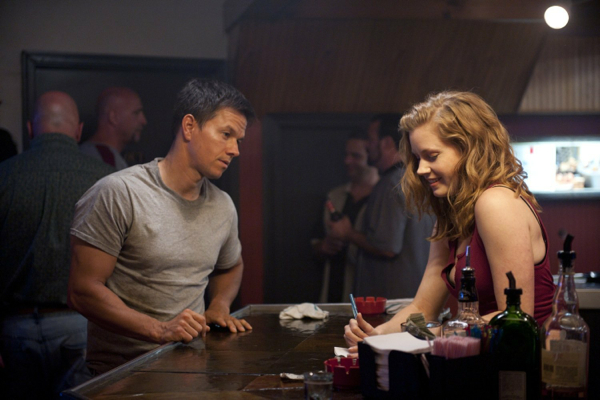
Another kaleidoscopic, anything-goes parody/satire from goofball pals Adam McKay and Will Ferrell, “The Other Guys” is the least structured of the comic team’s collaborations, and arguably the weakest. As pencil-pushing NYC police officer Allen Gamble, Ferrell trades his finely tuned sense of outrageous indignation and bullheaded machismo for a stab at meekness, passivity, and groveling obsequiousness. Mark Wahlberg’s Terry Hoitz, a dim-bulb loose cannon, is overmatched by partner Ferrell’s antics, and it would have been nice to see a variation on Wahlberg’s sharp-tongued (and much funnier) Staff Sgt. Dignam from “The Departed” instead.

“The Other Guys” peaks early with a brilliant argument pitting lion against tuna in a logic-warping bid for metaphoric food chain dominance that would be at home on any elementary school playground. The remainder of the movie’s best lunacy follows the well-established McKay/Ferrell pattern of overgrown boys masking their insecurities with pompous displays of testosterone-fueled bids for manly respect. In one hilarious example, a whispered argument interrupts a solemn cop funeral, escalating into noiseless fisticuffs to avoid disturbing the mourners. As the film grinds on, one begins to long for more scenes like these.

The supporting cast, which includes all too brief cameo appearances by Samuel L. Jackson and Dwayne Johnson as a pair of high-octane super detective action heroes as well as Michael Keaton as a captain who moonlights at Bed Bath & Beyond, adheres to the absurd shenanigans typical of McKay’s features. Keaton’s character, for example, peppers his dialogue with references to TLC song titles, but denies any knowledge of the musical trio. Director McKay drops in for a fleeting moment as Dirty Mike, a derelict who organizes sex parties in Gamble’s red Prius. An underutilized Steve Coogan plays the reptilian investment banker being investigated by Gamble and Hoitz.

Predictably, “The Other Guys” hews literally to the gender specification indicated by its title, and substantial roles for women are scarce. A game Eva Mendes logs some screen time as Gamble’s incongruously gorgeous wife, but the running gag that requires Gamble to abandon his daytime deference for a loutish spray of browbeating insults and put-downs directed at his weirdly complaisant spouse is one of the movie’s most inscrutable jests. Gamble’s inexplicable appeal to beautiful women, which confounds partner Hoitz, may be amusing, but the dismissive, mild sexism is far less appealing.

Viewers who sit through the movie’s end credits will see an animated series of statistics covering everything from the history of the pyramid scheme named for Charles Ponzi to runaway CEO compensation to Wall Street bailouts and bonuses, all set to Rage Against the Machine’s venomous, propulsive cover of Dylan’s “Maggie’s Farm.” Despite the inclusion of Coogan’s Bernard Madoff-esque financier as the film’s belabored central plot thread, the whole closing sequence feels like it should have been paired with a much tougher, smarter movie than “The Other Guys.” Instead, the preceding film relies too intently on delivering the automotive chaos and gunplay required of the genre being lampooned to transcend the already exploded myths of the buddy cop archetype.

The Kids Are All Right

Kidsareallright1

Movie review by Greg Carlson

Filmmaker Lisa Cholodenko regularly cooks up dramatic conflict by introducing the threat of a newcomer or stranger into the daily grind of characters whose lives require some sort of jolt. In “The Kids Are All Right,” viewers can expect another of the director’s sunny Southern California soap operas. An indelicate mash-up of calculating tearjerker and broad comedy – much of it designed around an adulterous affair – Cholodenko’s third feature has been coarsely touted as a “Brokeback Mountain” for lesbians, but lacks the gravitas to match Ang Lee’s groundbreaking film.

To be fair, the only significant parallel between “Brokeback Mountain” and “The Kids Are All Right” is the presence of well-known actors playing homosexuals, but the former film was a heartbreaking tragedy and the latter film relies on wildly improbable humor. Many viewers will not be able to resist the portrayals provided by veteran stars (and heterosexuals) Annette Bening and Julianne Moore, and Cholodenko deserves praise for the effective manner in which she directs the two women. The dialogue, which Cholodenko co-wrote with Stuart Blumberg, too readily depends on liberal and literal doses of “…just sayin’,” along with goopy platitudes and an earnest inclusion of the overworked bit about hurting the ones you love. Add to all of this an unwelcome streak of casual entitlement and racism, and one can never be certain whether the central couple deserves our affection or contempt.

Mark Ruffalo plays the sperm donor whose genetic material helped produce Moore and Bening’s teenagers Joni (Mia Wasikowska) and Laser (Josh Hutcherson), and when the children track him down, the mothers aren’t sure how to react. Ruffalo’s roguish Paul is a follow-your-dreams stud who enjoys responsibility-free sex with a gorgeous employee at his organic restaurant. A motorcycling college dropout, Paul fascinates inexperienced recent high school grad Joni, who is navigating the treacherous waters of an attraction to a close male friend. Everyone will be tested and challenged, however, when Paul starts sleeping with Moore’s Jules.

Cholodenko goes to great lengths to remind viewers that sexuality is fluid, confusing, mysterious, and inexplicable (the “Moms,” as they are called by their offspring, watch gay male porn, for example) but resorts to the unfortunate cliché that any lesbian might be willing to “hop the fence” – as Jennifer Lopez’s gay character in “Gigli” put it – for the right man. Along with the practically unmentionable “Gigli,” variations of the trope have been covered cinematically in “Chasing Amy” and “Kissing Jessica Stein,” and on series television in “Queer as Folk” and “The L Word.” An argument has been offered suggesting that the device brings gay stories to wider audiences, but at what cost?

LGBT blogs have lit up debating whether Cholodenko is moving things forward or setting them back, and one could spend hours poring over the feedback and commentary sections of “The Kids Are All Right”-related articles at the Advocate, Lesbian Dad, Autostraddle and After Ellen, where Sinclair Sexsmith’s piece is one of the most thoughtful deconstructions of the movie that has been written so far. Individuals gay, straight, bisexual, and otherwise need to see the movie before passing judgment on whether the application of the “sex with a man” premise is a legitimate Trojan Horse or merely the perpetuation of another tired stereotype.

The Secret in Their Eyes

Secretintheireyes1

Movie review by Greg Carlson

Filmmaker Juan Jose Campanella, who works regularly in both Argentina and the United States, crafts an engrossing blend of detective procedural, legal thriller, and romance in “The Secret in Their Eyes,” winner of the 2009 Best Foreign Language Film Academy Award. The movie is based on Eduardo Sacheri’s (slightly) differently titled novel “The Question in Their Eyes,” and author and director collaborated on the screenplay. The adaptation embraces melodramatic flourishes even as it makes room for serious questions about the nature of justice and punishment. Jumping back and forth between 1974 and 2000, “The Secret in Their Eyes” uses its dual chronology to explore themes of longing and regret, as well as class differences and the political corruption of the right-wing elements of Peronism.

Told mostly in flashback, “The Secret in Their Eyes” begins with former court investigator Benjamin Esposito (Ricardo Darin) constructing a passage for a novel inspired by a memory that has haunted him for a quarter of a century. A young woman named Liliana Colotto is savagely raped and beaten to death in her Buenos Aires home. Esposito promises Colotto’s widower (Pablo Rago), a gracious, sensitive – and now devastated – bank employee, that he will find the murderer. Against the better judgment of Esposito’s supervisor Irene (Soledad Villamil), for whom the man carries a white-hot torch, permission is reluctantly granted to continue work on the case even after it has been frustratingly and unfairly closed.

Like Laura Hunt and Laura Palmer, the spectral presence of Liliana casts a spell on the film’s protagonist and its viewers, and Campanella exploits the ways in which expectations of coded masculinity inform and direct Esposito’s motivations and choices, especially in terms of how his forbidden love for Irene fuels his desire to track Colotto’s assailant. Despite Irene’s affection for her co-worker, she is both engaged to be married to someone else and is Esposito’s superior. Additionally, the social gulf that separates Irene and Esposito prevents him from acting on his feelings. As a result, he focuses on the crime against Liliana, because it affords him a small measure of control.

Campanella, whose American directing credits include episodes of “House M.D.,” “Law & Order: Special Victims Unit,” “30 Rock,” and “Strangers with Candy,” draws on his experiences with drama and comedy, infusing “The Secret in Their Eyes” with a sense of wry, deadpan humor that tempers the grim details of the central offense. Esposito’s partner Sandoval (Guillermo Francella), a sloppy alcoholic with a knack for pulling clues together, provides comic relief and an unflagging commitment to his friend. Sandoval takes center stage during a spectacularly staged foot-chase shot as a sweeping long take at a packed football stadium. Later, the character anchors one of the movie’s most tragic encounters, a symbol of Argentineans swallowed up by a regressive political regime.

Sandoval is one of a half-dozen memorable figures in the story, and the plot’s twists and surprises, which continue to the end of the film, should ignite discussion about the scope and scale of restitution, retribution and redress, particularly in the manner of how a penalty is meted out. Cicero’s classic equation of proportionality between crime and punishment does not answer whether an eye for an eye provides an adequate measure of correction, and “The Secret in Their Eyes” just as easily calls to mind Voltaire’s note that “The punishment of criminals should serve a purpose. When a man is hanged he is useless.”

Cyrus

Cyrus1

Movie review by Greg Carlson

Mumblecore veterans Jay and Mark Duplass reach their widest audience to date in “Cyrus,” a queasy treatise on desperation and codependence misleadingly marketed as a goofball comedy. The movie is most certainly funny, but the laughter is tempered by the seriousness with which the writer-director siblings approach the core triangle of misfits, an awkward grouping that places a smart, beautiful woman between her genuine, earnest new suitor and her coddled adult son. “Cyrus” raises more questions about commitment, gender, parenting, and the postponement of emotional maturity than it answers, an apparently deliberate strategy which intrigues and baffles in equal measure.

Jonah Hill’s title character, a needy manchild still knotted to mother Molly’s (Marisa Tomei) apron strings, is but a whisper from Norman Bates. Cyrus’ headlining status clues the audience to his pivotal importance, even though we do not meet him until Molly has forged a sudden bond to John (John C. Reilly), a lovesick, forlorn washout still reeling from a divorce that was finalized years ago. Cute-meeting while John relieves himself in the bushes at a party, knockout Molly inexplicably pursues the self-described Shrek lookalike, initiating the first of the Duplass brothers’ movieland fantasias.

After a few dates and no invitation to see where Molly lives, John stalks his new girlfriend home and comes face to face with the unfailingly polite Cyrus, whose off-kilter demeanor hints at the deep dysfunction that will define the remainder of the story. As the first encounter between the two future rivals unfolds, Reilly and Hill unleash a lacerating duet of barely hidden masculine posturing, and the sequence in which Cyrus demonstrates his life’s work – spaced-out, beat-driven, electronic instrumentals created on synthesizers and a laptop – is a tiny masterpiece. John: “Sounds like Steve Miller. You know, that one Steve Miller song.” Cyrus: “No it doesn’t.”

The Duplasses are not the first filmmakers to embrace a loose, improvisational technique as they craft projects from the interplay of the characters on the page and the ways in which their performers realize and bring those people to life. All three of the principals make smart, canny choices, but the figures they represent have a way of blocking access to the parts of themselves that would really allow “Cyrus” to soar. At one point, when he can take no more of Cyrus’ lies and manipulations, John admonishes Molly to open her eyes, and the frustration he expresses is equally palpable for the audience, particularly because it is so difficult to see why an otherwise stable person enables the worst tendencies of her offspring.

In so many mumblecore movies, the line between pain and humor is fine, and “Cyrus” shares this trait with its lower-budgeted kin. The filmmakers and performers wholeheartedly embrace the conceit that Molly and Cyrus share a virtually incestuous relationship, but other than a few vague references to mistakes and failings in the manner Cyrus was raised by Molly, the viewer – along with John – must guess at the reasons for such overt oedipal adhesion. We know that a boy’s best friend is his mother, but the filmmakers Duplass firmly resist providing specifics.

Predators

Predators1

Movie review by Greg Carlson

Produced by Robert Rodriguez and directed by Nimrod Antal, “Predators” slaps together Richard Connell’s “The Most Dangerous Game” and Agatha Christie’s “And Then There Were None,” resulting in a hasty assemblage of so many genre tropes, viewers will swear they’ve already seen this somewhere. Although not without small doses of comic relief, “Predators” is bleak, grim, and serious, straining to maintain an air of cool toughness even when the saga’s B-movie origins might otherwise suggest guiding the tone in the direction of camp. Only a batty, “Apocalypse Now”-referencing cameo appearance by Laurence Fishburne keeps interest in the standard issue story from waning.

The movie opens with semi-conscious mercenary Royce (Adrien Brody) tumbling through the sky toward an alien planet. The ex-black ops ruffian opens his parachute without a second to spare, and soon meets seven other killers with equally impeccable badass credentials. An Israeli sniper (Alice Braga), a wired-up death row serial murderer (Walton Goggins), a Mexican drug cartel assassin (Danny Trejo), a hulking Russian commando (Oleg Taktarov), a mostly silent yakuza (Louis Ozawa Changchien), and a Sierra Leone death squad rebel (Mahershalalhashbaz Ali) round out the rogues’ gallery. Topher Grace’s meek and unassuming doctor doesn’t appear to fit the profile, however, which should be the first clue that he is hiding something.

The surly fire-eaters surmise that they have been kidnapped to a kind of interstellar game reserve, and are now the quarry of a breed of gifted super-hunters. Shortly thereafter, in one of the movie’s only substantial additions to “Predator” lore, custom, and zoology, a pack of hound-like quadrupeds (with more than a passing resemblance to some of the inhabitants of Pandora in “Avatar”) descends on the humans. Once the pursuit is underway, many viewers will determine that the only real fun is guessing the order in which the characters will be dispatched. It is no spoiler to say that Adrien Brody’s character manages to hang around.

Antal reestablishes the key ingredients of the Predator mythology introduced in the 1987 Arnold Schwarzenegger adventure, from the clever point-of-view thermal imaging to the rippling invisibility cloaking effect that hides the dreadlocked beasties from human view. Stan Winston’s original creature designs are left intact, despite variations identified as “Tracker Predator,” “Falconer Predator” and “Berzerker [sic] Predator.” Mirroring a plot point established in “Alien vs. Predator,” an uneasy quid pro quo is forged between certain representatives of each species, although the result rockets quickly toward an action-focused resolution rather than any exploration of what makes the Predators tick.

Underneath the buckets of blood, “Predators” alludes to the unsettling thought that some humans learn to enjoy preying on people. Each of the selected participants of the gory game comes to realize that her or his inclusion has been predicated on a ghoulish aptitude for mayhem, and for a fleeting moment the stock players almost engage in a contemplative exchange. The screenplay, which rarely strays from gruff recitations of the obvious, fails to explore this idea to any satisfying degree. Whenever subtext challenges action, Antal sets up another running firefight, effectively reminding us that when it comes to the Predator franchise, brawn trumps brain every time.

The Twilight Saga: Eclipse

Twilighteclipse1

Movie review by Greg Carlson

America’s favorite skinny white girl/vampire/werewolf love triangle continues in “The Twilight Saga: Eclipse,” the third big screen installment of Stephenie Meyer’s blockbuster publishing success. Director David Slade, who follows Catherine Hardwicke and Chris Weitz in the director’s chair, improves on the efforts of his predecessors, taking advantage of a healthy budget and the knowledge that the franchise has a rabid, ready-made following. As the series inches closer to a sexual consummation that appears to explode the underlying endorsement of abstinence, “The Twilight Saga” bears a striking resemblance to the “Harry Potter” series in its preoccupation with the liminal state of suspension between adolescence and adulthood.

Rekindling the romance of spooky sweethearts Bella Swan (Kristen Stewart) and Edward Cullen (Robert Pattinson) after their melodramatic separation in second chapter “New Moon,” “Eclipse” devotes a significant amount of time to a plot in which vampire Victoria (Bryce Dallas Howard, replacing Rachelle Lefevre) enlists dupe Riley (Xavier Samuel) to raise an army of hungry “newborns” hell bent on finding Bella. To protect Bella, the Cullen clan forms a shaky truce with Jacob Black (Taylor Lautner) and his family wolf pack. Additionally, the dastardly Volturi, led by youthful-looking Jane (Dakota Fanning) descend on Forks, Washington with a plan of their own.

Young girls have expressed loyalty and preference by joining “Team Edward” or “Team Jacob” (too bad there’s not a boyfriend-free third option called “Team Bella”) but whether one favors the bloodsucker or the lycanthrope, Lautner’s Jacob surely gets to deliver the movie’s best comebacks and insults. “Eclipse” is the most self-referencing of the three “Twilight” movies to date, and the film’s refreshing sense of humor, often applied in the service of mocking/acknowledging frequently bare-chested Jacob’s shirtless state, allows viewers to simultaneously embrace and ridicule the saga’s most recognizable appurtenances.

Padded with Bella’s voiceover narration and the threat of almost constant exposition, “Eclipse” does cleverly link one flashback – featuring a cameo by Bauhaus leader and Goth icon Peter Murphy – to a tactic Bella employs to distract Victoria from destroying Edward. That the strategy involves self-cutting will reignite discussion on gender messages in “Twilight.” Until Bella becomes a vampire herself, a transformation that requires the surrender of her life and the symbolic surrender of her virginity, the central character must remain durably passive (note how often she must literally be carried around in the arms of Edward or Jacob).

The climactic moment of the love triangle unfolds in a freezing tent, when Edward consents to save Bella’s life using the only reasonable method at hand: the warm-blooded body heat of half-naked Jacob, who happily crawls into the shivering heroine’s sleeping bag to warm her while ice-cold Edward broods. A marvelous spin on the “intimate healing” trope that has been a staple of soap operas for decades, and has made variant appearances in “The Saint,” “The Day After Tomorrow,” and “Tristan & Isolde,” the scene works perfectly as an illustration of the homoerotic connection between Edward and Jacob (they have an intimate heart-to-heart while Bella sleeps through the noise of her chattering teeth) and as the distillation of the forbidden and impossible ménage a trois, soon to be banished by Bella’s “choice.”

Knight and Day

Knightandday1

Movie review by Greg Carlson

Junk food cinema desperate to channel the sparkling charm of Stanley Donen’s “Charade” and other comic spy capers, James Mangold’s “Knight and Day” spirals out of control in the first few minutes and never finds a pleasant equilibrium for its attractive stars. Working much harder than Cary Grant, Tom Cruise crafts a winking, self-conscious amalgam of his public persona and several of his relentlessly self-assured characters from Jerry Maguire to Ethan Hunt. Cameron Diaz, who worked with Cruise in “Vanilla Sky” for Cameron Crowe in 2001, holds her own against her co-star’s gift for overstatement.

Cruise is Roy Miller, a government operative whose discovery of internal perfidy places his own security at risk. Tagged as a rogue agent, Miller – like the classic Hitchcockian wrong man – is on the run from good guys and bad until he can figure out a way to prove his innocence. Genre convention demands a romantic interest, and Miller cute-meets June Havens (Diaz) when he uses her as a mule prior to an airport security screening. For no good reason other than a potent mutual attraction, Roy and June embark on a series of increasingly unbelievable escapades that sweep them from Wichita to Salzburg and points in between.

The MacGuffin in “Knight and Day” is a tiny, perpetual energy battery codenamed Zephyr, but Miller’s motives, loyalties, and mental stability are equally curious. Not unlike the slippery identity games of Peter Joshua/Alexander Dyle/Adam Canfield/Brian Cruikshank in “Charade,” “Knight and Day” flirts with the possibility that Miller may be on the make (or completely bananas), but the screenplay fails to effectively develop the “is he or isn’t he” motif following a snappy diner scene in which a completely deranged Miller takes June hostage, threatening “No one follows us or I kill myself and then her.”

Cameron Diaz’s June Havens may be more competent than Katherine Heigl’s Jen Kornfeldt in the similarly themed “Killers,” but she’s hardly an argument for Hollywood’s ability to effectively represent capable women. Despite her status as the character through which the audience experiences the action, Havens is often on the receiving end of her partner’s creepy, unhinged behavior. Roy drugs June more than once, kidnaps her to his private tropical getaway, undresses her without her consent, and orders her around the way a trainer speaks to a puppy. In return, June makes cow-eyes at Roy whenever she is not shrieking, hyperventilating or hysterically discharging an automatic weapon.

In Diaz’s defense, June learns the tricks of the espionage trade quickly, and by the end of the movie, her natural abilities allow her to approach the skill level of the hyper-trained Roy. Both Diaz and Cruise, framed frequently in almost unsettling close-up, flash their blinding pearly whites often enough to remind viewers why they collect ridiculous paychecks. Separately and together the pair unveil comic dexterity – Cruise freaks out explosively and Diaz is especially good in a woozy scene following her character’s encounter with truth serum. Had “Knight and Day” presented a more coherent story, it might have transcended its fate as warmed over “North by Northwest” and “To Catch a Thief.” Instead, neither June nor the viewer knows what to believe.

Toy Story 3

Toy-Story-3-movie-image

Movie review by Greg Carlson

A deeply satisfying if imperfect conclusion (at least for now) to Pixar’s flagship franchise, “Toy Story 3” stands to make a fortune at the box office and win plenty of new converts to the beloved series. Boasting all the hallmarks of the company’s revered capacity for dazzling technical invention and nuts-and-bolts storytelling, “Toy Story 3” deftly balances the familiar and the novel, culminating in a tour de force display of emotions that range from sorrow to joy. Like its predecessors, “Toy Story 3” touches on the heartache that comes with the very essence of life’s transitory stages, and shares a profound understanding of what it means to love and be loved.

Following the terrific animated short “Day & Night,” “Toy Story 3” begins with an eye-popping runaway train fantasy that reestablishes cherished cowpoke Woody’s loyalty, pluck, and courage. Turns out Woody will need every ounce of those traits, as longtime owner Andy packs for college and intends to banish most of his old playthings to the attic. A misunderstanding brings what is left of the group – Bo Peep, Wheezy, Etch and others have been written out – to Sunnyside Daycare, a seemingly blissful promised land where toys won’t ever have to worry about their owners growing up. Woody, of course, insists that the friends must return home, whether Andy still wants them or not.

Like virtually any sequel, “Toy Story 3” introduces new characters, and one in particular is a humdinger. Ned Beatty’s Lotso, a plush, strawberry-scented bear with a mint julep drawl, rules Sunnyside with an air of privileged courtliness and capacity for mendaciousness that echoes Tennessee Williams’ Big Daddy Pollitt. Lotso, whose origin story is shared in flashback, runs Sunnyside like a penal colony, and the combination of his Old South manners and the forced chain-gang servitude of Andy’s toys allows for a diabolical parallel to antebellum history.

“Toy Story 3” is not without flaws. Cowgirl Jessie’s slightly diminished importance might remind some that the second film in the series is still the richest and most heartfelt. The Ken/Barbie subplot, with its crude waffling on Ken’s closeted sexuality, shifts too much attention away from the core gang, especially when the movie grinds to a halt for a superfluous montage set to Chic’s “Le Freak.” The mighty Buzz Lightyear, whose “Spanish mode” transforms the astronaut into a Latin lover, lacks some of his previous authority. Kyle Buchanan has already pointed out that the mechanics of the plot eerily resemble “A.I. Artificial Intelligence,” a parallel that should fuel a handful of film studies conference papers.

Of course, the tale of the “Toy Story” movies belongs first and last to Woody, and by the time the final scenes unfold, adult viewers, especially those with grown children, will be wiping away tears. The magnificence of the series rests largely with its refusal to ignore darkness and pain, and large themes, especially our fear of rejection and abandonment, guide the subtext of the trilogy toward surprisingly existential considerations – made all the more extraordinary by appearing in the seemingly disposable visages of the wood, plastic, and cloth toys that have come to mean so much to us.

The A-Team

Ateam1

Movie review by Greg Carlson

In “The A-Team,” director Joe Carnahan keeps most of the promises suggested by the title of his 1998 debut “Blood, Guts, Bullets and Octane.” Cacophonous, shrill, stupid, and ugly, Carnahan’s retooling of the wildly popular NBC series that ran from 1983 to 1987 embraces the cartoonish hallmarks of its source material with a huge bear hug. Seemingly made exclusively for young teenage boys, “The A-Team” rockets from one mindless action sequence to the next, rarely stopping to catch its breath. Character is an afterthought at best; we should, after all, be able to identify the title quartet by the simplified mannerisms that distinguish them from one another.

The key personality traits of the original four cast members are replicated in earnest. Liam Neeson’s Hannibal Smith is the seasoned, cigar-chomping paterfamilias, channeling George Peppard every time he repeats signature catchphrase “I love it when a plan comes together.” Quinton Jackson is serviceable as B.A. Baracus, the swing-first-ask-questions-later heavy so memorably originated by Mr. T. Bradley Cooper takes over Dirk Benedict’s Templeton “Faceman” Peck, the sexually irresistible con artist. Finally, the essence of Dwight Schultz’s ridiculous nut job Murdock, the multilingual pilot extraordinaire, is captured by a twitchy Sharlto Copley.

The other performers are as bland and forgettable as any of the straw men (and rarely women) who populated the TV series in supporting roles. Patrick Wilson’s slimy CIA operative Lynch provides the hissability alongside the equally venomous “Black Forest” security contractor Pike (Brian Bloom, who also co-wrote the screenplay). Jessica Biel stumbles around with little to do besides spar and flirt with old flame Face. Needless to say, she neither sees nor speaks to another woman for the duration of the movie. Gerald McRaney, as far from the quality dialogue of “Deadwood” as possible, turns up as General Morrison, a crafty pal of Hannibal’s who may be hiding a secret or two.

What passes for plot is loosely cribbed from the series, and whenever the mood arises, other callbacks to the show are trotted out – not that anyone born after 1980 would have much direct recollection of any of them. Murdock escaping from a mental institution, B.A.’s vaguely condescending fear of flying, the group’s drive to prove their innocence, the farfetched mechanical marvels hastily slapped together from spare parts – all of these things and more are meant to either fuel nostalgia or simply paint by numbers in between shots of massive explosions.

Since this installment is in many respects a slightly repurposed origin story that follows an inane caper revolving around stolen United States treasury printing plates, one key element from the old show that goes missing is the set-up in which a desperate underdog facing impossible odds hires the A-Team. The quaint magnanimity of the 1980s version returns (the gang would never violate their ethical and patriotic codes) and for the most part, so does the sterilized version of combat in which very few deaths are graphically depicted. The new “A-Team” is unlikely to capture the zeitgeist – don’t count on “Rampage” Jackson dressing up as Santa Claus at the White House next Christmas – but it does pity the fool who expects anything other than choreographed detonations at ear-splitting volume.