Splice

Splice-movie-image

Movie review by Greg Carlson

Vincenzo Natali’s “Splice” splices together horror and science fiction with satisfying results, although real gore-hounds might be put off by the deliberate pacing and the significant amount of relationship melodrama that eats up far more screen time than the gruesome and queasy special effects masterminded by Robert Munroe, Howard Berger and Gregory Nicotero. Featuring top-shelf talent Adrien Brody and Sarah Polley (named affectionately for Colin Clive and Elsa Lanchester of “Bride of Frankenstein”) as a pair of modern day mad scientists, “Splice” pays tribute to several touchstones, from the body dread of David Cronenberg’s “The Fly” to the parental anxiety of David Lynch’s “Eraserhead.”

Released under the Dark Castle Entertainment banner, “Splice” instantly embraces its B-picture pedigree, and Natali strikes a comfortable balance between earnestness and mockery. Arguably, the movie’s greatest strength is its relentless commitment to not take itself too seriously, and Natali and his actors fully commit to the impossibility, peculiarity, and insanity of the tale. Stealing kisses in between DNA sequencing attempts, Brody and Polley dress like rock stars and decorate their apartment with pop art canvases and designer Nathan Jurevicius vinyl toys. Brody’s Clive adorns his lab coat with punk-invoking military patches and cockily wears a checkered suit to a meeting with corporate investors. In the ultimate geek fantasy, Clive and Elsa even appear together on the cover of “Wired.”

The film’s scene-stealing main attraction, however, is Clive and Elsa’s “baby” Dren (“nerd” backwards in the clumsiest of the script’s asides), the genetically engineered monster whose journey from incubation to full sexual maturity is documented in impressive detail. A blend of performance, prosthetics, and computer generated imagery, Dren quickly evolves from something resembling a kangaroo rat/tadpole/human cross to an otherworldly beauty hypnotically blending actor Delphine Chaneac’s alien allure with some of the most fearsome attributes of William Blake’s Great Red Dragon paintings. Despite, or perhaps because of the layers of metamorphosed oddity, Chaneac is thoroughly engaging and sympathetic, recalling on several occasions Karloff’s mostly wordless longing and anguish as Frankenstein’s nameless creature.

Clive and Elsa react to their perverse progeny with an alarming number of staggeringly poor parenting decisions. Initially, Clive’s jealousy and nervousness threaten to explode into total panic, and brushes with near infanticide strain his relationship with Elsa to the breaking point. In a smart piece of writing, Clive and Elsa reverse roles as Dren assumes the awkwardness and confusion of adolescence. The previously nurturing and protective Elsa, suffering from the post-traumatic stress of her own hellish childhood, resents Dren’s growing independence while Clive falls under the spell of the mutant’s one-of-a-kind charms. Dren, naturally, suffers in spectacular fashion.

The escalation of the film’s parody of family psychodrama points to a predictable physical showdown, and several critics have bemoaned what might be perceived as a perfunctory climax. While genre devotees will anticipate many details of the final action and denouement, “Splice” is no less satisfying for insisting on the old-fashioned morality that is a paramount value of humans-playing-God stories. “Splice” is ultimately a traditional cautionary tale that does double duty as a warning against the Pandora’s Box consequences of rapid, ethically dubious technological advancement and as a delirious illustration of the worst nightmares of any mother or father.

Prince of Persia: The Sands of Time

Princeofpersia1

Movie review by Greg Carlson

The minor clamor over racially insensitive casting in “Prince of Persia: The Sands of Time” will probably be one of the only memorable aspects of the film, a Jerry Bruckheimer production that attempts to do for video games loosely based on the sixth century Middle East what “Pirates of the Caribbean” did for the Disney theme park dark ride. Hollywood’s long tradition of dubious casting (Warner Oland as Charlie Chan, John Wayne as Genghis Khan, Mickey Rooney as Mr. Yunioshi, Jennifer Jones as Han Suyin, and on and on) is aligned closely with the prospective bottom line, so it is hardly a surprise that a chiseled Jake Gyllenhaal would step into the title role, despite his lack of Iranian heritage.

Constructed loosely from Jordan Mechner’s 2003 iteration of his successful video game franchise, “Prince of Persia” continues the conflation of movies and software on a scale significantly larger than previous game-to-film translations including “Super Mario Bros.,” “Mortal Kombat,” “Lara Croft: Tomb Raider,” “Resident Evil,” and “Doom.” As expected, the narrative replicates elements of game play, especially in the magical properties of the movie’s MacGuffin, the ornate Dagger of Time, which allows operators to rewind into the past for “do-overs.” Not surprisingly, the movie’s action orientation trumps any kind of exploration of the philosophical underpinnings of time travel, from time loop logic to other intriguing paradoxes that have been a staple of science fiction for years.

Lavish production values, abetted by unhealthy levels of computer-generated imagery, fail to mask the phony exoticism of the film’s “One Thousand and One Nights” aspirations. “Prince of Persia” is too stiff to conjure up many allusions to snappy, entertaining precedents – its scattershot cultural signifiers are vaguely reminiscent of the animated “Aladdin.” Some viewers will certainly wish they were watching other, better Islamic-themed spectacles like Douglas Fairbanks’ 1924 “The Thief of Bagdad” or “Raiders of the Lost Ark” instead. This time, Alfred Molina avoids the spikes but suffers a more terrible fate: playing the grotesque, ostrich racing “small business owner” whose broad comic asides are meant as relief to Gyllenhaal’s square-jawed earnestness.

The little excitement “Prince of Persia” has to offer arrives in the old-fashioned, love/hate screwball sparring between muscular Prince Dastan (Gyllenhaal) and the resourceful Princess Tamina (Gemma Arterton, logging another dreary sword-and-sandal turkey on the heels of “Clash of the Titans”). The attractive performers share a comfortable chemistry, but the sexless script, demographically targeted at young boys, chastely sidesteps all but the tiniest hints of romance. Mostly, the supporting players make leaden quips in reference to Tamina’s reputation as a dazzling beauty.

Manohla Dargis has already noted that the movie is “generically insulting and relatively innocuous,” which is a fairly kind way of saying that “Prince of Persia” is too dull to get worked up about. Other than Molina, whose wisecracks are at least intended to be funny, nobody involved with the production seems to realize that “Prince of Persia” should not be taken so seriously. Ben Kingsley, whose groomed goatee, shaved head, and inky eyeliner make him a dead ringer for Anton LaVey, navigates the duration of his performance as if his evil uncle Nizam belongs in a heavy drama by Strindberg or O’Neill. One keeps waiting for Kingsley to wink at the audience, but it never happens, and “Prince of Persia” takes its place as a feature-length commercial for action figures and Lego sets.

The Girl with the Dragon Tattoo

Girlwiththedragontattoo1

Movie review by Greg Carlson

The first installment in the “Millennium Trilogy” of movie adaptations of Stieg Larsson’s publishing juggernaut, “The Girl with the Dragon Tattoo” is a satisfying mash-up that combines the film equivalent of page-turning crime procedural with a cyberpunk-inspired heroine who spends as much time hacking computers as she does gunning her motorcycle down icy Swedish highways. Title character Lisbeth Salander, played with fierce commitment by the compelling Noomi Rapace, is about as far away from Jane Marple as imaginable, but Salander’s perceptiveness, intelligence, and tenacity link her not only to Agatha Christie’s famous sleuth, but a line of problem-solvers including Sara Paretsky’s V.I. Warshawski and Thomas Harris’ Clarice Starling.

While “The Girl with the Dragon Tattoo” isn’t as brilliant as “The Silence of the Lambs,” the serial killer challenges faced by the heroine are equally diabolical, and Salander makes the transition from page to screen with practically all of her hallmarks intact. Salander is a terrific character. She masks her wounds and vulnerabilities under the confrontational accoutrements of her tough personal style, which include a severe haircut, chunky leather boots, facial piercings, and some elaborately inked body art. Both Larsson and director Niels Arden Oplev wring a few wry laughs from the ways in which Salander’s investigative skill regularly forces others to reevaluate their initial misperceptions of her.

In an aerodynamically streamlined translation that slices subplots, dumps characters, and simplifies convolutions, screenwriters Nikolaj Arcel and Rasmus Heisterberg retain the potency of the relationship that develops between Salander and her partner Mikael Blomkvist (Michael Nyqvist), the disgraced investigative journalist hired by a wealthy industrialist to unravel a decades-old cold case. Relying on the tried and true formulae of genealogically linked suspects and a variation of the locked room puzzle, “The Girl with the Dragon Tattoo” pays homage to years of crime fiction in ways that fulfill the expectations of genre fans.

The original title of the novel and film translates to “Men Who Hate Women,” and Larsson’s novel frequently cites statistics that address sexual violence committed against women in Sweden. One of the shrewdest choices made by Larsson in the construction of his vivid world divides our attention between the step-by-step journey toward the solution of the Harriet Vanger case and the legal dilemmas faced by Salander, which trigger several of the most shocking sequences in the film. Salander unmistakably retains key characteristics of heterosexual male fantasy object, but her motivations and actions add a complexity to the typically black and white simplicity of the binary poles that separate victim from victimizer.

The challenge of “The Girl with the Dragon Tattoo” is how to grapple with the coexistence of Lisbeth Salander’s brand of feminism and the candid depictions of brutal rape, sexual deviance, and physical torture that hover near the edge of sordidness. Director Oplev handles the most salacious content without blinking, but many viewers will be mulling over the sexual violence long after the central mystery that drives the plot is forgotten. To be fair, Larsson interlocks both past and present story threads with the undercurrent of power-based defilement, but the extent of the narrative’s identification with women will be hotly debated by readers and viewers for some time.

Robin Hood

Robinhood1

Movie review by Greg Carlson

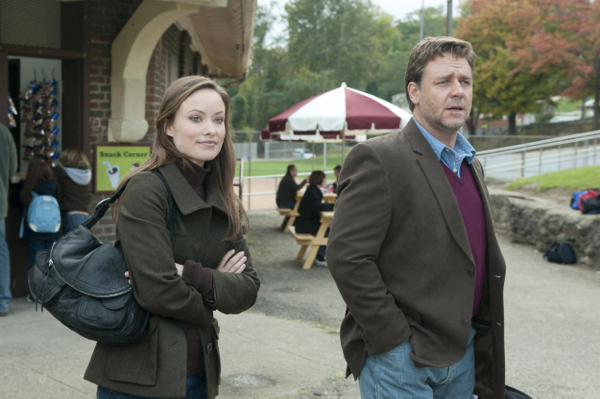
Ridley Scott’s “Robin Hood” is reportedly the most expensive version of the popular outlaw tale to date, but the resulting mess places the film near the bottom of the heap – no mean feat considering Kevin Costner’s ill-advised turn as the fabled archer in 1991. With Russell Crowe in the lead, one expects a dour, introspective, and serious-minded Robin, but the actor outdoes himself with brooding, furrowed-brow intensity, leeching away anything that resembles mirth, wit, or joy. Michael Curtiz’s brilliant “The Adventures of Robin Hood” – released more than seventy years ago – retains the crown as the definitive big screen version of the bandit’s fanciful biography.

While it may be tempting to view the subtext of Brian Helgeland’s screenplay through the lens of contemporary economic hardship – a convenient reading that simultaneously allows both conservative and liberal viewers to claim Robin as their champion – the script is instead a mishmash of hero tropes scarcely distinguished from material like “Braveheart” and Scott’s 2005 “Kingdom of Heaven.” “Robin Hood” marks Scott’s fifth collaboration with Crowe. If the actor’s choice of haircut is any indication, the pair likely hoped to recapture some of the success of “Gladiator,” and “Robin Hood” contains several scenes that mirror the action of the 2000 Academy Award-winning Best Picture.

Strangely, the film’s convoluted narrative re-imagines the origin of Robin Hood, fashioning a prequel of sorts in spite of Crowe’s maturity (the Internet Movie Database notes that Crowe is the oldest performer to play Robin Hood in a major motion picture, even topping Sean Connery’s aging fighter in Richard Lester’s “Robin and Marian”). Introduced as a soldier in the army of King Richard the Lionheart (Danny Huston), Robin Longstride has grown weary of the Third Crusade, due largely to the brutal slaughter of Muslims demanded by the power-mad English monarch. As Richard, Huston lolls around, rolling his eyes and generally playing crazy for the brief duration of his screen time. He makes an impression, mostly because he goes big when everyone around him underplays.

The other popular characters of the Robin Hood mythology nearly fade into the background. The pre-outlaw status of Robin means that the “Merry Men” have not been formally assembled, but the film renders Little John, Will Scarlet, Allan A’Dayle, and Friar Tuck as practically faceless extras on standby to serve Robin only when the need arises. The Sheriff of Nottingham is a non-entity, a curious change from the rumored version of the movie that might have cast Crowe in a dual role as protagonist and antagonist. The Sheriff’s malevolence is instead encompassed by Mark Strong’s Godfrey, a traitorous thug whose imposing, aristocratic bearing loosely mimics Basil Rathbone’s Sir Guy of Gisbourne.

A few revisions are made to the legend’s romantic angle, but they amount to little. Cate Blanchett’s Marion is strictly second fiddle to Crowe’s Robin. This Marion (for some unknown reason spelled with an “o” instead of an “a”) is a widow struggling to cultivate crops and maintain her farm, prevent theft from a roving band of war orphans, and protect her holdings from unfair taxation. Forced to accept Robin as her husband in an arrangement echoing the Martin Guerre story, Marion acquiesces to her blind father-in-law’s wishes. Scott jettisons the insouciant flirtatiousness of Errol Flynn and Olivia de Havilland, opting for a harder edged courtship. While historically normative expectations invite scrutiny whenever gender roles are revised, “Robin Hood” deserves some credit for depicting Marion’s brave entry into the final battle. It goes without saying, however, that Robin will rescue her, and not the other way around.

Iron Man 2

Ironmantwo1

Movie review by Greg Carlson

Following the custom of superhero sequels, fans and reviewers will compare and contrast “Iron Man 2” with the inaugural installment, a moot point when the grand design is to engineer and weld the franchise into a cinematic simulacrum of the Marvel Universe that looks an awful lot like a money-printing machine warming up to deliver as many spin-offs as the summer blockbuster schedule will allow. We love to complain about that common tragedy of the cape-and-tights genre: the follow-ups lose their balance taking on the weight of more story, more villains, more characters, and more action – even when alternatives are practically impossible.

“Iron Man 2” embraces this “more is more” expectation with a vengeance, but in its defense, the running time is two minutes shorter than the first episode and the current model isn’t dependent on the delivery of an origin mythology. Instead, Robert Downey Jr.’s billionaire industrialist Tony Stark is free to emphasize all the ways in which he defies the Batman template’s somber expectations of serious responsibility, searing guilt, and secret identity. Instead, Stark’s narcissism and fame are expertly communicated by Downey Jr., who cockily asserts during a televised Capitol Hill hearing that he has privatized world peace.

In one interesting scene, a drunken birthday bacchanal that Stark attends in full armor, the late DJ AM, to whom “Iron Man 2” is dedicated, drops “Another One Bites the Dust” while Stark gets sloppy. There is no Ghostface appearance, but a mixed bag of celebrity cameos, from shuddersome Bill O’Reilly to the classier Christiane Amanpour, links the movie’s fantastic alternate reality to the one in which the viewers reside, and a deliberate Stan Lee/Larry King mix-up notwithstanding, director Jon Favreau (who also returns as Stark chauffeur/bodyguard Happy Hogan) smoothly translates the candy-colored panels of the page to the computer-enhanced dream vision of Hollywood spectacle.

What a bummer that Gwyneth Paltrow’s talent is wasted playing the outdated stereotype Pepper Potts. Despite Potts’ promotion to CEO of Stark Industries, she remains a second-class citizen in her partner’s world, cleaning up his messes, nursing his wounds, scolding his bad behavior, and shrieking when placed in harm’s way. Screenwriter Justin Theroux’s snappy one-liners allow Paltrow and Downey Jr. the opportunity to banter in the tradition of William Powell and Myrna Loy, and the script is stuffed with a surprising amount of clever bons mots and double entendres, but Pepper is shackled to the sexist tradition that puts the men in the center of the action while the women passively observe from the sidelines.

At least one woman, Scarlett Johansson’s Natalie Rushman, a S.H.I.E.L.D. agent never directly identified in the movie as Black Widow, is allowed to dispatch a squad of security goons, but the character is so vague, fuzzy, and unfinished that we never develop a sense of her importance to Stark. The same goes for Samuel L. Jackson as Nick Fury, who descends in the middle to explain all sorts of presumably critical information, but really seems to be there to remind ticket buyers that Captain America and Avengers movies are on the way. Sam Rockwell and Mickey Rourke fare slightly better, stepping into the sequel’s equivalent of Jeff Bridges’ role in the first “Iron Man.” With so many important characters returning, however, there simply is not enough time available to fully explore the new personalities. Hopefully, part three won’t be as crowded.


Mother

Mother1

Movie review by Greg Carlson

“Mother,” Bong Joon-ho’s follow up to the wild monster movie “The Host” is another genre-bending thriller that blends intellectual acuity with voyeuristic sparks. Deftly balancing suspense, fear, black-hearted comedy, and a touching poignancy, Bong confidently envelops his viewers with filmmaking gifts that echo masters like David Lynch and Alfred Hitchcock. The prickly relationship of the title character to her son invites comparison to “Psycho,” and the amateur sleuthing that drives the plot mirrors “Blue Velvet.” Best of all, “Mother” stands refreshingly on its own, recalling the aforementioned works while retaining a unique style and voice.

An herbalist who practices acupuncture sans license, Hye-ja (Kim Hye-ja) smothers and dotes on her simpleminded adult son Do-joon (Won Bin), an idler who hangs out with a small time hoodlum, Jin-tae (Jin Gu). When Do-joon narrowly escapes serious injury in a hit-and-run car accident, he and Jin-tae track down the wealthy perpetrators on a golf course, engaging in a slapstick melee that results in a trip to the police station. Bong paints this action with broad brushstrokes, but there is nothing wasted in the tactic, as the audience gathers all kinds of information that will come in handy as soon as the narrative shifts in the direction of an altogether more sober tale.

Bong’s goofy opening act contrasts sharply with the brutal murder of a schoolgirl who was seen briefly by Do-joon on the night of her death. Once Do-joon is coerced into signing a murder confession, “Mother” begins to smolder, as Hye-ja expresses the lengths to which she will go in order to exonerate her son. She attempts to hire a lawyer, but the busy attorney she retains initially brushes her off. Determined and relentless, Hye-ja turns self-appointed bloodhound, tracking down leads and managing the case with more competence than the police detectives exhibit.

“Mother” is calculated and exacting, but Bong refuses to let the plot-heavy structure of his narrative get in the way of the rich details that bring the unusual characters to life. As Hye-ja toils to unravel the mystery, Bong meticulously rations tidbits of information about her, surprising viewers with each revelation. Like the best hard-boiled detective novels of Hammett and Chandler, Bong also pounds out a code of morality, perching the protagonist in a precarious position between salvation and sin. In one terrific scene, Hye-ja hides in a closet while someone she is investigating has sex with a young schoolgirl not unlike the murder victim. Like Hitchcock, Bong is able to convey the simultaneous rush of excitement and shame as Hye-ja, and the audience, cannot resist peeking.

No doubt some viewers will recoil at Bong’s choices in the film’s final movement, in which the director depicts all kinds of shocking intrigue designed to challenge viewer expectations and raise thought-provoking questions about the obligations of family ties. Anthony Lane has accused Bong of wrecking the equilibrium of the movie, but others will certainly contend that the filmmaker holds on to every bit of the supple plasticity that governs his view of human nature. By the time we witness the haunting final image – a curious dance both melancholy and uncanny – we will ask ourselves whether we would or could do what Hye-ja has done for her child.


The Art of the Steal

Artofthesteal1

Movie review by Greg Carlson

Don Argott’s entertaining documentary “The Art of Steal” is a passionate, if one-sided, examination of the convoluted history and looming fate of an unparalleled collection of modern art currently housed in Pennsylvania. Framed as a decades-long battle between an iconoclastic inventor with a brilliant eye and a horde of uncultured barbarians hell-bent on commercial exploitation, the movie dangles all kinds of questions concerning the law, public access to priceless art, and the unchecked influence of the powerful.

Dr. Albert Barnes made a fortune with the development of the antiseptic Argyrol, and used his wealth to assemble a jaw-dropping trove of canvases by the likes of Matisse, Picasso, Renoir, Cezanne, Monet, Seurat, Van Gogh, Gauguin, and Modigliani. “The Art of the Steal” hints at the scope and value of the art in the Barnes collection, but only one abbreviated sequence near the beginning of the movie really addresses a sampling of the paintings themselves, superficially commenting on pieces including Seurat’s “Models,” and Van Gogh’s “Portrait of the Postman Joseph Roulin.”

Heavy on talking heads, “The Art of the Steal” desperately needs a strong section more comprehensibly detailing the physical space of the Lower Merion Township location that houses the artworks. Argott relies on a number of tantalizing photographs of Barnes’ fascinating “wall ensemble” arrangement technique, but the grounds, which contain an arboretum teeming with botanical specimens, are virtually ignored (curious, because so much of the argument is focused solely on the relocation of the art to a proposed space on the Benjamin Franklin Parkway). The current incarnation of Barnes administrators claims that the original display configurations of the art, as well as the scale of the rooms, will be recreated in the new space.

“The Art of the Steal” is by no means perfect, and many viewers will begin to long for more personal information and history about Barnes, who is glimpsed throughout the film in clips of color home movie footage. Argott acknowledges all the pertinent facts relating to the eccentric curmudgeon’s disdain for the conservative Philadelphia establishment, but following the introductory exposition, the post-will assault is moved front and center for the rest of the running time. In his day, Barnes detested Philly fat-cat Moses Annenberg, and the contemporary villains materialize in the form of a trio of grant-making agencies: the Pew Charitable Trusts, the Lenfest Foundation, and the Annenberg Foundation. The devious dealings of the foundations, abetted by a group of oily politicians, are chronicled with relish.

Argott uses chapter-like headings to organize the film as a procedural, and the application of the tactic helps to build suspense as we wait to hear a judge’s decision on the fate of the Barnes Foundation collection. By this time, however, the theme of greedy corporate interests dismantling a man’s will has been looping on repeat long enough. Additionally, Argott misses several opportunities to thoughtfully explore the arguments and viewpoints of the opposition, content to stick with title card inserts informing us that so-and-so declined repeated invitations to be interviewed. Had the filmmaker been willing and able to ponder the most reasonable dimensions of the arguments from both sides, “The Art of the Steal” could have been great instead of good.

Kick-Ass

Kickass1

Movie review by Greg Carlson

The latest movie to draw some fire for depicting envelope-pushing levels of carnage, mayhem, violence, and profanity – much of it courtesy of pre-teen character Hit-Girl – “Kick-Ass” should see plenty of ink on opinion pages in the days to come. Based on the comic series written by Mark Millar and illustrated by John Romita, Jr., “Kick-Ass” is a wannabe satire never quite bright enough to present a cogent argument explaining the premise that there are consequences for actions taken by “real” people who choose to behave like superheroes. Director Matthew Vaughn wallows in the explosions and curses well past the point at which “Kick-Ass” morphs into the very thing it was purportedly trying to skewer.

High school nobody Dave Lizewski (Aaron Johnson) orders a green and yellow wetsuit and takes to the streets as the masked vigilante of the title. Following a period of recuperation after a disastrous encounter with two toughs who batter and stab him, Dave is caught on video attempting to assist a victim of street violence. The uploaded footage goes viral, and Kick-Ass sets up a MySpace page to handle the tidal wave of interest in his exploits. If Vaughn intended to say something about the use of social media in the service of post-Bat-Signal identity construction, the message gets lost as soon as Big Daddy (Nicolas Cage) and Hit-Girl (Chloe Moretz) enter the frame and start slaughtering baddies.

Narratively speaking, the colorful father-daughter team emasculates Kick-Ass, and Vaughn struggles to make room for the genre’s de rigueur expositional back-stories/origin myths as well as cram in a parade of tedious scenes setting up a villainous crime boss (Mark Strong), whose son (Christopher Mintz-Plasse) becomes Red Mist, yet another costumed hero added to the mix. The closer we get to the end of the movie, the more Vaughn amplifies the shocks. The filmmaker shamelessly imitates pop culture gleaner extraordinaire Quentin Tarantino, scoring off-speed, blade and pistol gymnastic showdowns to Ennio Morricone.

Vaughn also carries over and amplifies some of the comic’s worst impulses, including a casual homophobia played broadly for laughs. The movie does not use the other “F” word as abundantly as Millar’s series, but when Dave pretends to be gay in order to get close to his crush, the stereotypes pile up quickly, and Vaughn makes certain to telegraph relief when our protagonist is allowed to “prove” he is straight. It’s a departure from the comic, in which Dave gets a knuckle sandwich instead of the girl.

Only Nicolas Cage maneuvers the script with a sense of timing commensurate with the kind of winking irreverence that should have been the target of all the actors. His mentally unstable, revenge-driven gun nut is significantly more sympathetic than Millar’s original humorless brainwasher, whose rightist rhetoric while training Hit-Girl is absent from the screen adaptation. Cage is only upstaged by Moretz’s Hit-Girl by way of her sewer-mouth artistry, status as a juvenile, and way with a blade. The movie belongs to her and that is also its liability, since the title is “Kick-Ass” and not “Hit-Girl.”

Greenberg

Greenberg1

Movie review by Greg Carlson

Noah Baumbach continues to develop his best instincts as a storyteller and filmmaker in “Greenberg,” an idiosyncratic Los Angeles-set character study of Ben Stiller’s title layabout, a dysfunctional carpenter in his early 40s. Tenaciously committed to difficult personalities, painfully awkward interactions, and the inability to negotiate much in the way of shared meaning with others, “Greenberg,” like several of Baumbach’s other films, embraces insecurity, failure, and regret the way that so many studio-released romantic comedies utilize madcap coincidence, forced charm, and opposites fighting mutual attraction.

Stiller’s Roger Greenberg returns to LA from New York following a stint in a mental hospital. Holing up in his wealthy brother’s empty Hollywood spread while the family vacations in Vietnam, Greenberg busies himself with a doghouse construction project for his sibling’s ailing German Shepherd. Because he does not drive, Greenberg relies on paid family assistant Florence Marr (Greta Gerwig) to chauffeur him where he needs to go. Inexplicably, the younger woman finds the repellent Greenberg appealing, despite his fussiness, his condescending attitude, and his lack of listening skills. Moments after they meet, Greenberg schools Florence on the nostalgic importance of Albert Hammond’s “It Never Rains in Southern California” and Baumbach makes the scene a miniature masterpiece showcasing Roger’s awfulness.

Gerwig’s background identifies her with the unfortunately named mumblecore genre/category, but unlike her performance as the title character in “Hannah Takes the Stairs,” a movie that Gerwig also co-wrote, Florence actually appears to be deliberately likable and sympathetic. Her mumblecore peers, including Mark Duplass (who also appears in “Greenberg”), often confront audiences with obnoxious, unpleasant, narcissistic creeps, but Baumbach resists the urge to make Greenberg completely despicable, and the casting of Stiller – whose ability to play hurt and humiliation have become a signature aspect of his onscreen persona – cuts the character some slack, deserved or not.

Besides Roger’s resemblance to Saul Bellow’s Moses Herzog (noted by several critics, including J. Hoberman and David Denby), “Greenberg” invites comparison to “Annie Hall,” and the movie quotes several moments and gags from Woody Allen’s classic, even though Baumbach’s creations inhabit a milieu decidedly less magical and romanticized. In addition to first-rate technical credits, including photography by the terrific Harris Savides, “Greenberg” bests many of its mumblecore relatives by way of Baumbach’s ability to present unlikable characters without succumbing to belligerence toward or contempt for the viewers willing to go along with the atypical choice.

Baumbach, who wrote the screenplay after developing the story with partner Jennifer Jason Leigh (who also appears in the movie as Greenberg’s ex-girlfriend), illustrates his lead character with greater confidence than he musters for Gerwig’s Florence. Florence’s passivity, uncertainty and self-reproach create a big hole that Greenberg fills with cruelty, and the resulting imbalance constitutes the film’s most uncomfortable strain. Baumbach literalizes Florence’s marginalized status as a servant to the wealthy extended Greenberg family in the first of several calamitous sexual encounters between Roger and Florence, when a lacerating parody of a horrible “first date,” or more accurately, “first encounter,” amplifies the gulf of privilege between them. Jessica Grose, in a “Slate” essay, calls the scene “brutish and contrived,” and whether one agrees with that assessment or not, “Greenberg” is a movie that stirs up complex emotions.


Clash of the Titans

Clashofthetitans1

Movie review by Greg Carlson

As Perseus (Sam Worthington) arms himself to do battle with the Greek gods whose blood he shares, he picks up Bubo, the R2-D2-channeling clockwork owl that delighted children in the 1981 “Clash of the Titans.” A seasoned warrior tells Perseus to leave it, and only viewers of a certain age and disposition will even notice the fleeting reference to Ray Harryhausen’s original analog achievement. Even though Louis Leterrier’s remake fails to make room for Athena’s winged wind-up, the new “Clash of the Titans” incorporates a significant number of themes, ideas, plot points, and set pieces from director Desmond Davis’ original. Neither version quite does justice to the myths and legends upon which Beverly Cross’ hybridized screenplay was based, but younger and less discerning patrons will certainly purchase tickets to the party.

In the update, Liam Neeson is Perseus’ father Zeus, gravely passing judgment on humans with the same authority wielded by an ailing Laurence Olivier the first time around. Clad in lens-flare ready armor so shiny it nearly blinds, Zeus squares off against his wheezy, underworld sibling Hades, played by a stooping Ralph Fiennes in a dusky get-up and hairpiece that makes him look like a two-pack-a-day Spinal Tap roadie. Sadly, Danny Huston’s Poseidon sees his screen time reduced to a cameo, but Neeson, who barks the order to “Release the Kraken,” and Fiennes, who whispers “You have insulted powers beyond your comprehension” refuse to be upstaged by their unruly beards.

It is generous to give “Clash of the Titans” much, if any, credit for theological analogues to contemporary society, but the film’s conflict shows sinners in the hands of angry gods. Cities are divided between the fearful faithful and the arrogant apostates, while the pantheon of deities gazes down from a version of Mount Olympus tricked out with a floor that resembles Google Earth images. Conceptually, the limits of the Olympians’ power and their willingness to directly interact with humans spice up the action, but Leterrier labors unsuccessfully to balance the unwieldy number of characters, erring on the side of videogame battles involving Perseus and his cohorts.

The 2010 “Clash of the Titans” is more phallocentric than its predecessor, even though Gemma Arterton’s Io, a sort of fairy godmother/guardian angel to Perseus, fights alongside the boys. Io is also saddled with some of the movie’s most outrageously awful dialogue (to an agitated Perseus: “Calm your storm”) and Arterton deserves some kind of honor for believably wading through the muck. The film’s other significant female is damsel in distress Andromeda (Alexa Davalos), who at least communicates a smidgen of nobility in her willingness to be sacrificed to the Kraken before she is tied up and offered for dinner.

Medusa should have been a memorable female character, but Leterrier opts to render the gorgon as a computer-generated version of the serpentine Harryhausen design, building around the face of model Natalia Vodianova. Action trumps character, however, and Perseus’ showdown with Medusa and the Kraken climax are chaotic messes of vertiginous camera movement and choppy editing that provide almost no visual context or sense of space. Feverishly crammed in with so many reminders of the inaugural edition (scorpions, Calibos, Stygian Witches, Pegasus, etc.) these first-person thrill rides cannot disguise the movie’s wearisome similarity to so many other expensive fantasy entertainments.