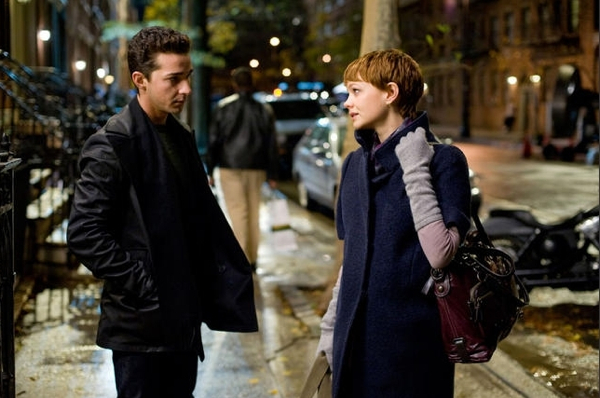
Chloe

Chloe1

Movie review by Greg Carlson

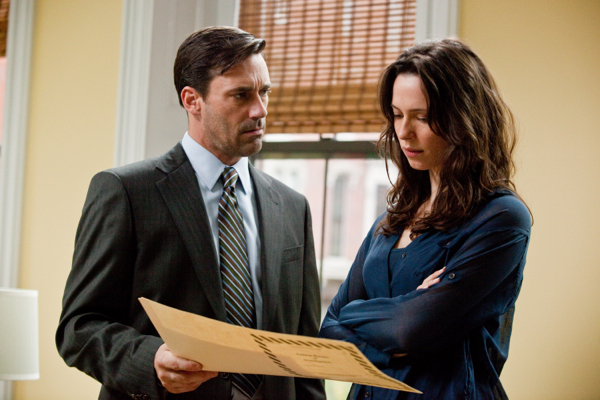
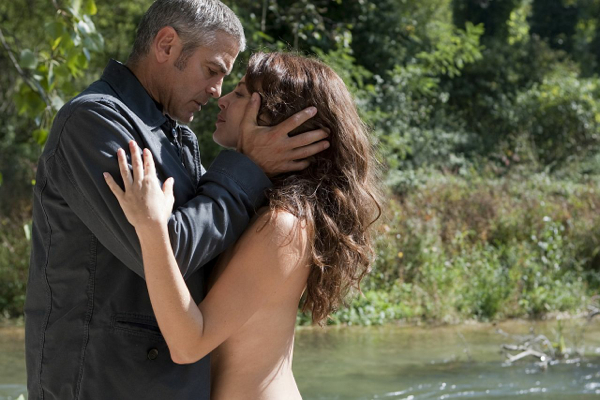
“Chloe,” Atom Egoyan’s remake of Anne Fontaine’s “Nathalie,” is a voyeur’s carnival. Egoyan has never shied from the possibilities of the sex thriller, despite the genre’s tawdry reputation as soft core, late night cable fare. Several of the filmmaker’s features, including “Exotica” and “Where the Truth Lies,” managed to address undress with some measure of seriousness – or at least earnestness – even if the end products were more often than not critiqued as prurient potboilers. Egoyan’s prodigious talent, however, extends beyond the boundaries of the libidinous, confounding attempts to dismiss him as purely a purveyor of titillation.

In “Chloe,” wealthy Toronto-based gynecologist Catherine Stewart (Julianne Moore) suspects her professor husband of cheating. Instead of hiring a private investigator, or simply having an open and honest face-to-face discussion, she does the logical thing and commissions a sophisticated prostitute to tempt her spouse with carnal charms. Following each encounter with David (Liam Neeson), Chloe (Amanda Seyfried) reports back to Catherine, who grows increasingly flustered with every new chapter. Surprisingly, Catherine finds herself aroused by Chloe’s artful cunning, and the movie briefly offers the possibility that it might be interested in cleverly subverting some of the gender expectations of mid-life crises and the affairs that accompany them.

Despite Moore’s convincing performance, “Chloe” falters once the title character is exposed as a needy lunatic who develops a fatal attraction to her initially naïve employer. It does not help that the audience can see Chloe’s mania long before Catherine catches on, setting up a preposterous series of revelations that obliterate credulity. The Stewarts’ teenage son Michael (Max Thieriot), whose own sexual explorations with overnight guests deeply disturb Catherine, is laughably positioned by Erin Cressida Wilson’s unsteady script as final act bait. Michael may have serious mommy issues, but he still finds time to play Beethoven’s “Moonlight Sonata” at piano recitals and skate for a hockey team.

Egoyan has considerably more fun making the film than the viewer has watching it, staging and framing the numerous sexual encounters with a rapturous eye unafraid to wink at his audience. The level of self-consciousness is also heightened by the application of Mychael Danna’s emphatic score, which reinforces the liquid glide of cinematographer Paul Sarossy’s roving camera. One is never sure how firmly Egoyan’s tongue is planted in his cheek, and the resulting ambiguity dooms “Chloe” from the start. Tonally, “Chloe” is too somber to be intended as outright camp.

Had Egoyan offered more insight into the motivations of the principal quartet of characters, “Chloe” might have been able to transcend its status as an amorous trifle quickly mired in the rusty mechanics and genre conventions that condemn the sex-crazed and psychotic to disproportionately applied punishments. By resorting to the dubiously moralistic and overused formula that equates the erotic with the thanatotic, Egoyan violates his own desire to examine sex intellectually as well as lustfully. The film’s ludicrous ending, a batty confrontation feverishly awash in Oedipal absurdity, concludes with the unwelcome cliché of a character plummeting from an upper-level window. It’s a disappointing ending to an unsatisfactory film.


The Ghost Writer

(Left to right) KIM CATTRELL and EWAN McGREGOR star in THE GHOST WRITER

Movie review by Greg Carlson

As filmmaker Roman Polanski continues to fight extradition to the United States in the wake of his September, 2009 arrest in Switzerland on sex charges that date back to 1977, his film “The Ghost Writer” arrives quietly in theatres. Biography-minded viewers will pore over the ironic parallels between Polanski’s life and the besieged, travel-restricted politician at the center of the movie, but the film’s thrill-seeking agenda rapidly parts company from any construction of possible self-pity cooked up by the 76-year-old director.

Ewan McGregor plays the unnamed character of the title, a scribe-for-hire who eagerly takes a quarter of a million dollar payout to finish former PM Adam Lang’s windy memoirs for publication. The Ghost’s predecessor died under mysterious circumstances, and as soon as he arrives at the austere modernist compound inhabited by Lang and his entourage of power brokers, the overwhelmed replacement realizes that nothing is as it seems and that he is in a bit over his head. Before the Ghost can polish a draft of the book, Lang is accused of war crimes by a former ally and cabinet member, and the household is swept up in a storm of spin, denial, and strategizing.

Smart, calculating, and stylish, “The Ghost Writer” is the best kind of Hitchcock homage. Filled with all sorts of diabolical details that seem to come straight from one of the Master of Suspense’s carefully constructed scripts, Polanski’s film delights in manipulating viewers with a balanced mix of plausible and impossible twists and turns. Close scrutiny threatens to collapse the house of cards, and the jaded will wince (and the faithful will cheer) as the plot machinery dispatches a climactic acrostic to solve a key mystery, but most audience members will eagerly embrace the movie’s expressiveness and intelligibility.

Polanski is just as capable with actors as he is with narrative efficiency, and across the board, “The Ghost Writer” features delicious performances from even the most surprising casting choices. McGregor, who always looks relieved when he is not playing Obi-Wan Kenobi, anchors the film as the initially innocent audience surrogate. Olivia Williams, playing older than her early 40s, tartly embodies the brains behind husband Pierce Brosnan’s Tony Blair-like politician. Movie aficionados will love the sight and sound of legendary Eli Wallach in a succinct, one-scene cameo, and even the surprising inclusion of James Belushi and Kim Cattrall is right on target.

Polanski co-wrote the movie’s script with Robert Harris, whose 2007 novel “The Ghost” is the basis of the movie. “The Ghost Writer” is as conspiratorial and at times outrageous as “Shutter Island,” and just as much fun, as Polanski retains his slightly offbeat sense of humor amidst all the mounting anxiety and dread. Despite its pulpy origins, or perhaps because of them, one can have a blast watching Polanski devise all sorts of ways to reinforce his protagonist’s status as a fading apparition. From the terrific opening scene, in which Polanski visually establishes the double-meaning of the titular occupation via an eerie ferry ride, to the sensational final shot, the filmmaker wastes no opportunity to affirm the precariousness of the anonymous hero’s sense of identity.

Green Zone

cinema

Movie review by Greg Carlson

A farfetched fantasy of the highest order, Paul Greengrass’ “Green Zone” re-teams the director with Matt Damon, here playing a truth-seeking soldier in a Byzantine hall of mirrors in 2003 Iraq. The credits claim that Brian Helgeland’s script was inspired by Washington Post journalist Rajiv Chandrasekaran’s 2006 non-fiction book “Imperial Life in the Emerald City: Inside Iraq’s Green Zone,” and the Oz reference is apt, as “Green Zone” blends credulity-stretching heroism with anti-Bush political commentary. To a certain extent, the movie gets to have its cake and eat it too, as the fierce action violence contrasts with the director’s harsh assessment of the dubious matters of state.

Damon plays Army Chief Warrant Officer Roy Miller, a focused and highly moral professional whose team has been sent on one too many wild goose chases looking for non-existent weapons of mass destruction. At a briefing, Miller has the audacity to question the faulty intelligence, and is promptly silenced by superior officers. Quickly running afoul of sinister Pentagon Special Intelligence agent Clark Poundstone (Greg Kinnear), Miller casts his lot with grizzled CIA bureau chief Martin Brown (Brendan Gleeson), a voice of reason in an otherwise topsy turvy fiasco. When Greengrass is not staging tense sequences of urban combat, he devotes time to the battle between Poundstone and Brown, with Miller caught in the middle.

Amy Ryan also shows up a few times as the Judith Miller-esque Wall Street Journal reporter Lawrie Dayne, but the talented performer is underutilized, almost as if the movie is too impatient to give her anything to do outside of helping Miller put the pieces of the puzzle together. Faring slightly better is Khalid Abdalla as Freddy, a local who befriends Miller even as he expresses reservations about American trustworthiness. Despite the oversimplified explanations of Freddy’s frustrations, the actor, who appeared in Greengrass’ “United 93,” brings depth to what might have been a sketchily constructed figure.

Along with its kinship to the superior “United 93,” reviews of “Green Zone” inevitably mention the Greengrass/Damon partnership on the Bourne sequels, and the comparisons are apt. Miller, like Bourne, inevitably comes to operate as a lone wolf, surviving by his wits as well as some dumb luck. Greengrass also stages the action with his familiar kinetics, working with editor Christopher Rouse to slice up Barry Ackroyd’s purposefully shaky photography. Damon is nicely cast, offering an earnestness that borders on naïve until the overwhelming evidence of his country’s failures causes him to snap.

“Green Zone” calls to mind Charles Ferguson’s incredible documentary “No End in Sight,” a sobering assessment of the stunning arrogance of Bush policy in the aftermath of “Shock and Awe.” Several key boondoggles addressed by Ferguson, such as the disbanding of the Iraqi military and paramilitary, are referenced in “Green Zone.” Most nauseating, however, is the grim realization that the reasons for going to war in the first place were predicated on vapor. Greengrass cannot help but include the clip of George Bush smugly, prematurely asserting that the mission was accomplished, and the oft broadcast speech is no less sickening today.


Angela Steffen Interview

Angelasteffen1

Interview by Greg Carlson

Animator Angela Steffen visited Fargo for the 2010 Fargo Film Festival, where her animated short “Lebensader” won the award for Best Animation. While she was in town, she collaborated with a group of documentary makers on “Lines of Communication,” which was made for the International Documentary Challenge.

Angela spoke with Greg Carlson about her background in animation and her work on “Lebensader.”


Greg Carlson: You spent some of your childhood in Saudi Arabia. How and why did you get into illustration and animation?

Angela Steffen: I grew up at the Persian Gulf, in Ras Tanura, a little camp in the middle of the desert. I loved it there. It was like paradise for me. I went swimming in the ocean every day, and that was just the best thing to do. For many hours of the day it was just too hot to go outside, and we had a big table, lots of pencils, and paper at home.

I remember waking up extremely early in the morning with my sisters and little brother, not to miss the cartoons on the only TV channel we got. We just sat there waiting, and at one point, the screen finally showed the first picture: a handsome portrait of King Fahd. I knew that after seeing him, for half an hour, there would be cartoons.

And every time, the television made an electric sizzling sound when I kissed him for that.

Until the Gulf War in 1990, I think I had the best childhood ever. When we left for Germany, I was defiant. I didn‘t speak the new language for a long time, but I did keep on drawing, and that still feels like the best way to communicate and express myself.

Animation came as an accident, actually. At first I studied graphic design in Hamburg, but I dropped out of it. I wasn‘t sure what I was doing when I started drawing this little story at home. It turned out to be a straightforward animation. I was absolutely willing to go to school for this! I went to animation school in Hamburg and after that I specialized in 2D animation at the Filmakademie.


GC: Are you inspired by pop culture?

AS: The truth is, I have not had a TV for about 8 years now, but I do love documentaries, especially when they are about animals. I love going to the movies and I love old cartoons. I have read everything I could find about Chuck Jones and I admire Norman McLaren.

I like reading scientific literature more than comics, but my biggest inspiration comes from my family, my friends, from music, wild animals, and from being outside in nature.


GC: What was the animation training like at the Filmakademie Baden-Wurttemberg?

AS: It is a really great place to learn and work on 3D animation. The facilities are almost not comparable to other film schools worldwide. The problem for me was that I was way too interested in 2D. I had the plan to find out more and to explore this field.

There is so much still to be discovered, you know? Even though I felt the energy it‘d probably be good to swim along, just to be able to find work after graduation.

I am too idealistic and naive, and sometimes I wish I could be different, because going against the flow was kind of hard. I have to say I love this school. I had a studio, a drawing table, and best of all, the chance to make my own films in total freedom.

The films I made there taught me everything I know now. I also had advisers on my side, like Andreas Hykade and Ged Haney for example, who questioned my stories and from whom I learned some animation tricks. They have become very important to me over time and it‘s good to have someone to look up to. We are all different but we do, for example, love David Bowie, Bob Dylan and Neil Young!


GC: The creatures in your movie bear a resemblance to Pacific Northwest Native American iconography and art. How did the idea for “Lebensader” evolve?

AS: You won‘t believe how often I‘ve heard that. It’s good, that makes me happy, but “Lebensader” didn‘t come from researching the books and museums, although that‘s what I‘m into now because I‘ve heard it so often. It started like this: I had the chance to make another film that would be my diploma at the Filmakademie.

So I looked inside myself and I looked outside. I ended up in the woods and meadows around my home, in uncountable walks. Then one day I found a leaf that was different from the others. It struck me with all its colors and I picked it up as a souvenir.

What happened next was the reason I made “Lebensader.” I turned the leaf and saw it was sick. It was from a sick tree. In that moment I knew I had to cope with my father’s disease, which until then I was good at hiding. I knew I‘d be spending a whole long time with whatever subject I chose, and nothing else made more sense then this.


GC: How much time did it take to complete “Lebensader” from conception to completion?

AS: It took longer then I thought it would. I think I spent at least half a year getting the story straight, inventing the world for “Lebensader” in all its facets. There was so much more invented then what you see at the end, but it was really important to do.

The time of development is always the toughest for me. Finally I dove into the animation. That was great. Everything was planned out in storyboards, and I knew exactly what I wanted in my head. Only the transitions were much more difficult than I thought they would be. Fortunately, it was exciting to the end. In the whole it took about three years to complete.


GC: How many drawings did you make? Do you save all your materials?

AS: I have no idea! They‘re all in boxes and I don‘t know what to do with them yet!


GC: How important are computers in your animation process?

AS: They’re not. Only the story is important. My favorite way is still to animate with pencil on paper. Then I need the computer as the tool to test, build and color it. I‘ve been working on a Wacom Cintiq recently, experiencing digital drawing and doing some crazy stuff without thinking so much.

The computer is fun and faster for some jobs, which is good, but I do miss the drawing table. And the passion that comes with old-fashioned ways.


GC: Have you traveled much to promote “Lebensader”?

AS: I‘m definitely excited to be in Fargo now. Thank you for having me! You know, I‘ve been hiding away for so long while making “Lebensader,” and I love the autonomy of it, but now it‘s taking me out suddenly and I‘m not used to it. I get really homesick when I am away.

I love to be with audiences and to meet with other filmmakers. I loved this about the Ottawa International Animation Festival. I visited the Star School, near Flagstaff in Arizona, after being in Canada, and I showed “Lebensader” to a group of Navajo children. That was amazing. I won‘t forget that.


GC: What’s next?

AS: I tell you, it can be really cold and tough out here after school. I‘m working hard to make a living in freelance animation. I need to be digital and fast on one side, and on the other I‘m really longing to do something new again. I need that too.

There seems to be a new energy in Baden-Wurttemberg, where I have lived since graduating from the Filmakademie. They might start helping young filmmakers like me to keep them from leaving the country. I have tiny, tiny and really big upcoming projects in my head. It is just a matter of how to set the frame for them. We’ll see!

The Last Station

Laststation1

Movie review by Greg Carlson

Michael Hoffman, whose odd filmography as director includes “Some Girls,” “Soapdish,” and “One Fine Day,” stages the final phase of literary giant Leo Tolstoy’s life and career in “The Last Station,” an uneven tale that never decides whether it wants to be an earnest meditation on the life of the mind or a marital melodrama dependent on the theatrical pyrotechnics of its principal couple. Veering capriciously between the madcap and the sober, the adaptation of Jay Parini’s biographical novel filters a power struggle between Tolstoy’s wife Sofya (Helen Mirren) and longtime confidante Vladimir Chertkov (Paul Giamatti) through the eyes of neophyte secretary Valentin (James McAvoy), a young man who must learn the rules of the Tolstoy household quickly.

The actors in the film, especially Mirren, Giamatti, and Christopher Plummer, who plays an emotionally explosive Tolstoy, emote to the rafters, and one’s enjoyment of the movie will depend somewhat on a tolerance for breast-beating and eye-rolling (not to mention mustache-twirling, which Giamatti employs literally as a running gag). Even McAvoy boards the tic train, bestowing Valentin with the habit of sneezing when nervous, an affectation that wears out its welcome after the third or fourth tiresome instance. The actors throw themselves into their roles with lust but no caution. In one scene, Tolstoy crows like a rooster before bedding Sofya, and the campy cock-a-doodle-doo echoes through much of the movie.

Valentin, who is thrilled to learn he will attend personally to Tolstoy at the sage’s bustling estate, joins other “Tolstoyans” at a nearby commune, where he falls under the spell of the free-thinking Masha (Kerry Condon), a fetching lodger unwilling to conform to the program’s prohibition on sexual intercourse. A relationship develops under the scornful watch of Chertkov’s austere underlings, who frown fiercely whenever Valentin and Masha are together. Predictably, Valentin will soon be forced to choose between Tolstoy and Masha, and the romantic subplot is placed on hold until a final-reel reunion ties things up with a ribbon.

“The Last Station” never fully investigates the philosophical underpinnings of Tolstoy’s political and spiritual “movement,” and the movie suffers as a result. We are told that love is the answer to everything, but the actions of the scheming characters mostly suggest otherwise. At one point, Tolstoy ends an argument with Sofya by admitting his disgust at their material comfort, and for a second, one can see a finer, more intelligent movie lurking underneath the surface. Both Sofya and Chertkov fight like heavyweight champions for Tolstoy’s heart and the copyrights to his published works, and the movie would have been much more satisfying had we been allowed to see more shades of gray in the longtime rivals.

“The Last Station” also squanders a prime opportunity to explore the pitfalls and demands of celebrity. Tolstoy and his followers are constantly being photographed and filmed, but Hoffman elects not to investigate the intersection between the man/father/husband and the literary deity. The final section of the movie, in which a grave and rapidly declining Tolstoy takes to his deathbed in the location of the title, builds to the inevitable final showdown between Sofya and Chertkov, unfortunately positioning the delirious and wheezing Tolstoy as a pawn rather than a king.

A Single Man

Singleman1

Movie review by Greg Carlson

Fashion designer Tom Ford makes his feature directorial debut with “A Single Man,” a fairly loose adaptation of Christopher Isherwood’s 1964 novel of the same name. The film covers the events of one day in the life of literature professor George Falconer, whose grief at the death of his longtime companion has stirred suicidal thoughts. George remembers Jim (Matthew Goode) in flashbacks that interrupt his routine and derail his prepared lecture on Aldous Huxley. Even as he makes preparations to kill himself – a melodramatic detail absent in the book – George meets with a curious student, gently navigates the subtle disapproval of his hetero neighbors, turns down a Spanish hustler in front of a giant billboard for Alfred Hitchcock’s “Psycho,” and dances to “Green Onions” with an old friend.

Ford’s presence as director and co-writer – he adapted Isherwood’s novel with David Scearce – draws a great deal of attention to the costuming and design of the film, and sometimes the slick perfection of the film’s aesthetic threatens to overwhelm the senses. The supporting cast members seem to have been selected from the pages of “Vogue Hommes International” and the movie occasionally takes on the atmosphere of a cologne or wristwatch advertisement. Cinematographer Eduard Grau devises a muted, monochromatic palette of somber grays and blacks that periodically blossoms into vivid hues of blues and reds whenever George momentarily lets his mind wander away from dark thoughts.

As George, Colin Firth navigates the 1962 setting with quiet power. Much of the film depends on restrained introspection and self-examination, and Firth masterfully communicates the depth of George’s anguish non-verbally (fortunately, the film’s use of voiceover narration is applied sparingly). The indispensable Julianne Moore appears in one of the movie’s finest scenes as Charley, George’s perpetually inebriated confidante, and the two performers engage in a terrific pas de deux in which George holds his tongue when Charley reaches out to him in her hopelessly misplaced optimism.

Some gay viewers might take exception to several of Ford’s compromises and alterations. Keith Uhlich, writing in “Time Out New York,” complained that Ford has made George “allegorically alien,” and that “too many movies subscribe to the regressive notion that queers are unassailable victims of fate and circumstance.” Uhlich offers evidence of his argument by noting the movie’s scene in which George is not invited to Jim’s funeral. In the novel, George turns down the invitation. Of course, Firth plays the movie version of the scene beautifully, and Anthony Lane defends Ford’s amendment, alluding to period expectations that dictated social prohibitions to gay men.

Ford might not be as accomplished a filmmaker as he is a clothing designer, but “A Single Man” flirts with the intersection of loneliness and self-pity in a manner not so easily dismissed. The movie is not great, and it might not even be really good, but the airless, impeccable idealization pursued by its director appropriately matches the emotional landscapes traversed by its title character. Both Ford and George Falconer depend on outward appearances and the trappings (and traps) of style. Like George, many of us have also believed that we can overcome personal tragedy and loss, even though we discover that the reality of putting everything in its right place is not such an easy thing to do.


The Wolfman

Wolfman1

Movie review by Greg Carlson

Veteran director/art director/visual effects specialist Joe Johnston makes mincemeat of “The Wolfman,” his remake of the 1941 Universal horror classic that spawned numerous imitators and thousands of nightmares for generations of children who caught Halloween broadcasts on television. Johnston’s version eliminates suspense in favor of brutal shock, which assaults the viewer in scene after scene of abrupt cuts to hapless extras eviscerated on the heath. Dull, repetitious, and gravely serious when it should be howling with midnight black humor, “The Wolfman” will appeal to only the most devoted genre fanatics seeking a lycanthropic fix.

Benicio del Toro assumes the central role of thespian Lawrence Talbot, the soon-to-be cursed prodigal son who returns to his ancestral estate to attend the funeral of his brother, the victim of a gruesome and puzzling murder. Talbot reunites with his moody, cantankerous father Sir John (Anthony Hopkins) and quickly takes a fancy to the aggrieved Gwen Conliffe (Emily Blunt), his brother’s fiancée. Before he can fully investigate the cause of his sibling’s demise, Talbot is attacked and bitten on the neck by a werewolf, and his new affliction consumes all the energy the matinee idol can muster.

It is no coincidence that Talbot has been envisioned as a stage actor interpreting Hamlet, but the obvious, edgeless screenplay by Andrew Kevin Walker and David Self stops short of the deep self-reflection undertaken by the melancholy Dane. Instead, “The Wolfman” lopes along in a repetitious cycle of action sequences, expository flashbacks, and Talbot’s psycho-dramatic confrontations with Sir John and Gwen. Anyone paying attention will suspect immediately that Sir John is not exactly what he seems, and the Oedipal undertones of the story divert any intrigue that might arise from Talbot’s man/beast struggle toward a forgettable werewolf versus werewolf brawl that sets up the film’s conclusion.

Once Talbot’s monthly metamorphosis has been established, Johnston jettisons the mystery procedural in favor of the equally well-worn chase structure, as a constabulary led by Scotland Yard’s humorless Inspector Aberline (Hugo Weaving, neglected and misused) hunts the doomed Talbot. Following his initial confinement to a horrific insane asylum, Talbot disproves the hospital’s smug physicians by painfully busting through the leather straps that confine him. The tiered operating theatre, heavily peopled by curious doctors, calls to mind images like Rembrandt’s “The Anatomy Lesson of Dr. Nicolaes Tulp” as well as a famous scene in “King Kong,” and is the only memorable moment in an otherwise dreadful slog.

Del Toro plays his part arrow-straight, and Hopkins climbs all over the furniture, but Emily Blunt somehow capitalizes on the thankless “love interest” role. Maintaining dignity well beyond the measure offered her character in the script, Blunt proves more interesting than any of the hairy, fanged brutes whose company she keeps. A final-scene suggestion that the lupine curse has been passed to someone else follows the rules of bijou cliché, but sadly, Blunt is not the recipient of the fateful wound that makes new mutants. That’s a pity, since the prospect of Ms. Blunt as the She-Wolf of London sounds infinitely more thrilling than anything that transpires in the dreary and ponderous sludge presented by Johnston.

Crazy Heart

Crazyheart1

Movie review by Greg Carlson

The steadfast Jeff Bridges appears in nearly every frame of “Crazy Heart,” carrying the movie on his sturdy shoulders and infusing it with just enough depth, charm, and dignity to transcend the familiarity of its oft-told story. First time feature director Scott Cooper also wrote the screenplay adapted from Thomas Cobb’s 1987 novel, and Cooper gives Bridges all the space the actor needs to work his formidable magic. In the hands of a less gifted performer, a figure as messy and wrecked as alcoholic singer-songwriter Bad Blake could swiftly sour into a puddle of bathos, but Bridges knows exactly how much line to reel out, protecting Mr. Blake with an armor of tart intelligence and self-perception underneath the booze-soaked shame and regret.

Following a brutally funny piece of exposition that explains the distance of Blake’s fall from grace, Cooper reveals one of Blake’s sorest indignities: his once bright career has been eclipsed by the protégée he formerly mentored. Surviving on a diet of whiskey and cigarettes, the 57-year-old soldiers on, steering his battered two-tone Suburban to small time gigs with even smaller pay. The cheap motels and one night stands that await Bad after last call have evidently fueled the musician’s subject matter, even though the man has not written any new material in a few years. While Bad putters around from bowling alleys to dive bars throughout the American Southwest, he maintains just enough contact with his agent to convey his endless resignation and bitterness.

During a stop in Santa Fe, Bad agrees to be interviewed by writer Jean Craddock (Maggie Gyllenhaal), and despite the sizable gap in age, their initial flirtation turns into something more serious. “Crazy Heart” moves with an easygoing pace that masks some of the director’s desires to explore tougher, sterner complications brought on by Bad’s disease, and the tentative relationship that develops between Bad and Jean functions as the means by which Bad will eventually hit bottom. Against her better judgment, Jean lets Bad develop a bond with her four-year-old son, but an easily foreseeable near-disaster precipitated by Bad’s excessive drinking threatens to foil one of the last good things in the musician’s life.

Cooper is a more assured handler of character than plot, and the short scenes in which Colin Farrell appears as rising star Tommy Sweet, Blake’s former student and current rival, are among the film’s best. One expects Tommy to respond negatively to Bad’s barely concealed antagonism and hostility, but the younger man treats Bad with courtesy and respect. Bridges and Farrell also do their own singing, and are convincing interpreters of the perfectly crafted tunes by T Bone Burnett, Ryan Bingham, and the late Stephen Bruton.

Robert Duvall’s appearance in “Crazy Heart” immediately calls to mind “Tender Mercies,” and the veteran performer, who is also listed as one of the film’s producers, provides unaccompanied vocals on a section of Billy Joe Shaver’s “Live Forever.” In addition to “Tender Mercies,” “Crazy Heart” invites comparison to “The Wrestler,” particularly in the way that both films examine the strained dreams of once popular performing artists who have abused their bodies and neglected or abandoned their own children. Both Bad Blake and Randy Robinson seek comfort in the arms of younger single mothers, as well as second, third, or fourth chances in their personal and professional lives. In both films, we are reminded that the deepest beauty is often in the singer, not the song.

Broken Embraces

Madrid

Movie review by Greg Carlson

Spanish maestro Pedro Almodovar should easily win new converts to his cult of admirers with the ravishing “Broken Embraces,” a liquid bonbon of metafiction bearing many of the filmmaker’s hallmarks, including a superb performance by occasional muse Penelope Cruz. With few exceptions, most notably Woody Allen’s “Vicky Cristina Barcelona,” Cruz is at the peak of her game when working for Almodovar, and “Broken Embraces” is a dream vehicle for the performer, who plays a call girl/secretary/movie actress in a fantasy wonderland of humor and drama that belongs unmistakably to the imagination of its creator.

Heavy with the melodramatic flourishes that have transformed the filmmaker’s name into an adjective, “Broken Embraces” combines the guilty pleasures of soap opera romance with the director’s longstanding veneration of Alfred Hitchcock and classic film noir. Told mainly from the point of view of blind filmmaker Mateo Blanco/Harry Caine (Lluis Homar), “Broken Embraces” jumps between its contemporary setting and a series of events that transpired some fourteen years earlier. During the course of the story the audience will discover how the director lost his eyesight as well as the reason for his dual monikers.

Chief factor in the mystery is Lena (Cruz), the devastatingly beautiful wannabe actress who falls for Mateo during the production of his movie “Girls and Suitcases,” the film-within-the-film that allows Almodovar to quote purposefully from his own “Women on the Verge of a Nervous Breakdown.” Lena’s much older lover Ernesto (Jose Luis Gomez) is bankrolling Mateo’s project and enlists his creepy son Ernesto Jr. (Ruben Ochandiano) to make a “behind the scenes” documentary as a means of spying on Lena. Ernesto also retains a lip reader to translate the inaudible exchanges captured by his son’s camera, and one haunting image in “Broken Embraces” focuses on Ernesto’s stricken face as he jealously watches footage of Lena and Mateo while seated next to the unblinking glow of the red, green, and blue eyes of his video projector.

Many of the best scenes in “Broken Embraces” reflect on the act of looking and the desire to comprehend the meanings conveyed by visual narrative. Hitchcock and voyeurism were a match made in movie heaven, but Almodovar is just as deliberate as the Master of Suspense in exploring the ways that watchers find and take pleasure – and along with it – some amount of pain. Almodovar’s exquisitely designed productions, which pop with solid blocks of saturated rainbow hues, especially red, explode with mouthwatering compositions that complement the considerable amount of dialogue spoken by the ensemble.

In addition to Hitchcock, Almodovar pays tribute to numerous cinematic inspirations, including Orson Welles, Douglas Sirk, Michael Powell, Louis Malle, and Roberto Rossellini, inviting fellow movie lovers to notice the references and quotations. One need not be familiar with specific motion pictures to enjoy the strange, emotionally complex journeys concocted by Almodovar, but earnest cinephiles will appreciate the shower of intertextuality. “Broken Embraces” is by no means Almodovar’s best film, even though it does happen to be his most expensive and longest. Instead, it is both thematically representative of the filmmaker’s impressive body of work and introspective in a manner that is most welcome.


The Imaginarium of Doctor Parnassus

Imaginarium1

Movie review by Greg Carlson

“The Imaginarium of Doctor Parnassus” will draw some spectators solely on the morbid curiosity factor that director Terry Gilliam was in production when actor Heath Ledger died.  Gilliam, who continues to earn his reputation as one of the least fortunate filmmakers in the business, scrambled to salvage something worthwhile from the tragedy, but like so many of the fabulist’s features, the resulting movie is sloppy and poorly paced, lurching from one wild idea to another.  “The Imaginarium of Doctor Parnassus” is closer to “The Adventures of Baron Munchausen” than “The Brothers Grimm,” but like the latter, a dependence on computer-generated special effects will make many of Gilliam’s ardent supporters long for the handmade physicality of the pre-digital years.

Christopher Plummer plays the title character, a traveling carnival magician and Gilliam surrogate who makes ill-advised wagers with the Devil himself.  As the King of Hell, known principally as Mr. Nick, Tom Waits alternates between the “can’t be bothered” cool of his cultivated persona and the growls and barks of a well-lubricated guard dog in the style of Nick Nolte.  With Lucifer close at hand, Parnassus lumbers around modern day London in an anachronistic theatre wagon, facing the unfortunate prospect of having to turn over his nearly sixteen-year-old daughter Valentina (Lily Cole) to the evil one.  Parnassus, naturally, has not told his lovely offspring that her soul risks imminent forfeiture to Beelzebub.

Ledger enters the story as Tony, a possible amnesiac who joins the disheveled troupe and poses an immediate romantic threat to Parnassus’ underling Anton (Andrew Garfield) for the affections of Valentina.  Tony shakes up the daily routine, suggesting a new look for the nightly show that sends attendees through a Lewis Carroll-esque looking glass into a fantasy domain where Gilliam’s images blossom into arrays of surrealistic spectacle.  When Tony enters the hidden realm of the imaginarium to take part in scenes that had not been shot at the time of Ledger’s death, Johnny Depp, Jude Law, and Colin Farrell take over as the character.

The presence of the three stars has a curious impact on the movie, calling attention to Ledger’s absence while simultaneously providing the means for Gilliam to complete the film.  Ledger’s Tony is not the center of the movie, but the performer’s literal graven image overshadows the players with whom he shares scenes.  In particular, Verne Troyer is wretched and out of his depth as Parnassus company member Percy.  The diminutive actor fails to convincingly deliver a single line, infusing his readings with the flat, self-conscious cadences often heard in junior high school drama productions.  In hindsight, Mike Myers look brilliant for rendering Mini-Me mute.

Gilliam and screenwriting collaborator Charles McKeown tangentially address themes of death, but the most thought-provoking issues that surround fame and immortality, dying young, and the afterlife are drowned in the parade of Gilliam’s chaotic, frantic images.  In one eerie moment, miniature effigies picturing the likes of Princess Diana and James Dean float down a river that might be Styx, and the viewer half expects to see Ledger himself included in the group.  He isn’t, but his participation in “The Imaginarium of Doctor Parnassus” fixes the movie as a strange memorial that dominates any reading Terry Gilliam might otherwise have solicited or desired.