Hellboy II: The Golden Army

Hellboytwo1

Movie review by Greg Carlson

Director Guillermo del Toro’s “Hellboy II: The Golden Army” manages the trick of pleasing existing fans of Mike Mignola’s big red demon and winning new converts to the franchise. “Hellboy II” might be better than del Toro’s first outing with the character, although both movies share the same strengths (inspired creature design, a sense of humor, and the director’s affection for the material) and weaknesses (convoluted mythologies, haphazard plotting, and not enough development of the very colorful characters). In a season saturated with super-hero movies, “Hellboy II” falls somewhere in the middle; it’s neither as good as “Iron Man” nor as awful as “Hancock.”

With the exception of the young male demographic for which the movie was principally made, viewers of “Hellboy II” will lose patience with the scattershot storyline, which involves assembling pieces of an enchanted crown in order to control an army of hulking clockwork soldiers. As Hellboy stories go, this one isn’t as engaging as some of the more folkloric tales explored in the comics, but it does boast several thrilling sequences, including a visit to the wonderfully grotesque Troll Market, a battle between Hellboy and a tree-like forest god, and a showdown set in and around giant rotating gears. The whole movie is notably less indebted to H.P. Lovecraft than the first “Hellboy,” which is not necessarily a bad thing.

Hellboy’s previous movie companions see their roles expanded for the better. Abe Sapien (Doug Jones) is given both a love interest and a more pivotal place as confidante to Hellboy and Liz Sherman (Selma Blair). One memorably entertaining sequence sees a heartsick Hellboy and Abe slurping beer and singing along to Barry Manilow. Even though a major change in Hellboy’s relationship with Liz is disclosed up front, the thread is virtually ignored until the latter portion of the film. The revelation moves disappointingly toward standard issue soap opera territory, and suggests a variety of possibilities for the inevitable “Hellboy III.”

Unquestionably the linchpin in Hellboy’s leap from page to screen, Ron Perlman embodies the title character with tough guy panache. Perlman carries the mantle of Hellboy’s distinctive crimson physicality, including filed-down devil horns and the oversized, stony “Right Hand of Doom,” with comfort and ease, and one immediately sees the advantages of employing a real human actor as opposed to the lifelessness of computer-generated performers in movies like “The Incredible Hulk.” Perlman treats Hellboy with respect and plays him straight, a tactic that pays big dividends for the movie as a whole. While Red’s signature traits, including his fondness for candy bars and cigars, remain intact, he thankfully mutters “Oh crap” less often than last time.

Del Toro’s “more is more” attitude works visual miracles, even if the script isn’t A-game stuff. Even though plenty of computer enhancements are used to fuel the action, del Toro clearly seems to prefer the tactility of prosthetics, and the real-world quality consistently shows. The filmmaker will have plenty of opportunities to strut his stuff when he tackles “The Hobbit” for Peter Jackson and company. If that project is even a fraction as successful as “The Lord of the Rings” trilogy, it might provide del Toro with an opportunity to take even greater risks when he revisits “Hellboy” sometime in the future.


Hancock

Hancock1

Movie review by Greg Carlson

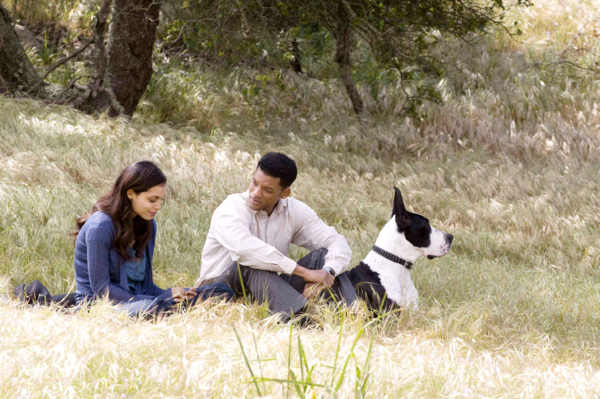
The best thing about “Hancock” is its tight running time. In recent history, the Fourth of July weekend plus Will Smith’s impervious likability equals substantial box office receipts, but “Hancock” is poor to the point of insulting – a sarcastic metafiction that appears to have been assembled by committee. Word is that the original screenplay went through major rewrites, but regardless of the script’s origins, the garbage that ended up on the screen is a complete misfire. With a steady stream of winks to the audience, “Hancock” wants to send up the superhero genre, but it depends too much on its cruddy CG effects and a rote climactic showdown to make an effective argument for satire.

Smith plays the title character, a reluctant, almost suicidal do-gooder who so loathes his role as a Los Angeles-based, crime-stopping savior that he has taken to drink, profanity, sarcasm, and property damage to overcompensate for his super services. As embodied by Smith, Hancock has all the necessary ingredients for a terrific character. It’s the writing that lets him down scene after scene. After establishing a relationship between the derelict hero and a PR executive whose life Hancock saves, an insensible plot twist is sprung on the audience a little more than halfway through the film. It might be unfair to share the details of this revelation, but the result is so goofy, it belongs in another movie, like “Highlander.”

Charlize Theron factors into the cockamamie surprise, and like Smith she is engaging even when saddled with a wholly wretched character. Theron, as much as Smith, is called upon to do all sorts of things that snap credulity in two, and she does them with a conviction the movie doesn’t deserve. She plays the doting wife of Jason Bateman’s public relations man, and by the time the film gets around to its water-drenched climax, Theron suffers the indignity of writhing in agony in a hospital bed while all hell breaks loose around her. The sight of it is sheer nonsense, and one cannot help but feel a little bit embarrassed for the Academy Award winner.

“Hancock” is a tasteless brew of competing themes, agendas, and cinematic styles. Director Peter Berg stages too much of the action in frustrating, handheld close-up, and the result is a nauseating tour of the lead actors’ nostrils and facial pores. Tobias Schliessler’s gritty cinematography suggests that “Hancock” might have intended to construct a more plausible universe than the ones offered up in recent Marvel and D.C. adaptations. Too bad that the story finds no incentive to follow through on the possibilities, opting instead to lard the pietistic, self-satisfied displays with juvenile gross-outs revolving around Hancock’s ability to literally shove a man’s head up another man’s rectum.

Such touches, along with Hancock’s disdain for wearing a costume that might be perceived as less than straight, flaunts a boorish homophobia that undermines the movie’s position as an enlightened social commentary. Berg spends too much time with his hand on the throttle of squishy exposition and incomprehensible backstory, and neither endears Mr. Hancock to the viewer. The movie’s ending is a shambles, reintroducing the most forgettable hook-handed villain in recent memory. “Hancock” is a sickening waste of the talents involved and should be avoided even if a friend offers to buy you a ticket.


WALL-E

Walle1

Movie review by Greg Carlson

During the sensational opening section of Pixar’s “WALL-E,” the last functioning Waste Allocation Load Lifter Earth-Class robot dutifully fulfills a daily routine of mashing piles of garbage into small cubes and stacking them until they reach monumental heights. Against the backdrop of a dusty, desolate landscape that recalls Tom Petty’s “You Got Lucky” video (among several other post-apocalyptic visions), the soulful WALL-E either doesn’t know or doesn’t care that no human beings are around to appreciate his efforts. WALL-E’s only companion is a scuttling cockroach who tags along while the indefatigable bucket of bolts engages in his Sisyphean task. Wordless and haunting, the purely visual exposition emulates the poetic narratives of Buster Keaton and Charlie Chaplin, whose work director Andrew Stanton has claimed the moviemaking team studied intensely.

Blending a classic love story with a less effective environmental message, “WALL-E” is at its best when expressing the title character’s ardent desire to hold hands with another robot willing to reciprocate his unlikely emotion. Stanton’s clever use of a couple of songs from “Hello, Dolly!” gives the tired musical a brand new life, and it is rather easy to speculate that the next generation of moviegoers will not be able to hear “Put On Your Sunday Clothes” and “It Only Takes a Moment” without filtering them through WALL-E’s consciousness.

Resembling Number 5 from “Short Circuit,” WALL-E is a marvel of character animation. With “vocalizations” provided by legendary sound designer Ben Burtt, who brought the voices of R2-D2, Chewbacca, and many other creatures to life in “Star Wars,” WALL-E finds himself in good cinematic company. As one has come to expect from Pixar, the movie teems with visual quotations, in this case touching on many Hall of Fame science fiction films, from “Metropolis” to “Blade Runner.” Pixar fans will also find multiple references to previous movies from the studio’s formidable oeuvre.

“WALL-E” is composed of three sections, and the first two are vastly superior to the third, which loosens its grip on the robot protagonists long enough to let a mothership of obese interstellar travelers drive home a nearly tedious gag about fat Americans. Jeff Garlin voices the captain of the floating city Axiom, a gorgeously designed spacecraft that looks like something out of John Berkey’s beloved fantasy painting. Garlin is surely a talented performer, but the movie is infinitely more engaging without the unnecessary chatter of explanatory dialogue. This is a minor complaint, however, as “WALL-E” pretty consistently delivers the goods.

The middle section of the movie is the likeliest to appeal to the youngest members of the viewing audience, and some might quibble that a sequence involving a collection of malfunctioning, “rogue” robots panders to kids whose attention spans might be tested by the rest of the film. Fortunately, WALL-E’s relationship to his soul-bot EVE is wonderful enough to silence all but the crustiest of critics (despite the considerable number of times EVE pleadingly pronounces the hero’s name). In one glorious scene, WALL-E and EVE share a zero gravity dance together that echoes the breathtaking outer space ballets choreographed by Kubrick in his masterpiece “2001: A Space Odyssey.” For this, and many of its other stunning compositions, “WALL-E” is one of the few must-see titles of the summer movie season.

Get Smart

Getsmart1

Movie review by Greg Carlson

While it might have sounded marketable on paper – Steve Carell filling the telephonic shoes of Don Adams in a big-budget version of “Get Smart” – the resulting mess is a hodgepodge of mostly unfunny physical comedy supplemented by a smattering of reasonably clever one-liners. Older fans of the original television series that ran from 1965 to 1970 might smile at some of the movie’s half-hearted efforts to revive beloved gags, but younger viewers with no frame of reference will be more likely to unfavorably compare the film to James Bond movies. Strangely, “Get Smart” spends nearly as much time attempting to pull off the breathless action that propels the Bond franchise when it should be a daffy send-up.

Carell is no Don Adams, but given the current roster of deadpan television performers adept at playing nerdy and clueless, he was a good choice for Maxwell Smart. The movie re-imagines Smart as a deskbound “chatter” analyst for CONTROL, even though the man dreams of passing his field agent exam in order to attain some of the glamour that virtually emanates like a cloud from the hyper-masculine Agent 23 (Dwayne Johnson). The Chief (Alan Arkin, doing the best he can with an almost shockingly flavorless screenplay) knows that Smart is better utilized in a cubicle, but relents following an attack by KAOS that jeopardizes CONTROL’s entire operation.

Naturally, Smart is quickly paired with the luscious Agent 99 (Anne Hathaway), but unlike the relationship of the small screen version, she initially finds Smart anything but attractive and brusquely tells him so. Hathaway’s 99 is a brittle scold and absolutely no fun. The resulting screwball-style bickering between the mismatched leads wears thin almost immediately, even though Carell manages embarrassment and humiliation like a champ. The main problem with this Smart, though, is that he is far too competent and self-aware to earn the kind of huge laughs that Peter Sellers managed as Inspector Clouseau.

When “Get Smart” pulls out staple jokes, they bomb hard. The “Would you believe?” routine ends with a lame Chuck Norris punchline that was kind of funny when it bounced around the web a few years ago. “Missed it by that much” pops up a couple of times, and yields zero laughter. As seen in the trailer, Carell’s intense shouting about the best day of his life is pretty good, although the “Cone of Silence” loses its physical Plexiglas charm in a transformation to a run-of-the-mill CG effect. Ditto for the multiple security doors that Smart navigates at CONTROL headquarters.

“Get Smart” is designed as a showcase for Carell’s comic acting, but most of the veterans stuck in supporting roles struggle with wooden dialogue. In addition to Arkin, Terence Stamp’s KAOS leader is a discarded afterthought. A Richard Kiel-esque KAOS henchman gets more screen time and character development. David Koechner is a boorish Larabee, and James Caan is completely miscast as a W-like idiot commander-in-chief. Johnson, like Carell, is willing to do anything for a laugh, but Agent 23 functions almost entirely as a plot device rather than a character. “Get Smart” has not been as poorly reviewed as “The Love Guru” (which opened less successfully on the same day) but it is hardly worth seeing as a replacement.

The Incredible Hulk

Incrediblehulk1

Movie review by Greg Carlson

Significantly better than Ang Lee’s tortured and torturous 2003 “Hulk,” the current re-do fixes many of its predecessor’s problems. In the end, though, the computer-generated green giant lacks the heart and soul that only a human being can provide. Sure, one could argue that the central character, when transformed into a raging, destructive behemoth, is not exactly human. Even so, the presence of a pixel-constructed monster has the drawback of never effectively interfacing with the flesh and blood actors who struggle to touch something that isn’t there or make eye contact with empty space. The newest Hulk looks better than the last one, but not by much.

While Lee’s mournful take on Stan Lee and Jack Kirby’s riff on “Dr. Jekyll and Mr. Hyde,” “Frankenstein,” and “King Kong” labored over the origin story, director Louis Letterier’s “The Incredible Hulk” covers that turf during the opening credits, which pay tribute to the popular 1970s television series starring Bill Bixby and Lou Ferrigno (who makes yet another cameo as a security guard and provides the Hulk’s vocals). Other inside references for fan geeks pop up here and there, but Letterier mostly sticks to the basics of the summer superhero playbook, which means little introspection and lots of smashing and bashing.

Edward Norton, who reportedly clashed with powerful, suit-wearing types over the final shape of the movie, is serviceable as Dr. Bruce Banner, but Zak Penn’s script leeches any potential thrill from the Freudian fever dream of unleashing fury and losing control (until the final close-up that alludes to future installments). Banner makes it clear that he sees his condition as a disease-like burden, and emphatically exclaims that he doesn’t want to control it, he wants to get rid of it. That sentiment precludes the opportunity to explore some of the more fascinating dimensions of Banner’s unique ability.

The depiction of Banner’s relationship with Dr. Betty Ross, now played by Liv Tyler, is another place where “The Incredible Hulk” tops the Ang Lee version. While Tyler might not be considered as accomplished as Jennifer Connelly, she is thankfully not called upon to spend the majority of her screen time weeping over the traumatic events that unfold whenever her old flame’s heart rate passes a particular threshold. Tyler’s more imaginative Betty initiates some romance despite the dangers that come with Banner’s quickened pulse. Betty and Bruce spend a chunk of time with one another and the simplicity of the movie’s structure as an extended chase is one of its chief pleasures. Betty’s eagerness to be on the run with Bruce propels the movie until it reaches the inevitable climactic battle.

While “The Incredible Hulk” relies on images of goliath versus military machinery in many of its action sequences, the movie deserves points for several of its cleverly used sets and locations. The parkour-style pursuit through the Brazilian favela where Banner has hidden himself from government pursuers has plenty of energy. Additionally, the first sequence in which Banner goes bonkers in full-on Hulk mode is done mostly in shadow; it generates a fair amount of suspense and postpones some of the disappointment that comes with seeing the emerald colossus in broad daylight.

Son of Rambow

Sonoframbow1

Movie review by Greg Carlson

A largely winning and occasionally beguiling friendship yarn from moviemaking team Hammer & Tongs, “Son of Rambow” applies liberal doses of British eccentricity and charm as it crafts the story of two unlikely pals who forge a creative moviemaking partnership. While it certainly cannot hold a candle to “Rushmore,” “Son of Rambow” respectfully takes up with its nearly adolescent protagonists after the fashion of Wes Anderson’s contemporary classic, allowing the audience to relate to these kids from the inside out. Viewers who give in to the movie’s imaginative tone will be transported to the emotional heart of childhood, a time when fantasy and escapism counteract the indignities of having little control over one’s own daily life.

“Son of Rambow” fires up an opposites attract dynamic in its opening scenes, introducing viewers to Will Proudfoot (Bill Milner), a rail-thin elf protesting the sins of cinema with his religious clan, and Lee Carter (Will Poulter), a scruffy rebel who happens to be pirating the goods with a bulky camcorder in the smoking balcony. The film in question is Ted Kotcheff’s “First Blood,” and it ends up becoming a key ingredient in the oddball collaborative relationship that will form between Will and Lee. Will is forbidden by his family to watch movies, but once he sneaks a peek at Sylvester Stallone’s heroic killing machine, all bets are off as he is seized by production fever.

Both boys are fatherless to some degree, and when he is not illegally taping movies, Lee dreams of winning a BBC-sponsored moviemaking competition. After establishing the unlikely partnership between Will and Lee, the film’s script makes certain that their skills are much stronger when working together. The arrival of an outsider, humorously embodied by a tragically hip French exchange student named Didier (Jules Sitruk), threatens both friendship and production. The movie within the movie provides many opportunities for self-referential comedy (not unlike Max Fischer’s elaborately staged dramas in “Rushmore”), and is one of the chief pleasures of “Son of Rambow.”

Writer-director Garth Jennings, who forms Hammer & Tongs with producer Nick Goldsmith, apparently based some of the crude moviemaking experiments of the main characters on his own exploits. He previously helmed the execrable big budget adaptation of “The Hitchhiker’s Guide to the Galaxy,” and while that film had its supporters, “Son of Rambow” is a much stronger piece of moviemaking in every way, despite the colossally different price tags. The quaint stereotypes might be a bit broad, but the intimacy of the village and school are preferable to the vastness of giant studio sets.

“Son of Rambow” exuberantly identifies with the thrill of childhood imagination, which knows zero limits. Will illustrates the margins of his books and a bathroom stall with detail-rich landscapes reminiscent of Henry Darger’s intricate scrolls. The movie often asks the audience to suspend its disbelief, as the boys arrange shots for their movie that end with gravity-defying catapults and other dangerous stunts. It asks again when the entire school caste system is inverted by filmmaking delirium that turns the nerds into the cool kids. “Son of Rambow” errs too often on the side of sentimentality, but for anyone who has ever been gripped by the desire to make a movie, it reflects familiar emotions.

The Visitor

Visitor1

Movie review by Greg Carlson

Writer-director (and regular actor) Thomas McCarthy follows his strong debut “The Station Agent” with “The Visitor,” a warm, character-driven showcase for veteran thespian Richard Jenkins. Like McCarthy’s debut feature, “The Visitor” adopts an unhurried pace to spin its tale of a middle-aged academic whose intellectual and spiritual malaise are obliterated by an unexpected encounter. “The Visitor” mirrors “The Station Agent” in several other ways as well, including an emphasis on thoughtful, carefully considered interactions among central characters who are emotionally guarded and more than a little bit leery of opening up to others. While some viewers will find that the movie embraces a piety that creeps close to sanctimoniousness, others will enjoy the director’s well-crafted variation on opposites attracting.

“The Visitor” introduces the viewer to the dour, taciturn Walter Vale (Jenkins), a professor of global economics whose career has stagnated since the death of his pianist wife. Pressured by a colleague to deliver a paper at an NYU conference, Walter returns to a rarely visited apartment he still rents in the city and is startled to discover that a young Syrian musician named Tarek (Haaz Sleiman) and his Senegalese girlfriend Zainab (Danai Gurira) have been swindled into renting it by an opportunistic con artist. As expected, Walter eventually invites the illegal immigrants to stay, and they cautiously renegotiate their living arrangements as they slowly warm up to one another.

Walter’s longtime passion for music migrates from classical to Afrobeat when he hears Tarek’s nimble drumming. With the encouragement of the accomplished and easy-going Tarek, an inspired Walter begins to practice regularly. “The Visitor” might have continued quietly along this path, but McCarthy abruptly changes gears to explore a social-political dimension of post-9/11 immigration policy when Tarek is arrested and held in a sub-contracted detention facility to await deportation. The filmmaker’s indignant attitude moves front and center, but the fortunate dramatic byproduct of this choice is the arrival of Tarek’s mother Mouna (Hiam Abbass), who breathes life into every scene in which she appears.

Jenkins, who has appeared in multiple movies by the Coen Brothers, the Farrelly Brothers, and David O. Russell, has developed a cult following, and “The Visitor” provides him with an opportunity to anchor nearly every scene in the film. No matter what his role, Jenkins has always conveyed a fierce intelligence and a wicked sense of humor, and while opportunities for the latter are largely absent from “The Visitor,” viewers will not be disappointed in his work. McCarthy’s script transforms Walter from a stiff classroom presence into a passionate enthusiast of African rhythms perhaps too smoothly, but Jenkins is never less than compelling, and his cast-mates are uniformly wonderful.

“The Visitor” juggles several thematic concerns, and some are handled with more subtlety than others. A tentative romance that develops between Walter and Mouna might have been a movie all by itself. McCarthy’s high-minded moralizing, which manifests in Walter’s growing outrage and frustration at the government’s treatment of Tarek, hits several sour notes, and is only salvaged by the film’s postscript. With the exception of one brief flicker, Tarek remains cheerful, patient, and optimistic during his confinement – hard to believe considering that he faces being expelled from his adopted country. Even so, “The Visitor” remains thoroughly watchable.


Indiana Jones and the Kingdom of the Crystal Skull

Indianajonesandthekingdomofthecrystalskull1

Movie review by Greg Carlson

Considering the monumental success of the trio of movies that preceded it, “Indiana Jones and the Kingdom of the Crystal Skull” needs little in the way of traditional movie reviewing: isn’t everyone going to see this thing? As one of the enduring adventure heroes of American movie culture, Dr. Henry Walton “Indiana” Jones, Jr. can be tough to beat. Perfectly inhabited by Harrison Ford in what is arguably his signature role, Jones is the Yankee antidote to the eternally smooth and competent James Bond. As constructed by Ford, director Steven Spielberg and creator George Lucas, Jones makes plenty of mistakes, takes a slapstick pratfall like Buster Keaton, and rarely knows what to say to an attractive woman. Luckily, he’s terrific with a bullwhip.

Just shy of two decades since the last appearance of the superhero archeologist, “Indiana Jones and the Kingdom of the Crystal Skull” ages the story to 1957, throwing over Nazis for Cold War Soviet Reds. The movie jump-starts with a gleeful, high-speed, Rock and Roll drag race, the first of many signifiers of Lucas’ affinity for 50s pop culture. A squad of commies led by the striking Irina Spalko (Cate Blanchett) infiltrates Nevada’s ultra-secret Area 51 (identified onscreen as Hangar 51) to locate a crated extra-terrestrial that might hold the key to world domination. Can Indiana Jones put a stop to them?

“Crystal Skull” crams in near non-stop action to the detriment of detailed character, and everyone outside of Indy remains largely two-dimensional. Despite her memorable hairstyle and skill with a blade, Blanchett’s Spalko pales in comparison to Rene Belloq, even though both are adept at taking objects away from Jones. John Hurt’s loony, expendable Professor Oxley adds little, and Ray Winstone’s George “Mac” McHale switches allegiances so many times the audience loses track. Whippersnapper Shia LeBeouf, who first appears astride a motorcycle channeling Marlon Brando in “The Wild One,” makes a few too many age jokes at Ford’s expense. LeBeouf’s Mutt Williams certainly would have been a more interesting character had the script arranged for him to experience some sensual tension with KGB goddess Spalko.

The little romance that does creep in sees Indy reunite with “Raiders of the Lost Ark” love interest Marion Ravenwood (Karen Allen). Both Ford and Allen look terrific more than a quarter of a century later, but the script insists they start bickering immediately. This all feels a little forced, and a silly scene in which they nearly submerge into a murky, quicksand-like pit should have been trimmed entirely.

While “Crystal Skull” was winding through years of script revisions under a revolving army of writers, hopes were high that if it did get made, Spielberg and Lucas would – presumably for the sake of nostalgia – keep the CG to a minimum. No such luck. From the early appearance of a digital prairie dog to a climactic set piece that will delight some fans as surely as it will rile others, computerized fingerprints stain the movie to the point of overwhelming it. It is hard enough for some of us to accept Indiana Jones in the Atomic Age without the added distraction of busy special effects that cannot match the elegant, gravity-bound thrills that dominate the first, and best, movie in the series.

Paranoid Park

Gave Nevins, Lauren McKinney

Movie review by Greg Carlson

Director Gus Van Sant continues his impressive run as one of the foremost cinematic explorers of Portland, Oregon in “Paranoid Park,” a very subjective character study based on a novel by Blake Nelson about a teenage skateboarder involved in the death of a railroad security guard. The movie is a feast for admirers of Van Sant’s signature voice. Beautiful cinematography, originated on 35mm and Super 8mm by Christopher Doyle and Rain Kathy Li, blends seamlessly with the director’s inspired music choices and Leslie Shatz’s elegant sound design to place the viewer inside the point of view of the story’s troubled protagonist.

The movie’s events are recounted elliptically, as scenes and images recycle and repeat in a parallel to the confusion cluttering the mental state of Alex (Gabe Nevins), the quiet skater who finds himself in dire straits following an evening in which a few bad choices lead to a horrific event. Van Sant’s staging of the gruesome accident is a moment of shocking, terrible beauty that works on many levels, including one as a severe memento mori. The filmmaker sympathizes with the naïve Alex without excusing him, taking a position that some viewers will no doubt find disturbing. It would be unfair to say that “Paranoid Park” suggests that young people are without a moral compass; Van Sant is interested in the ways that kids struggle mightily to figure out parts of the adult world.

In terms of style and sensibility, “Paranoid Park” is closer to “Elephant,” “Last Days,” and the classic “Drugstore Cowboy” than it is to “Good Will Hunting” or “Finding Forrester.” Van Sant cultists typically prefer the former set of movies to the latter, and “Paranoid Park” is filled with excellent music cues (including Menomena, Cast King, Elliott Smith’s nearly heartbreaking “Angeles,” which Van Sant used previously in “Good Will Hunting,” and several Nino Rota cuts from “Juliet of the Spirits”) that contribute to uncanny juxtapositions. Alex’s denial and avoidance find visual expression in the shallow focus images, which haunt many scenes.

Van Sant’s eclectic directing career has been engrossing to watch for more than two decades, encompassing studio-financed Hollywood fare as well as intimate, experimental pieces featuring untested amateurs in key onscreen roles. Something like a big deal has been made of the MySpace casting process used to select many of the performers for “Paranoid Park,” but Van Sant has often included non-professionals in his movies to great effect – several of the street kids in “My Own Private Idaho” come to mind.

The use of non-actors as a stylistic choice is nothing new, but Van Sant does it as well as any filmmaker since Robert Bresson. While many viewers might find lead actor Gabe Nevins’ lack of emotional expressiveness and technical polish off-putting, his presence works as an alienation effect that refocuses viewer attention on the manner in which the story is being told as opposed to the mechanics of the plot. Nevins’ Alex doesn’t need to be shown wrestling with his ethical quandary because Van Sant asks the audience to do it.

My Blueberry Nights

Film Title: My Blueberry Nights

Movie review by Greg Carlson

Cult director Wong Kar-wai disappoints his Yankee constituency with “My Blueberry Nights,” his first English language feature. Molded in the same sumptuous, neon-drenched style of Wong’s finest films, “My Blueberry Nights” relies too heavily on greeting card philosophy and a slightly shaky central performance from recording artist Norah Jones, making her big screen debut. Purportedly, Wong designed the role for Jones alone, acting chops be damned. Certainly the singer is a lovely creature, and it is easy to see why Wong wanted to build a movie around her. Regrettably, little of the chanteuse’s seductive and beautiful phrasing comes across on film; one longs for a musical number so that she might be photographed in her element.

The movie’s first section loiters in the NYC café run by the worldly Jeremy (Jude Law). Jones plays Elizabeth, who has recently broken up with her boyfriend. Nursing her wounds with the help of Jeremy’s late night culinary skills, Elizabeth grows fond of, among other things, her new friend’s delectable desserts. Wong often shows the movie’s titular pie in near pornographic close-up, rivulets of melting ice cream cascading through the violet-hued filling. Before she can rush into something with Jeremy, however, Elizabeth hits the road, and “My Blueberry Nights” relocates from the Big Apple to Memphis and then Nevada.

Wong has never hesitated to stitch together storylines that might exist as their own shorter (and possibly better) movies, and “My Blueberry Nights” switches gears rather abruptly once Elizabeth stops in Tennessee. Serving up hash by day and whiskey by night, Elizabeth meets alcoholic cop Arnie (David Strathairn), a broken man at the end of his rope. Arnie has separated from his sultry, unfaithful wife Sue Lynne (Rachel Weisz), though anyone can see that he aches to turn back the hands of time. As one might expect, both Strathairn and Weisz breathe plenty of life into their characters, despite the melodrama with which they are burdened.

Natalie Portman, showing up late as a tough-talking card sharp who can spin lies as effortlessly as the truth, stands in such contrast to Jones that they almost seem to be in different movies. While Portman plows through the emotionally charged territory that has been carved out for her, Jones merely has to watch and listen. Perhaps Wong and co-scripter Lawrence Block were too cautious with the main character. When Chan Marshall shows up as Jeremy’s old flame, her single scene contains more intrigue than the complete running time afforded Jones, whose Elizabeth is given so little to do.

Thematically, “My Blueberry Nights” revisits some of the director’s familiar lovelorn turf, and Jeremy’s Klyuch eatery will remind Wong admirers of the Midnight Express lunch counter that figured so prominently in the masterful “Chungking Express.” Both restaurants attract broken-hearted souls who turn over keys to the proprietors for safekeeping and/or delivery to ex-lovers. Always a sucker for a clever or cute conceit, Wong trades in a pushpin-pierced envelope for a fishbowl, but the core idea remains the same. Needless to say, Wong’s earlier movies were more exciting, more romantic, and more urgent than “My Blueberry Nights.” If America was a nice place for a visit, here’s hoping that Hong Kong will always be home.