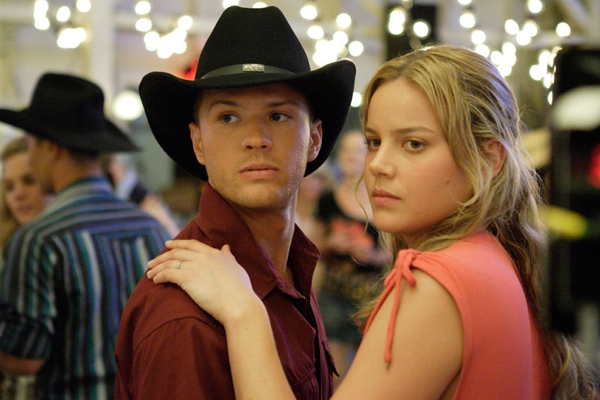
Feel the Noise

FEEL THE NOISE

Movie review by Greg Carlson

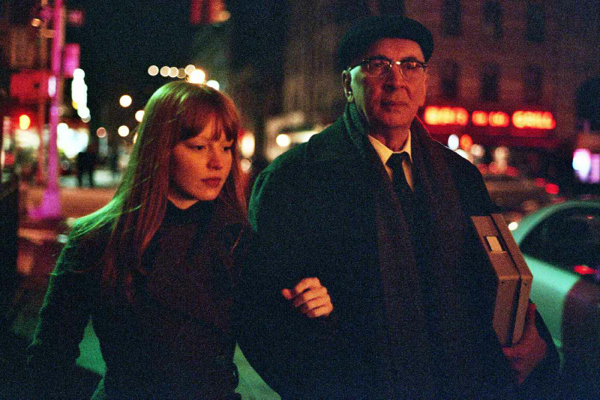
Despite whatever benefit studio marketers assumed they might reap for hyping “Feel the Noise” as material from “producer Jennifer Lopez,” the movie is a boring mess. An uninspired laundry list of common music movie clichés, “Feel the Noise” squanders its opportunities at every turn, managing to transform the infectious energy of the reggaeton genre it documents into a listless snoozer. Recording artist Omarion Grandberry demonstrates nothing so much as a grave need for more acting classes, alternating between angst and earnestness as Rob, a wannabe MC from Harlem who relocates to Puerto Rico after being shot at by local bangers with a grudge.

Grandberry is certainly not helped any by Albert Leon’s awful screenplay, which eagerly trots out every chestnut in the “we can make it if we try” canon. From the estranged father who harbored his own dreams of playing music (done much better in “Purple Rain”), to the step-by-step process of building a hit record from scratch (again, done much better in “Hustle & Flow”), “Feel the Noise” succumbs to predictability in scene after agonizing scene. One might feel the need to suppress a chuckle when Rob finds sonic inspiration in the chirp of a bird that provides his single “Coqui” with a hot hook. Despite the silliness, however, the song itself is not bad, even though it is played to death throughout the film.

Cinematographer Zoran Popovic makes the most of a small budget, striking suitably different tones for the glass and steel-dominated NYC and the sunny island life of Puerto Rico. Better than any of the storylines, the location photography offers a fleeting diversion from the tedium of the characters’ soapy dramas. Steamy club sequences, in short supply for a movie supposedly about an irresistible genre of danceable music, are nicely captured, but the movie’s PG-13 rating keeps the heat from the sexy dances in check.

Alejandro Chomski’s direction occasionally makes hash out of what should be easy work in such a connect-the-dots plot. Characters are introduced and then forgotten, and some scenes are so short and underdeveloped that we hear only fleeting snippets of dialogue before moving on to the next diversion. Half the movie plays like an extended preview of coming attractions. The idea that Rob might be able to relate to love interest C.C. (Zulay Henao) with anything approaching rational thought cannot compete with the genre’s requirement that the lovers must quarrel before reuniting. Equally annoying is the depiction of Rob’s frustration with Jeffrey Skylar (James McCaffrey, totally somnambulant) the sleazy, opportunistic record producer who has sexual designs on C.C.

Most regrettably, the always excellent Giancarlo Esposito, playing Rob’s quiet dad, is criminally ignored. The only cast member with sterling acting chops, Esposito mostly pops up whenever the story demands a father-son conflict scene. In the hands of a stronger director, Esposito might have been allowed to provide some much-needed depth of characterization. Instead, “Feel the Noise” skips relationships altogether, opting for a phony, feel-good resolution staged at New York’s Puerto Rican Day Parade, complete with an unnecessary cameo by J. Lo herself.

Interview

Interview1

Movie review by Greg Carlson

In Steve Buscemi’s remake of Theo van Gogh’s 2003 “Interview,” the writer-director-star shares the screen with tabloid fixture Sienna Miller, who plays a bratty, spoiled starlet most audience members will assume is rather close to the truth. Of course, the gamesmanship on display between the two principal characters argues that there is no such thing as reality, and Buscemi’s nimble direction makes the most out of what is essentially a single location story. Van Gogh was planning an English language version of his loosely improvisational “Interview” at the time of his politically motivated murder, and Buscemi’s film operates as a tribute to the slain provocateur. Fans of theatrical, two-character drama will enjoy watching the intriguing exchanges that fuel the movie’s action, but those expecting cinematic fireworks must resign themselves to the fact that there are only so many ways one can frame a NYC loft.

Buscemi plays Pierre Peders, a bitter political journalist nursing a serious grudge against the editor who assigned him to a toothless puff piece on rising hottie Katya (Miller), a self-obsessed up-and-comer used to being the center of attention. Kept waiting at a restaurant for more than an hour, Pierre lets Katya know that she means nothing to him, and his admonishment triggers her most base narcissistic impulses. The interview seems to be over before it begins, but Pierre is injured in a minor fender bender caused in part by Katya, who insists he accompany her back to her apartment so she can attend to his wound.

Once Pierre and Katya settle in to her spacious pad, they begin a devilish dance that finds them swerving back and forth between weird attraction and total contempt for one another. The writing darts through all sorts of psychological minefields, alighting periodically on father/daughter baggage carried by both parties, as well as the easy codependence shared by longtime substance abusers. Alcohol, cocaine, and a variety of pills fuel the snaky conversation and loosen the tongues of the already uninhibited combatants.

The movie’s handheld photography, which is rendered in the muted tones provided by digital video, replicates the style preferred by van Gogh. As the performers circle each other, so do the cameras, instilling a sense of woozy, uneasy intimacy. Miller and Buscemi seem to relish the opportunity to sink their teeth into roles that allow for such violent mood swings, and the fact that their characters spin all sorts of lies for a living sustains interest throughout the essentially real-time unfolding of the story.

At one point in the movie, Katya and Pierre agree to reveal dark secrets to each other. By this time, the number of individual accusations, tantrums, crying jags, and quasi-seductions has reached a fever pitch, and viewers won’t know who to believe anymore. “Interview” doesn’t say anything new about the parasitic relationship between celebrities and members of the press, or for that matter the consumers who clamor for personal information about the rich and famous, but Buscemi and Miller are consistently compelling to observe. At the end, the battle of wits and wills between Katya and Pierre is revealed to have a clear victor, but one leaves the theater thinking that both of these unsavory vampires are more loser than winner.


Eastern Promises

Easternpromises1

Movie review by Greg Carlson

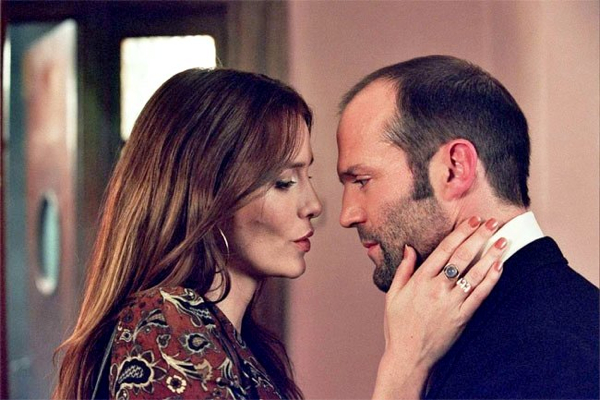
Arguably more brilliant than “A History of Violence,” David Cronenberg’s “Eastern Promises” proves one of the year’s most compelling, engaging, and sharpest films. The movie’s Christmastime setting in contemporary London conjures a thoroughly fascinating otherworld of Russian transplants who count themselves members of the “vory v zakone,” a crime organization that translates to “thieves in law.” After a young prostitute dies giving birth, the diary she leaves behind compels hospital midwife Anna (Naomi Watts) to seek out information that might lead to the infant’s family. Instead, the miserable document delivers her into a den of wolves.

Cronenberg continues his late tradition of closely examining murderous impulses within a familial setting, and the result verges on the spectacular. The Russian gangsters, led by calm but menacing Semyon (Armin Mueller-Stahl) are as perfectly drawn as any of Scorsese’s dynastic concoctions, and the jealousies, power plays, and intimacies that link Semyon’s weak, sadistic, and out-of-control son Kirill (Vincent Cassel) with his confidante Nikolai (Viggo Mortensen, in a career-best performance) are utterly Shakespearian. As the movie alternates between Anna’s precarious foray into the mobster’s universe and Nikolai’s emerging depth, Cronenberg reveals layer after layer of thought-provoking insight into their respective worlds.

Some viewers will cover their eyes during Cronenberg’s signature episodes of lightning-bolt violence. Once again equaling or bettering Scorsese, the director settles his camera on several tremendously unsavory, nearly hideous, moments of intimate mayhem. As gunshots to the head were to “The Departed,” razors to the throat are to “Eastern Promises.” A slippery, steamy hand-to-hand combat sequence in a Turkish bath draws gasps from the audience, and Cronenberg documents a variety of gangland traditions with the clinical gaze of a coroner. Like many of his other films, the violence operates in service to the story, and not the other way around.

As the taciturn Nikolai, Mortensen completely runs away with the movie. In one of the film’s many standout scenes, Nikolai, stripped to his underwear, stands tall before the council of bosses who will decide whether or not to fully embrace him as one of their own. They read aloud the story told by his prison tattoos, and ask him to renounce his father. Nikolai explains that he has been dead since the age of fifteen, and in a line that sends a crawling chill, says “Now I live in the zone all the time.” Mortensen himself is in the zone as well, playing Nikolai as if he is someone the actor has known his whole life.

Working from an original screenplay by Steven Knight, Cronenberg strikes an almost perfect balance between the emotional drama of the central characters and the intricate machinery of the Russian mafia. With a master’s sense of timing and pacing, Cronenberg finds all sorts of beautiful ways to express thoughts about the cycle of life and death, the toll of being a stranger in a strange land, and the secrets that can simultaneously enable and restrict us. “Eastern Promises” is a movie that inspires thought long after one leaves the darkness of the theater, and should not be missed.

The Ten

date:modify: 2013-05-19T22:47:45+00:00

Movie review by Greg Carlson

Despite inviting comparisons from critics partial to Krzysztof Kieslowski’s “Dekalog,” the strange anthology movie “The Ten” offers enough outrageous gags and sly wit to qualify as one of the year’s most audacious comedies. Created by members of comedy troupe the State, “The Ten” presents a series of shorts riffing on the biblical rulebook inscribed on those famous tablets toted by Moses. Thankfully, Charlton Heston is nowhere in sight, leaving a seasoned cast of contemporary comic firebrands to throw all sorts of ideas at the wall to see which might stick. Like so many movies composed of segmented vignettes, not everything in “The Ten” works. Viewers partial to vulgar, smart, off-the-wall jokes will split over which sections work the best, and the movie is sure to be more successful on DVD, which allows for skipping over the dead weight.

“The Ten” gets off to a rocky start by introducing a narrator played by the typically sublime Paul Rudd, whose job it is to provide context and set-up for each of the shorts. Co-screenwriters Ken Marino (who appears in the movie as a surgeon with a criminally poor sense of humor) and David Wain (who also directs) fail to ground Rudd’s character until rather late in the proceedings, which makes the first several times we see him land with a series of thuds. The first segment, in which a stupid skydiver (Adam Brody) suffers an accident that turns him into a national celebrity, struggles to capitalize on its central conceit. Thematically, movies like “Network” and “Being There” have done it better.

Several of the next segments improve on the movie’s chief gimmick. Librarian Gretchen Mol travels to Mexico, where her mind is blown by a passionate handyman named Jesus Christ (Justin Theroux). A bouncy animated segment concerning the consequences of a truth-stretching rhino initially seems out of place, but ends up keeping with the odd spirit of the movie. In what is arguably the film’s most biting story, a prison inmate played by Rob Corddry finds himself deeply attracted to the “wife” of another felon.

Several of the stories are a bit tired, even if they manage to elicit some laughs. A mother played by Kerri Kenney-Silver hires a marginal Arnold Schwarzenneger impersonator (Oliver Platt) to play father to her grown sons. Winona Ryder is both believable and clearly enjoying herself as a woman who develops a major attraction to a ventriloquist’s dummy. In a bit that would have played better as a brief TV sketch, two neighbors attempt to best each other in a battle to acquire expensive medical equipment.

It is difficult to speculate whether the movie would have been improved had it jettisoned the story introduction device, which gets old rather fast. When Rudd’s character finally appears outside of the nearly empty stage from which he has delivered the bridging material, his scene with Famke Janssen hints at a better use for his screen time. It is unlikely that the content of “The Ten” will place it in the company of the creators’ “Wet Hot American Summer,” but it does exude the feeling that multiple viewings will isolate and pinpoint some tremendous laughs.


Crazy Love

Crazylove1

Movie review by Greg Carlson

Directed by Dan Klores with Fisher Stevens, “Crazy Love” spins the almost unbelievable tale of Burt Pugach, a devilish con-man, and Linda Riss, the woman Pugach stalked and later married. Presented with the same sensational tone as the screaming late-1950s New York Mirror headlines it incorporates, “Crazy Love” parades its true-crime content as if it were dealing with a kooky romance instead of a sadistic and brutal nightmare. As documentary features go, the movie leaves out far too much to be considered truly gripping, and its unwillingness to dive beneath the surface frustrates mores than illuminates.

In the movie’s first third, which is also the strongest, a wealth of stock footage, vintage photographs and home movies, and other archival imagery is blended together to reproduce mid-20th century NYC. Ambulance-chasing negligence attorney Pugach lives the sweet life, using the income from his shady legal practice to finance powder blue Cadillac convertibles, a private plane, and even a nightclub. Despite the fact that he is married and has a severely disabled baby daughter, Pugach plays the field like a world-class lothario, initiating affairs with a parade of attractive young women. When the playboy lawyer spies movie star-gorgeous Riss, he pursues her with an intensity that should have merited a restraining order.

Despite being impressed by Pugach’s wealth and connections to celebrity, Riss insists that all bets are off until the older man finalizes a divorce. Pugach, who fibs as easily as Baron Munchhausen, draws up phony papers to appease Riss, but she exposes the ruse and breaks it off. For reasons that the movie never adequately explores, the jilted boyfriend reacts by hiring some hoods to throw lye in Riss’ face, partially blinding and disfiguring her. The melodrama is so thick to this point, that a more skillful moviemaker would have had enough material for a miniseries. Instead, Klores and Stevens are content to glide along, connecting the dots that lead to the even more outrageous revelation that Riss married Pugach following his release from prison for the crime he committed against her.

Both Pugach and Riss appear in muddy-looking talking head interviews, but neither one allows the viewer to see any deeper than the glossy surface of Riss’ dark cat glasses. Clips of the pair with Mike Douglas, Geraldo Rivera, Sally Jessy Raphael, and Joe Franklin merely reinforce the notion that the unlikely duo understands how to work with, and just plain work, the media. The moviemakers are complicit in the spin game, trading the opportunity for some claws-out discussion of Pugach’s horrific actions for total access to the subjects.

“Crazy Love” raises so many more questions than it dares to answer. By the end, when Burt and Linda are shown as a playfully bickering and bantering elderly couple, one has long given up on the possibility that the movie will reveal much about the psychology of their relationship. Letting the subjects off the hook is too easy, and the movie leaves much about gender roles and expectations unsaid. Playing the dark material for laughs, Pugach’s grotesque sense of sexual entitlement elicits nothing so much as incredulity at the notion that a victim would choose to be with the abusive gargoyle who took away her sight.


Halloween

Halloween1

Movie review by Greg Carlson

Remaking, or as the studio would have it, “re-imagining,” a contemporary classic horror movie might win a generation of new fans, but for those old enough to remember John Carpenter and Debra Hill’s superior version of “Halloween,” Rob Zombie’s take doesn’t quite measure up. There is no question that the rocker-turned-auteur has a genuine affection, even reverence, for the most derided film genre, but like his earlier movies, “Halloween” loses focus during its too-long final third. Additionally, this contemporary re-working of the horror staple routinely tumbles into the “more is more” camp, with an unnecessary backstory and explanations that take all the mystery and fun out of the legend.

Like the recent remake of “Black Christmas,” Zombie’s version of “Halloween” aims to leave no exposition unexplored. Excruciatingly detailing the family history and origin of unstoppable bogeyman Michael Myers, played this time as a child by Daeg Faerch and as an adult by Tyler Mane, the new “Halloween” spends too much time checking off a list of the requisite serial killer tropes in young Michael’s life, from harming animals to sexual dysfunction to relentless suffering at the hands of bullies. The Halloween evening massacre is presented with plenty of bloody detail, which will please the gore hounds at the same time it disappoints those who favor suspense over shock.

Zombie shows more restraint than he did in “House of 1000 Corpses” and “The Devil’s Rejects,” but that is not saying much. As a director, he appears to relish the extended climax, and “Halloween” suffers from a flabby, predictable endgame that might have been excised altogether. Most unfortunate is the director’s inability to infuse the script with vivid characters. Laurie Strode (Scout Taylor-Compton), indistinguishable from either of the other two female characters who are supposed to be her close friends, is flatly written. Taylor-Compton proves that she has powerful enough lungs to pass the scream test, but the movie sorely lacks the spark provided by the likes of Jamie Lee Curtis, P.J. Soles, and Nancy Loomis.

Malcolm McDowell, replacing Donald Pleasance in the Dr. Sam Loomis role, struggles mightily to make his execrable dialogue sound halfway intelligent. Zombie had a genuine opportunity to deepen the themes that made Loomis a figure of light to Michael’s shadow, but McDowell is mostly wasted, fulfilling the routine slasher flick slot of the modern day Cassandra, warning the non-believers that terrible things are afoot. Zombie does make certain, however, that Loomis is shown to sympathize with the hulking murderer, a good choice rarely explored in horror since the days of Karloff as Frankenstein’s Monster.

It is the director’s sympathy with Michael that operates as the movie’s paradoxical strength and its Achilles’ heel. Zombie’s strenuous efforts to humanize and account for Michael’s inexcusable behavior don’t mix with the shocking body count tallied by the masked creep. Late in the movie, there is an interesting moment when Michael is shown to reach out to another character in an emotional acknowledgment of his past. Predictably, the connection isn’t made, and he quickly resumes his relentless, machine-like killing. Had Rob Zombie wanted to really expand the character, that scene should have had a different outcome.


The Nanny Diaries

THE NANNY DIARIES

Movie review by Greg Carlson

Dozens of reviews of “The Nanny Diaries” have compared the movie to the much stronger “The Devil Wears Prada,” and it is easy to see why. Both films are adapted from popular books and both stories deal with wide-eyed young women attempting to negotiate the impossibly airtight worlds of ultra-wealthy New Yorkers. Additionally, both film versions follow a predictable trajectory in which the central character discovers self-reliance after putting up with cartoonishly grotesque abuse and humiliation from a so-called superior. Much more uneven than “The Devil Wears Prada,” however, “The Nanny Diaries” will be forgotten quickly.

At the outset, it might appear to savvy viewers that “American Splendor” co-directors Shari Springer Berman and Robert Pulcini will be an asset to the proceedings, transporting their sharp observational skills to the Upper East Side from the vivid Cleveland depicted in their brilliant Harvey Pekar biopic. Several unusual touches, from the incorporation of clever anthropological dioramas to a Mary Poppins-esque umbrella ride above the city, occasionally alleviate the tedium arising from the movie’s toothless satire. The filmmakers, who also crafted the script based on the book by Emma McLaughlin and Nicola Kraus, make the mistake of trading character for caricature, resulting in a sloppy, dull slog of a show.

Scarlett Johansson plays Annie Braddock, a recent college grad who would much rather pursue behavioral field studies than business. She literally stumbles into a gig as the nanny of a wealthy family, hiding the nature of her job from her hardworking nurse mom. Echoing “The Devil Wears Prada” again, the central conflict revolves around the impossible demands of a seemingly demonic boss. Laura Linney plays Mrs. X, a neurotic, self-centered, spoiled wife of a piggish, unfaithful, and distant husband (Paul Giamatti). The talented thespian digs deep in order to find some shred of sympathy for Mrs. X, but the tone of the movie is discombobulated and inconsistent.

“The Nanny Diaries” might have had something insightful to say about parenting, the class divide, and immigration, but its predictable, feel good conclusion only serves as a reminder that sights were set too low. Annie’s relationship with Harvard Hottie (Chris Evans), superficially intensified by the fact that he comes from privilege and she from the working class, proves another missed opportunity. Despite some mostly playful sparring and a directive from Mrs. X that Annie not be allowed to fraternize with anyone in the building, the partnership between the young lovers is smooth sailing all the way.

The movie’s critical relationship exists between Annie and her young charge Grayer X (Nicholas Reese Art). Transforming almost instantly from a devilish brat into a fawning angel, Grayer stirs Annie’s sympathies because he is a pawn in the battle between Mr. and Mrs. X. Naturally, the little boy becomes emotionally attached to his nanny, creating an impossible situation that can only end sadly. The movie plays more like a television pilot than a feature with an A-list cast. Without the prospect of a continuing storyline, however, details need to be meaty and satisfying in short order, which is something “The Nanny Diaries” does not offer.


Superbad

Superbad1

Movie review by Greg Carlson

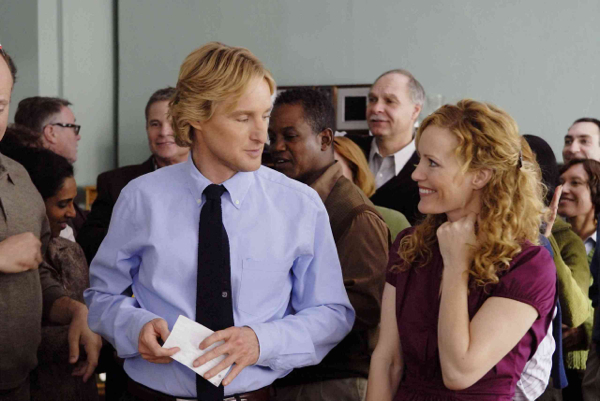
“Superbad” marks another successful collaboration from the collective that orbits around Hollywood’s current comedy golden boy Judd Apatow. Co-written, co-starring and co-executive produced by Seth Rogen, who helped make a major hit out of Apatow’s recent “Knocked Up,” “Superbad” is targeted at a younger core audience sure to keep cash registers ringing throughout back-to-school season. The movie’s clever balancing of take-no-prisoners vulgarity and self-deprecating introspection marks it as a generous cut above most of its teen movie competition. In addition to the appealing lead performances of Michael Cera and Jonah Hill, “Superbad” is the screen debut of scene-stealing Christopher Mintz-Plasse, a pitch perfect goofball who will have a devil of a time avoiding being typecast as an uber-geek.

Rogen penned the screenplay with pal Evan Goldberg, commencing work on an early draft when the two were newly minted teenagers. Cera and Hill play Evan and Seth, best pals facing the end of high school with the daunting prospect that they will not be attending the same college. To make matters worse, third wheel Fogell (Mintz-Plasse), who irritates Seth to no end, will be rooming with Evan at Dartmouth. A few weeks prior to graduation, the boys have an opportunity, at least in their own minds, to play smooth heroes when attractive classmate Jules (Emma Stone) enlists the fellows to purchase alcohol for a celebratory bash. The best-laid plans come apart at the seams, however, once Fogell reveals his ridiculous fake I.D., which depicts him as a twenty-five year old Hawaiian organ donor with the single moniker “McLovin.”

Like “American Pie,” “Superbad” revolves around a testosterone-fueled quest of high school seniors seeking to attain some degree of carnal knowledge prior to graduation. In fact, there are few landmark teen comedies “Superbad” doesn’t reference or acknowledge, and various elements and scenes echo titles as far ranging as “American Graffiti,” “Dazed and Confused,” “Weird Science” and “Fast Times at Ridgemont High.” Fans of those movies will likely find much to enjoy in “Superbad,” which incorporates a catalogue of recognizable situations encompassing teenage rites of passage. Director Greg Mottola handles the performers with finesse, particularly capitalizing on Hill and Cera’s comic timing.

Once the simple plot is set into motion, the movie cuts back and forth between a storyline involving Fogell/McLovin’s post-liquor store misadventures with a pair of outrageously incompetent police officers (played by Rogen and Bill Hader), and Seth and Evan’s long and winding road to secure booze for the evening’s big party. While the cops end up behaving along the lines of the Keystone, “Super Troopers,” and “Police Academy” variety, Seth and Evan find themselves in equally bizarre situations. The movie spends a little more time than it ought to getting to the party, and older viewers might grow impatient for the payoff sequence.

On the downside, “Superbad” plays it entirely safe as a “guy movie.” Despite its welcome testimonials to adolescent anxieties, the movie focuses solely on the male point of view, leaving its handful of bright and talented female performers without much to do beyond fuel the lust of Seth, Evan, and Fogell. That is too bad, since the girls in “Superbad” are played by smart, promising performers who prove every bit as interesting as Seth and Evan in their few scenes together. In the end, however, “Superbad” reveals the depth of love that Evan and Seth feel for one another, another example of the comically homoerotic “bromance” that elicits nervous recognition from scads of close young buddies in the audience.

Hot Rod

Isla Fisher and Andy Samberg Hot Rod movie image

Movie review by Greg Carlson

It is easy to point out the numerous flaws in the moronic “Hot Rod,” a cheap stuntman comedy that was to have starred Will Ferrell in an earlier incarnation. The script breaks a sweat trying to ape vibes from “Napoleon Dynamite,” “Anchorman,” and “Zoolander.” Characters are sketched too thinly for much emotional investment on the part of the watcher. Repetition is embraced so firmly by the filmmakers you’ll swear that some of the movie’s endless training montages are used twice. Despite the drawbacks, however, “Hot Rod” is just the ticket for a lazy Sunday matinee, and it might find an audience with fans of absurdist, nonsensical comedy.

Like “Napoleon Dynamite,” “Hot Rod” channels core elements from the childhood and coming-of-age eras of the principal creative team. “Saturday Night Live” cast member Andy Samberg, along with his Lonely Island partners Jorma Taccone and Akiva Schaffer, whip up a surreal simulacrum of the 1980s. Every other song on the soundtrack is vintage filler from Swedish hairspray giants Europe; shrewdly, the film omits their huge hit “The Final Countdown,” which would have seemed like overkill. The childhood motif extends to the nebulous ages of the core group of characters. They all appear to be in their late 20s but they live with parents and behave like pre-adolescents.

Samberg plays Rod Kimble, a largely clueless wastrel with pipe dreams of becoming a stuntman like Evel Knievel, whom he believes worked with his father. Kimble and his team of dim-witted pals, including Taccone, Bill Hader, and Danny McBride, can’t pull off a decent jump to save their lives, and it never seems to occur to them until the end that a moped is not going to have enough juice to clear a swimming pool. Much of the movie is given over to images of hilarious stunt mishaps. The endless parade of body punishing humiliation will remind some people of “Jackass,” but “Hot Rod” eschews virtually all vulgarity in favor of a goofy innocence.

Rod’s arrested development doesn’t appear to bother Isla Fisher’s Denise, a big-hearted sweetie who admires her childhood pal’s never-give-up attitude. Pam Brady’s screenplay was allegedly rewritten heavily by the Lonely Island team. None of the drafts apparently had much use for the Denise character, which is the movie’s greatest loss, since it utterly underutilizes the tremendously talented Fisher, who deserved much more than “adorable cheerleader” status. The same goes for Sissy Spacek and Ian McShane, who might have been wondrous in more fleshed-out roles.

Surprisingly, “Hot Rod” connects as often as it misses, with all sorts of off-the-wall gags that draw hearty laughs. In one scene, the phrase “cool beans” morphs into a stuttering rap performance piece that appears out of nowhere. Samberg delivers another gut-busting bit during a “punch dancing” training sequence in the woods that extends into one of cinema’s lengthiest tumbles down the side of a hill. “SNL” favorite Chris Parnell turns up as a wonderfully smarmy AM radio station owner who broadcasts Rod’s big jump. “Hot Rod” will not appear on too many top ten lists at the end of the year, but it is enjoyable all the same.


The Bourne Ultimatum

Bourneultimatum1

Movie review by Greg Carlson

While it is not quite the instant classic many critics have touted, “The Bourne Ultimatum” is one of the season’s finest sequels by default. Relying on the well-oiled formula that made the first two Bourne outings so good, the latest installment, helmed by the excellent visual stylist Paul Greengrass (who also directed “The Bourne Supremacy”), fills in even more of the mysterious operative’s complex backstory. Robert Ludlum’s well-known creation appeals to many because the enticing premise invites close identification with the title character. Even as the world of highly trained super assassins remains wholly far fetched, we sympathize with Jason Bourne because he asks the question we ask ourselves: “Who am I?”

Greengrass manages to pose this query anew while forging jittery, adrenaline-fueled action sequences and intelligent political debate that masquerades as cat and mouse espionage. The spy thriller’s genre conventions are practically worn out, but the Bourne filmmakers hit the ground running and never look back. Similarly to his gripping “United 93,” Greengrass toggles between two locations as one major event simultaneously unfolds: Bourne on the move and the CIA command center attempting to trace Bourne’s path.

As the principal character, Matt Damon does the most comfortable acting of his career, inhabiting the relentless operative with a studied intensity and razor focus. Bourne’s superhuman abilities in hand to hand combat, his skill in languages, his aptitude for driving anything with a motor, and his preternatural gift for geography might liken him in some ways to James Bond, but the flavor of the Bourne series is substantially darker, which allows Damon to infuse the character with a combination of weary frustration and understated, cerebral contemplativeness.

“The Bourne Ultimatum” is not without its challenges. The shaky, handheld camerawork, designed by series director of photography Oliver Wood, will not be welcomed by every ticket buyer. A strong argument can be made, however, that the imagery tends to place the viewer directly in the middle of the action and lends an air of documentary-style verisimilitude and immediacy to the many scenes set in heavily peopled public spaces. This is evidenced in the sensational Waterloo Station sequence near the beginning of the movie as well as the harrowing rooftop chase through Tangier. Greengrass is especially adept at choosing visuals that convey to the audience a sense of spatial relationships between the pursued and the pursuers.

As a sequel, “The Bourne Ultimatum” attempts to provide both Bourne and the viewer with some enlightenment regarding the character’s amnesia and his origins. Although the answer is not particularly surprising, one specific element delivers a jolt. Greengrass stops short of nihilism, though, wrapping up the action with a coda suggesting that justice will be served to those most in need of it. Damon has indicated that he does not plan to return to the Bourne character, and if this is the case, he can be proud of completing a well-built trilogy, certainly a cinematic rarity. If Bourne does return, one hopes that the filmmaking team remains largely intact and as committed to visual storytelling as Doug Liman on the first and Paul Greengrass on the second and third installments.