The Savages

Savages1

Movie review by Greg Carlson

Tamara Jenkins, whose semi-autobiographical debut feature “Slums of Beverly Hills” managed to wring some humor out of desperate living, attempts more of the same with “The Savages,” a blackly comic movie of the week with most of the melodrama and sentimentality left on the cutting room floor. This is not necessarily a bad thing, and what remains might please moviegoers interested in emotionally conflicted, adult children faced with the challenge of caring for an aging parent who can no longer care for himself. No director could ask for better performers than Laura Linney (Academy Award-nominated for her role) and Philip Seymour Hoffman, but Jenkins saddles them with a script (also Academy Award-nominated) that spins its wheels for an unnecessarily long running time.

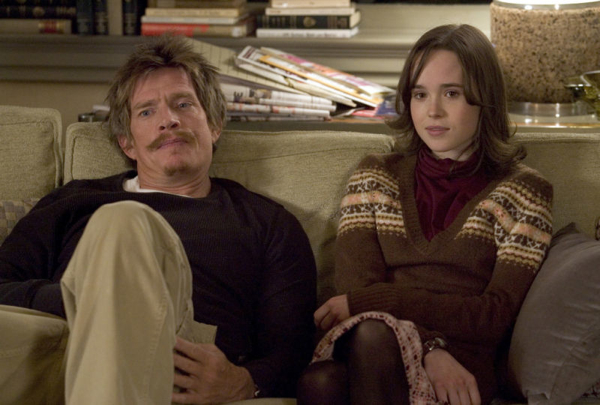
Linney and Hoffman play Wendy and Jon Savage, siblings who find themselves quickly at odds over how best to address the needs of their nearly estranged father, now on a slippery slope into dementia. Following the death of his longtime companion, Lenny Savage (Philip Bosco) can no longer live in the home they shared, and the Savage children wrestle with the decision to place him in a nursing home. Despite expository hints that Leonard left much to be desired as a father, Wendy finds herself tormented by guilt even as Jon proceeds swiftly, and with conviction, to find an elder care facility that will accept the old man.

Jenkins possesses an eye and an ear for all kinds of familiar, everyday details inherent in a brother-sister relationship, and “The Savages” succeeds as a rare examination of something that many would argue is one of life’s most emotionally draining trials. Additionally, we are also witness to the broken dreams and unfulfilled potential of the Savage kids, who aspire to careers in theater (she as a dramatist, he as a Brecht scholar). Reduced to temping, stealing office supplies, and applying for multiple grants, Wendy’s shortcomings are compounded further by a dead-end affair with a married man.

The depressing milieu of “The Savages” virtually challenges viewers to stick with the movie, and by the halfway point, some people will be checking their watches and eyeing the exits. Because the film is deliberately character driven, many of the middle scenes come across as inert, or as prelude to something more important that never happens. When Jenkins offers glimpses of vintage fare like “The Jazz Singer” and “Night and the City,” classic movie fans will want the camera to linger on the clips to alleviate some of the tedium.

Linney and Hoffman are two of the current cinema’s finest actors, and both bring vulnerability and humanness to their roles. Jenkins has named the pair after two of J.M. Barrie’s most famous characters, and by replacing the adjectival surname Darling with Savage, makes transparent her dramatic intentions. In one scene, a young actor escapes his abusive tormentor by means of the kind of flying harness that would be used in a stage production of “Peter Pan.” In “The Savages,” Barrie’s popular theme is inverted as Jon and Wendy are forced to grow up, whether or not they are ready, willing or able.

There Will Be Blood

Therewillbeblood1

Movie review by Greg Carlson

A staggering and singular piece of intimately personal storytelling that recalls many of the director’s adored 1970s period piece inspirations like “Days of Heaven,” “McCabe & Mrs. Miller,” and “Chinatown,” Paul Thomas Anderson’s “There Will Be Blood” is one of the year’s most memorable movie experiences. Despite acknowledging Upton Sinclair’s 1927 novel “Oil!” as its source material, Anderson uses the book merely as a jumping-off point, erasing most of Sinclair’s sprawling social and political tableaux as well as the literal-minded debates on war, Bolshevism, and labor unions. Instead, Anderson is concerned with the moral and mental decline of his central character, allegorically renamed Daniel Plainview (Daniel Day-Lewis), an unstable oil wildcatter who loses his sanity as he finds a fortune in the black gold of California in the first quarter of the 20th century.

Despite his proven skill as a director of large ensembles, Anderson also jettisons many of the novel’s supporting characters, ditching the businessman’s family to reshape Plainview as a completely isolated man. The movie suggests that Plainview adopts his son H.W. (Dillon Freasier) following the death of a worker killed in a drilling accident. Other alterations, principally the shift in focus from the son (the book’s central protagonist) to the father, allow Anderson the opportunity to pay complete attention to Plainview, who is artfully embodied by Day-Lewis in yet another sensational performance in a career full of them.

Anderson has always been wonderful with his performers, and Paul Dano, playing brothers Paul and Eli Sunday, is a perfect foil for Day-Lewis’ Plainview. Eli rises to prominence as a faith healer and minister in the Church of the Third Revelation, and the bitter rivalry that develops between the young preacher and the old oilman develops in a series of scenes of increasing intensity as the determined men try to outdo one another. Dano is not as accomplished a performer as Day-Lewis, but his calculating evangelist proves every bit as fascinating as Plainview, and their final scene together packs a punch that leaves many audience members reeling.

Jonny Greenwood’s brilliant, unsettling score rings out like nothing less than a herald of the apocalypse, and several of the movie’s scenes are rendered more frightening with Greenwood’s music as counterpoint to the images. Amidst all the Old Testament thundering, Anderson also takes time to remind his viewers that he has a sense of humor, although its inclusion in “There Will Be Blood” is as black as Plainview’s petroleum. Two favorites examples are Kevin O’Connor sharing the information that he is a “brother from another mother” and Day-Lewis slurping and bellowing “I drink your milkshake! I drink it up!”

“There Will Be Blood” has already been a critical success, and many writers have noted both the movie’s similarities to 1970s material (Anderson ends the movie with a dedication to Robert Altman) and its indebtedness to “The Treasure of the Sierra Madre” and “Citizen Kane.” The comparisons are apt, and by the conclusion of “There Will Be Blood,” it is clear that Anderson has proven himself a filmmaker of the first rank.

Private Fears in Public Places

Privatefears1

Movie review by Greg Carlson

Legendary French filmmaker Alain Resnais returns to playwright Alan Ayckbourn for source material, adapting “Private Fears in Public Places” for the screen. Known as “Coeurs” outside of North America, “Private Fears in Public Places” offers the octogenarian a prime opportunity to explore one of his long-held thematic obsessions: loneliness and the ways people deal with it. Connecting the often unfulfilled lives of its six Paris inhabitants in sometimes surprising ways, the movie transcends its theatrical origin, even if Resnais never seems particularly bothered by it in the first place. Although the quality of the piece never comes close to the director’s best known movies of the late 1950s and early 1960s, it will please viewers seeking wistful, bittersweet romanticism.

Real estate broker Thierry (Andre Dussollier) lives with his younger sister Gaelle (Isabelle Carre), a frustrated single who seeks companionship through contacts made in personal ads. Thierry shows apartments to Nicole (Laura Morante), whose engagement to moody boozehound Dan (Lambert Wilson) appears less than stable. Additionally, Thierry’s seemingly prim co-worker Charlotte (Sabine Azema) moonlights as a personal caregiver for the verbally abusive father of bartender Lionel (Pierre Arditi), who works at Dan’s favorite watering hole. Additionally, Charlotte loans Thierry videotapes of her favorite television program, and he discovers mysterious erotic content after the episodes have ended.

Most of the characters also intersect in other pairings, and with the exception of Nicole and Lionel, who often disappear from the action, Resnais nimbly juggles the storylines. Much of the movie is composed of fairly short, fairly tidy scenes that have the effect of building upon one another as terminal velocity is reached. Some of the outcomes are satisfying, while others seem to demand more explication. A few of the characters also act out with almost hypocritically confusing actions, which will delight some and frustrate others. Charlotte in particular would provide a psychoanalyst with a meaty case study.

The purposely artificial quality of the production design enhances the tone of the movie, and Resnais occasionally chooses to peer down at the characters from an overhead angle, a tactic that evokes the attitude of a casual god observing laboratory specimens. Rooms are visually divided in two, from the severed apartment Nicole considers renting in the first scene of the movie to the sleek beaded curtain behind the hotel bar where Lionel pours drinks. To top it off, Resnais also keeps the snow falling from start to finish, which blankets the proceedings with wintry beauty.

Resnais clearly relishes observing human behavior, and the movie regularly incorporates scenes in which messages are perhaps sent but not received, or signals go misinterpreted. Small humiliations are depicted with affection, and serve as rueful reminders of our own embarrassments. “Private Fears in Public Places” is also quite funny, and Resnais coaxes many slyly humorous bits from the seasoned cast. None of the characters in the story are novices in life, and the suggestion of their collective life experience serves as a welcome contrast to movies celebrating callow youth just coming of age.

Margot at the Wedding

Margotatthewedding1

Movie review by Greg Carlson

Writer-director Noah Baumbach’s most recent movie, “Margot at the Wedding,” is a polarizing experience that will alienate at least as many viewers as it enchants. Critic-proof in the sense that it wholly embraces the selfish, sadistic, and shitty narcissists whose frustrating lives it illustrates, the movie serves in some ways as a grim companion to Baumbach’s previous outing, “The Squid and the Whale,” a stronger film in virtually every capacity. Gruesome, hateful characters don’t necessarily translate to gruesome and hateful moviegoing experiences, but “Margot at the Wedding” defies its audience to sympathize with its inhabitants, a pack of emotionally damaged jackals who practically lick their chops at the opportunity to snipe, whine, and grouse at one another.

As the title character, Nicole Kidman uses her icy charisma to terrific effect. Traveling to her sister’s nuptials with all kinds of self-serving motives, writer Margot spends most of her time inappropriately blurting family secrets to her curious but confused son Claude (Zane Pais). She also mines family pain for her short stories. Margot’s sister Pauline (Jennifer Jason Leigh, whose husband is the film’s auteur) plans to marry the clownish, unsavory, and unemployed Malcolm (Jack Black), and Margot immediately disapproves of the match, peppering her commentary with barbed, contemptuous insults.

As a director, Baumbach displays an almost reckless confidence that his audience will appreciate a plotless psychodrama that clearly contains a splash of Bergman and a jigger of Chekhov. It’s refreshing to find a dark-hearted movie with such well-known performers, but the psychological warfare waged among blood relations, friends, and neighbors has a tiring effect. The metaphoric rotting tree, under which Pauline and Malcolm intend to be married, is the least subtle of symbols, and its fate is sealed as soon as it is glimpsed in Harris Savides’ gray-hued cinematography.

Given the centrality of the family tree motif, “Margot at the Wedding” might have been a more powerful experience had Baumbach spent as much time with the children as he does with the adults. The filmmaker’s uncanny understanding of the pain and challenges of adolescence, perfectly tuned in “The Squid and the Whale,” is only hinted at here. Claude, his cousin Ingrid (Flora Cross), and neighbor Maisy (Halley Feiffer) form a trio with as many possibilities as the grown-ups around them, but short of a scene or two, Baumbach leaves their inner lives unexplored.

The movie’s disjointed, episodic structure is also its principal cinematic strong suit. Aided by editor Carol Littleton, Baumbach stitches moments together with an array of interesting juxtapositions and jump cuts. Often, we enter or exit scenes in the midst of the action, a stylistic device that intensifies the movie’s sense of anxiety. While some viewers might argue that too many people spend too much time crying or running and falling down, Baumbach locates the humor that emerges from our ability to identify with humiliation, even if the movie presents it in concentrated form. At one point Pauline defecates in her drawers, and Margot’s response is to remind Claude that sooner or later, this will happen to all of us.


Juno

Juno1

Movie review by Greg Carlson

Jason Reitman’s film of Diablo Cody’s screenplay “Juno” can be a frustrating concoction that pits sweetness and warmth against manipulative calculation. It is already the hipster movie of the moment, destined to rotate through several cycles of praise and hatred before it develops a major following theatrically and then on home video. Essentially a “Knocked Up” for the current high school generation, “Juno” largely employs a predictable plot template to detail the comic misadventures and life lessons learned by the title character, a 16-year-old smart-mouth who always knows exactly what to say. As Juno, Ellen Page cements her reputation as a talent to watch, even if her character speaks more like a jaded grown-up than someone born in the 1990s.

“Juno” is the kind of movie that constructs a much cooler version of the world we actually inhabit; glittering D.I.Y. pop adorns the soundtrack and kids talk on vintage hamburger-shaped telephones. Juno’s accidental pregnancy can scarcely muster a raised eyebrow from her doting dad and step-mom, and sometime boyfriend Paulie Bleeker (Michael Cera, terrific as ever) carries himself with such poise and maturity, you’ll wish you knew someone like him when you were in high school. Juno’s support system is so strong that if it weren’t for Ellen Page’s charm, the whole thing might collapse under the weight of its just-obscure-enough pop culture references.

By the time Juno has decided to give her baby up for adoption to a seemingly perfect yuppie couple, the story has settled in to a comfortable, if predictable, sequencing of events. In spite of the Oscar buzz already in the air for Cody’s script, the movie’s structure is formulaic. By far the film’s biggest liability is that everyone talks, thinks, and sounds like a single person. The cast works wonders in the attempt to differentiate, but the movie almost entirely avoids showing anyone who doesn’t agree with Juno’s flippant handling of every situation, or doesn’t let loose with a perfect rejoinder to every statement.

Only Jennifer Garner, who plays the woman desperate to be the mom to Juno’s baby, transcends the screenplay’s homogeneity. Amidst all the moments designed to tug at our heartstrings, Garner’s Vanessa Loring is the lone soul who earns it, giving her character a depth that initially seems hidden underneath the vaguely creepy façade of perfection she maintains with jingle composer husband Mark, a good but ultimately miscast Jason Bateman. Bateman is always a joy to watch, but he fails to make a convincing case that his emotionally stunted, selfish manchild would actually watch Herschell Gordon Lewis movies or listen to Sonic Youth (even if he does favor their cover of the Carpenters’ “Superstar” over “Daydream Nation” or “EVOL”).

Reitman, whose “Thank You for Smoking” skipped along at a brisk pace even while it tackled politically charged subject matter, just as deftly handles the action in “Juno.” Juno’s sarcastic quips pile up so quickly, fans will likely turn out multiple times, scanning for the ready-made catchphrases that bring to mind “Napoleon Dynamite,” another seemingly unassuming crowd pleaser that could run for miles. “Juno” works just as hard to win over its viewers, and that is not necessarily a bad thing.

Charlie Wilson’s War

Charliewilsonswar1

Movie review by Greg Carlson

A nimble blend of politics, sex, and modern history, “Charlie Wilson’s War” is ten times more fun than a cinematic civics lesson ought to be. With Mike Nichols behind the camera and Aaron Sorkin at the typewriter, the movie’s liberal disposition will surprise nobody, but the film contains a tacit approval of hawkishness that lends the enterprise a sobering subtext. Conservatives will seethe at the suggestion that clandestine, Reagan-era armament of Afghan Mujahideen set the table for the Taliban and the rise of terrorism perpetrated by Islamic extremists, but the filmmakers are not afraid to connect the dots provided by George Crile’s 2003 book “Charlie Wilson’s War: The Extraordinary Story of the Largest Covert Operation in History.”

With its trio of Academy Award winning performers in starring roles, “Charlie Wilson’s War” might have easily been a bloated prestige picture designed to reel in trophies even as it put audiences to sleep. Fortunately, Nichols and Sorkin streamline the source material into an aerodynamic bullet train, and the movie’s 97-minute running time turns out to be one of the film’s biggest assets. Nichols also understands better than nearly any director that a spoonful of comedy helps the political exposition go down, and makes certain to skirt didacticism whenever satire and farce will do.

Stepping into the shoes of the Texas Congressman known as “Good Time Charlie,” Tom Hanks works his self-deprecating charm into overdrive, emphasizing Wilson’s predilections for whiskey and women without losing sight of the man’s keen interest in world affairs. Wilson’s very friendly relationship with Houston socialite Joanne Herring (embodied seductively by Julia Roberts), involves him in the anti-Soviet cause, and in a blink, he’s helped appropriate substantial piles of cash to provide anti-tank and surface-to-air missiles to fighters in Afghanistan. Aiding and abetting Wilson is surly C.I.A. operative Gust Avrakotos (Philip Seymour Hoffman), whose rapid comebacks and quicksilver wit perfectly complement his intense expertise and unwillingness to suffer fools.

Sorkin has honed his ability to balance bleak, darkly comic cynicism with I-told-you-so piety, and his screenplay demonstrates the best example yet. The dialogue is so crisp and sharp, it makes you wish people were able to speak with such consistent bite in the real world. Sorkin has a knack for both illuminating and simplifying the messed-up ironies inherent in the U.S. political machine, and once the dust begins to settle, the audience shares Wilson’s indignation at the refusal of his colleagues to spend a measly million dollars to finance schools in Afghanistan after the tide has turned against the Soviet Union.

Of course, the idea that Wilson was able to get everything done with a wink and a drink plants “Charlie Wilson’s War” firmly in the tradition of Frank Capra’s Capitol Hill fantasies. This breezy approach enhances rather than diminishes the movie’s sparkle, except in the few instances when the filmmakers opt for seriousness. Scenes in which villages are strafed by U.S.S.R. attack helicopters feel out of place, especially when Nichols takes us into the cockpits for some subtitled gallows humor. Minor complaints like this, however, can scarcely stand in the way of the movie’s grand old time.

I Am Legend

Iamlegend1

Movie review by Greg Carlson

Richard Matheson’s 1954 cult novel “I Am Legend” makes another big screen appearance this week, and like its cinematic predecessors, it fails to capture the essence of the original story. Trading vampires for poorly designed, super-powered zombie creatures that look like they are on loan from a videogame is only one of the mistakes. The movie’s biggest crime is a flagrant refusal to believe in Matheson’s sobering apocalypse and see it through to the end. With films like “Children of Men” and “28 Days Later” already demonstrating dazzling retro-futuristic design in the tradition of “Blade Runner,” the bar has been set too high for “I Am Legend” to clear.

Following a sensational first section that vividly renders Manhattan as a weed-infested wasteland, director Francis Lawrence totally chokes, piling on the carnival ride shocks without the smallest hint of finesse. Old-fashioned suspense would have better served the material, but Lawrence seems incapable of believing in the intelligence of the viewer. As a result, the monsters are never scary, and the movie’s reliance on sub par CG imagery makes the whole enterprise feel half finished. “I Am Legend” is good until the night seekers turn up. The early, off-screen suggestion of their power, evidenced in the way Neville nervously checks his watch as daylight slips away, is more ominous than phony villains hewn mostly out of pixels.

At least Will Smith is a terrific choice to play Robert Neville, transformed from the “Average Joe” protagonist of the novel into a super-fit military scientist whose immunity to a plague of biblical proportions has made him a likely candidate for last man on earth. Whether he is working alone, interacting with a German Shepherd, or playing opposite others, Smith makes the most implausible of scenarios feel credible. His typical grit and determination suit Neville, whose mental struggle with the psychological implications of his predicament adds a thoughtfulness often missing from action heroes. Smith’s presence will undoubtedly secure substantial box office returns.

Despite being the first film version of the story to use Matheson’s super cool title, “I Am Legend” essentially ignores the meaning, opting instead for a diluted conclusion that deletes the book’s most essential plot element. Neville’s neighbor Ben Cortman (one of the novel’s cleverest touches and most interesting characters) is replaced by the boring Alpha Male (Dash Mihok), a ghoulish cue ball left with nothing to do other than writhe, shriek, and leap around unconvincingly. Practically all of the novel’s other surprises are excised in favor of less satisfying battles between Neville and the horde.

Two scenes that do not appear in Matheson’s story stand as embarrassing examples of damage that can be done by misguided additions. In one, Neville conveys the strain on his sanity by imitating the voices in “Shrek.” The odd moment is at best a grotesque display of product endorsement and at worst an amplification of the minstrelsy of Eddie Murphy’s Donkey. In the other scene, Neville delivers an embarrassing lecture about the power of Bob Marley. Someone should have mentioned to Lawrence that nothing is worse than being told about the emotional importance of something. To paraphrase the old saying, if you need to explain, they wouldn’t understand.


I’m Not There

Imnotthere1

Movie review by Greg Carlson

A dazzling visual exercise that can be both mesmerizing and maddening, Todd Haynes’ “I’m Not There” celebrates the myths of Bob Dylan in a carnival of re-imagined incidents from the eventful life of the self-proclaimed “song and dance man.” A labor of love garnished with the blessing of (at least) Dylan’s management, “I’m Not There” trips and skips through the singer-songwriter’s canon, eschewing chronology and coherence for stimulating conjecture and imaginative speculation. Casting six actors as Dylan-esque figures, a ploy that works better on film than it sounds on paper, Haynes stitches together one of the year’s most stimulating movie experiences.

The director aims for a kind of transcendence through suggestion, and achieves the effect just enough to keep amateur and professional Dylanologists from pulling out their hair. Two masterstrokes of casting involve African-American adolescent Marcus Carl Franklin as a freight train-hopping hobo who calls himself Woody Guthrie and chameleon Cate Blanchett as Jude Quinn, a twitchy doppelganger of the “Don’t Look Back”-era Dylan. Other performers weave in and out with varying degrees of impact. Heath Ledger plays an actor who portrays a Dylan-like figure in a movie within the movie. Christian Bale manages two sides of Dylan. Richard Gere’s version is a graying Billy the Kid, and Ben Whishaw rounds out the interpreters as Arthur Rimbaud.

No other film has been released this year that so directly calls to mind the influence of Jean-Luc Godard, and “I’m Not There,” as a spiritual homage to the 1960s, gleefully appropriates the stylistic and politically minded accoutrements of the French New Wave. Individual images attest to the élan of discovering the power of “Masculin Feminin” and “Band of Outsiders”: Quinn machine-gunning the folkies who fail to appreciate amplification; Quinn floating above the rooftops, ankle tethered to prevent total ascension; Jim James in Rolling Thunder whiteface, singing “Goin’ to Acapulco” next to the open-eyed corpse of a young girl propped up in a pine box while a giraffe wanders by.

Ultimately, Dylan is most powerfully felt not through impersonation but rather in the spectacular collection of music that fuels nearly every scene. In choice cuts of both familiar and rare material as well as outstanding cover versions, Dylan’s songs act as another form of narration, and their arrangement and placement throughout the movie speaks more loudly than any of the actors. Among the highlights is Richie Havens leading Franklin through a masterful take on “Tombstone Blues.”

The most strangely successful element of “I’m Not There” lies in Haynes’ outright refusal to explain, finalize, or otherwise put a period on the end of the movie’s sentences. Like Dylan’s songs, the film honors the value of creating something that will not yield to seekers of the concrete who demand an answer for everything. Bruce Greenwood, who turns up as an antagonistic journalist type (immortalized by Dylan in “Ballad of a Thin Man” as Mr. Jones) and as a cantankerous evocation of Pat Garrett, perfectly embodies the threats of authority. Greenwood provides just one of the many reasons to see “I’m Not There,” another chapter in Dylan’s often odd relationship with the cinema.


Mr. Magorium’s Wonder Emporium

Mrmagoriumswonderemporium1

Movie review by Greg Carlson

Upon seeing the trailer for “Mr. Magorium’s Wonder Emporium” many weeks ago, my friend Jim Shands asked whether “The Simpsons” hadn’t already said it better with Troy McClure in “The Contrabulous Fabtraption of Professor Horatio Hufnagel.” “The Simpsons” often manages to cut to the quick of manufactured whimsy packaged as entertainment, and “Magorium” writer-director Zach Helm should have swallowed a much needed dose of vinegar to temper the syrup he cannot wait to spoon all over the place. Fancy-titled movies aimed at young audiences are not inherently detestable, but most of them suffer a grim fate when they fail to include material that can appeal to grown-ups as well.

Borrowing liberally from Dr. Seuss and Roald Dahl to name just two, Helm skirts the boundaries of familiar fantasy stories. Mr. Edward Magorium (Dustin Hoffman) is the 243-year old proprietor of a toy shop that appears to experience human emotions. Inexplicably preparing for death (always referred to in irritatingly fuzzy euphemisms), the aged magician makes known his desire to leave the store to longtime manager Molly Mahoney (Natalie Portman), a blocked composer struggling to finish a major opus. Despite Magorium’s entreaties, Mahoney refuses to accept his impending departure, and Helm reveals a deep “Harold and Maude” fetish as the story plays out between the youngster and the senior citizen.

In addition to the generational transfer of wisdom, Helm inappropriately conjures Hal Ashby’s masterful cult film in a scene set to Cat Stevens’ “Don’t Be Shy.” Involving the movie’s two other principal characters, the Mutant (Jason Bateman) and narrator Eric (Zach Mills), the unspoken exchange feels both manipulative and overly cute in its commentary on making friends and the tension between work and play. Most of the movie alternates between thunderously obvious pronouncements about believing in life and strained exhibitions of gleeful frolicking.

As Magorium, Hoffman looks like he is only there to cash a fat check. Decked out in colorful pinstripe ensembles and a mad scientist fright-wig with eyebrows to match, the veteran actor phones it in with a thoroughly galling lisp that makes his creaky gags sound even older than the age of his character. Portman fares little better, squirting crocodile tears whenever the script calls for them. Worse yet is Mills, cute enough to cause cavities; his unnecessary voiceover narration is one of the movie’s biggest liabilities. Only Jason Bateman, playing a variation on the straight man he honed to perfection on “Arrested Development,” provides a shred of common sense amidst the would-be madcap antics.

Helm, who previously penned the screenplay “Stranger Than Fiction,” appears to make a serious effort to avoid the gross-out humor that has become commonplace in kiddie fare. For that he should be commended. The problem is that he hasn’t replaced vulgarity with anything remotely engaging to the brain. “Mr. Magorium’s Wonder Emporium” has plenty of eye candy for sale, but the lack of depth in its characterizations stops the movie in its tracks. While it earns points for earnestness and family friendliness, older viewers might be dreaming about the more satisfying wonderlands conjured in the tales of Pippi Longstocking or “Pee-wee’s Big Adventure.”

No Country for Old Men

Nocountryforoldmen1

Movie review by Greg Carlson

An early holiday gift, “No Country for Old Men” is cinematic catnip for admirers of Cormac McCarthy, the Coen Brothers, or both. Tremendously faithful to its source material, the movie is a case study in novel-to-film translation, honoring most of the letter and all of the spirit of McCarthy’s grim tale. Joel and Ethan Coen, sharing screenplay and directing credits, operate comfortably within their element, combining bursts of grisly violence with moments of thoughtful reflection. The Coens also lace the story with their signature humor, served as black as midnight.

Essentially a lengthy cat and mouse pursuit, “No Country for Old Men” follows the fortunes and misfortunes of Llewelyn Moss (Josh Brolin, never better), a southwest Texas hunter who stumbles upon the aftermath of a bloody drug deal and makes off with a briefcase stuffed with cash. Moss is smart enough to know he’ll be tracked by the good guys and the bad guys, and much pleasure is derived from watching him struggle to stay an eyelash ahead of the predators who aim to recover their prize. Leading the malevolent forces is Anton Chigurh (Javier Bardem), the sort of person one might cross the street to avoid.

Representing something akin to the Angel of Death, Chigurh is the stuff of nightmares. A relentless psychopath who sports a weird Prince Valiant coiffure, Chigurh is willing to dispatch anyone who crosses his path, a task he often performs with a captive bolt cattle stun gun. Occasionally allowing his victims the opportunity to save their lives with the toss of a coin, Chigurh operates with an ice-cold personal logic that leaves no room for second-guessing or remorse. Bardem plays his part with zest, discovering all kinds of opportunities to bring depth and humor to a figure of seriously damaged psychological complexity.

Sheriff Ed Tom Bell, embodied by Tommy Lee Jones as if he was born for the role, senses the depth of Moss’ predicament and aims to deliver him from harm’s way. An old-fashioned lawman concerned by what he sees as the erosion of values and traditions, Bell also instinctively knows he is up against something unusual and formidable, and tries to act accordingly. Chigurh and Bell, who travel along parallel paths that initially seem destined to intersect, make an ideal match, and the Coen Brothers effortlessly balance their importance to the narrative.

Typical of work by the Coens, the supporting actors are uniformly well chosen, and many bit players register memorably. “No Country for Old Men” also boasts top-notch technical credits, including gorgeous cinematography from ace collaborator Roger Deakins and smashing sound and production design. Some viewers may be surprised by just how much of the story is told without dialogue, a technique that pays off again and again, especially in blisteringly suspenseful sequences that recall the best of Alfred Hitchcock. Longtime Coen devotees will surely call to mind “Blood Simple,” another chilling yarn hell bent on gazing coolly at the stupid decisions people make, and how they have to live or die with them.