Assassination Nation

Assassination Nation (1)

Movie review by Greg Carlson

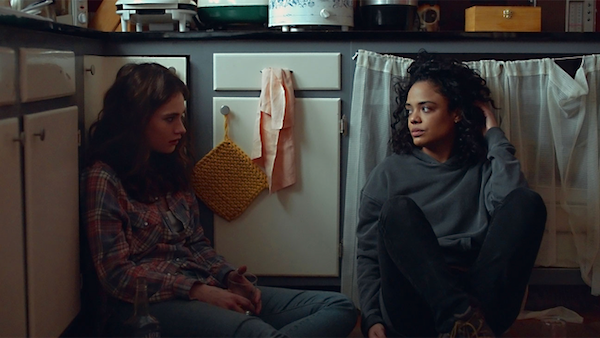
Slipping and sliding through its blood-soaked climax, “Assassination Nation” attempts to reconcile the lurid and exploitative embrace of its milieu with an in-your-face polemic on the modern hellscape of rape culture and toxic masculinity. As channeled through the hypersexualized noise of social media (where everyone can be a “star” or cultivate a personal “brand”) as well as the private-until-they’re-not exchanges of person-to-person text messages, writer-director Sam Levinson’s provocative, profanity-laced roller coaster is an acquired taste.

Writing in “The New York Times,” Bruce Fretts described the trailer for “Nation” as “the demon spawn of ‘Heathers’ and ‘The Purge,’” a perfect logline nailing the film’s penchant for quasi-teenspeak among its central quartet of high school hipsters and the allegorical but blunted home invasion bullet festival that dominates the late stages. Odessa Young is Lily Colson, the central protagonist among a wolfpack of frustratingly underdeveloped characters deserving of much more than what’s provided by Levinson to play (more Hari Nef, please). 

Coincidentally, the fellow Sundance premiere “Eighth Grade” shares several core thematic concerns questioning the effects of the less savory aspects of internet culture on young people (particularly young women). Even though the two movies could not be more dissimilar in terms of tone and genre, their shared moment in time points toward the inevitability of even more stories utilizing the subject of the digital realm to ask questions about the ways in which we have been, and are being, transformed by living online. Familiar subjects, from cyberbullying to identity construction, are here. Levinson’s use of doxxing as a plot vehicle is also not new, but turns out to be the filmmaker’s most effective device.   

Can a movie that literally wears its male gaze on its sleeve (along with a number of other trigger warnings boldly stated in Godardian titles of red, white, and blue) offer a convincing message of empowerment? Are feminism and screen exploitation mutually exclusive, particularly if filtered through a masculinist lens? Katie Walsh’s “Los Angeles Times” review takes the position that “Nation” fails, citing red flags like the way the cinematography establishes a “leering gaze directed at the girls’ nubile bods, [that takes] much delight in wringing every sexy moment out of attacking young women, shooting scenes of violence that are gratuitously pornographic.” Unsparingly, Walsh also rips Levinson (“Dude really tried to mansplain the virgin/whore paradigm”) and blasts the film’s attempt to decry sexual objectification while objectifying.

It might be a stretch to imagine that “Assassination Nation” will enjoy the same kind of cult longevity as the smarter, funnier, and more subversive “Heathers” a quarter century or more down the road. But Sarah Kurchak wisely reminds readers in her honest, mixed “Consequence of Sound” review that different generations and demographics naturally view texts through the standpoints of unique levels of age and experience. She cites, for example, how the forgettable and critically dismissed “Jawbreaker” “was embraced by a younger audience… hungry for something sloppy, weird, and improper that we could grapple with on our own messy and increasingly complex terms.” Maybe the kids catching “Assassination Nation” today will experience a similar reaction.

Lizzie

Lizzie (1)

Movie review by Greg Carlson

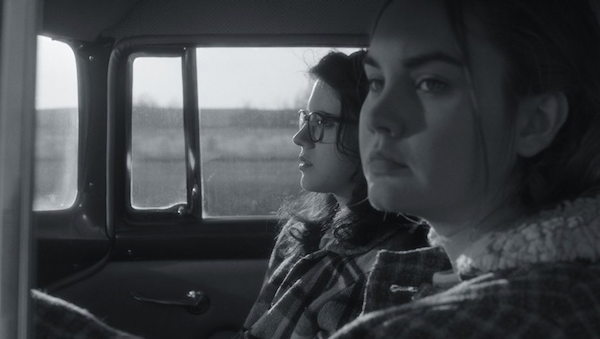
Director Craig William Macneill speculates on the infamous legend surrounding Massachusetts murder suspect Lizzie Borden in “Lizzie,” a long-germinating labor of love for star Chloe Sevigny. Working from a screenplay by Bryce Kass, Macneill’s stylish direction will satisfy a good cross-section of true crime fans as well as admirers of Sevigny and Kristen Stewart, who plays live-in Irish housemaid Bridget Sullivan. The continuing cultural fascination with the gruesome deaths of Lizzie’s father Andrew and her stepmother Abby have inspired a number of other dramatizations, including the 2014 Lifetime movie “Lizzie Borden Took an Ax” and the accompanying 2015 eight-episode series “The Lizzie Borden Chronicles,” both starring Christina Ricci.

Because Borden was acquitted of the crime, all of the literary treatments of the events surrounding the August 4, 1892 killings rely to a significant degree on purely imaginative constructions of character personalities, suspects, motivations, and conversations. Macneill’s version leverages several theories, including the speculation of Ed McBain and others that Lizzie and Bridget were involved romantically with each other. Kass’ script also taps markers from the historical record, including the absence of blood on Lizzie’s clothing, details of the hatchet handle in the murder house basement, the role of Lizzie’s maternal uncle John Morse (played to perfection by the great Denis O’Hare), and possible reasons for the presumed gap in time between the death of Abby (Fiona Shaw) and Andrew (Jamey Sheridan).

The movie combines aspects of the procedural with horror notes, burnished by Noah Greenberg’s superb cinematography and Jeff Russo’s unsettling score. “Lizzie” sides most sympathetically with its title character, casting the domineering and miserly Andrew as a monstrous sexual predator whose frequent nocturnal visits to Bridget’s bedroom are known to the other inhabitants of the household (disturbingly conveyed in one of many instances of the film’s tremendous handling of sound design). Andrew’s unforgivable actions as a rapist motivate and justify Lizzie’s hatred of her father, leading to an intense set-piece showcasing the axe-bludgeoning with definitive, all-in fervor.

Several critics have been strangely dismissive of the way in which “Lizzie” happens to align with the ongoing interest in rape culture, especially as referenced in the contemporary exposure of men abusing their power to manipulate, control, and assault women. Others, like Leslie Felperin in “The Hollywood Reporter,” argue that the movie “carves out of the raw material a suitably 2018 version, befitting of the #MeToo generation.” While I enjoyed the Lizzie/Bridget take on the mythology, parallel disagreements over the effectiveness of Sevigny and Stewart indicate another source of the decidedly mixed reactions to the film.   

Certainly, the challenge of presenting the Lizzie Borden story as historical fiction rests outside the margins of the most solid of corroborated facts. What did Lizzie’s older sister Emma (Kim Dickens) know, if anything? Andrew’s refusal to electrify his house or install indoor plumbing have often marked him as an eccentric tightwad, given the man’s personal wealth. But some Borden historians, like Michael Martins, would argue that Andrew’s frugality was “no different than the other men of his age.” To this day, the crime remains officially unsolved, and “Lizzie” will not be the last movie to fantasize about the possibilities.  

I Think We’re Alone Now

SD18 I Think We're Alone Now

Movie review by Greg Carlson

Filmmaker Reed Morano’s “I Think We’re Alone Now” doesn’t match the levels of heat surrounding the tireless veteran cinematographer’s other recent successes on “The Handmaid’s Tale.” Working from an original script by Mike Makowsky, Morano cannot be faulted for the film’s exquisite visual design, but the story — another post-apocalyptic, last-person-on-earth dystopia winding up to some kind of bombshell — stumbles following a riveting set-up.

Peter Dinklage is Del, a librarian left behind in New York’s Hudson Valley following what appears to be the complete cessation of all other human life in his community. Del spends his waking hours recovering, cataloguing, and burying the seemingly endless supply of dead bodies. Without the need for any explanatory dialogue/monologue, Morano wordlessly conveys the contours of Del’s routine. To our surprise and delight, given the morbid circumstances, Del thrives in what would surely be a hellscape for so many others. He is at peace until the unwelcome arrival of Elle Fanning’s Grace, a young woman who may know more than she lets on.

Dinklage and Fanning are, it should go without saying, highly skilled and thoroughly watchable performers who have both contributed to memorable projects over the years. Unfortunately, Del and Grace are never afforded the opportunity to engage one another in the kind of complex and thoughtful conversation that should accompany a tale with a premise ripe for contemplations of our place in the world, our capacity to welcome the stranger, and our need for love and some kind of companionship — even if we prefer being solitary. Del’s skepticism is not the problem, but the late revelation of a suspect plot twist sets fire to the much more intriguing possibilities of a rich character study.

The three principal sections of the film are so contradistinctive, each could be a self-contained short film. It does not help that these pieces diminish in quality as the movie unfolds. Despite the inherent potential for drama accompanied by the introduction of Grace as a second survivor, “I Think We’re Alone Now” is easily at its more comfortable and confident when Del undertakes his grim but important role entirely by himself during the first and most expository sequence. Many movies, from “28 Days Later” to “WALL-E,” have relished the presentation of eerie emptiness and isolation, along with the thrill of that solitude. The contradictory personality of Del — expressed by the assertion that he ironically felt more alone before the event that killed everyone in his town — is an avenue Makowsky’s script never fully grasps.    

Morano, who also serves as her own director of photography, lights and shoots the action with a sustained degree of gorgeous composition and bold contrast that deserves better than the frustrating beats of a narrative uncertain, or unwilling, to fully commit to an exploration of existential questions. Is Del better off solo? Are Del and Grace obligated to consider repopulation versus extinction and oblivion (never mind that Dinklage is currently 49 and Fanning is 20)? The movie starts to tangle with a few of these knots until the final shift realigns the entire operation, turning “I Think We’re Alone Now” into a far less satisfying experience than the one belonging exclusively to our two main characters.

Blindspotting

Blindspotting

Movie review by Greg Carlson

With first-time feature director Carlos Lopez Estrada at the helm, friends/screenwriters/producers/stars Daveed Diggs and Rafael Casal collaborate on “Blindspotting,” one of the year’s most innovative and thought-provoking movies. Just as given to imaginative flights of fantasy as Boots Riley’s “Sorry to Bother You” — another Sundance premiere examining the twined Romulus and Remus of race and Oakland, California — “Blindspotting” skips Riley’s wild swerve into science fiction, opting instead for an equally creative technique and style. Bursting with poetry, the film covers a huge amount of ground, from gentrification to cultural appropriation to privilege to police brutality and more, all expressed through the dynamic relationship of childhood friends adjusting to the rapid changes in their lifelong domain.

“Hamilton” Tony-winner Diggs plays Collin, wrapping up his final three days on probation, under curfew, and at a halfway house. Casal is Miles, the hot-headed but loyal partner whose hair-trigger volatility and questionable decisions are a constant source of stress for the calmer Collin. The two men work for Commander Moving, a real company playing a version of itself among production designer Thomas Hammock’s many brilliant touches of anti-tourist civic presentation. That particular occupational assignment is a savvy one, as Collin and Miles witness firsthand the clash between the neighborhoods they knew and the encroachment of the new Oakland’s turn toward expensive condos and upscale shops.

Neither Diggs nor Casal had a background in screenwriting prior to tackling the story of “Blindspotting,” but producer Jess Calder — who saw Casal’s spoken word videos on YouTube — encouraged the men to build a script incorporating the rhythms and cadences of verse. The result, which boldly embraces the Shakespeare-meets-hip-hop presentation of core ideas via unexpected linguistic bursts in sequences reminiscent of numbers in a musical, makes room for some artistic subjectivity that never tramples on the grim realities of tough moments, like the scene in which Miles’ young child finds his father’s gun.

The movie balances the heaviest melodrama with consistently successful humor. The interactions between Collin and Miles bounce from the mundane to the perilous, and the familiarity stemming from the longtime friendship of Diggs and Casal treats the viewer to an easygoing, intimate rapport that echoes the deeply social bonding of Cassavetes and Poitier in Martin Ritt’s “Edge of the City,” minus the degree of that film’s coded homoeroticism. Clearly, Collin and Miles love each other, and “Blindspotting” articulates the depths to which the dual protagonists are willing to protect one another as well as the costs of that allegiance.

Several critics have argued that the bluntness with which “Blindspotting” communicates, coupled with the earnestness of the climax, diminishes the movie’s impact (Emily Yoshida, for example, dislikes the application of the onscreen freestyle, claiming that its use “…starts off fun and ends up feeling like homework” and Alissa Wilkinson reads the conflict as “a tad ham-fisted”). I thought the choices made in the final scenes were perfect, and worked precisely because the outcome of events defied the likely or “realistic” conclusion. Ethan Embry, who plays Officer Molina, shares a tremendous performance, but to reveal more would spoil the experience of those viewers open to the film’s peculiar satisfactions.    

Madeline’s Madeline

Madeline's Madeline

Movie review by Greg Carlson

The borders of the real and imagined assume a prominent place in Josephine Decker’s “Madeline’s Madeline,” the new feature from the talented filmmaker of “Butter on the Latch” and “Thou Wast Mild and Lovely.” As a richly layered metanarrative that utilizes the vehicles of acting, performance, and improvisation as the means to probe a complex emotional triangle involving a troubled young woman, her mother, and her theater teacher, Decker’s movie is a visual and auditory odyssey. Newcomer Helena Howard is explosive as the titular teenager, an intense explorer and deeply committed student who channels her demons into a series of stage exercises overseen by Molly Parker’s out-there coach Evangeline.

In what many admirers will see as a shrewd piece of cross-casting opposite Parker, Miranda July is Madeline’s concerned mom Regina. As the events unfold, audience allegiance to the parent and the role model shifts alongside the confused and frustrated Madeline. Decisions made by each person escalate the drama, and Decker handles the works — manipulations, humiliations, and aggressions both micro and macro — with supreme skill. While many of the cruel actions elicit gasps, none read as false.  

The unidentified mental health issues faced by Madeline and the character’s subjective interactions with her world guide the presentation of the content. Decker, working again with cinematographer Ashley Connor, plays with textures so convincingly that “Madeline’s Madeline” quickly transcends the simplistic formula in which a person’s fraying perception is expressed via filmmaking technique (like “Repulsion” or “Black Swan” or dozens and dozens of other examples). Connor, operating a custom rig that allows for close physical proximity to the actors, transforms her roving lens into a character.  

Chris O’Falt notes that Connor’s camerawork has a “liquid-like aspect to the focus, and the image is often slightly doubled or warped, while out-of-focus translucent objects come into the edges of frame to cause pockets of soft, sometimes colorful blurring.” Some viewers will be put off by Decker’s level of comfort with abstraction and shifting depth of field, but for those willing to embrace Madeline’s perilous journey, with all its highs and lows, the style is integral to the story. In this sense, “Madeline’s Madeline” demands repeat viewings to unpack the dazzling manner in which Decker uses the cinema to probe the nature of the creative process itself.           

In one of the movie’s most electric scenes, Evangeline invites Madeline to a dinner party at her home in a potentially inappropriate violation of teacher-student boundaries. Decker’s acute awareness of Madeline’s age and vulnerabilities shapes the film into a potent bildungsroman, despite — or perhaps due to — the outsize talent possessed by both Madeline and Howard. The growing pains dramatized here can make you squirm, and the threat of violence is clear from the beginning of the movie. Howard is given a perfect canvas on which to paint a masterpiece of a screen debut, as Evangeline’s questionable if not unethical decision to use Madeline’s personal experiences as the basis for her theatrical piece simultaneously flatters Madeline with attention and pushes her to the very edge of destruction.

BlacKkKlansman

BlacKkKlansman

Movie review by Greg Carlson

Spike Lee’s stated desire to comment on current events through the colorful prism of a 1970s-set period piece reaps tremendous rewards in Cannes Grand Prix winner “BlacKkKlansman,” a startling and brilliant addition to the veteran filmmaker’s top tier. Loosely based on Ron Stallworth’s autobiographical memoir, Lee’s film dramatizes the utterly unbelievable story of the first African-American officer and detective on the force of the Colorado Springs Police Department. Stallworth, using the telephone, established a relationship with members of a local chapter of the Ku Klux Klan, sending a white proxy for face-to-face meetings as he infiltrated the organization.

In the movie, Stallworth is portrayed by John David Washington. Adam Driver plays Flip Zimmerman, Stallworth’s counterpart and fellow undercover operative. Together, the two men create a complex composite, and Lee balances the unique pressures and dangers of the dual subterfuge. Like “Sorry to Bother You,” another 2018 release that addresses code-switching via the presumption of a “Black voice” and a “white voice” ideal for telephone communication, “BlacKkKlansman” captures the nuances of identity construction as modified for particular audiences and situations. While Stallworth keeps the secret of his occupation hidden from Colorado College Black Student Union president Patrice Dumas (Laura Harrier), so too must Zimmerman hide his Jewish heritage from the racists with whom he is now spending significant time.

At one point, Zimmerman confides to Stallworth that because he was not raised in the Jewish faith, he has not previously contemplated that dimension of his culture. Hanging out with violent practitioners of antisemitism, however, now causes Zimmerman to think about it every day. Lee has always demonstrated expertise and clarity when presenting conflict between polarities (from the gender-based double standards faced by Nola in feature debut “She’s Gotta Have It,” to the divisions of colorism in “School Daze,” to Radio Raheem’s homage to the iconic love/hate speech from “The Night of the Hunter” in “Do the Right Thing”), and “BlacKkKlansman” spits fire in this regard.

In what might be the movie’s most riveting sequence, Lee crosscuts between a KKK initiation presided over by David Duke (played to perfection by Topher Grace in one of the film’s many terrific supporting turns) and a student gathering in which the horrific details of the 1916 lynching of Jesse Washington in Waco, Texas are recounted by Harry Belafonte’s civil rights activist Jerome Turner. Toggling between the locations, Lee and longtime editor Barry Alexander Brown present unsettling footage of the white-robed bigots cheering their favorite scenes in a celebratory screening of D. W. Griffith’s “The Birth of a Nation” and the gruesome, professionally shot photographs of Washington’s charred and brutalized corpse, which would be sold as souvenir postcards.

That scene concludes with parallel chants of “White Power!” and “Black Power!” in what one imagines would be the film’s peak example of Lee’s facility with diametric binaries. The filmmaker’s fiercest masterstroke, however, arrives in a late-amended coda showing images from the events and aftermath of the 2017 “Unite the Right” demonstration in Charlottesville, Virginia. Donald Trump’s inexcusable, indefensible, David Duke-endorsed “many sides” response and the killing of Heather Heyer are included. We realize instantly that despite the presence and plentitude of the preceding tale’s humor, tragedy eclipses comedy. And past and present are close siblings.

Eighth Grade

Eighth Grade

Movie review by Greg Carlson

Elsie Fisher’s Kayla Day is the lonely but indefatigable middle-school protagonist of first-time feature filmmaker Bo Burnham’s “Eighth Grade,” a winning addition to the pantheon of the adolescent cinematic bildungsroman. What details and nuances other performers might have brought to the role we wouldn’t dare to imagine, so perfect is Fisher’s take. She constructs a brilliant characterization utterly unselfconscious in its self-consciousness. There are millions like Kayla, permanently chained to the glowing screens of cellphone, tablet, and laptop — but Fisher is essential. Without her, the movie would be difficult to imagine.   

While the hopes and dreams, as well as the challenges and embarrassments, of “Eighth Grade” are universal experiences, the technological containers in which they manifest make Burnham’s film an instant time capsule. Kayla follows a long line of young movie characters who find opportunities to create distance between themselves and their parents, but her methods involve nonstop scrolling through Instagram, earbud volume loud enough to ignore the attention of father Mark (Josh Hamilton). And as it has been for some time, the World Wide Web is a simulacrum offering intensified, accelerated fantasies and horrors from self-constructed projections of the curated “best life” to candid tutorials on oral sex.   

The ambitious host of a YouTube channel bereft of viewers and subscribers, Kayla commits to “really putting herself out there” via the diary-like doses of solid advice she shares to the internet. Burnham uses Kayla’s clips to structure the film, and the nuggets of wisdom imparted in the interstitials as direct camera address never fail to find their mark. Innocent and earnest, the lessons are so obviously the remedies and prescriptions that Kayla can’t bring herself to swallow. Signing off each installment with a cheerful “Gucci!,” Kayla — like so many kids who express themselves in similar fashion — interestingly projects a more confident persona via the mediated world than she dares attempt face-to-face with her peers.

In the real spaces of the hallways and classrooms at her school, Kayla navigates the minefield of potential humiliations by remaining quiet and observant. Curiously, she does not enjoy the companionship of a close friend and confidante with whom she can commiserate, a circumstance intensified when she and some fellow soon-to-be-freshmen shadow high schoolers. Kayla’s partner is Olivia (Emily Robinson), who invites Kayla to hang out at the mall. Nearly unable to contain herself, Kayla soaks up the conversation of Olivia and friends at the food court. The hilarious scene is one of several in which Burnham reiterates a cyclical, generational motif of the similarities and differences that exist with just a few years of distance.

At the age of 27, Burnham has a tremendous ear for contemporary culture, and his own background as a YouTuber is vividly reflected in the details of “Eighth Grade.” The plot is resolutely low-key. Kayla’s world is distinct from the ones inhabited by Dawn Wiener in “Welcome to the Dollhouse” (as noted by Leslie Felperin) and Nadine Franklin in “The Edge of Seventeen” (with which “Eighth Grade” shares a number of depictions of deeply awkward teen rites of passage). Burnham nails audience identification with his heroine, however, and sequences like the pool party — a “squirmy tour de force embellished with a punctuating zoom and a plangent sense of dread” according to Manohla Dargis — demonstrate the work of a talented newcomer.   

Three Identical Strangers

Three Identical Strangers

Movie review by Greg Carlson

Tim Wardle’s documentary “Three Identical Strangers” shares the seemingly impossible tale of brothers Eddy Galland, David Kellman, and Bobby Shafran, separated-at-birth triplets who discovered one another as young adults in 1980. Recipient of the U.S. Documentary Special Jury Award for Storytelling shortly after its world premiere at the 2018 Sundance Film Festival, the movie draws on new interviews and a strong archive of visual material to paint a colorful but troubling picture of a secret study that aimed in part to gather information about nature versus nurture.

At the age of 19, Shafran showed up at Sullivan County Community College in New York to an utterly surreal welcome, as people he had never met greeted him with warm hugs and kisses. He quickly realized the students had mistaken him for someone named Eddy, and a visit with one of his doppelganger’s friends arrived at the strange truth. Eddy and Bobby met face to face in Long Island and local and regional media interest followed the long-odds discovery. And then, an even bigger bombshell detonated as David spotted an article on the siblings and recognized himself. Another meeting and the Three Musketeers were off to the races.     

Reconstructing certain key events with dramatized flashbacks, Wardle gets much more mileage from the energetic section following the pre-internet celebrity of the brothers as they dazzle and delight on talk shows and in magazine articles. Playing up their “uncanny” similarities (same smokes, same taste in women, same key interests, etc.), the fellows pour on the charm with matching mannerisms, matching outfits and hairdos, and matching smiles. Madonna invites them to make a cameo in “Desperately Seeking Susan.” They party at the Copa and Studio 54. They open their signature SoHo restaurant Triplet’s and capitalize on the perfect combination of extroverted bonhomie and heartwarming human interest that draws booming business.

But the good times don’t last. Tragedy looms along with the nasty truth surrounding the circumstances of the adoptions. The roller coaster of emotional swings inherent in the story presents Wardle with a narrative conundrum that splits the film with a tonal challenge of communicating the extent of the joy and the pain. Beginning with the weird thrill and jubilance of the unexpected reunion and ending with the grim mystery of the unethical experiment that split up the brothers in the first place, Wardle shifts from the rapid-fire montage illustrating brotherly love to the tearful nightmare initiated by Viola Bernard and Peter Neubauer and facilitated through adoption agency Louise Wise Services.     

“Three Identical Strangers” also hints at more subplots and characters than the length will sustain. The boys were carefully placed with parents that had already adopted an older daughter. One family was working class, one was middle class, and one was well-heeled. None were told of the existence of the other two boys. Especially tantalizing is the supporting appearance of Paula Bernstein and Elyse Schein, authors of the memoir “Identical Strangers” and unwitting participants in the same set of research. Viewers eager to learn more may wish to seek out Lori Shineski’s 2017 film “The Twinning Reaction,” which also explores the same study.   

Unfriended: Dark Web

Unfriended Dark Web (1)

Movie review by Greg Carlson

Making his feature directorial debut, “The Grudge” writer Stephen Susco scares up a handful of unnerving images and grim thoughts in “Unfriended: Dark Web,” a standalone follow-up to the incredibly profitable 2014 Blumhouse film. Like the first “Unfriended,” “Dark Web” was produced at a cost of roughly one million dollars, practically guaranteeing a big return on investment by the conclusion of its opening weekend. The second installment retains the visual gimmick of delivering the entire story through a series of websites, login pages, applications, video chats, windows, text messages, folders, drop-down menus, and other familiar computer screen experiences that members of the target demographic will instantly recognize.

As a relatively new subset, or extension, of the found footage technique that has existed for a long time, the computer screen point-of-view, or screencast, borrows key tropes from established, hallmark films. Susco mixes in everything from first person camera perspectives ala Robert Montgomery’s 1947 “Lady in the Lake” to the tight close-ups of distressed, sobbing, and almost always doomed unfortunates that call to mind Heather Donahue in “The Blair Witch Project.” One of the first movies to successfully deliver the screen-exclusive storytelling device was Walter Woodman and Patrick Cederberg’s 2013 short “Noah,” and while a few aspects of the approach have evolved these past five years, the basic gist in “Dark Web” is the same.

“Dark Web” skips the supernatural dimension of the previous “Unfriended” for malevolence grounded in conspiracy theories growing out of the shadowy and unindexed destinations of the World Wide Web that conjure longstanding nightmares of the worst kind of criminal acts, including kidnapping, theft, and murder. Susco combines several of these scenarios via the journey of Matias (Colin Woodell), a tech-savvy guy who has apparently acquired a used laptop that still contains all kinds of sensitive files. Matias, desperate to win back the love of Amaya (Stephanie Nogueras), also participates in a regular game night group video chat with a circle of their close friends. Needless to say, the previous owner of Matias’ computer is a very bad person, and following the exposition/set-up, Susco shifts toward a variation on “The Old Dark House”/“And Then There Were None” approach to supporting characters.

While the body count increases, Susco plays with a few interpretations of cat-and-mouse, although the balance of power never really swings in favor of Matias and his pals. In one scene, a character suffers the horror of swatting, and while the details are farfetched in Susco’s dramatization, echoes of the 2017 death of Andrew Finch in Wichita, Kansas raise questions about the filmmakers’ willingness to caricature unsavory realities of genuine harassment. April Wolfe even argues that the movie “inadvertently glorifies hacker chaos trolls and criminals as hyper-intelligent masterminds,” and her point is worth contemplating, although she goes on to acknowledge the conundrum of critiquing the horror genre on the basis of morality.  

One would think that at least some of the contemporary specifics of the screencast approach to narrative filmmaking come with the inevitability of rapid obsolescence as social media platforms, and the way in which we use them, change and morph. Will these films be viewed one day as curiosities, time capsules, or something else? No matter what happens to the style, there is surely an aspect of movies like “Unfriended: Dark Web” that inspire critical viewers to wonder about the amount of time that so many of us already spend each day looking at a monitor.    

Hearts Beat Loud

Hearts Beat Loud

Movie review by Greg Carlson

Brett Haley follows “The Hero” with another intimate and small-scale drama that touches on love and loss, looking back and moving forward. Nick Offerman, who provided memorable support in “The Hero” as Sam Elliott’s drug connection, assumes lead duties as Brooklyn record store proprietor Frank Fisher. Coming to grips with the imminent closure of his shop and the cross-country relocation of his daughter Sam (Kiersey Clemons) to UCLA medical school, widower Frank avoids the realities of his midlife crossroads by way of improvisational and, as it turns out, highly productive songwriting collaborations with the reluctant but talented Sam.

Despite her aptitude for cardiological studies, Sam takes genuine pleasure in “jam sesh time” with her pop. And just like that, father and daughter build and record a track that Frank uploads to Spotify and minor indie mix glory. Akin to the John Carney trio of “Once,” “Begin Again,” and “Sing Street,” “Hearts Beat Loud” occupies that cinematic sweet spot that sprinkles enough pixie dust on music composition montages for us to suspend our disbelief at the tough process of making art. Keegan DeWitt supplies the music, effectively selling the deceptively simple combination of instruments as the work of Frank and Sam (Offerman and Clemons play and sing).

Haley, working again with co-screenwriter Marc Basch, revels in the unhurried pace and quiet revelations that give the actors plenty of space to build and explore characterization. Offerman’s role as written is meatier than the one played by Clemons, but both performers — especially in their scenes together — zero in on the complexities of their relationship. The absence of Sam’s mother/Frank’s partner is effectively integrated. Allison Shoemaker, for “Consequence of Sound,” recognizes one of the movie’s joys in how that grief registers, writing that “Offerman makes his choices look like survival instincts.”

The most interesting interpersonal dynamic in “Hearts Beat Loud” blossoms in the specific and particular way in which Frank and Sam navigate their roles and responsibilities. The loss of Sam’s mom continues to be processed in ways individuated by Haley and Basch, manifesting in scenes like the one in which Sam learns to ride a bicycle, and the subsequent confrontation over her missing curfew. Sam and Frank, especially through the awkward magnet of their aptly-named duo We’re Not a Band, are as much friends as they are parent and child. Clearly, Frank’s pressure on Sam to see where their music might take them cleverly allows Haley to invert the typical trope of sensible adult/dreamy kid.

Moviegoers looking for something darker and edgier won’t find it in the crowd-pleasing fuzz of “Hearts Beat Loud,” but I don’t think Haley should be faulted for his tone. So many potential cliches are deliberately ignored (Haley veteran Blythe Danner’s challenges with aging and possible dementia as Frank’s mom/Sam’s grandma may come closest to stepping on the line) that repeat viewings will reward the watcher with tiny details in the low-key interactions between and among the central cast. The supporting players, including Ted Danson (tending bar!) and especially Toni Collette and Sasha Lane, add to the good vibrations of Haley’s sweet summer tune.