Hal

Hal

Movie review by Greg Carlson

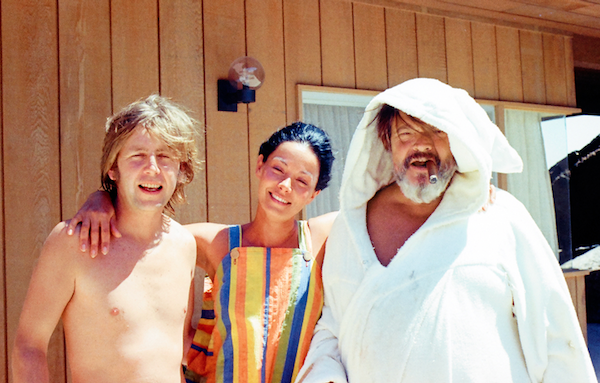
The career of legendary Hollywood iconoclast Hal Ashby is given a thorough assessment in “Hal,” one of this year’s several top-notch biographical documentaries and an absolute must-see for cinephiles. Making her feature debut as director, Amy Scott — whose own background as an editor closely aligns her with obsessive cutter Ashby — draws heavily from the research of Nick Dawson, author of “Being Hal Ashby: Life of a Hollywood Rebel.” The resulting film is a colorful portrait of an underappreciated master moviemaker whose marijuana-fueled, hippie sensibilities only enhanced the deep connection he felt to so many of the outsiders and dreamers who populated his films.

Scott is more interested in Ashby’s work than in his personal life, concentrating attention on the run of the filmmaker’s seven key movies of the 1970s, spanning from directorial debut “The Landlord” to the more-apt-than-ever “Being There.” The film does not, however, ignore Ashby’s prodigious appetite for drugs and his string of romantic partnerships that included five marriages. Scott strikes an effective balance between the public and the private, often acknowledging the intersection of the two in the ongoing battles waged between the filmmaker and the studio executives that Ashby viewed as nothing less than demons in tailored suits.

In addition to audio recordings of phone calls and conversations that allow the voice of Ashby to consistently represent himself as narrator, Scott invites Ben Foster to read excerpts from the letters that the director would furiously tap out to the objects of his love and his ire. Both Ashby’s words and his own voice complement the impressive lineup of luminaries who agreed to be interviewed for the film, and when unavailable for whatever reason, Scott draws on some terrific archival clips. Ruth Gordon, obviously, could not record and Bud Cort declined, but both are nicely represented in a vital section on “Harold and Maude” so tantalizing it could readily sustain its own full-length documentary.

Despite the cult devotion for “Harold and Maude” that would be sustained years later in the work of Ashby admirers like Wes Anderson (who landed Cort for the memorable role of bond company stooge Bob Ubell in “The Life Aquatic with Steve Zissou”), Scott furnishes solid segments on Ashby’s other essential movies. Both “The Last Detail” and “Coming Home” are discussed with a passion and verve that will inspire fresh visits to the films, and “Bound for Glory” and “Shampoo” are treated with appropriate insight and reverence. Through each, Scott illuminates Ashby’s maverick, anti-authoritarian ethos.  

Along with his superhuman abilities at the controls of the motorized plates and rollers of the massive flatbed motion picture editing systems from which he could conjure magic, Ashby adored the characters brought to life by so many talented performers. Owen Gleiberman even asserts in his “Variety” review of “Hal” that Ashby was the “anti-Kubrick, treating each actor as the center of the universe.” Followers know that Ashby’s party ended with the dawn of the 1980s, and that chronologically arbitrary dividing line represents an eerily prophetic demarcation fixing the man firmly in time and place. Even though he made several more movies in the years before his death at the age of 59 from pancreatic cancer, Ashby no longer enjoyed the level of creative control that accompanied his staggering string of seven consecutive masterworks, but that initial septet is as good as the output of any filmmaker in the same period of time.  

306 Hollywood

306 Hollywood

Movie review by Greg Carlson

Siblings Elan and Jonathan Bogarin remember their late grandmother in “306 Hollywood,” an appealing mixture of nonfiction and magical realism the filmmakers have dubbed “normalized magic.” Premiering in competition at the 2018 Sundance Film Festival, the film will be broadcast as part of the 31st season of public television’s “POV” series following a number of festival screenings. “306 Hollywood” has been compared to the audio segments one might hear on NPR’s “This American Life” or “Radiolab,” but the filmmakers use their visual sensibilities to great advantage. A seemingly simple house, and all the objects accumulated within, turn out to be a splendid gift to the viewers who will immediately recognize familiar aspects and dimensions of their own departed loved ones.

“306 Hollywood” is the mediated monument to Annette Ontell, a New Jersey grandmother who lived what many might describe as a full but unremarkable life at the title address. The Bogarins are shrewd and competent storytellers, however, melting down that “unremarkable” adjective to poke at questions of grief and the way we honor the lives of the ones who have meant the most to us on an intimate level. Midway through the movie, a visit to Bob Clark, the full-time Director of Archives at the Rockefeller Archive Center in Sleepy Hollow, New York, invites what might be the key question of the story: are ordinary people less important than the titans of history whose accomplishments are preserved and shared at a more privileged rate?

Clark’s answer is a good and satisfying one, and the Bogarins — who may already have suspected how the response would shape their feature — add to Ontell’s legacy even when they focus attention on a wonderfully curated group of outsiders. M.I.T. professor and physicist Alan Lightman addresses the mysticism of presence and absence at the molecular level. Fashion and textile conservator Nicole Bloomfield analyzes the dresses constructed by Ontell, who designed fashionable clothing for wealthy New York women and always sewed a copy for herself from the leftover fabric. Jonathan’s affinity for time spent in Rome leads us to the Biblioteca Casanatense for a lesson on cataloguing that will delight anyone who has ever admired the work of a devoted librarian.

But no matter how far away Elan and Jonathan take us from the house, Grandma Annette looms large, courtesy of a decade’s worth of videotaped interviews that began when she was 83 years old. It is hard to say whether “306 Hollywood” could have been completed without those recordings, given the vivacious personality of Ontell and the candid way in which she responds to all sorts of queries. In one sequence, which has divided reviewers, Ontell is coaxed into trying on an old dress by her daughter and granddaughter. A corresponding sequence, in which dancers twirl elegantly in the grass of Ontell’s front yard, affirms the highly particular vision of the Bogarins.

That lovely image, and several others, like the display of old clothing on the house’s rooftop and exterior siding and a rainbow assortment of old toothbrushes and dentures, evoke the compositional symmetries of Wes Anderson, cited along with Agnes Varda by the Bogarins as an inspiration. A scene in which actors lip-synch a tape-recorded 1972 family argument in the very room where it took place recalls Clio Barnard’s “The Arbor,” and the presence of a custom scale model of Ontell’s home, meticulously designed and executed by master dollhouse builder Rick Maccione with wallpaper by Evan Raney and miniatures by Frank Galica, coincidentally echoes “Hereditary,” another Sundance premiere deeply attentive to family, albeit in a decidedly different genre.

Sorry to Bother You

Sorry to Bother You

Movie review by Greg Carlson

Boots Riley hallucinates a wildly funny feature debut with “Sorry to Bother You,” a sharp-fanged social satire that mashes up the innovative handmade aesthetics of Michel Gondry with the fierce truth-to-power consciousness of Spike Lee. As uneven as it is addictively watchable, the movie caroms from sharply on-point to murkily broad. Fans of alternate reality dystopian nightmares like Mike Judge’s “Idiocracy” and Richard Kelly’s “Southland Tales,” two of a smallish number of fellow genre torchbearers, will help assure the movie’s future cult status. Love it or lump it, “Sorry to Bother You” is perfectly situated for the messed-up cloud cuckoo land infected by the down-is-up, black-is-white fabrications of life under the current presidential administration.  

The film opens with a brilliant sight gag summarizing the hapless financial straits dogging Cassius Green (Lakeith Stanfield), whose significant bright spot is his romantic relationship with visual artist Detroit (Tessa Thompson). The desperate Cassius finds employment at a shady outfit called RegalView, working the phones as a telemarketer under pressure to make sales or risk termination. A tip from veteran closer Langston (Danny Glover) to “use your white voice” is the movie’s most obvious application of code-switching, but Riley will extend his consideration to wonder aloud about the degrees of Blackness performed by everyday people as well as wealthy entertainers.

Riley’s agenda is so comprehensive, there is virtually nothing the filmmaker doesn’t incinerate with his barrage of Molotov cocktails. High on the list are corporate evil, capitalist greed, mass media numbness, the insidiousness of casual racism, and the challenge of remaining true to principles when faced with the temptations of selling out and/or seeking financial security. Not all of Riley’s commentary lands with equal dexterity, but the filmmaker’s spirit of experimentation is so loose and comfortable, the absolutely bananas dreamscape of the film’s later segments boasts a kind of surreal weirdness almost never seen at your local multiplex.    

That’s not to say that “Sorry to Bother You” is completely unprecedented, despite the presence of its brain-melting “equisapiens.” The Halloween costume-inspired popularity of Cassius’ soda can head injury, in both theory and application, plays an awful lot like the runaway “success” of the plastic blackface masks inspired by “Mantan: The New Millennium Minstrel Show” in Lee’s “Bamboozled,” a movie from which Riley borrows much. Another of Lee’s favorite bits — off-the-wall television parodies broadcast in-universe — manifests in the gonzo gameshow “I Got the Shit Kicked Out of Me,” one of Riley’s reminders of the depths of humiliation not too far away from existing “reality” programming.   

The all-in culmination of Riley’s manifesto, a dark metaphor featuring a coke-fueled, sarong-appreciating Armie Hammer as a rich and terrifying overlord named Steve Lift, will split viewer opinion, but it is not the only element that will attract criticism. The protagonist of “Sorry to Bother You” is most certainly Cassius, but Riley fails to carve out the richer opportunities that Thompson’s Detroit deserves. Despite industry credits stretching back to 2005, Thompson has more recently broken through to tremendous exposure via standout performances in higher-profile projects from “Dear White People” to “Creed” to “Thor: Ragnarok,” and is a major star in the making. Not surprisingly, you miss Detroit when she is not on screen.  

Leave No Trace

SD18 Leave No Trace

Movie review by Greg Carlson

Filmmaker Debra Granik’s “Leave No Trace,” based on Peter Rock’s novel “My Abandonment,” demonstrates some spiritual and stylistic kinship with the director’s tremendous “Winter’s Bone,” but the new film stakes out the emotionally intense territory shared by a father and his daughter living off the grid as a means of self-care/self-preservation and survival. Ben Foster turns in a predictably excellent performance as Will, a veteran with serious PTSD. Will’s thirteen-year-old daughter Tom (Thomasin McKenzie), it would appear, is the single motivation and responsibility that keeps the man’s demons at bay. Together, they live quietly, furtively, and out of sight of institutions, authority figures, and most other aspects of society.

Building on interests explored in “Winter’s Bone,” Granik doubles down on the instinctive, often unspoken rhythms of committed outsiders, and the opening scenes of the film illustrate the lengths to which Will and Tom must go to protect their anonymity and independence. Illegally camping in Forest Park to the west of Portland, Oregon, father and daughter work in tandem, complementing one another without much need for verbalized instruction. It’s the movie’s first sign of Granik’s consistently remarkable way with her actors, suggesting an almost documentary-like verisimilitude regarding the rituals used by the characters to stay off the radar.

Of course, the primary external conflict of the story manifests in the inevitable interactions Will and Tom have outside of their cultivated bubble of privacy. Those scenes, constructed by Granik to maximize the simultaneous wariness and curiosity aroused in Tom, mirror the movie’s underlying psychological conundrum: no matter how close the bond between father and daughter, Tom’s desire to learn more of the world places her relationship with Will in a position as precarious as their legal status. Granik circles that growing divergence with a series of scenes in which the heartbreaking reality of Tom’s responsibility to Will puts a lump in the throat of any parent who has witnessed the emotional and intellectual growth of a child coming into independence and personhood.

A number of writers and viewers have already remarked on the basic decency with which Granik chooses to portray nearly every person who crosses paths with Tom and Will (very far from the dark menace faced by Jennifer Lawrence’s Ree Dolly in “Winter’s Bone”). In one sense, that choice is a testament to the filmmaker’s sophistication; nuance can be challenging in the absence of a concrete antagonist. Not even the representatives of the bureaucracies Will so strongly opposes betray any sense of incompetence or apathy, and the device sparks us to deeper questions about the tough hand Tom and Will have been dealt and whether there is any way back for the latter.    

One of the ideas best expressed in “Leave No Trace” is the extent to which Tom and Will parent one another. Very obviously, Will has brought up his offspring with a level of skepticism and fear that suggests an arguably unhealthy — or at least deeply limited — view of community. Granik will challenge Will’s position in several ways, and the presence of Dale Dickey, so unforgettable in “Winter’s Bone,” is but one suggestion that Tom might be better served by opportunities to interact with humans beyond her dad. Newcomer McKenzie’s performance is so remarkable, not only does she match the skill of the always-invested Foster, she renders Tom’s growth with an astonishing and vivid sense of the changes that test her willingness to continue the status quo. We watch her grow up before our very eyes.  

Hereditary

Hereditary

Movie review by Greg Carlson

Scaring up early buzz as a premiere in the Midnight section of the 2018 Sundance Film Festival, Ari Aster’s “Hereditary” is the horror film of the year. Anchored by the vital performance of Toni Collette as grieving, disintegrating mother Annie Graham — arguably the actor’s career-best work — the movie’s other noteworthy MVP may just be Pawel Pogorzelski’s sharp cinematography, which features one breathtaking day/night cut so perfect it serves as a reminder that not even the bright sun can ward off the inevitable. Aster, making his feature film debut as writer-director, assembles “Hereditary” with the confidence of a clockmaker, his gifts reflected in the dollhouse designs of both the scale miniatures by Steve Newburn and the life-size environment of the hell house inhabited by the Graham family.  

The movie opens with the brief obituary of Ellen Leigh, the mother of Annie. At the funeral, Annie indicates some surprise at the large number of mourners, citing Ellen’s intense secrecy, her difficultness, and her suspicious nature. It’s an early tip-off that Ellen’s fierce sense of personal privacy veiled some awful secrets, and Aster relishes his opportunity to tease out the precise manifestation of family skeletons in the closet. The most devoted genre fans may be able to predict the film’s trajectory with some accuracy, but many viewers will be confronted with disequilibrium designed for maximum anxiety, especially as Aster punctuates the action with some well-timed bombshells.   

“Hereditary” maximizes the one-two punch of what several observers have referred to as “slow horror” or “slow burn horror,” which eschews the jump scare and the emphasis on gore in favor of a kind of psychologically-oriented accretion of dread. Aster also supplies bold structural feints, powered in part by the deceptive brilliance of A24’s sensational trailer and marketing. Not everyone has been completely won over by the film’s so-called “art house” factor, however, and some intelligent explorations of the pros and cons of the filmmaker’s technique can be found online for anyone interested in a very deep dive.   

Horror aficionados have embraced Aster’s meticulous attention to detail, ringing up comparisons to everything from “Rosemary’s Baby” and “The Shining” to “The Babadook” and “The Witch.” Aster himself reminds viewers that plenty of inspiration was mined from less obvious sources. He has cited “Cries and Whispers,” “Don’t Look Now,” “Ordinary People,” “In the Bedroom,” and several other titles as important texts informing various aspects of “Hereditary.” The cinema-literate filmmaker’s focus on sturdy examples of wrenching family melodrama makes perfect sense as the subtextual concerns of “Hereditary” break through to the surface.

While many fingers remain crossed that Aster will prepare an audio commentary for the eventual home release of “Hereditary,” the devoted must currently settle for multiple viewings and spirited discussions. Whether or not the movie will become a canonized horror classic can’t truly be known for some years, of course, but “Hereditary” certainly has a shot. The film’s minor drawbacks, which count the tip-off casting of Ann Dowd (nothing wrong with the work itself) are outnumbered by the strengths. Principal among them is the respect with which Aster works both the demonic/supernatural angles and the heartbreaking metaphors of serious mental illness straining to unravel a family.  

The Rider

Rider

Movie review by Greg Carlson

Writer-director Chloe Zhao’s sophomore feature “The Rider” cements her status as one of contemporary filmmaking’s most promising voices. A carefully curated blend of fact and fiction, the movie focuses on the aftermath of a traumatic head injury suffered by a young Sioux rodeo cowboy. Played by Brady Jandreau, the fictional Brady Blackburn is faced with an impossible choice: accept the reality that his riding days are done or court almost certain death by returning to competition. Many films have stuck their protagonist with a variation of this conundrum, but Zhao’s humaneness elevates “The Rider” to poetic, personal storytelling.  

Darren Aronofsky’s “The Wrestler,” for example, successfully explores much of the same terrain. Both movies use a touch of “meta-casting” in their leading men. Both Brady and Randy “The Ram” Robinson are sidelined doing what they know/love (or in Randy’s case at least once loved) and are warned by medical professionals to stop. Both movies also show rent troubles and the acceptance of work that sharply contrasts with the spectacle of past glories. Both men are recognized by fans while toiling at those jobs. Zhao, who followed her instincts toward similar unorthodox techniques while building “Songs My Brothers Taught Me” from 100 hours of footage shot and no script, also parallels — to some degree — Aronofsky’s commitment on “The Wrestler” to verisimilitude through the blend of the authentic and the imagined.    

And yet, even compounded by the minefield of potential sentimentality attached to a boy-and-his-horse tale, Zhao manipulates all the dangerous chestnuts to her advantage. “The Rider” finds the sweet spot between well-worn themes that could have so easily soured into cliche and the kind of fresh and unexpected surprises that reward and delight dedicated appreciators of “small” filmmaking. In other words, the specific challenges of making ends meet in and around the Pine Ridge Indian Reservation are presented with rich layers of exquisite detail even as Zhao commandingly locates the universal familiarity in Brady’s aching heart.

For my money, the most electrifying sequence in “The Rider” is one in which Brady trains a neighbor’s unbroken horse. Like any number of other scenes in the film, Zhao puts together something that unfolds with a startling sense of what might be called evidence-based certainty. Yes, Brady’s cowboy pals swap what are surely unscripted stories around a campfire, and even more remarkably, Brady’s father and sister are played by Tim Jandreau and Lilly Jandreau — his real-life family — but the almost wordless scene of Brady moving through a series of exercises to calm and prepare an animal to accept a human on its back is a superb piece of observation and dramatization that allows viewers to feel something close to awe for the privilege of bearing witness.

The understated beauty of this scene contrasts to some degree with more traditionally dramatic crisis points and climaxes, but Zhao directs both with grace. Brady’s close relationship with Lane Scott (playing Lane Scott), a paralyzed former rodeo brother whose own injuries require potentially permanent nursing care, a wheelchair, and physical therapy, add another layer to the film both on and off camera. The real-world Lane Scott suffered a catastrophic car accident and not a bull-riding mishap as imagined for the film, but Zhao’s modification fits the narrative without diminishing the love that exists between Scott and close friend Jandreau. That bond, like the rest of “The Rider,” is not easily shaken or forgotten.

Won’t You Be My Neighbor?

Won't You Be My Neighbor?

Movie review by Greg Carlson

In a bit of fortuitous timing, Oscar-winning filmmaker Morgan Neville turns his attention to public television superstar Fred Rogers, an almost universally beloved figure whose unwavering message of peace, friendship, love and kindness contrasts diametrically with today’s bullying tone of undignified late-night tweets issuing from a certain well-covered account. One wonders how Rogers, a devoted Republican, might have dealt with the grim political partisanship that currently hamstrings just about any kind of cooperation and civility between lawmakers of opposing parties. Neville’s documentary, titled “Won’t You Be My Neighbor?,” doesn’t directly speculate on the marked differences between the quality program for children and the Orwellian doublethink accompanying so many of the president’s messages. It doesn’t really need to do so.

In several significant ways, “Won’t You Be My Neighbor?” works best as a straightforward piece of media history chronicling a true anomaly. As producer Margy Whitmer notes, “[If] you take all of the elements that make good television and do the exact opposite, you have ‘Mister Rogers’ Neighborhood.’” Neville touches on Rogers’ core philosophies, which span from the worth of each and every individual to the musically-inspired attempt to recognize and honor the difficult “modulations” experienced by children. Rogers famously devoted airtime to deconstructions of heavy topics like divorce and, following the death of Robert Kennedy, assassination. Still remarkable, even radical, when you think about it.

For committed fans of Rogers, Neville’s film offers few new or earth-shattering revelations. Given the director’s track record, the depth, breadth, and quality of the archival footage is predictably tremendous. And there is absolutely nothing amiss about the inclusion of some familiar series highlights, from the appearance of ten-year-old Jeff Erlanger in his electric wheelchair to the sight of Rogers cooling his feet in a kiddie pool with Francois Clemmons (an anecdote also visited in a memorable 2016 installment of StoryCorps). Neville also confirms Rogers’ incredible skill as a puppeteer, revealing the emotional map of the man’s keen understanding of children through characters like King Friday XIII and close-to-the-heart alter ego Daniel Striped Tiger.  

Despite the fact that Rogers died in 2003, the huge amount of film and tape covering his work and career from beginning to end allows Neville to place his principal subject’s voice and words at the heart of the documentary. The upshot of so much content with Rogers front and center is an immediacy that has the effect of virtually erasing the passage of time. The downside, however, is a certain amount of carefully cultivated distancing that perpetuates the myth of Rogers as a servant to his work (other tall tales that weirdly dogged Rogers for years, including wartime exploits, tattoos, and hidden sexuality, are lightheartedly but firmly dispelled). Fortunately, Neville makes sure to include a few examples of off-script Rogers. One, supplied by Rogers’ son, reveals that the Lady Elaine Fairchilde voice would materialize when Fred was perturbed or aggravated by his own kids.     

To Neville’s credit, “Won’t You Be My Neighbor?” sidesteps the cliche of similar feature biographies by avoiding a parade of celebrities holding forth on the meaning of the person of the hour. Instead, he curates a very select set of interviews with key collaborators and confidantes to fill in the chapters, and the viewer is better for it. Some have wondered whether Neville should have worked harder to address frustrations and shortcomings (the movie does include a brief but valuable segment on Rogers’ “Old Friends… New Friends,” perceived largely as an unsuccessful attempt to make a show for grown-ups). But one look at a clip of Rogers greeting graduates following a commencement address affirms the what-you-see-is-what-you-get reality. As mirrored in the “New York Times” obituary of Rogers by Daniel Lewis, “…if college seniors were not always bowled over by his pronouncements, they often cried tears of joy just to see him.” Watching “Won’t You Be My Neighbor?,” you will too.     

RBG

RBG

Movie review by Greg Carlson

Betsy West and Julie Cohen assemble a welcome biographical portrait of Supreme Court Justice Ruth Bader Ginsburg, the octogenarian icon whose legacy already includes her groundbreaking work in the area of gender-based discrimination and her powerful dissents in cases decided by an increasingly conservative high bench. “RBG,” which playfully alludes to the meme-based appellation linking the jurist to hip-hop’s Christopher Wallace, a.k.a. the Notorious B.I.G., is but one boulder in an avalanche of nonfiction features attempting to untangle, in whole or in part, the roller coaster ride of the Trump presidency. To the credit of the filmmakers, their movie juggles the (sur)realities of our current moment without pulling focus away from the small-in-stature, large-in-accomplishment superstar.  

For the many younger viewers who might only know Ginsburg from her later-blooming cultural popularity on and in jabot-accessorized Halloween costumes, coffee mugs, screen-printed tees, and endlessly shareable images on the internet, “RBG” does a terrific job filling in the blanks of the associate justice’s life prior to her confirmation in 1993 as only the second woman in U.S. history to sit on the Supreme Court. To that end, West and Cohen shape several prominent narrative threads into a deeply human love story tracing Ginsburg’s marriage to and partnership with Martin D. Ginsburg and her tenacious and strategic brilliance as a litigator fluent in every possible legal nuance of women’s rights via the Equal Protection Clause of the Fourteenth Amendment of the U.S. Constitution.

Alternating between explications of important cases like Frontiero v. Richardson and anecdotes from friends and family members attesting to the relentlessness, grit, and determination demonstrated by Ginsburg in her public and private journey, “RBG” calls up an impressive group of interview subjects. And where new testimonials were simply not available, West and Cohen — aided by skillful editor Carla Gutierrez — seamlessly integrate archival content. One of many highlights in this latter category is an exploration of the unlikely friendship between Ginsburg and fellow justice and operaphile Antonin Scalia. Glimpses of joint public appearances, including a witty retort explaining why the feminist Ginsburg sat behind Scalia on the back of an elephant during a trip to India, add nuance to the film and remind us that collegiality is possible even when philosophies are virtually incompatible.

Ginsburg’s more controversial 2016 criticisms of Republican presidential candidate Donald Trump, which resulted in a formal apology following the sizable outcry from many quarters of the media, merits its own short section in the film. Despite longtime Ginsburg friend Nina Totenberg’s acknowledgement that Ginsburg’s comments about Trump were “inappropriate,” the filmmakers aren’t too bothered or dissuaded, doubling down by including footage of Ginsburg’s non-singing appearance in the Washington National Opera’s production of “The Daughter of the Regiment,” during which Ginsburg alluded to Trump’s “birther” position and other moral and intellectual failings.

That stuff, as well as clips of Ginsburg working out with trainer Bryant Johnson and laughing at Kate McKinnon’s antic, vitamin-chugging parody on “Saturday Night Live,” is more colorful than some of the audio clips of Ginsburg arguing before the Supreme Court and the images of her carefully facing down the male legislators firing off questions at her confirmation hearing. But West and Cohen are so deeply committed to laying out the hard-fought details of Ginsburg’s role in American history that “RBG” keeps careful track of the discriminatory realities experienced by their hero.

Jeffrey Toobin noted in “Heavyweight: How Ruth Bader Ginsburg Has Moved the Supreme Court,” his 2013 profile in “The New Yorker,” that “…her reputation as the Thurgood Marshall of the women’s-rights movement exceeds her renown as a Justice.” Once Ginsburg’s tenure concludes — which supporters hope will not happen for at least an Oliver Wendell Holmes Jr. or John Paul Stevens length of service — one wonders whether Toobin’s statement will need to be rebalanced.   

Bombshell

HPR Bombshell

Movie review by Greg Carlson

Writer-director Alexandra Dean’s “Bombshell” recounts the remarkable life and achievements of Hedy Lamarr, the Golden Age screen goddess whose physical beauty and career as a Hollywood actor long overshadowed her groundbreaking technological inventions. The documentary, which premiered at the 2017 Tribeca Film Festival, will be broadcast on PBS as an installment of “American Masters” on May 18, 2018. The cult of Lamarr, which flowered following a 1990 “Forbes” profile by Fleming Meeks, has more recently taken up residence on the internet — including an appearance in a 2015 Google Doodle honoring the 101st anniversary of Lamarr’s birth.

Dean’s straightforward presentational style, which relies heavily on talking head interviews and a wealth of archival content, presents the key events of Lamarr’s life in chronological order. Thematically, the director privileges Lamarr’s offscreen work, even though the arc of her tumultuous filmography supplies the movie with a parade of clips. The movie’s key section details Lamarr’s collaboration with the avant garde composer George Antheil, with whom she developed her ideas on the subject of frequency hopping. The two friends filed a patent, and offered their tech to aid the war effort, but it was shelved by the United States Navy. The foundations of Lamarr’s work with spread spectrum frequency eventually proved important in the development of Bluetooth, GPS, and Wi-Fi.   

Dean has so much raw material, an opening montage flashes past several anecdotes that would have merited a deeper dive had Lamarr’s resume been less crowded. Claims that Disney’s animated Snow White and DC Comics’ Catwoman were directly inspired by Lamarr zip past, and Mel Brooks more or less credits his entire career to Lamarr, cracking that the star’s unique allure in “Algiers” drew him to Los Angeles. Later, Dean highlights a suggestion that Louis B. Mayer’s inability to see past Lamarr’s sex appeal negatively affected her film opportunities.   

Along with luminaries like Brooks, Robert Osborne, Diane Kruger, and Peter Bogdanovich, Lamarr’s family members participate in the project, but Dean struggles to find the right balance. Lamarr’s daughter Denise makes a number of insightful comments, but is overshadowed by the presence of her younger brother Anthony. Anthony, whose commitment to his mother’s legacy can be seen in the volume of preserved and catalogued press clippings, photographs, magazines, and correspondence he has archived, emerges as the de facto spokesperson. Curiously, Dean only devotes a cursory mention to Lamarr’s other son. James Loder speaks briefly on his own behalf, as Dean attempts to reconcile the grim reality of a fraught relationship with a mother who publicly claimed James was adopted.   

Dean directly addresses other aspects of Lamarr’s personal life that might be construed as dream factory cliche, most notably the subject’s six marriages (all of which ended in divorce), drug addictions, and Lamarr’s later penchant for frequent visits to the plastic surgeon. The filmmaker relies on a few key interviews to revise the narrative, pointedly noting that Lamarr certainly did not want to be perceived as a joke in parodies like Lucille Ball’s “I am Tondelayo” shimmy. Lamarr’s status as an iconoclastic original is enhanced by her string of unsuccessful partnerships, as her inability to enjoy lasting love is explained by son Anthony as stemming from trust issues exacerbated by men who only cared about the way she looked. The documentary opens with the quotable Lamarr epigraph/lament, “Any girl can be glamorous. All you have to do is stand still and look stupid.”  

Revenge

SD18 Revenge

Movie review by Greg Carlson

Earning a limited theatrical release following a successful run of festival appearances and a streaming deal with Shudder, writer-director Coralie Fargeat’s “Revenge” simultaneously embraces and subverts many tropes of the rape-revenge film. Powered by a supercharged central performance by Matilda Lutz, Fargeat’s feature also draws from the implied isolation of its evocative locations and the saturated hues of Robrecht Heyvaert’s dazzling cinematography. Given the nature of its subject matter and execution, “Revenge” will not likely find a receptive home in too many suburban multiplexes.  

Carol Clover, Jacinda Read, Alexandra Heller-Nicholas, Claire Henry, and other scholars have taken hard looks at the rape-revenge film, a categorization commonly linked to a set of exploitation titles produced in the 1970s but occasionally explored in mainstream studio releases and by A-list and “prestige” filmmakers. The defining characteristics of the subgenre, argued by Heller-Nicholas, require that the sexual assault or assaults “must be the core action that provokes revenge,” whether or not the rape is shown. Moral and ethical implications complicate the rape-revenge film. As Heller-Nicholas points out, the visualization of rape can be motivated by the maker or consumer’s “ugly desire to watch sexual violence.”

That particular conundrum — how to critique hypermasculinized bro behavior and the unchecked misogyny of rape culture in a vehicle that thrives on a voyeuristic gaze at eroticized femininity — provides different answers for different spectators. Fargeat and Lutz collaborate on several strategies to accomplish the task. As Jen, the young girlfriend of a married man, Lutz infuses her character with an initially naive openness and misplaced trust that will transform, post-trauma, into gritty resolve and intense self-reliance. Like many action movie protagonists, Jen’s very life depends on her autodidacticism in impossible situations, and in “Revenge” that includes several satisfying pegs, including a memorable self-surgery.        

As noted by Katie Walsh, “Fargeat’s camera apes the male gaze in such an ostentatious way that it’s nearly laughable, a parody of the way that women’s bodies are consumed in horror movies.” Later, phoenix imagery symbolizes Jen’s return from the brink. The potential obviousness of those choices could easily unravel or backfire, but Fargeat is comfortable rendering her world in streamlined archetype, and it mostly pays off. The filmmaker strikes a hallucinatory tone (complete with peyote trip) that allows for maximum stylization without ever losing sight of the seriousness of her heroine’s experiences.    

“Revenge” is not as rich or rewarding as “Raw,” Julia Ducournau’s midnight-programmed barn-burner that made the rounds last year. Although they focus on different aspects of horror, the two films have in common female-centric storylines and French-language directors deeply invested in explorations of gender empowerment. Both movies also cut together pulse-quickening scenes reliant on significant amounts of blood. The middle sections of “Revenge” struggle at times to match the voltage of the first act, but Fargeat comes out blazing with a climax that cements the movie’s future cult-item bona fides.

The harrowing crucible suffered by Jen culminates in a cat-and-mouse showdown through the slippery corridors of a modernist home. The set-piece, conjuring a warped mash-up of the lurid pop production design of “Pulp Fiction” and the gliding Steadicam shots in both the Overlook and the hedge maze in “The Shining,” is staged and directed with supreme confidence by Fargeat. When all is said and done, many might stumble away with what A. O. Scott aptly calls a “lurid, punchy afterimage, an impression somewhere between righteous delight and quivering revulsion.” Scott’s accurate description speaks to the promise of Fargeat’s talent.