Don Jon

Donjon1

Movie review by Greg Carlson

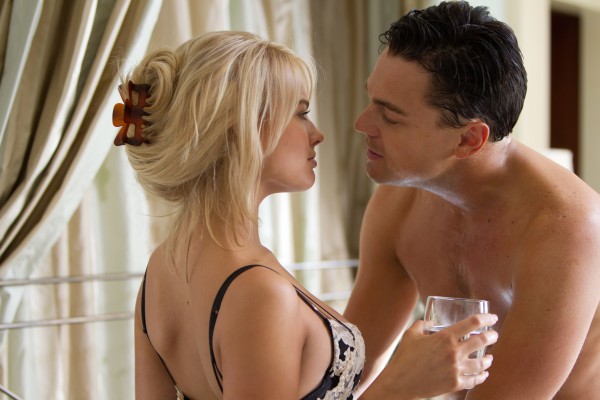
In a famous line in Laura Mulvey’s influential “Visual Pleasure and Narrative Cinema,” the film theorist writes, “In their traditional exhibitionist role women are simultaneously looked at and displayed, with their appearance coded for strong visual and erotic impact so that they can be said to connote to-be-looked-at-ness.” Joseph Gordon-Levitt, the onetime child performer turned serious and sought-after actor, makes his feature writing and directing debut with “Don Jon,” a loaded, comic spin on the prerogatives and expectations of masculinity and femininity in the age of ubiquitous Internet pornography and media-constructed messages selling us the just-out-of-reach good life. Gordon-Levitt’s decision to situate his characters within the world of working-class New Jersey Italian-Americans is simultaneously the movie’s strongest asset and greatest liability.

As swaggering bartender “Don” Jon Martello, Jr., Gordon-Levitt adopts the hairstyle, wardrobe, and thick accent necessary to distance key elements of his more contemplative public persona and previous role choices from the broader exaggerations of his priapic new character. The tactic, underscored in one of the movie’s effective trailers, serves as a reminder that Jon derives pleasure from a particular set of basic offerings. Possibly in ascending order of importance, Jon cites “my body, my pad, my ride, my family, my church, my boys, my girls, and my porn” as the few things that he really cares about. The central conundrum for the young man, then, is outlined by Jon’s perceived failure of real life to recreate the same thrills offered to him by the fantasy world of pornography.

Jon is accustomed, night after night, to alcohol-fueled club hookups that rarely extend beyond one-night stands. When he spots perfect “dime” Barbara Sugarman (Scarlett Johansson), Jon has no clue that his predictable pattern of predatory conquest will be challenged, upended, and torched. Gordon-Levitt suggests that Barbara’s own sense of entitlement is driven by a no-less damaging enslavement to the happily-ever-after mirages served up in countless big screen romantic comedies. Johansson’s extraordinary physicality coincides with Mulvey’s claim that the viewer takes scopophilic pleasure in “using another person as an object of sexual stimulation through sight” (Gordon-Levitt was enthusiastically praised by Reddit users for his “genius” casting) and her character is decidedly situated within the “language of the dominant patriarchal order” to which Mulvey refers.

Strictly from a narrative standpoint, the inclusion of Julianne Moore’s older woman, a grieving widow named Esther who teaches Jon that “real” sex is a “two-way thing,” softens and subdues the movie’s flirtation with chauvinistic brutishness. The revelation of Barbara as a manipulative, demanding, castrating princess, rather cleverly communicated in the only dialogue spoken by Jon’s otherwise silent, eye-rolling, constantly texting sister Monica (Brie Larson), gives off the slight whiff of sour stereotype. Moore’s worldly, mature guide contrasts efficiently with the high-maintenance Barbara, allowing Gordon-Levitt to investigate a mother-whore equation and let his character off the hook.

When the fifth edition of the Diagnostic and Statistical Manual of Mental Disorders was published in May, some mainstream press articles and essays fixated on the tricky terminology of sexual “addiction” by noting the convoluted history of hypersexuality in the DSM and the ongoing question of whether compulsive use of sex and porn is more than a “condition” in need of additional study and research. In spite of the graphic descriptions of sexuality and the inclusion of lurid but carefully edited clips of well-known “adult” industry veterans like Alexis Texas and Tori Black, it might be a stretch to describe “Don Jon” as edgy and challenging when the movie’s conclusion hews to Jon’s description of the pretty woman and pretty man who drive off into the sunset even though “everyone knows it’s fake.”

Prisoners

Prisoners1

Movie review by Greg Carlson

Like Baran bo Odar’s “The Silence,” theatrically released this year in the United States, Denis Villeneuve’s “Prisoners” deploys a large ensemble cast and interwoven plot threads involving victims, police detectives, perpetrators, and the bereaved to examine moral relativism in a stomach-turning crime involving children. Both movies follow the rules of the procedural, but “The Silence” emerges as the superior film based on its director’s deliberate objectivity in exploring the range of individual motives and personalities. Villeneuve, whose previous feature “Incendies” was selected to represent Canada as an Oscar nominee for Best Foreign Language Film, struggles to find much room for nuance in Aaron Guzikowski’s sprawling screenplay.

In a weird inversion of the typical direction of the biblical allusion, Hugh Jackman plays Keller Dover, a struggling carpenter whose love for his daughter is so great, he is willing to do harm to an individual the police have questioned and released. On a crisp Thanksgiving Day, Dover’s young child disappears from her own neighborhood along with the daughter of family friends. The chief suspect, a creepy, monosyllabic manchild named Alex Jones (Paul Dano), drives an old RV that the girls were seen climbing on, but following a dramatic arrest, no trace of the missing children can be found in the vehicle or the home of Alex’s grim aunt, Holly Jones (Melissa Leo, distractingly made up to look heavier and older).

Jake Gyllenhaal’s Detective Loki is assigned to handle the case, but the absence of any forensic link between Jones and the lost girls forces the officer to pursue other leads. Unsatisfied with Loki and driven by a sense of urgency, Dover takes matters into his own hands, abducting and imprisoning Jones, the single action that should drive the story’s thorniest dilemma: would you become a monster to stop a monster? That’s a question addressed in many movies – see Ji-woon Kim’s “I Saw the Devil” for a particularly riveting and graphic example – but “Prisoners” can’t quite rise to the challenge. One scene with Viola Davis alludes to a deeper exploration of thought experiments on the ethics of torture, but the direction it points toward is not pursued.

While the levels of contemplative sophistication are running on empty, “Prisoners” is still worth seeing for the remarkable cinematography by superb image-maker Roger Deakins. The longtime collaborator of the Coens has been Oscar-nominated without a win a staggering ten times, but his work is always award worthy. In “Prisoners,” the texture and sense of scale in composition rendered by Deakins transcend the shortcomings of the drama’s pretend thoughtfulness, and the movie is a visual feast of practical lighting that caresses the outdoors and imagines the boundaries of asphalt and woods and daytime and nighttime with startling clarity.

The outlandish twists and turns in “Prisoners” include a crimson herring so red it’s positively bloody, and Villeneuve wastes far too much time digging in that particular rabbit hole. Gyllenhaal’s Loki is deprived of any meaningful explanation of his pained demeanor. His policeman is a blank page and we are given no glimpse into any kind of life outside his relentless quest to maintain a perfect record of solutions. The potential of seeing Jackman, Maria Bello, Viola Davis, and Terrence Howard process their walking nightmare is a promise unfulfilled, as Bello disappears into catatonia and Jackman takes center stage.

The Spectacular Now

Spectacularnow1

Movie review by Greg Carlson

Observant and sincere, James Ponsoldt’s adaptation of Tim Tharp’s “The Spectacular Now” is quieter and more naturalistic than the recent version of “The Perks of Being a Wallflower, another novel-to-film coming of age story willing and eager to treat its teenage characters with sensitivity and respect. Both stories deal substantially with the encroachment of the unwelcome responsibilities of adulthood, and Miles Teller and Shailene Woodley are perfect as young people negotiating the rapid approach of life after high school. A worthy addition to the canon of serious-minded teen movies, “The Spectacular Now” could mark breakthrough turning points for the talented young leads, both of whom showcase their finest screen performances to date.

The plot is as easygoing as protagonist Sutter Keely (Teller), a quick-witted high school senior interested in the Spicoli-esque pursuit of a good time, all the time. Sutter is the kind of kid who outwardly makes it all look so easy, even if his borderline math grades pose a minor threat to graduation. Behind the smiling façade, however, are the lasting scars of paternal abandonment, now taking up residence in the form of Sutter’s dependence on the contents of his ever-present hip flask. Sutter’s mom Sara (Jennifer Jason Leigh) works hard to provide for her son, clearly hoping he won’t follow in his father’s unsteady footsteps. Recently dumped, Sutter surprises his friends and himself by pursuing a rebound romance with the quiet, overlooked Aimee Finecky (Woodley).

As a filmmaker, Ponsoldt takes obvious pleasure in collaborating with the performers, and some of the most rewarding exchanges of “The Spectacular Now” emerge from the long takes and unhurried intimacies that give Teller and Woodley the space to listen, react, and respond to each other. The opposites-attract combination of smart but slightly sheltered girl and sociable, underachieving wiseacre boy will remind some of Cameron Crowe’s beloved “Say Anything…” but “The Spectacular Now” appears to aim for a slightly different kind of epiphany for its central pair. John Cusack’s Lloyd Dobler never doubts his suitability as a partner for Ione Skye’s Diane Court the way that Sutter second-guesses being with Aimee.

As admirably as “The Spectacular Now” holds focus on Teller and Woodley, Ponsoldt sometimes fails to fully capitalize on the story’s grown-ups. The film certainly would have benefited from one or two more short conversations featuring Jennifer Jason Leigh. The same goes for the brilliant Andre Royo as Sutter’s patient geometry teacher Mr. Aster. Bob Odenkirk plays a terrific turning point scene as Sutter’s tailor shop boss and Mary Elizabeth Winstead, who starred as an alcoholic elementary school teacher in Ponsoldt’s previous feature “Smashed,” appears as Sutter’s slightly older, married sister.

For many viewers, the film’s highlight will be Sutter’s ill-advised journey to visit his absentee father, an irresponsible lush whose glassy eyes instantly relate the grim knowledge that he spends most of his time inebriated. As Tommy Keely, Kyle Chandler steals the brief segment in which he is featured. The father-son interaction is clearly engineered as a bleak wake-up call to Sutter and a reminder to the audience that history can come uncomfortably close to repetition. Sutter’s anger and resentment reside next to a pained and fragile vulnerability that positions “The Spectacular Now” as one of the year’s most welcome entries.

Blackfish

Blackfish1

Movie review by Greg Carlson

Next to the events that inspired it, Gabriela Cowperthwaite’s “Blackfish” is the worst kind of public relations nightmare for marine park giant SeaWorld Entertainment. Systematically documenting and dismantling years of questionable practices and dubious assertions about orcas, the gripping film uses an array of footage, from degraded old television spots to freshly composed interviews with scientists and former killer whale trainers. Most dramatic, however, are clips from several harrowing incidents in which the massive black and white captives have inflicted harm on one another and on human beings. SeaWorld representatives declined requests to be interviewed, and issued a rebuttal to some of the film’s charges.

The movie’s central non-human subject is a twelve thousand pound bull orca named Tilikum. On February 24, 2010, Tilikum killed 40-year-old SeaWorld trainer Dawn Brancheau. The same orca was also previously involved in two other deaths: trainer Keltie Byrne in 1991 and Daniel Dukes in 1999. Although Tilikum has become one of the most widely known whales in captivity due to these three incidents, other captive orcas have killed trainers and there are dozens of well-documented near misses. In the wild, orca attacks on humans are nearly nonexistent.

A reasonable person might ask why Tilikum has continued to perform in SeaWorld shows after killing Dawn Brancheau and the answer, not surprisingly, is financial. Tilikum’s value as a stud is of tremendous significance to his owners. Motley Crue drummer and animal rights activist Tommy Lee – who does not appear in “Blackfish” – has called Tilikum the “chief sperm bank” of SeaWorld. Graphic video of trainers collecting whale semen underscores the exploitation, and the revelation that Tilikum is the most prolific sire in orca captivity leads Cowperthwaite to a deeper and more disturbing discussion of the cruelty of separating offspring from parent. Orca researchers know that killer whale calves remain with their mothers for life, and descriptions of desperate, long-distance cries as the young are taken by force leave a deep impression on the viewer.

To be fair, SeaWorld does not break up all mother-offspring family units, but shrewdly, Cowperthwaite builds a case that exculpates the whales for presumably just responding to the appalling conditions in which they are forced to exist. In the wild, orcas swim many miles each day, and the cramped pens of SeaWorld in no way, shape, or form offer adequate room for the animals to thrive. Among the repercussions of cell-containment are behaviors in which whales rake one another with their teeth, dental problems from gnawing and chewing on barriers, and the most pathetic visual reminder of the difference between wild bull orcas and those in captivity: the collapsed dorsal fin. SeaWorld’s explanation for the numbers on flopped-over dorsal fins doesn’t align with scientific data.

The closest cinematic companion piece to “Blackfish” is probably “The Cove,” the gruesome expose of Dolphin hunting in Japan, but Cowperthwaite’s film also shares much in common with Werner Herzog’s phenomenal “Grizzly Man,” particularly in the way the ethics of human interaction with wild creatures are pondered. Interestingly, “Blackfish” omits any footage from “Free Willy,” although a few shots of Richard Harris in the much maligned 1977 “Jaws” pretender “Orca” are used to underscore some points about long-held misperceptions of killer whale behavior. Two other films are worth noting: “Blackfish” may lead some to Jacques Audiard’s “Rust and Bone,” one of the most memorable films of 2012. Also, Amy Kaufman reported in “The Los Angeles Times” a few weeks ago that the ending of Pixar’s upcoming “Finding Dory” was “retooled” following a screening and discussion of “Blackfish.”

Twenty Feet from Stardom

Twentyfeetfromstardom1

Movie review by Greg Carlson

An engrossing and thoughtful look at the backup singers whose voices grace some of the most familiar recordings of popular music, “Twenty Feet from Stardom” is certainly a must-see for rock fans. Tracing the enormous and all too often unheralded contributions of the supremely talented vocalists whose job requirement more or less demands a kind of selfless anonymity, director Morgan Neville’s documentary opens up a conversation on the mysterious alchemy of stardom and the painful realities of a cold-blooded industry. Colorfully supported with vintage film and video footage, archival photographs, and interviews with the likes of Stevie Wonder, Bruce Springsteen, Mick Jagger, and Sting, “Twenty Feet from Stardom” shines a light on a segment of the music world long overdue for just this kind of consideration.

With the possible exception of 2011 Rock and Roll Hall of Fame inductee Darlene Love, the incomparable voice cruelly exploited by Phil Spector, most of the singers profiled by Neville are unknown to a general audience. Along with Love, the performers who receive the most screen time include Merry Clayton, Claudia Lennear, Lisa Fischer, and Judith Hill, although Neville includes many more figures whose individual tales could easily support entire films of their own. “Twenty Feet from Stardom” makes the case that any one of these women could have – or should have – achieved the stratospheric levels of adoration and compensation enjoyed by the rock stars they complement, but as Sting points out, there is no way to figure the luck and timing and fortune that smile on some and ignore others, regardless of talent.

In a document filled with lore and legend, no anecdote is more potent than the story of Merry Clayton receiving an invitation to a late night session for “Let It Bleed.” Clayton describes being pregnant and dressed for bed, but determined to hold nothing back with each take. Without her scorching contributions to “Gimme Shelter,” particularly the lacerating wail of “rape, murder, it’s just a shot away,” the track is unthinkable, unimaginable. Neville treats the viewer to a sample of Clayton’s vocal isolated from the mix, and the sound sends a chill up and down the spine of any appreciator of the Rolling Stones’ apocalyptic hurricane.

Many of the most complex skeins involving race and gender are at least acknowledged if not completely and satisfyingly untangled by Neville. The movie opens with a brief discussion of the famous line “and the colored girls go…” preceding the Thunderthighs “doo do doo” backup on Lou Reed’s “Walk on the Wild Side,” and any time the director reaches for the details of songcraft and collaboration – Bowie’s “Young Americans” and Lynyrd Skynyrd’s “Sweet Home Alabama” are two of the other examples – the movie soars.

Slightly less successful is the handling of the sticky question confronting the extent to which the women were used by the performers who hired their services. Even though Neville does not directly make note of it, Claudia Lennear’s intimate relationship with Mick Jagger inspired him to pen “Brown Sugar” (she is also regularly cited as the inspiration for Bowie’s “Lady Grinning Soul”). Lennear, who would leave the music business and find work as a tutor and teacher, carefully and tactfully alludes to her time in the orbit of the Stones, leaving one to marvel at her grace and class. Robert Christgau once called “Brown Sugar” a “rocker so compelling that it discourages exegesis.” After spending a little time with her in “Twenty Feet from Stardom,” one could say the same thing about Lennear.

Blue Jasmine

Bluejasmine1

Movie review by Greg Carlson

The tremendous Cate Blanchett supplies a tour-de-force performance in Woody Allen’s “Blue Jasmine,” a Blanche DuBois meets Bernie Madoff moral tale that represents one of the writer-director’s strongest and most sustained efforts since 2005’s “Match Point.” Allen’s ever-prolific late period contains more clunkers than gems, but the misfires (“To Rome with Love,” “Whatever Works”) haven’t tarnished the delights (“Midnight in Paris,” “Vicky Cristina Barcelona”). “Blue Jasmine” doesn’t surpass “Crimes and Misdemeanors,” perhaps Allen’s finest exploration of the psyche’s darkest corners, but the new film is a worthy addition to the filmmaker’s oeuvre.

Blanchett appeared as DuBois in the Sydney Theatre Company’s revival of “A Streetcar Named Desire” (performed in 2009 at the Brooklyn Academy of Music) and many commentators have drawn comparisons between Tennessee Williams’ tipsy, fading belle and Jeanette “Jasmine French” Francis, Allen’s richly imagined hothouse flower. While the “Streetcar” allusions in “Blue Jasmine” can keep Williams aficionados busy – see Manohla Dargis’ review in “The New York Times” for a thorough account – Allen has shaped the homage into a stern portrait of desperation both loud and quiet.

Miraculously, Blanchett wills the elitist, entitled Jasmine into spaces of pathos and vulnerability. The fallen Park Avenue socialite’s doomed marriage with a swindling financier (Alec Baldwin) has left her without means and a place to live. After fleeing New York for San Francisco to crash with her sister Ginger (Sally Hawkins), Jasmine’s sense of privilege collides with the working class world inhabited by her sibling, a grocery clerk whose boyfriend, an auto mechanic named Chili (Bobby Cannavale), deeply resents the needy Jasmine’s inconvenient imposition. Jasmine’s plans to rediscover herself are by turns pathetic and misguided, and Allen nails the clash of classes in a series of jittery outbursts and cruel recriminations.

Allen explores a number of his pet themes, including self-delusion, wealth, opportunity, greed, and the fallout from amour fou. The fortunes and misfortunes of both Jasmine and Ginger are examined in detail, and Allen includes numerous flashbacks to explain Jasmine’s precarious and deteriorating mental health. Even though both blue and white collar stereotypes abound in the outward appearances of the film’s inhabitants, Allen wisely withholds judgment on his players, allowing the viewer to understand the motives of all significant parties, most of whom make poor decisions at one point or another. Along with Hawkins, Baldwin, and Cannavale, support is provided by Andrew Dice Clay, Louis C.K., Michael Stuhlbarg, and Peter Sarsgaard.

“Blue Jasmine” belongs to Blanchett, however, and although it’s far too early to make award season predictions, nobody would be surprised if she earns an emphatic series of accolades later this year for her work as Jasmine, a role David Denby has called “the most complicated and demanding performance of her movie career.” Allen currently holds the record among living filmmakers for directing the most Oscar-winning performances (six total, five by women), so it is little wonder that actors seek opportunities to appear in his movies. Blanchett, like Dianne Wiest before her, makes room for humor while striking the perfect notes of seriousness and sadness. By the time we join Jasmine on a park bench in the movie’s stirring coda, she has become very difficult to forget.

Jobs

Jobs1

Movie review by Greg Carlson

An embarrassing, half-baked product that stands in diametric opposition to the stamp of quality and user experience demanded of its subject on his company’s game-changing devices, “Jobs” is not the biopic Apple fanatics, or anyone else for that matter, wanted or needed. Director Joshua Michael Stern violates every law of competent filmmaking, stacking his movie with surface-level historical highlights instead of thoughtful ideas and explorations of what might drive and inspire a visionary person to innovate within a dynamic and highly competitive industry.

“Jobs” is so uninvolving, it could inspire a game in which participants tally the number of times the title character is shown barefoot, applauded by staff, nearly comes to tears, or breaks out a combination of the smirk/intense gaze. Ashton Kutcher’s passing resemblance to the younger version of the man (the actor is currently 35 and Steve Jobs died at 56 in October 2011) does not translate into a nuanced performance, and a portion of the blame belongs to screenwriter Matt Whiteley, who insists on giving Jobs a string of uninterrupted zero-to-sixty escalations from tranquility to rage. And Kutcher’s misguided exaggeration of Jobs’ ambling walk is just a bad joke.

If “Jobs” has a single redeeming feature, it can be described in the willingness of the filmmakers to remind viewers that Jobs could be selfish, savage, mercenary, and deluded. When told he is his own worst enemy, we are all inclined to believe it, since so many of the movie’s interactions are predicated on Jobs being a massive tool in matters of interpersonal communication. One gets the feeling that the nonstop loops of scenes exploring Jobs’ battles with Apple suits, his shabby and abusive treatment of employees, and his grotesque disloyalty to the people in his circle of closest friends are in the script to illustrate the man’s complexity and the burdens of genius, but the effect is cartoonish.

Stern and Whiteley eschew any close examination of Jobs’ personal life except in tiny glimpses when it suits their larger design. The movie hints that Jobs carried around a chip on his shoulder regarding his status as a child given up for adoption. Additionally, Jobs’ cruel rejection of his daughter Lisa (born 1978 to Chrisann Brennan) is minimized. Neither Brennan nor Laurene Powell are seen as significant in the life of Jobs, although Brennan (played by Ahna O’Reilly) has a small scene in which she is comforted by Daniel Kottke (Lukas Haas) after Jobs kicks her to the curb. It is certainly debatable whether the filmmakers’ decision to omit content dealing with the pancreatic cancer that would claim Jobs’ life was a wise decision.

Supposedly, Aaron Sorkin’s own script about Steve Jobs consists of only three scenes – each one playing out in real time prior to major Apple product launches – but if the writing is even a fraction as good as Sorkin’s work on the screenplay for “The Social Network,” the future movie would still be better than “Jobs.” In 1981, Bud Tribble coined the term “reality distortion field” as a means of accounting for the uncanny way in which Jobs could seduce himself and others into total belief in and commitment to an endeavor, especially when the odds against success were high. “Jobs” the movie so completely misses that charisma, the result is all Zune and no iPod.

Fruitvale Station

FRUITVALE © 2013 The Weinstein Company. All Rights Reserved.

Movie review by Greg Carlson

In the early morning hours of New Year’s Day 2009, 22-year-old Oscar Grant III was shot and killed by Bay Area Rapid Transit police officer Johannes Mehserle on the platform of the Fruitvale BART station in Oakland, California. The incident was captured on several cell phone cameras while the train full of witnesses idled, and the footage from one angle is used at the beginning of writer-director Ryan Coogler’s “Fruitvale Station.” Coogler’s decision to start with the disturbing documentation of the gunshot that took Grant’s life permeates the film’s quotidian business of following one young person’s last day with foreboding feelings of dread, melancholy, and regret.

As Grant, Michael B. Jordan navigates the man’s frustrating contradictions with a keenly applied understanding of the knots and errors that contribute to any life’s mosaic. Grant’s mostly uneventful schedule is given several dramatic conflicts by Coogler that capitalize on the fresh-start promises afforded by New Year resolutions. Grant tries to come clean with girlfriend Sophina (Melonie Diaz), the mother of their daughter, about romantic infidelity and the loss of his supermarket job. Additionally, we bear witness to Grant’s tendency toward prevarication and poor choices, as he struggles to leave behind the drug dealing that placed him behind bars in one of two prison terms served.

First-time feature filmmaker Coogler demonstrates maturity and confidence periodically offset by a few unnecessarily manipulative portents of Grant’s destiny. A scene in which Grant comforts a pitbull that has been struck by a vehicle flirts with both emotional artificiality and symbolic transparency. The narrative unity of several “it’s a small world” coincidences converging in one transit car is also a stretch, but the core of Coogler’s agenda, expressed by his thought in a New York Times interview with Joe Rhodes that “When you know somebody as a human being, you know that life means something,” is omnipresent in the film.

While some critics have negatively responded to Coogler’s affirming portrayal of Grant, “Fruitvale Station” is no different from any “based on a true story” historical dramas that, as narrative fiction, imagine and invent dialogue, details, and demeanors of “real” people being portrayed by talented actors. Coogler shrewdly and soberly turns “Fruitvale Station” into a meditation on the full range of one individual’s humanness instead of an inquiry into racial division, use of force principles, and police brutality and misconduct.

In the New York Post, Kyle Smith made several dubious assertions, including the statement that “videos of the shooting don’t support a claim of outrageous policing.” The validity of Smith’s comment depends upon one’s definition of “outrageous,” but plenty of eyewitness testimony and the videos taken that day corroborate the fact that Grant was unarmed and on the ground when Mehserle pulled the trigger (the defense team made the argument that the officer confused his Taser with his firearm). Coogler’s take on the chaotic prelude to Grant’s death unfolds with markers of urgency and unpredictability, identifying the filmmaker as an artist to watch and “Fruitvale Station” as one of 2013’s key movies.

The To Do List

Todolist1

Movie review by Greg Carlson

Writer-director Maggie Carey’s feature film debut “The To Do List” has received attention for gender-inverting the common masculinity of the “pursuit of sexual experience” trope that has fueled the plots of several raunchy comedies including “Porky’s,” “The Last American Virgin,” and “American Pie.” “The To Do List” is not the first rite-of-passage movie to be shared from the perspective of a female protagonist – “Little Darlings,” “Stealing Beauty,” “Juno,” and “18-Year-Old Virgin” represent a range of tones and agendas – but Carey’s unapologetic heroine Brandy Klark (Aubrey Plaza), is so matter of fact about wanting to understand and acquire carnal knowledge on her own terms that the film has been called both “fake feminist” by Rafer Guzman and “radically feminist” by Inkoo Kang.

Carey, who wrote the screenplay on spec before it ended up on Franklin Leonard’s influential Black List survey, met Plaza in an Upright Citizens Brigade Theatre class and cast the future “Parks and Recreation” performer in a web series called “The Jeannie Tate Show.” In “The To Do List,” Plaza continues to hone her deadpan style, but overachieving valedictorian Brandy is considerably less sarcastic and cynical than April Ludgate. Brandy shares some movie DNA with Ione Skye’s Diane Court from teen hallmark “Say Anything…” and even though Skye was age-appropriately cast as a high school graduate, one of the gags of “The To Do List” is the “Beverly Hills, 90210”-style use of performers ranging in age from their mid-20s to their mid-30s as teenagers.

Set in Carey’s high school graduation year of 1993, “The To Do List” uses that specific date to mine music and fashion nostalgia as well as provide a framework for a plot that simply could not exist once Internet search engines began to provide instant access to definitions and illustrations of any and every possible sexual behavior. Brandy’s quest to check off the likes of French kissing, motorboating, hand jobs, pearl necklaces, dry humping, and cunnilingus (outside of a committed relationship and with multiple partners) will vex certain conservatives opposed to what might be perceived as the movie’s permissive/progressive affirmation of sex positivity. On the way from “straight A’s to getting her first F,” as the double-entendre of the trailer puts it, Brandy may very well challenge Kathryn Schwartz’s argument that virginity is a “vehicle for misogyny.”

Pursuers of raucous comedy and onscreen vulgarity will find many opportunities to laugh, although Carey mostly steers clear of using Brandy’s rendezvous for the most graphic jests. Instead, an errant bikini top and a gross-out tribute to the Baby Ruth scene from juggernaut “Caddyshack” provide Brandy’s biggest humiliations. Surely it is no accident that Carey constructs “The To Do List” in a way that tries to depict a contextual authenticity for Brandy’s sexual roadmap. The most compelling example of this occurs during the intercourse that Brandy imagines will conclude her homework: she has the presence of mind to be on top to increase the likelihood of orgasm.

The most disappointing dimension of “The To Do List” is the borderline apathetic treatment of the talented secondary cast members. Brandy’s BFFs, played by Alia Shawkat and Sarah Steele, importantly avoid slut-shaming their curious pal, even though Shawkat’s Fiona lashes out with the S-word in anger and humiliation when she feels betrayed by one of Brandy’s particularly clueless moves. Fiona and Steele’s Wendy are never developed beyond slight and flimsy approximations of self-actualized persons, and the lack of meaningfully communicated interpersonal relationships prevents the film from achieving the kind of richness and depth of character associated with the 1980s movies of John Hughes.

The Silence

Silence1

Movie review by Greg Carlson

Based on a popular 2007 novel by Jan Costin Wagner, German-made “The Silence” is an ambitious, accomplished procedural significantly more restrained and purposeful than the majority of its American counterparts. Directed by first-time feature filmmaker Baran bo Odar, the film juggles a potentially precarious number of characters and interlocking storylines to explore the grim and lurid contours of an unsolved rape and murder that eerily, impossibly is recreated almost a quarter of a century later. The Swiss-born writer/director reveals a visceral command of the somber material, and while he does not quite achieve the sustained poise and profundity of Gotz Spielmann’s “Revanche,” his talent is considerable.

The most remarkable dimension of Odar’s work is the inquisitive, non-judgmental manner in which each individual personality is treated. From pedophile to police detective, “The Silence” spends significant time with each of its unfolding drama’s inhabitants, although the gambit risks occasional audience alienation when some storylines unfold in stronger and less predictable ways than others. Not every viewer will appreciate the constantly shifting point-of-view, a technique that feels more at home on an episodic series like “The Wire,” in which multiple episodes afford an opportunity to fully explore the lives and motivations of those involved in a complex case.

The film’s opening scene establishes the identities of the two men responsible for the killing of 11-year-old Pia in 1986, and that choice shifts audience focus and concern away from the who and toward the inexplicable why. Apartment caretaker Peer Sommer (Ulrich Thomsen), a patient, calculating predator, befriends lonely student Timo (Wotan Wilke Mohring), instinctively recognizing in the young man a kindred spirit with a similar appetite for vulnerable girls. Peer projects home movie reels of child pornography for Timo, and one afternoon they go hunting, taking advantage of a quiet, seldom traveled road and the unfathomable horror of a child being in the wrong place at the wrong time.

Certainly the most thought-provoking figure in “The Silence” is Timo. Though no less guilty than Peer in the assault, Timo does not directly participate, remaining frozen in Peer’s car during the murder of Pia. When reintroduced many years later, we are surprised and taken aback to learn that Timo has become an architect, is married, and has two children. Like Peter Lorre’s unforgettable Hans Beckert in Fritz Lang’s masterpiece “M,” Timo represents the rare cinematic monster we are not asked to forgive or understand, but whose presence as a human being makes hatred and contempt more difficult propositions.

We are left to wonder why Timo keeps for so long the awful silence referenced in the title, a conspiracy that revisits hell so many years later on the people (especially Pia’s mother Elena, played by the sensational Katrin Sass) whose lives were forever changed in an instant. The time-spanning unsolved crime narrative of “The Silence” will remind many of “The Girl with the Dragon Tattoo” and “Memories of Murder,” the latter a direct inspiration noted by Odar. Like Joon-ho Bong’s film, “The Silence” does not provide any comfort or closure in its haunting conclusion, only an invitation to reflect on the nauseating, senseless cruelties that sometimes befall the innocent.