Before Midnight

Beforemidnight1

Movie review by Greg Carlson

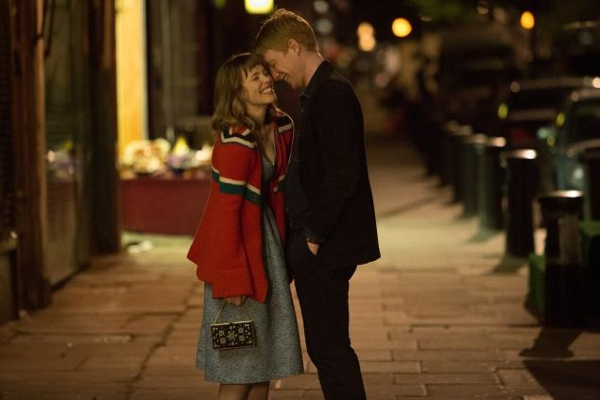
The experience of “Before Midnight,” the third installment of Richard Linklater’s remarkable group of films exploring, among other things, the possibilities of romantic love, calls to mind Robert Browning’s famous lines, “Grow old along with me! The best is yet to be…” What began in 1995 as an impossibly right merger of minimalist plotting and maximalist self-exploration and philosophizing has surprisingly, confidently, and assuredly made the case that sequels can sometimes surpass inaugurations. As Jesse and Celine, Ethan Hawke and Julie Delpy have by now come to feel like two close friends, and we admirers already hope to see them again in another nine years.

Cynics and pessimists need not bother with the “Before” series, ripe as it is with the poetry of spontaneity, love at first sight, and the value of saying yes. That said, “Before Midnight” embraces the changes that accompany post-40 adulthood. Jesse’s missed flight at the conclusion of “Sunset” has led, finally, to a long-term partnership with Celine, and at least one result is a pair of young daughters. “Before Midnight” opens with a sober airport farewell between Jesse and his son Hank, boarding a jet home to America and his mother, the woman Jesse left to be with Celine. It is instantly apparent that Jesse aches to spend more time with his quickly growing child, and the interaction sharply seeds key elements of a conflict that will soon unfold between Jesse and Celine on Greece’s idyllic Peloponnese peninsula.

Like Linklater’s previous treatments of Vienna and Paris, an appreciation of the dreamy, picturesque locations complements the thematic focus on taking chances and seizing happiness. Even so, all of the “Before” movies have made room for careful consideration of mortality and the finite number of moments we have. In the first film, a visit to the Cemetery of the Nameless confronted both the anonymity of death and the way in which time for the dead is suspended (“Now I’m ten years older and she’s still thirteen, I guess”). “Before Midnight” continues the memento mori ruminations, and a spirited dinner conversation attended by participants of many ages and life stages ends in a wistful toast to “passing through.”

Even though “Midnight” eschews the device of an imposed time limit bearing down on Jesse and Celine, a technique essential to “Sunrise” and “Sunset,” the movie’s final act is a tour de force that summons the same kind of panic and urgency we felt as the endings of each of the first two movies approached. What was planned for Celine and Jesse as a kid-free hotel getaway gifted by friends collapses into a bitter display of grievances, accusations, and deeply cutting differences of opinion that no fewer than half a dozen critics have compared to “Scenes from a Marriage.”

One must see “Before Midnight” to appreciate both the detail and the scale of the vicious verbal battle between two idealized projections of our cherished fantasies. My viewing companion, a longtime and committed backer of the “Before” films, expressed her intense feeling of discomfort at bearing witness to the painful blowup. It is unnecessary to say more, since Celine and Jesse have always been best at doing the talking. Like the serpentine twists and turns of fate that challenged our lovers at sunrise and sunset, things are not always what they seem and endings are often just beginnings in disguise.

Deborah Koons Garcia Interview

Symphonyofthesoilkoonsgarcia1

Interview by Greg Carlson

On Tuesday, June 18 at 7pm at the Fargo Theatre, documentary filmmaker Deborah Koons Garcia will present her latest film, “Symphony of the Soil.” Koons Garcia is an accomplished artist, whose 2004 documentary “The Future of Food” investigated the perils of genetically modified foods. “Symphony of the Soil” continues the filmmaker’s study of our relationship with food and the environment.

High Plains Reader film editor Greg Carlson asked Koons Garcia about her work.


HPR: Symphony of the Soil establishes soil as the film’s protagonist and central character. At the beginning of the movie, soil is beautifully described by the brilliant Ignacio Chapela as a “living crust that is smeared over the surface of our planet.” What is your favorite thing about soil?

Deborah Koons Garcia: What fascinates me about soil is its transformational nature, the idea that it not only provides a foundation for life – that plants and trees and animals grow out of it – but that it transforms death into life.  It is the medium in which life is broken down and made available for new life to form. One aspect of this is called nutrient cycling, but it’s really about life cycling through the soil.


HPR: When you made The Future of Food (2004), the focus was on the genetic engineering of food and the risks of corporate influence on agricultural practices. Even in recent weeks, more news stories about nations banning the importation, use, or growth of genetically engineered crops have emerged. Labeling and definitions can be controversial. Where do you see the United States in the next steps of the movement to more carefully examine GE/GMO practices and potentially adopt more detailed and explicit labels?

DKG: I personally am relieved that the general population is starting to rise up and question the GMO regime.  I know a lot about this because I been studying, making films and speaking about it for over 12 years. For too long, so much of what has gone on in this country has allowed GMOs a free pass; they’ve been under the radar.

It amazes me that the corporations that have spent billions of dollars on propaganda to convince people that we need these allegedly harmless GMOs to feed the world are terrified by mandatory labeling. If they are so proud of their product, they should be proud to label it because then the people convinced by their propaganda can go out and buy it.

You have to be suspicious of the corporate persons, which are these corporations, who are so afraid of being held accountable for their products. The only way that people are going to develop any confidence that this stuff is what their promoters say it is is if we have long term scientific studies that are transparent and neutral, that are not funded and controlled by the corporations controlling the GMOs, and if we have labeling of the food itself.

This way, if GMOs cause harm, we’ll be able to identify where that harm came from.  They don’t want stuff labeled, they don’t want to be tested, they don’t want us to have a choice. Just that alone should alarm the public. What are they hiding?  Why are they afraid?  What do they know that they don’t want us to know?  And why should their attitude be so infantilizing – shut up and eat!  That is totally insulting.

This whole thing with GMO wheat has alarms going off everywhere – good! Monsanto has not managed to shove this stuff down the world’s throats and Americans are finally waking up and realizing we don’t want it shoved down our throats either. I certainly don’t think Monsanto and friends should be able to contaminate their way into controlling every field in America.

We have to make them pay for damaging farmers’ property by contaminating it with GMOS without the farmers wanting it there, rather than having to make the farmer pay them for basically destroying his freedom to grow what he wants. They should be paying such huge damages for contamination that they have to go out of business. These entities are not who we want controlling our seed supply.


HPR: As a filmmaker and storyteller, can you name a film you saw or a filmmaker whose work you saw that really communicated something special to you or inspired you?

DKG: I recently saw a film called “Hot Coffee,” which is about some changes in our judicial system that have happened over the past 20 years in terms of product liability and limits on what courts can award to victims of wrongdoing.  It’s a topic that I’m really interested in.  The filmmaker is a lawyer and she shows how our judicial system has been changed to favor corporate interests.

It’s been out for a few years.  It’s really fascinating and also terrifying. What it points out is that by introducing mandatory arbitration and limits on what courts can award to someone who has been harmed, special interests such as insurance companies and corporations that make products that end up hurting people really face very little penalty.

It shows the degradation of the judicial system-how corporate interests now trump individual rights.  There was a campaign to make these changes happen and they did happen, and our rights as citizens have been eroded. In many ways, we have lost the protection of the law. It didn’t inspire me exactly, rather it infuriated me, but it really brought to light in a clear way some very important issues that too few people are aware of. This affects all of us.


HPR: “Symphony of the Soil” visits many places to share the diverse stories of sustainable practices. How many miles did you log during the production phase of the documentary? Of the places you had never been before, where would you like to return?

DKG: We went to Norway, the UK, India, Egypt and around the United States over a few years, so it was many thousands of miles, many days of jet lag, all of it completely worth it. We were in Egypt before this revolution happened and sometime in the future it would be interesting to go back and see how the lives of the people that we met there have changed.

I was also really fascinated by natural beauty of Norway, the fjords and magnificent land and seascapes there.  We were shooting midsummer, so it was light 24 hours a day where we were, up above the Arctic Circle. It was a very strange feeling.  As a filmmaker of course I was thrilled because we could shoot 24 hours a day.

Some of the scenes there we filmed at 2 AM and the light was so beautiful. I found it hard to sleep at all because I could feel that the sun was out, even in a darkened room. There’s a part of me that would like to go back there midwinter and experience what it’s like when it’s dark 24 hours a day and everything is snowy and cold outside and cozy and warm inside.


HPR: Scientists often have a dry, clinical, cerebral reputation that suggests difficulty in cinematic translation, but your subjects defy the stereotypes. How do you approach the interview process in order to collect material that is accessible to the non-scientists in the audience?

DKG: I do a lot of homework for my interviews. I choose subjects who are at the top of their field and I figure I owe it to them to know what they do and to figure out the right questions to ask them. One scientist in the film, Peter Vitousek from Stanford, with whom we went to Hawaii, has a book called “Nutrient Cycling and Limitation in Hawaii.” So I read the book of course and then when I told him in a pre-interview that I’d read his book he said “My condolences.”

It actually was a fascinating book and really helped me understand that soil has a lifespan and also that cycling process, life cycling through the soil. I do try to really understand the topic so I can bring out the best of what each person I’m interviewing, whether she’s a scientist or a farmer or an activist, can bring to the film.

I prepare a list of questions in advance. I also see the interview process as a formal one. I tried to not get too chatty or casual before the interview. After the interview, that’s fine, we can go have a drink or meal together but I want to create a kind of formal set up, the sense that this is a special interchange, a kind of a witnessing.

I find that once they understand that I respect them enough to actually find out quite a lot about what they do, that that actually helps bring their best to the interview process as well. I let them know in advance exactly what area I want to cover with them because a lot of these people have a vast amount of knowledge about all kind of things.  I chose something they have special enthusiasm for and want to share with the world.

Plus I choose topics that I’m interested in and so they’re telling me about things I’m personally fascinated by so it makes it an animated conversation. One person I interviewed had had a film made about him and it was funny because before we did the interview, he was complaining about that film, that he didn’t like it, that he didn’t feel that filmmaker understood his work.

Then after our convivial interview, he said, “I really enjoyed this interview. You asked me such good questions.”  And I said, “Well, I read your book.” And he complained one last time about the previous filmmaker and said, “He did not read my book.” But I can tell as a filmmaker when I watch films in which the director really hadn’t connected with the interviewee, when they just kind of came in on the fly in and didn’t really get the person. Then it becomes rote.

An interview is a kind of a ritual: film lasts forever so you really want to be focused, show respect for them and their work by understanding it, look them in the eye, and figure out how to really listen to them.  Usually the people I interview have spoken a lot about their work, presenting papers or teaching.  I talk to them about communicating to a mass audience and they are intelligent enough to understand how to present their special knowledge in a way that people can understand it.

If necessary I ask them to rephrase the answer so the average person can get it.   It doesn’t mean dumbing it down, it means smartening up. The people in this film are thrilled that it is raising soil consciousness.  It’s also nice to ask a question which they wouldn’t be expecting because then they can improvise and that gets them kind of excited too to have to think on their feet.


HPR: You find an artistic tone and voice in “Symphony of the Soil” that resists any temptation to escalate the fear and terror that sometimes accompanies the dialogue about the state of the ecology. Is it hard to be calm, rational, and positive when it feels like there is so much to be scared and angry about?

DKG: I agree there is a lot to be scared about these days. As a filmmaker though it would just be too easy to put people on a giant bummer and leave it at that. After all, to my mind the purpose of making a film is to help. I want people to make positive changes and if you leave people in a negative, depressed, freaked out state nothing will change, they’ll just go to bed and pull the covers over their head, so I’ve wasted my time as a filmmaker.

This film is a kind of a hybrid in that it’s got a lot of science in it but it’s also artfully done, artistically done. Yes, I went to art school! And art is about transformation. The best art is about deep transformation and, I believe, ultimately should be ennobling.

I know it’s an old-fashioned idea but that’s what I believe. I think that beauty, scientific rigor and skillful filmmaking can be joined together to create something that actually changes how people see the world and therefore changes how they act upon that world.

I wanted this film to be highly informational. Soil science is fascinating, cutting-edge science these days. And I also wanted it to be heartening and I wanted it to be fortifying. The idea is that once people are armed with this knowledge and this understanding, they simply can’t treat soil like dirt.

I also feel that one of the problems today is that most people have a hard time connecting with nature. It’s just the way our lives are now. We spend a lot of time online, we spent a lot of time running around and so we see “the environment” as something that is out there. What I am trying to do in this film is to give people a sense of connection with nature, a sense that they are part of nature.

When you feel that connection and when you deeply value nature, those feelings change how you live your life.  Film is ultimately an emotional medium, so even when I have a lot of information that information has to be grounded in a kind of emotional understanding. I want people to stay “in the film.” Anything that distances them gets cut out. I want people to love my work and to want to share it.

It’s a tricky thing I think to make people realize that the stakes are very high, which they are, and that there are actions we can take to help create a wholesome future and that we must do that now. I did this pretty well in “The Future of Food.” It’s actually a lot more difficult than people may realize to make a film that keeps people connected through bad news so that they’ll hang in there and realize, wow yes there is a lot of bad news but the good news is that there is something I can do about it, and I’m going to do it, I have to do it.

Not that many films actually achieve that.  They often just bring all the bad news and then promote that it’s a powerful film, but to my mind you can go online and get all that bad news in five seconds.  The challenge is to make a transformational film that moves the audience enough to really change their minds and actions. Another thing is that it’s part of my philosophy as a filmmaker that I want people who see my films to have a sense that they’re in good hands.

I think that’s very important to have faith between the filmmaker and the audience that the experience is going to be a good one, that that you’re in good hands and this is going to be healing even though there is difficult information here, even though we’re dealing with tough issues, ultimately you will be fortified and heartened.


HPR: I am sure you learned many things during the process of making “Symphony of the Soil,” but what is one specific thing you discovered that surprised you and stuck with you?

DKG: When I started researching the film I bought and read a lot of soil textbooks and books on soil so I had a lot of book learning. Then I started interviewing people and started seeing soil from their point of view, whether scientific or agricultural or cultural. Then at some point I really got soil; I understood that soil is alive.

I really got the sense that soil is an living organism that is filled with life and constantly changing and made up of all kinds of organisms from the tiniest little critter to herds of animals to us – the soil community.

I got the sense that there were all kinds of processes going on, and cycles and transformations. So I went from basically being soil blind to being overwhelmed with how complex soil is. Right around then, I was out for a walk one day and I looked out at the hills where I walk and have walked for many years and I just suddenly got the idea, “My God, it’s all alive out there. It’s all moving and breathing and changing.”

I got this sense of life: organisms churning through the soil and microorganisms eating each other in releasing nutrients and roots and exudates and chemical reactions going on, massive complexity.  I realized I’d looked out on this land for years and not seen it that way, then I learned all this stuff and I look out and thought, “Wow, this is just a miracle, you know, it’s a miracle that soil exists and it’s a miracle that we humans have risen up out of it” and there was for me at that moment an experience of reverence towards all of life in all its glory.

So then I knew what I wanted the film to be: to start off with science and end up with a sense of the sacred.


HPR: You are a self-described food fanatic. What is your absolute favorite meal to prepare yourself and serve to friends or to eat at a restaurant?

DKG: I live in Northern California which I think has the best food in the world because we can grow stuff year-round and what we grow is so wonderful, so that totally influences my favorite food. My favorite meal is a simple one, all organic of course: maybe start with artichokes from my garden, then wild salmon from the coast, lovely greens from my garden like chard or kale or dandelion greens or all of them with lots of garlic, maybe green garlic, some other vegetables in season like beets, and a nice grain say millet or brown rice, then a lovely salad from my garden with a dressing of local olive oil and lemons from my lemon trees, and maybe some perfect fresh peaches for dessert from my little orchard, shared with friends.

I also love good local cheese. And maybe a special occasion flourless chocolate cake, not from my garden. I actually get a CSA box from a great local farm so I don’t eat everything out of my garden but I thought I would just do a little bragging since you asked.

Kon-Tiki

Kontiki1

Movie review by Greg Carlson

A fictionalized account of Thor Heyerdahl’s 1947 seafaring adventure, “Kon-Tiki” burnishes Heyerdahl’s well-documented penchant for mythmaking and self-promotion. Nominated for an Oscar in the Foreign Language category, “Kon-Tiki” was shot in both Norwegian and English editions, and most U.S. viewers will experience the latter as the Weinstein Company’s release rolls out to American cinemas. Heyerdahl’s theory, that people from what is now Peru may have traveled to and populated Polynesian islands, was not then and is not now believed by most anthropologists, but the spirit of exploration and not the scientific record really fuels the movie.

Culling together material from Heyerdahl’s wildly popular book “The Kon-Tiki Expedition: By Raft Across the South Seas” and the Academy Award-winning documentary that remains Norway’s only Oscar-winning feature to date, “Kon-Tiki” tempers the long stretches of uneventful downtime with sudden bursts of intense conflict and crisis. Spending the majority of its duration on the water journey itself, “Kon-Tiki” also covers Heyerdahl’s initially unsuccessful attempts to mount the unlikely Pacific Ocean crossing on a raft of balsa logs lashed together. A minor subplot addressing marital tension between Thor and his wife Liv adds another small layer of drama.

Weirdly, directors Joachim Ronning and Espen Sandberg feel compelled to punch up a few of the voyage’s key moments with outright fabrications. Perhaps the most glaring example is the demise of parrot mascot and companion Lorita, who, according to Heyerdahl’s original documentary, simply took wing some sixty days into the adventure, never to be seen again. This time, Lorita is snapped up by a hungry shark, setting the stage for a brutal man-versus-nature slaughter fueled by the rage of a bereaved crewmember. By all accounts, however, the presence of sharks was constant, even if the movies, thanks to “Jaws,” can’t resist showcasing the animals as ultimate, primal fear-inducing predators.

A source of consternation for family members (none of the original Kon-Tiki crew are alive today) of German-born Herman Watzinger is the film’s portrayal of the refrigeration engineer. As Heyerdahl’s second in command, the real life Watzinger was confident of the raft’s seaworthiness, but the movie uses Watzinger to manufacture conflict that did not genuinely exist. Actor Anders Baasmo Christiansen is asked to play a nervous, out-of-shape doubter whose actions veer close to the edge of endangering the lives of his fellow sailors. “Kon-Tiki” screenwriter Petter Skavlan has defended the changes, but the result is diminished credibility.

“Kon-Tiki” might inspire more visits to the excellent museum in Oslo where the original raft is housed (along with Heyerdahl’s Oscar statuette). In the end, the successful completion of Heyerdahl’s mission at least validated the claim that a 4000 plus nautical mile journey on little more than a bobbing cork was possible. Considering the manner in which the filmmakers have defended their “enhancements” to Heyerdahl’s story, however, “Kon-Tiki” surely would have been improved by the inclusion of a more idiosyncratic and self-aware tone. The film takes itself very seriously when it could, and probably should, be playing with the captain’s oddness, ego, and self-righteousness.

The Iceman

Iceman1

Movie review by Greg Carlson

A grim, true crime account of the rise and fall of hitman Richard Kuklinski, a bearish mob affiliate and enforcer whose handiwork resulted in a body count estimated at more than 100 victims, Ariel Vromen’s “The Iceman” showcases another example of Michael Shannon’s totally committed, bravura acting chops. Despite a modest budget, the film effectively sketches the period detail of the gritty 1960s through 1980s East Coast environment (Detroit and Shreveport standing in for New York and New Jersey), evoking the street look of classic dramas photographed by Arthur Ornitz and Victor Kemper.

Based on the 1992 HBO documentary “The Iceman Tapes: Conversations with a Killer” and Anthony Bruno’s 1993 book “The Iceman: The True Story of a Cold-Blooded Killer,” Vromen’s film capitalizes on the unfathomable, unthinkable chasm that exists between Kuklinski the family man and Kuklinski the assassin. Keeping secrets and/or living a double life has served as the narrative engine of titles as wide-ranging as “Belle de Jour,” “Vera Drake,” “True Lies,” and “The Departed,” but “The Iceman” is perhaps closest to “The Sopranos” in terms of Kuklinski’s desire to offer a “normal” life to his wife and kids while concealing the volcanic reservoirs of lethal violence that guide his unorthodox vocation.

As Kuklinski’s wife, renamed Deborah for the movie, Winona Ryder has the unenviable task of playing a character unable to ask questions of or communicate fully with her spouse. The real Barbara Kuklinski described years of physical abuse at the hands of Richard, but Vromen elects to minimize the extent to which Kuklinski’s horrific behavior spilled over into his day-to-day domesticity. The fictionalized Kuklinski is dubiously constructed as a mostly loving husband determined to keep his demons hidden. As the façade begins to crumble, a scene of Richard’s physical abuse is placed as a marker of the man’s slide toward discovery and capture.

Along his twisted path, Kuklinski meets a curious doppelganger in Robert “Mr. Freezy” Pronge, a fellow contract killer whose incongruous front as an ice cream truck driver is just as implausible as Kuklinski’s own double life. Known in real life as Mister Softee and played by an unrecognizable Chris Evans, buried beneath sunglasses and facial hair, Pronge both escalates and diversifies the range of Kuklinski’s grisly trade, which soon includes the use of small spray bottles containing cyanide. Disguised on food or discreetly dispensed as a phony sneeze, the lethal poison is perhaps Kuklinski’s creepiest means of dispatching a target, although the postmortem dismemberments carried out by the two men are equally unsettling.

The presence of Ray Liotta as Gambino crime family crew leader Roy DeMeo links “The Iceman” to “Goodfellas” in spirit and partial milieu, but the tone of Vromen’s movie withholds any romanticizing of the “lifestyle” associated with the mob, instead considering Kuklinski as a perpetual outsider whose ability to commit murder stems in part from a brutal upbringing at the hands of physically and emotionally abusive parents. Using some of Kuklinski’s own confessional descriptions, Vromen alludes to some of the conditions that might shape a future killer, but “The Iceman” is ultimately not in a position to offer any definitive answers for Kuklinski’s psychopathy.

The Sapphires

Sapphires1

Movie review by Greg Carlson

Very loosely based on the story of a singing group of Aboriginal women who performed for soldiers during the Vietnam War, “The Sapphires” depends on the charm and wit of Chris O’Dowd and the catchy soul tunes made famous by Linda Lyndell, the Staple Singers, the Four Tops, and others to overcome the film’s marshmallow structure and simplistic historical reductionism. Director Wayne Blair paints the characters in extremely broad strokes, falling back on the use of single, repeated traits to differentiate among the principal players, but the exuberance of the music and the heartwarming uplift will win over many.

Originally produced as a stage play written by Tony Briggs, whose mother was one of the women who inspired the drama, “The Sapphires” introduces Australian sisters Gail (Deborah Mailman, who played younger sis Cynthia onstage) and Cynthia (Miranda Tapsell) as a duo keen on performing country music in backwater talent competitions. Soon, youngest sibling Julie (Jessica Mauboy) emerges – to the dismay of bossy Gail – as the most talented vocalist in the family. As a single mother who for unknown reasons keeps secret the identity of her little boy’s father in a storyline that goes nowhere, Julie should have been constructed with greater care and detail, especially in the rendering of her decision to temporarily leave her child.

O’Dowd’s boozy promoter Dave Lovelace is initially painted as a potentially untrustworthy opportunist who sees in the Cummeragunja Songbirds a chance to pursue both R&B passions and financial gain. To the film’s credit, we are spared at least one classic ne’er do well cliché when Dave doesn’t squander the group’s earnings during a drunken card game. Instead, the narrative uses Dave’s borderline substance abuse as a conflict trigger in his budding romance with Gail. Both the color of O’Dowd’s skin and his unlikely nationality are mined for jokes, but the character’s affinity for Otis Redding and Wilson Pickett is as earnest as the same kind of ardor displayed by the working class Dubliners in Alan Parker’s infectious 1991 adaptation of Roddy Doyle’s “The Commitments.”

Capitalizing on the parallels between the African-American Civil Rights Movement and the discrimination faced by indigenous Australians through the institutionalized removal of Aboriginal children from their families, “The Sapphires” addresses racism and the horror of legally sanctioned kidnapping in one of its arcs. The story of the fourth Sapphire, Kay (Shari Sebbens), deals with the young woman’s identity as a mixed-race victim of the removal policy. Viewers will be reminded of Phillip Noyce’s 2002 movie adaptation of “Rabbit-Proof Fence,” the best-known feature to cover the Stolen Generations.

The pain caused by the childhood theft and forced adoption of Kay fuels Gail’s feelings of anger, guilt, and resentment, and the subplot is one of the movie’s most emotionally satisfying components. The relationship dynamics between the two women might have served as the basis for a fully-fledged movie on its own. As it stands, “The Sapphires” spends more time on the eye-opening adventures that accompany a theater of war, and in spite of the film’s modest budget, the limited location photography in and around Ho Chi Minh City evokes the period detail of the Vietnam War.

Mud

Mud1

Movie review by Greg Carlson

Writer-director Jeff Nichols follows his arresting and much admired “Take Shelter” with “Mud,” a Southern Gothic-tinted, Arkansas bildungsroman indebted to hallmarks including “Tom Sawyer,” “To Kill a Mockingbird” and “The Night of the Hunter.” “Mud” is nowhere near as good as those titles, but the movie’s unhurried pace and detailed identification with its young protagonist balance the busy contrivances that mar the climax. Photographed in Nichols’ home state, “Mud” tells the story of fourteen-year-old Ellis (Tye Sheridan), a houseboat dwelling kid dependent on the river for the precarious livelihood of his family. Dealing with the impending separation of his parents and the pangs of first love, Ellis turns his attention to a mysterious fugitive named Mud (Matthew McConaughey) when he discovers the outlaw living in a derelict boat stuck high in the branches of a tree.

Nichols believably pinpoints the intersection of hope and desperation in the charismatic McConaughey, who is perfectly cast and ideally realized as the hungry lawbreaker whose silver tongue and smooth confidence seduce Ellis and Ellis’ close friend Neckbone (Jacob Lofland) into aid and abetment. Mud tells the boys about Juniper (Reese Witherspoon), the woman whose purported victimization at the hands of a brutish lover brought about a miscarriage and the subsequent murder of the man by Mud. Despite being hunted by the dead man’s family and the local authorities, Mud is certain he can restore the boat and make his escape.

Like many coming of age narratives, “Mud” develops a theme addressing the question of what it takes to be a man, and the movie has no shortage of fathers, father figures, and males of various ages working out the codes of honor that are preoccupations of masculinity. Nichols locks on to paternal regulations with gusto, even casting go-to grizzlies Sam Shepard and Joe Don Baker in parallel roles. When it comes to the outnumbered women, Nichols is less certain of himself, and Juniper in particular is frustratingly opaque. Mud’s proximity to Juniper puts him in grave danger, but Ellis – whose own romantic pursuit of the hard-to-read May Pearl (Bonnie Sturdivant) – can only see things in terms of his incomplete teenage notions of chivalry.

Even if the film’s female characters are underserved and, as noted by Kimberly Jones, exist only in their relation to men, “Mud” understands the possibility that the gullibility and earnestness of youth can lead to situations in which kids are used by grown-ups. Nichols’ conclusion is ambivalent on the extent to which Mud has taken advantage of Ellis and Neckbone, even though that question is at one point directly raised. The ambiguity of some child-adult relationships can make one’s heart ache as innocence gives way to experience, and Nichols captures the feeling.

The wild, violent conclusion of the movie will feel out of step for some of the viewers who appreciate the finely observed repetition of Ellis’ smallish, hardscrabble day-to-day. The economics of small town De Witt, Eudora, and the surrounding communities are not nearly as dire and catastrophic as Hushpuppy’s environs in “Beasts of the Southern Wild,” but both movies touch on the possibility that their young heroes and heroines are flirting with the epiphany that the world is much bigger than previously imagined.

The Great Gatsby

Greatgatsby1

Movie review by Greg Carlson

F. Scott Fitzgerald’s “The Great Gatsby” receives its fourth theatrical feature adaptation (for whatever reason, the forgotten 2005 “G” is not included on that list) along with the Baz Luhrmann treatment, an expectedly anachronistic bricolage that marginally improves on the somnolence of the 1974 version directed by Jack Clayton. Mostly faithful in major plot detail and too faithful in the relentless use of “old sport” as Gatsby’s favorite term of endearment, Luhrmann’s edition spares no expense in conjuring up a simulacrum of Jazz Age extravagance and conspicuous consumption. The movie’s brio fails to develop into a “spectacular spectacular,” however, and like Gatsby’s doomed quest, no amount of money can buy the viewer’s love.

The 1998 Greenhaven Press compilation “Readings on The Great Gatsby” addresses Gatsby’s nature by presenting a quintet of essays arguing that the man is variously a classic romantic, a sinister gangster, a profoundly comic character, a pathological narcissist, and a fairytale hero for the middle class. Leonardo DiCaprio doesn’t get at each of these positions equally, but his portrayal effectively encapsulates Gatsby’s neediness and desperation for love and approval that never arrive. Of course, it is Nick and not Daisy who comes closest to validating Gatsby’s desire (“You’re worth the whole damn bunch put together.”), but Luhrmann doesn’t press the homoeroticism of the Jay-Nick bromance, extra-textually stimulated by DiCaprio and Tobey Maguire’s foundational membership in the coarsely named Pussy Posse.

Daisy Fay Buchanan, the shallow and capricious committer of vehicular homicide, is arguably the Gatsby character most resistant to cinematic translation. Mia Farrow’s disastrous interpretation left much to be desired, and Carey Mulligan strains to make the most of her very scarce opportunities to instill complexity in a young woman so idealized by her onetime suitor she cannot possibly live up to Gatsby’s expectations. The romance of “The Great Gatsby” has always struck me as a terrible, rotten mirage, and its fundamental emptiness and fraudulence – a key part of Fitzgerald’s tragedy – presents a major adaptation obstacle.

Those who accept the novel as sacred canon will despise Luhrmann’s big alterations, most glaringly manifested in a poorly conceived and wretchedly executed framing device that places Nick Carraway in a sanatorium as he “writes” the story of Gatsby as a kind of purgation of his alcoholic and melancholic demons. The gimmick gives Luhrmann and co-screenwriter Craig Pearce an excuse to slather on what feels like pages and pages of extraneous voiceover narration presumably included to honor Fitzgerald’s poetic cadences. In case we miss the point, Luhrmann superimposes the text of key passages and quotations directly onscreen.

Considering Shawn Carter’s producing credit and soundtrack presence, it obviously occurred to Luhrmann that Jay-Z’s Marcy Projects to Madison Square Garden trajectory mirrors the Horatio Alger-esque, self-made journey of Gatsby. In her “New York Times” column, Maureen Dowd quoted Leon Wieseltier, who “thinks it’s time for a black Gatsby.” Luhrmann retains Fitzgerald’s references to race, including the moment when Nick and Jay are passed on the Queensboro Bridge by a limousine “driven by a white chauffeur, in which sat three modish negroes, two bucks and a girl.” The scene in the film is underscored by Jay-Z’s “Izzo (H.O.V.A.),” and serves as a reminder of the gulf between the wealthy white Roaring Twenties aristocracy and the artists and innovators of the Harlem Renaissance.

Trance

Trance1

Movie review by Greg Carlson

WARNING: The following review reveals key plot information. Read only if you have seen “Trance.”

The recently released “Oblivion” made the error of using Andrew Wyeth’s “Christina’s World” as an artificial stand-in for desired psychological depth that failed to materialize. In Danny Boyle’s “Trance,” a similar tactic is employed via Francisco Goya’s 1798 “Witches in the Air,” but in this case the painting is a major MacGuffin at the center of an auction house art heist gone wrong. Boyle pays homage to and explodes the contours of classic film noir, although one’s enjoyment of the movie will depend on the extent to which disbelief can be suspended in the service of a plot that explores lost and found memory.

James McAvoy, Rosario Dawson, and Vincent Cassel form the highly unreliable triangle of participants in the criminal roundelay. McAvoy’s Simon is the inside man who suffers an unexpected blow to the head that leaves crook Franck (Cassel) no choice but to retain the services of hypnotherapist Elizabeth Lamb (Dawson), who will assist Simon in remembering the location of the Goya. In his biography of Ava Gardner, Lee Server wrote that amnesia is “noir’s version of the common cold.” Joe Ahearne – who wrote and directed the TV movie upon which “Trance” is based – and John Hodge take the device to heart in their script, setting out to both construct a typically fatalistic noir and explore the abstract, faulty, and untrustworthy workings of the brain.

With its dependence on double and triple-crosses, “Trance” pays homage to a number of twisty noir hallmarks, including “Detour,” “D.O.A.,” and as Tom Wardak has pointed out, “High Wall” and “Spellbound,” a pair of psychiatry noirs that Wardak notes, “flipped the gendered stereotypes of male psychotherapist and female hysteric… to explore the emasculation that returning soldiers now felt in a peaceful, domesticated, female-driven arena.” The emasculation of “Trance” is mostly visual and in keeping with motion picture rating double standards, as both McAvoy and Cassel are photographed in careful compositions to obscure their genitalia while Dawson’s nudity is situated as a key plot point doubling as an art history lesson about the presence and absence of pubic hair.

Even though Lamb is grossly outnumbered by the male thugs and thieves with whom she capably holds her own, “Trance” has a few tricks up its sleeve regarding gender. While it is easy to read Lamb initially as a femme fatale responsible for the downfall of Simon, Boyle’s slippery shifts in allegiance and the revelation of Simon as a possessive abuser suggest that the “real” protagonist of “Trance” is Elizabeth. Unfortunately, Boyle seems to be less interested in character than in structure, and despite Dawson’s considerable efforts, Lamb suffers in the tradeoff.

The resolute amorality of the movie’s characters burdens anything that might pass for a rooting interest, and in this respect “Trance” is less successful than Boyle’s directorial debut “Shallow Grave.” Regular collaborator Anthony Dod Mantle works his usual magic behind the camera, fracturing, fragmenting, and mirroring motifs into a hallucinatory kaleidoscope that includes a bizarre close-up of what remains of Cassel’s head after a point blank gunshot. Next to Dawson’s glabrousness, it’s the movie’s most discussed image. The photographic pyrotechnics complement the contrivances bound to the film’s big shock, a disclosure made all the wilder for its dependence on Simon’s acomoclitism as memory trigger. “Trance” may not be for every taste, but it’s a razor in more ways than one.

Oblivion

Oblivion1

Movie review by Greg Carlson

WARNING: The following review reveals key plot information. Read only if you have seen “Oblivion.”

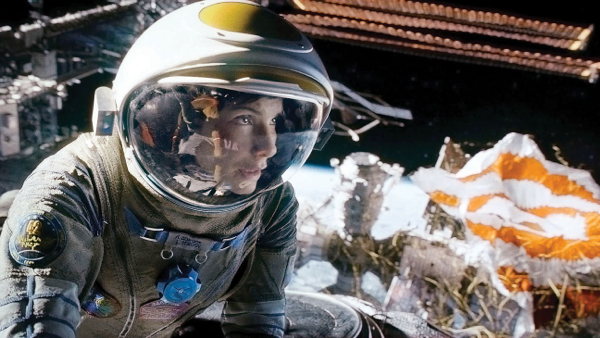
Director Joseph Kosinski, working from his own currently unpublished graphic novel, borrows from so many science fiction texts that genre fans might well pass the unsustainable running time of “Oblivion” tallying the allusions. From any number of episodes of “The Twilight Zone” to quotations of “WALL-E,” “Solaris,” “Moon,” “Minority Report,” and the unavoidable indebtedness to “2001: A Space Odyssey,” Kosinski’s shaky simulacrum labors as a visual concept-in-search-of-a-story that took multiple scribes several rewrites to complete. Many of the harshest critiques have been levied at star Tom Cruise, who continues to look and behave some fifteen to twenty years younger than the July 3, 1962 date on his pilot’s license, but the real trouble with “Oblivion” is the huge, empty vacuum of nothingness suggested by its title.

Long after viewers have sifted through messy exposition belabored by long stretches of redundant voiceover, “Oblivion” adopts a “Matrix” meets “Terminator” view of enslavement or death delivered by artificial intelligence. A gigantic tetrahedral station unimaginatively nicknamed the Tet fills in for HAL 9000/Matrix/Skynet as the movie’s symbol of sentient machinery gone awry. Cruise’s Jack Harper, in partnership with communications officer/lover Victoria Olsen (Andrea Riseborough), works on a desolate Earth to service and repair the intimidating drones that patrol the huge platforms slurping up resources needed to sustain the Tet. No matter how many midnights he skinny-dips with Victoria, Jack cannot shake visions of life before the fall, even if he erroneously believes humans have retreated to the safety of a colony on Saturn’s moon Titan.

Olga Kurylenko, who was three years old when “Risky Business” was released in 1983, plays Julia Rusakova, an astronaut whose frequent appearances in Jack’s dreams portend even deeper significance when she shows up in the flesh aboard a crippled NASA craft. Julia’s arrival shifts the narrative focus of “Oblivion” to a series of creaky revelations that include both the AI shocker and an opportunity to feature Jack versus Jack fisticuffs in a clone showdown. Throw in retreats to Jack’s secret cabin and the mysterious “Scavs,” led by an underutilized Morgan Freeman, and the recipe of “Oblivion” stirs in too many ingredients to be palatable.

Kosinski’s fondness for elegant design rescues “Oblivion” from total catastrophe, but like his debut “Tron: Legacy,” the beauty is only pixel deep and bereft of intellectual sustenance – especially notable when Jack succumbs to that most laughable of action tropes: outrunning the fireball. The vehicle effects work, however, and Claudio Miranda’s frequent, IMAX-ready wide shots frame landscapes that provide the necessary scale for the dragonfly-shaped, iPhallic “bubble ship” flybys. Along with the EVE meets Beholder firepower of the spheroid drones, the sleek, Bell 47 helicopter-inspired “bubble ship” is the film’s most interesting and memorable character.

The post-apocalyptic dystopia of “Oblivion” contains all kinds of markers to lace the unfamiliarity with a sense of the uncanny. Aviator sunglasses and a New York Yankees baseball cap are joined by other iconic symbols of American culture, including “Planet of the Apes”-style glimpses of a half-buried Statue of Liberty and the inexplicable presence of Andrew Wyeth’s “Christina’s World” as a symbol of who knows just what – a reference to Arthur C. Clarke’s “2001” novel, maybe? The danger of inviting a painting like “Christina’s World” to the party is the risk that some viewers will notice its artistic superiority. I can imagine spending two hours revisiting Wyeth’s canvas. “Oblivion,” not so much.

The Place Beyond the Pines

Placebeyondthepines1

Movie review by Greg Carlson

WARNING: The following review reveals key plot information. Read only if you have seen “The Place Beyond the Pines.”

Derek Cianfrance trades the time-jumping, one-on-one marital discord of “Blue Valentine” for the more determined triptych of “The Place Beyond the Pines,” an expectedly moody and atmospheric examination of paternal failure and inescapable generational torment that nods to sources as wide-ranging as “Roustabout” and “Miller’s Crossing.” Selling the movie on the promise of Ryan Gosling as a death-defying motorcyclist who robs banks to provide for the baby he didn’t know he fathered, Cianfrance delivers a “Psycho”-style shock when Gosling’s Luke Glanton is killed just as the audience has grown accustomed to his reckless larceny. The murder of Luke by police officer Avery Cross (Bradley Cooper) provides the first of two significant narrative turning points in which Cianfrance divulges his agenda.

It turns out Cross is no less ruthless than outlaw Glanton, but the privilege afforded him by his upbringing as the offspring of a judge allows room for political ambitions that don’t necessitate armed robbery. Cianfrance might be trying to comment on class (as in societal pecking order) and class (as in character that transcends financial disadvantage), but the film is guarded and cagey on matters of good and bad fortune, morality, and personal responsibility. In his aggressive demolition of the film, Ed Gonzalez calls “The Place Beyond the Pines” a “daisy chain of physical and emotional violence that sacrifices emotional specificity to often-purple marriages of sight and sound.” In light of the director’s way with actors, not all viewers will be this perturbed by Cianfrance’s storytelling proclivities.

In the third story arc, Cianfrance focuses on teenagers AJ (the son of Avery) and Jason (the son of Luke). The director lavishes a surprising amount of attention on AJ (Emory Cohen), a frustrated bully who postures behind the phony affect of mannered slang and grating false bravado. Following the lead of many a soap opera, the boys become friends without knowing that AJ’s dad shot and killed Jason’s dad. AJ’s ugly personality is so pronounced one cannot help but wonder how he managed to develop into a cur, especially when raised with means by Rose Byrne’s sympathetic Jennifer. We’re not supposed to like AJ, but it’s hard not to wonder what happened in the fifteen years skipped over by the director.

In assigning point of view, Cianfrance shortchanged Michelle Williams in “Blue Valentine” and does the same thing to the often invisible women of “The Place Beyond the Pines.” As the mother of Luke’s child, Eva Mendes manages to squeeze every possible drop of humanity from her suffering, noble Romina. Since Cianfrance doesn’t offer, we have to speculate as to the reason Romina would be drawn back to Luke when she has begun building a new, stable life with Kofi (Mahershala Ali), the one male in the film who might be a whole dad. Mendes is every bit as good as the men – maybe better, since she is given so much less emphasis and has fewer scenes in which to make an impression.

In “Blue Valentine,” Cianfrance demonstrated his keen ear for music, and “The Place Beyond the Pines,” from Mike Patton’s score to needle-drops of Bruce Springsteen’s “Dancing in the Dark” and the climactic placement of Bon Iver’s “The Wolves (Act I & II),” marry Gosling’s tough persona to the ineffable cool of song, not unlike the heat generated much the same way in “Drive.” Coincidentally, Springsteen (“State Trooper”) and the very same Bon Iver track were cued up in Jacques Audiard’s “Rust and Bone,” a superior study of a troubled man not fully equipped to be a father.