Movie review by Greg Carlson
Viewers who come to “Supergirl” without the experience of having read the extraordinary, self-contained, 8-issue Eisner-nominated series by Tom King and Bilquis Evely might mistake director Craig Gillespie’s adaptation for just another installment in the almost automated line of big budget spectacles breathing screen life into the most popular DC and Marvel characters. But for the devoted readers held in thrall to the stirring and poignant source material, the movie stings with disappointment, eliminating many of the essential ingredients that elevated the story of young Ruthye Marye Knoll and her life-changing relationship with the Woman of Tomorrow, Kara Zor-El, who we know more commonly as Supergirl.
Presumably in an effort to continue laying the groundwork for a successful, sustained and interconnected DC extended universe by concentrating on origin mythology, creative bosses James Gunn and Peter Safran abandon the commitment to rich, meaningful characterization and interpersonal connection that rocketed Gunn to the head of the class during his “Guardians of the Galaxy” days. Did Gunn, Safran, screenwriter Ana Noguiera, and others worry that retaining Ruthye as narrator and audience surrogate at the beating heart of the story would shrink our attention on Supergirl? Despite a decent performance from Eve Ridley, Ruthye is too often sidelined, diminished, and ignored.
King acknowledges the influence of “True Grit” on his tale. The curious cadences and vocabulary of Ruthye’s delightful narration on the page, shared with the reader in flashback long after she has become an old woman (just like aged spinster Mattie Ross in the Charles Portis novel) are sorely missed. So, too, is the stroke of genius that places Supergirl in Rooster Cogburn’s spot as a cynic who comes to appreciate a younger charge’s courage and determination so succinctly alluded to in the novel’s title. The hard-drinking Rooster/Supergirl alignment is one thing the movie gets right. Fortunately, Milly Alcock’s trauma-informed pain starkly distinguishes her own self-destructive streak from the “He sees the good in everyone” optimism of cousin Clark.
One can hope that the uninitiated will seek out “Supergirl: Woman of Tomorrow” and feast their senses on the exceptional original work. While I certainly did not mind the addition of Jason Momoa’s bounty hunter Lobo to the film (the character was considered for inclusion but does not appear in the King/Evely series), I would have much rather seen more of the comic book’s indelible highlights, from the quiet grace of Supergirl’s kindness when she teaches Ruthye how to wash her hands to the chilling Blue-versus-Purple atrocities kept secret in a town called Maypole (and even though I disagree with several of his key assertions, see also Noah Berlatsky’s thoughtful essay “Supergirl vs Genocide” for more).
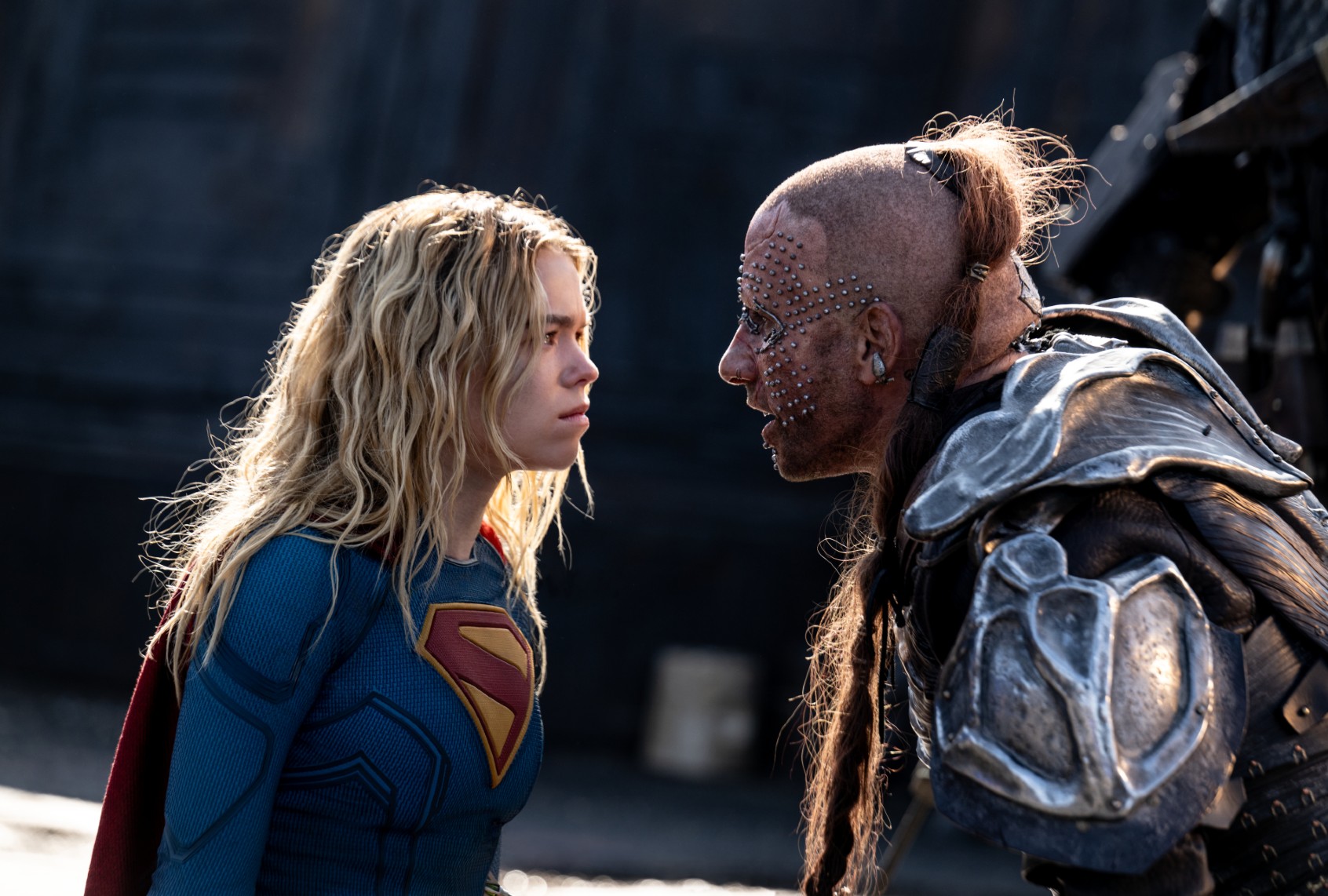
While I am at it, I might as well gripe that the movie discards Comet and radically alters/messes up the ultimate fate of central villain Krem of the Yellow Hills (Matthias Schoenaerts, buried under “Fury Road” armor and given so little of substance to do he is not interesting on any level). Krem’s look as well as his Immortan Joe-like sex trafficking call to mind a superior film. In the fifth issue of the series, Ruthye stands vigil over a weakened Supergirl on the planet Barenton, a hostile environment with a green sun that saps Kara’s powers. Defending her companion against dinosaur-like creatures, Ruthye faces her own fears and saves Supergirl’s life, a defining moment of bildungsroman growth you won’t find in Gillespie’s adaptation.